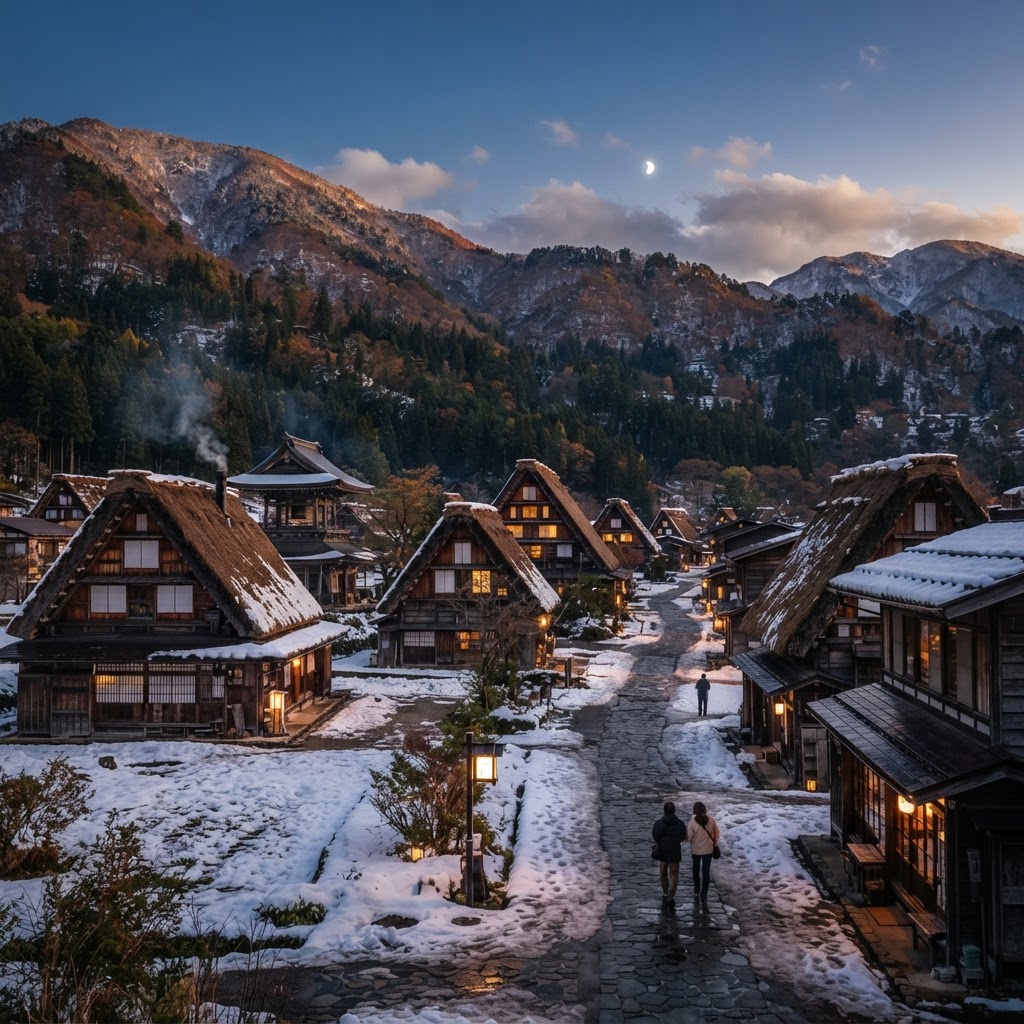
Japan
Shirakawa-go, Gifu, Japan
A living mountain settlement of steep-pitched thatch, silence at dusk, and alpine timbercraft.
Plan & book
Sort your Shirakawa-go, Gifu, Japan trip in one place.
We point you to the booking tools we'd actually use — live prices, no markup. Or let us build the day-by-day plan around you first, then book.
Set in a steep river basin within Gifu's Shogawa Valley, Shirakawa-go is internationally recognized for its clusters of steep-pitched thatched farmhouses, known as gassho-zukuri. Built without nails to endure heavy alpine snowfalls, these massive cedar-and-reed homes anchor a functioning agricultural community. While day-tripping bus crowds can overwhelm the main lanes midday, early mornings and evenings—especially when staying overnight in a preserved farmhouse—deliver an intimate look into traditional mountain life.
How long
1 night / 24 hours (arriving late afternoon, staying in a minshuku, departing late morning)
Best time
Late October through mid-November for golden foliage and crisp air, or late January through February for deep snowscapes.
Build your own trip with these prebuilt itineraries
Each one is a tested, day-by-day plan for Shirakawa-go, Gifu, Japan — start here, then make it yours.
3 Days in Shirakawa-go & Gokayama in Shirakawa-go
Regional Alpine Valleys & Rural Hamlets by Car
2 Days in Shirakawa-go in Shirakawa-go
Overnight Minshuku & Traditional Architecture
1 Day in Shirakawa-go in Shirakawa-go
Overland Transit Highlights
The primary draw is experiencing gassho-zukuri architecture in its authentic geographic setting rather than in an open-air museum. These structures were built with multi-level attics designed for sericulture (silkworm cultivation) under severe winter conditions. Sleeping overnight on tatami in a heated hearth room, waking to mist rising off the surrounding rice paddies, and exploring Ogimachi before the tour buses arrive offers an atmospheric window into rural Edo-era Japan.
Where to stay
Getting there
Getting around
Food & drink
What it costs
Skip it if
Skip this destination if your itinerary is already tightly compressed between Tokyo and Kyoto; routing through the Chubu region adds significant transit time. Travelers expecting modern luxury hotels, private en-suite amenities, and late-night dining will find village stays frustrating. If you cannot manage cold mountain weather or have limited mobility on uneven paths and historic, steep interior wooden ladders, Takayama's Hida Folk Village is a much more accessible alternative.
When to go
Winter brings postcard-worthy deep snow cover, but bitter freezes and intense tourist interest make logistics tight. Autumn offers easier footing, golden rice harvests, and brilliant maples without the extreme travel delays of winter blizzards.
Peak (January–February & Late October–November)
Substantial snowfall and select winter light-up dates bring peak crowds; bus bookings and accommodation lottery applications must be secured months ahead.
Shoulder (Mid-April–May & September)
April brings cherry blossoms and flooded rice paddies reflecting farmhouses; September provides warm, dry walking weather with far fewer bus crowds.
Low (Mid-March–Early April & June)
March brings slushy melting snow before the green season starts; June brings persistent rainy-season downpours and low cloud cover.
Neighborhoods
Where you stay shapes the trip. Here's how to think about it.
Central Ogimachi
Paved lanes between monumental thatched roofs, daytime tourist buzz, and quiet cedar smoke at sunrise.
Best for:Overnight farmhouse minshuku stays and first-time walkers
Don't miss:Wada House (Wada-ke) and Nagase House (Nagase-ke) interiors
Ogimachi Castle Site & Shiroyama Lookout
Panoramic alpine ridge overlook above the clustered gassho roofs.
Best for:Photographers and panoramic valley views
Don't miss:The winding walking path up from Central Ogimachi for dawn views before the shuttle crowds arrive
Gassho-zukuri Minkaen (West Bank)
An open-air architectural museum across the Shogawa River suspension bridge.
Best for:Architecture buffs who want to inspect timber joinery and framing without private-property restrictions
Don't miss:Deai-bashi pedestrian suspension bridge crossing over the Shogawa River
Hirase Onsen & South Valley
Rushing mountain rivers, unadorned sulfur onsen baths, and zero tour-bus crush.
Best for:Hot spring purists and travelers with a car who want authentic mountain lodging away from day crowds
Don't miss:Soaking at Shiramizunoyu hot spring bathhouse
Destination intelligence
Updated 9/14/2026The structured record we plan every Shirakawa-go, Gifu, Japan itinerary from.
Walkability
High. The entire historic village of Ogimachi is walkable on foot along flat, paved lanes, though historic farmhouse interiors require removing shoes and navigating steep wooden steps.
Transit quality
Moderate. There are no trains; long-distance highway buses run reliably to Takayama, Kanazawa, and Toyama, but reservations are mandatory on primary tourist runs.
Car needed
Not required. Direct express highway buses connect Ogimachi to Takayama and Kanazawa. A car is only advantageous if exploring outlying Gokayama hamlets or rural valleys.
Ideal duration
1 night / 24 hours (arriving late afternoon, staying in a minshuku, departing late morning)
Minimum useful
3 to 4 hours (as a direct transit stopover between Takayama and Kanazawa)
Peak season
Winter (January–February for heavy snowfall and the select illumination evenings) and Autumn (late October–November for valley foliage).
Shoulder season
Spring (mid-April to May for cherry blossoms and fresh green rice fields) and late Summer (September for warm weather and golden harvest prep).
Low season
Mid-March to early April (snow turns to slush before full thaw) and June (rainy season).
Best for
Common mistakes
- Treating the village solely as a 2-hour midday dash, which concentrates your visit during peak bus-tour congestion between 11:00 and 15:00.
- Failing to pre-book Nohi Bus tickets, resulting in being stranded at Takayama or Kanazawa stations when scheduled departures are full.
- Expecting modern luxury amenities in village minshuku: rooms are partitioned by sliding paper screens (fusuma), toilets and bathing facilities are shared, and heating relies on kerosene stoves in winter.
- Attempting to attend the Winter Light-up event without entering the official lottery months in advance; unauthorized cars and buses are strictly turned away.
- Disregarding local residential etiquette: Ogimachi is a living village, meaning wandering into private yards, flying recreational drones, or littering is prohibited.
Best nearby
See what a trip to Japan actually costs. Travel Budget Co.
How to plan it
- Treat Shirakawa-go as the scenic midway bridge between Takayama and Kanazawa rather than an out-and-back day trip.
- Reserve your Nohi Bus or Hokutetsu express bus seats exactly one month in advance online, especially for mid-morning and late-afternoon time slots.
- If visiting on a day trip, arrive before 09:30 or after 15:30 to experience the village lanes without tour group bottlenecks.
- Do not visit expecting dinner out: if you stay overnight, ensure your minshuku or ryokan booking explicitly includes dinner and breakfast.
- Bring cash; many historic farmhouse entry desks and local snack counters do not accept credit cards or IC transit cards.
Questions
More in Japan
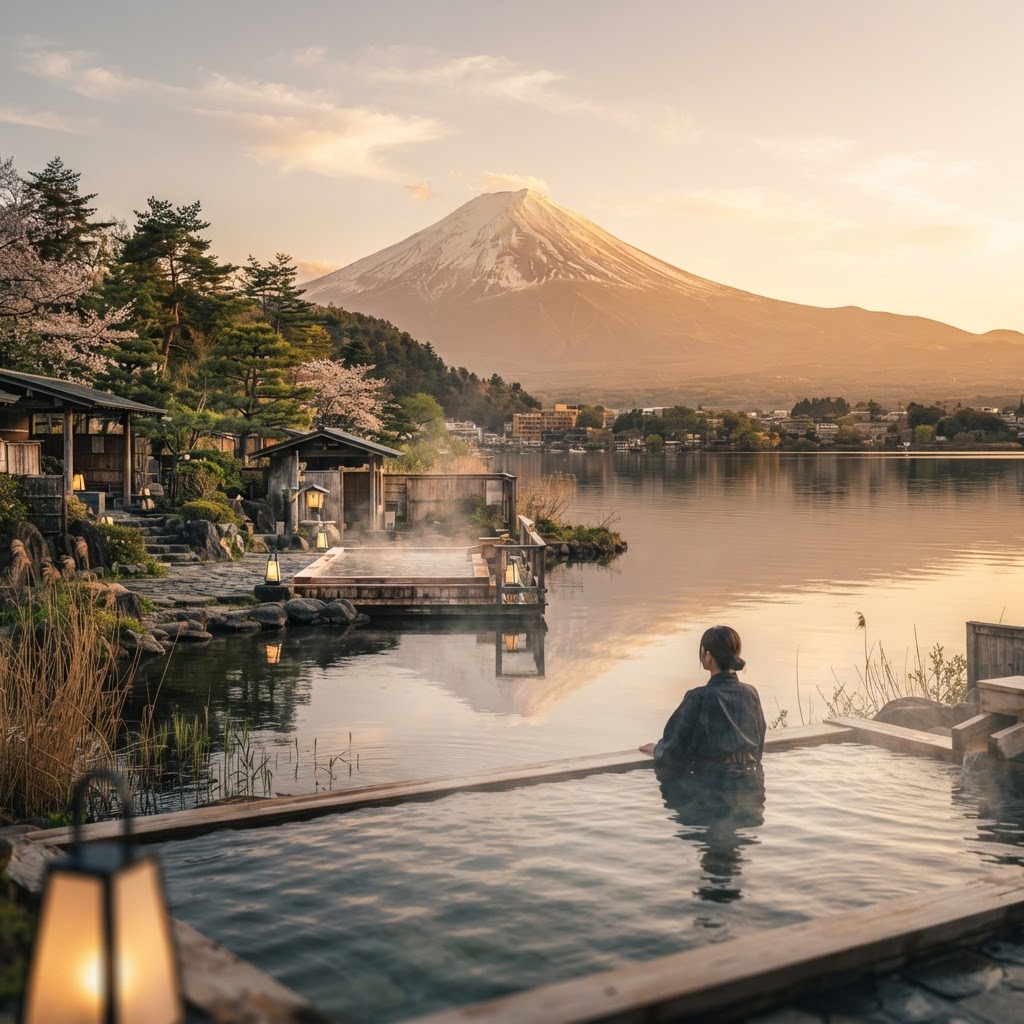
Kawaguchiko & Fuji Five Lakes
Japan
Unrivaled front-row views of Mount Fuji, lakeside onsens, and open mountain air.
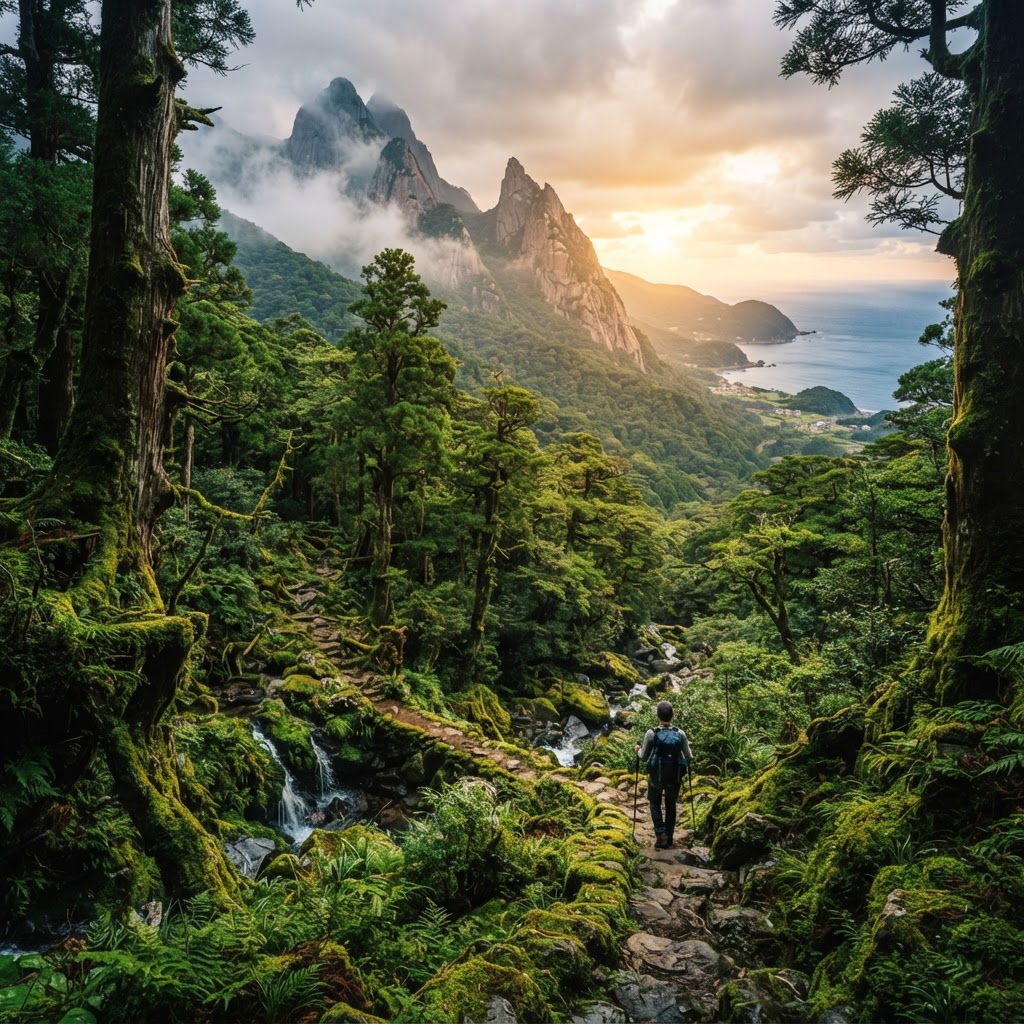
Yakushima, Japan
Japan
Ancient moss-draped cedar forests and misty granite peaks rising abruptly from the Pacific.
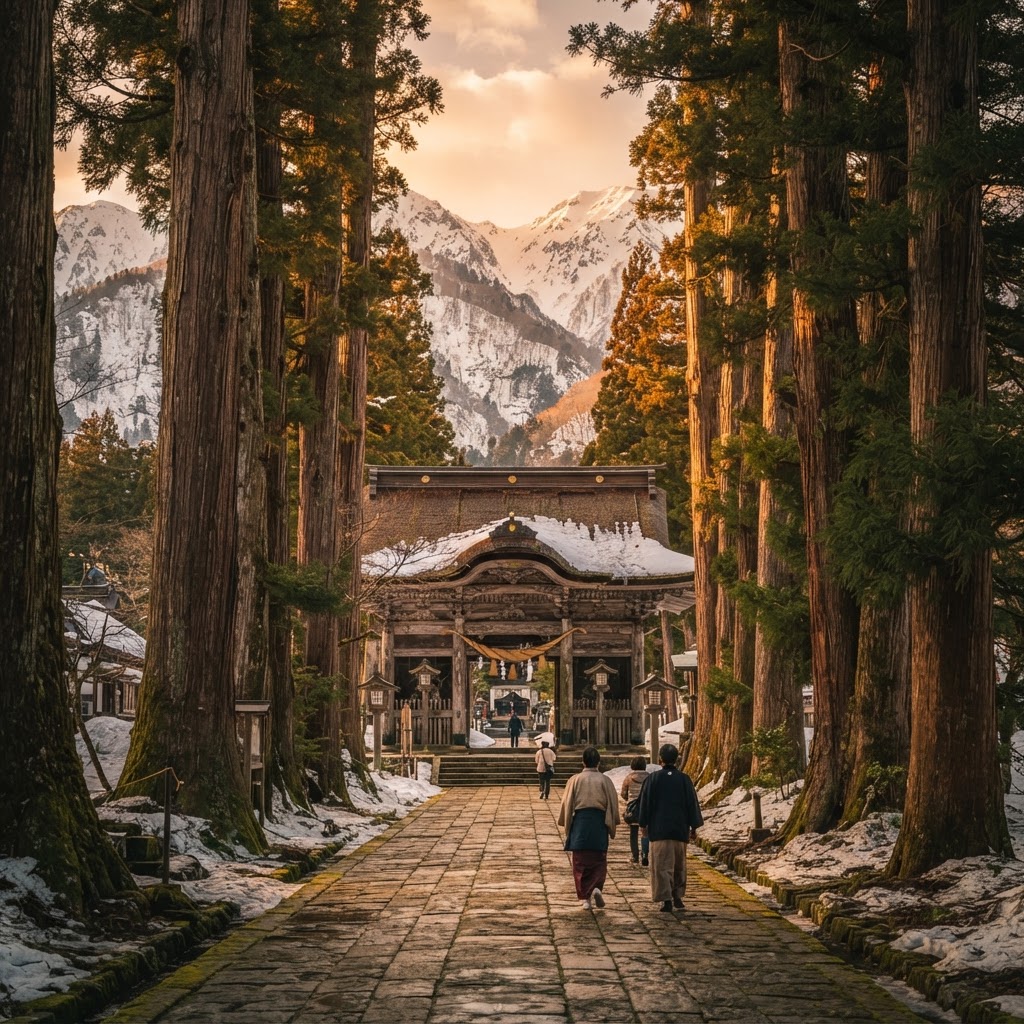
Nagano, Japan
Japan
Pilgrim temples, cedar-lined alpine shrines, and the gateway to Japan's northern powder peaks.
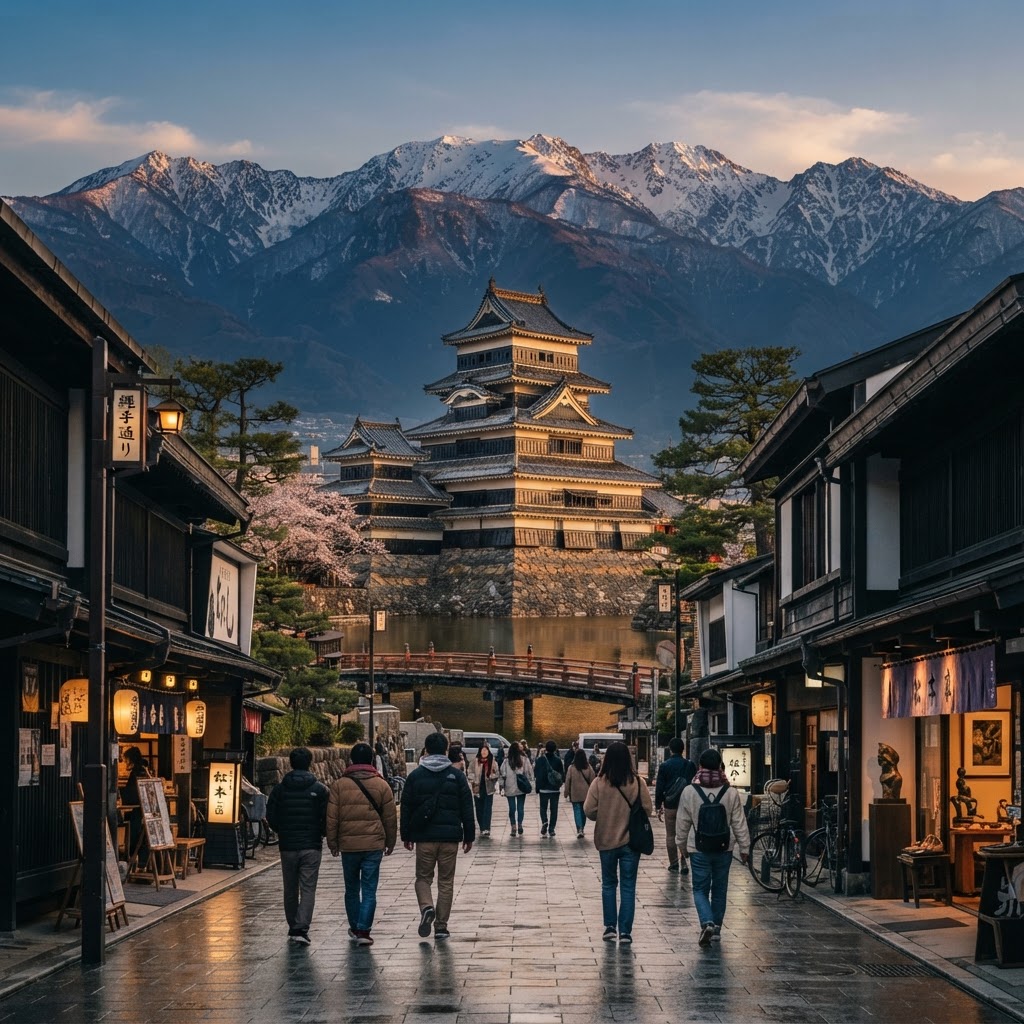
Matsumoto
Japan
Feudal black timber architecture framed by the Northern Alps and alpine art culture
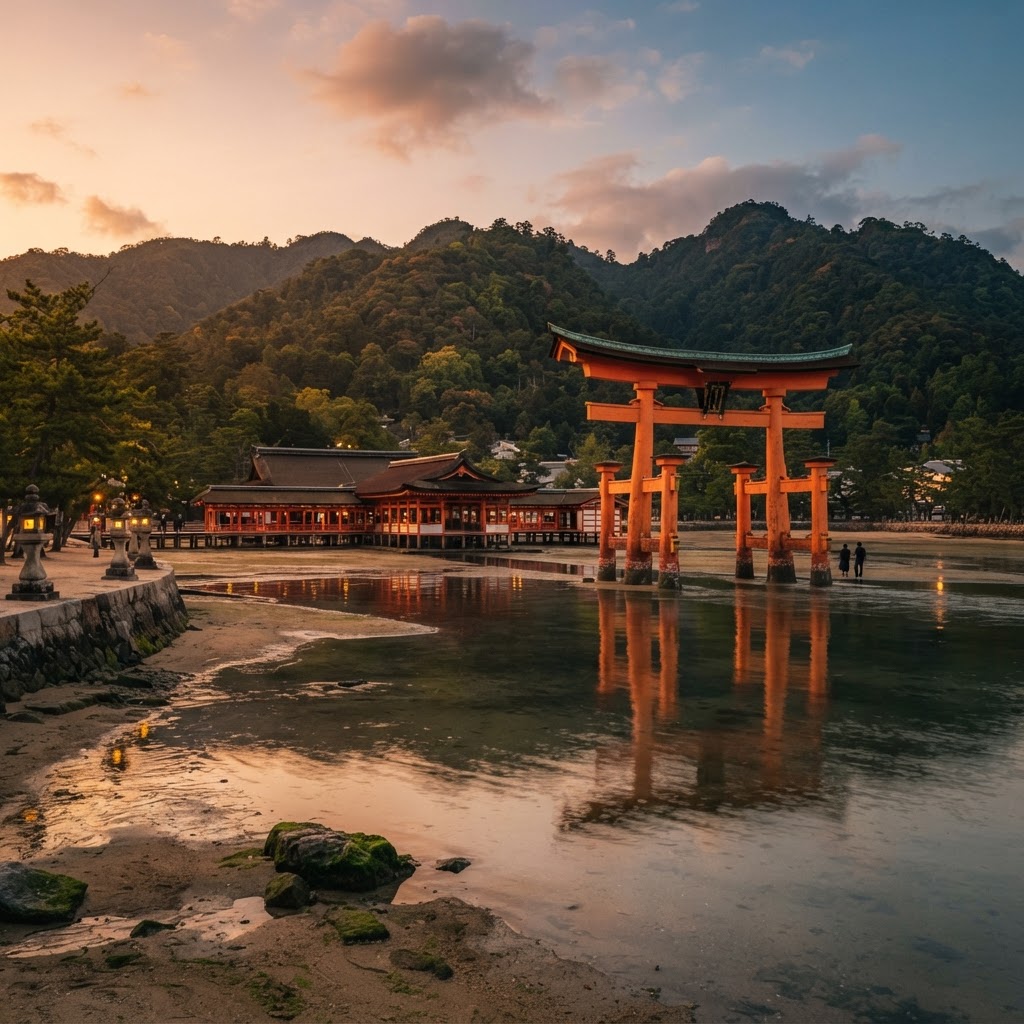
Miyajima (Itsukushima), Japan
Japan
A sacred island of tidal shrines, ancient virgin forest, and silent lantern-lit evenings.

Ishigaki, Japan
Japan
The coral-fringed subtropical gateway to Japan's untamed southern archipelago.
Readymade itineraries
Start from a tested template — then make it yours.
Ready to book
Lock in your Shirakawa-go, Gifu, Japan trip
Everything in one place. We may earn a small commission — it never costs you more.
Plan a trip to Shirakawa-go, Gifu, Japan
Pick a length and we'll build a day-by-day plan around how you travel — neighborhoods clustered, budget-aware, and editable.
Get better at planning trips like this
Occasional notes on planning smarter — no spam, unsubscribe anytime.
Plan a trip to Shirakawa-go, Gifu, Japan
Turn this guide into a day-by-day plan built around your pace, your group, and your budget.
Build my Shirakawa-go, Gifu, Japan trip