Spain
Salamanca
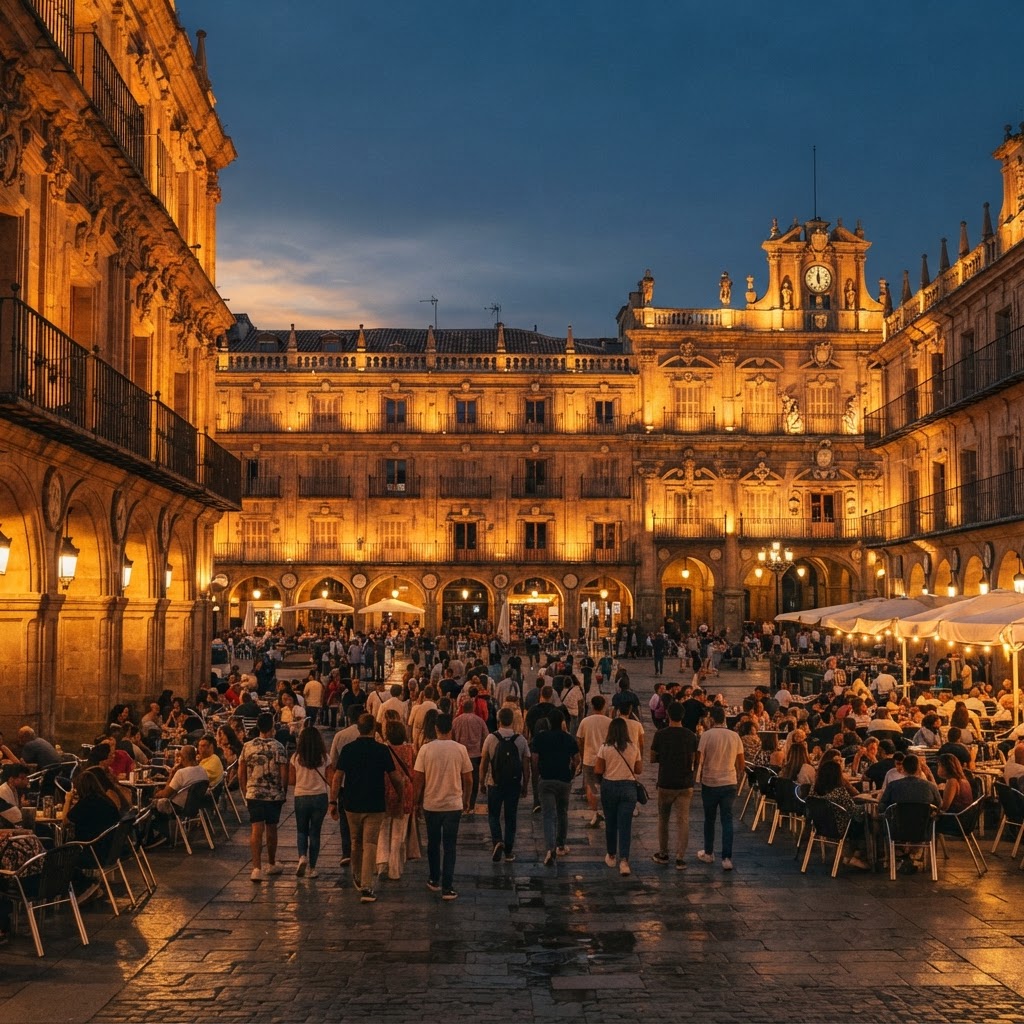
Spain's golden sandstone intellectual capital with an unrivaled late-night plaza culture.
Plan & book
Sort your Salamanca trip in one place.
We point you to the booking tools we'd actually use — live prices, no markup. Or let us build the day-by-day plan around you first, then book.
Carved from warm Villamayor sandstone that turns amber under dusk lighting, Salamanca is Spain's premier university city and one of Europe's most cohesive historic centers. Anchored by the majestic Plaza Mayor, its ancient university halls, twin joined cathedrals, and lively student tapeo culture deliver an authentic Castilian rhythm that feels lightyears away from tourist-packed Madrid.
2 days
Best time
May to June or September to October.
Build your own trip with these prebuilt itineraries
Each one is a tested, day-by-day plan for Salamanca — start here, then make it yours.
3 Days of Castilian Tapas & Unhurried Living in Salamanca
A leisurely culture-and-culinary escape focused on neighborhood tapeo, hidden courtyards, and local museum gems beyond the tourist rush
2 Days of Golden Stone & Plateresque Splendor in Salamanca
First-time architectural and historic highlights covering the university halls, twin cathedrals, and illuminated evening plazas
1 Day Salamanca Essentials in Salamanca
A tightly-curated walking day trip taking in Plaza Mayor, the famous university facade, and sunset over the Roman Bridge
Salamanca delivers the quintessential Spanish plaza-and-tapas culture at half the cost and fraction of the crowds of Madrid or Barcelona. Its Old Town is a dense UNESCO World Heritage treasure of Plateresque and Renaissance stone architecture, entirely walkable and energized day and night by one of the oldest scholarly populations in Europe.
Where to stay
Getting there
Getting around
Food & drink
What it costs
Things to do
Book tours & tickets in SalamancaSkip it if
Skip it if you only have four days in Spain and have not yet seen Madrid, Seville, or Barcelona, or if your priority is coastal beaches, modern metropolitan nightlife, or high-speed AVE trunk connections.
When to go
Spring and early autumn hit the sweet spot: warm, dry days around 20°C to 24°C, active outdoor terrace life on the Plaza Mayor, and the academic hum of the university without the baking meseta heat of midsummer.
Peak (May–Jun & Sep–Oct)
Lively university buzz, comfortable walking weather, and bustling plazas. Book accommodations at least 4 to 6 weeks ahead, especially around festival weekends.
Shoulder (Apr & Nov)
Cooler temperatures and brisk mornings, but minimal crowds at monuments. April can be busy during Semana Santa, while November brings crisp, chilly Castilian autumn air.
Low (Jul–Aug & Dec–Feb)
Summer brings searing midday heat exceeding 35°C that empties streets until 9 PM, while winter brings biting Castilian plateau frost and cold winds, though room rates drop substantially.
Neighborhoods
Where you stay shapes the trip. Here's how to think about it.
Centro Histórico (Plaza Mayor & Catedral)
Monumental golden sandstone streets, historic university courtyards, and bustling café terraces.
Best for:First-timers, architecture buffs, and short stays wanting to step straight into the sights.
Don't miss:Catching the golden hour light hitting the intricate Plateresque façade of the University of Salamanca on Patio de Escuelas.
Barrio del Oeste
Bohemian, creative enclave covered in vibrant public murals and filled with indie coffee shops.
Best for:Alternative travelers, street art fans, and anyone wanting a modern local break from medieval stone.
Don't miss:The outdoor street-art gallery Galería Urbana covering garage doors and apartment walls around Plaza del Oeste.
Van Dyck
Lively, unpretentious student and local tapas artery buzzing with sizzling planchas every evening.
Best for:Budget foodies, tapeo hopping, and night owls craving authentic pinchos morunos without tourist markups.
Don't miss:Ordering grilled pork pinchos and a caña along Calle Van Dyck at Mesón Cervantes or Rufo's.
San Esteban & Ribera del Tormes
Quiet, romantic, and spacious riverside district framed by imposing monastic cloisters and historic bridges.
Best for:Couples and quiet seekers wanting refined hotels within an easy 7-minute stroll to the core.
Don't miss:Walking across the ancient Roman Bridge (Puente Romano) at sunset for the iconic view of both cathedrals reflected in the Tormes river.
Destination intelligence
Updated 9/14/2026The structured record we plan every Salamanca itinerary from.
Walkability
Excellent. The entire UNESCO historic core is pedestrian-friendly, flat to gently rolling, and best navigated on foot.
Transit quality
Moderate regional rail and bus connections; within the city center, public transit is rarely needed because walking suffices.
Car needed
No. A car is an active liability inside the historic perimeter due to pedestrian zones and strict parking limits.
Ideal duration
2 days
Minimum useful
1 day
Peak season
May to June and September to October, when comfortable temperatures meet university buzz and lively terrace weather.
Shoulder season
April and November, offering mild walking weather and lighter tourism, though university terms are in full swing.
Low season
July to August (extreme Castilian summer heat) and December to February (bitterly cold, dry winds off the meseta).
Best for
Common mistakes
- Treating Salamanca as a rushed 4-hour day trip from Madrid and missing the magical sunset illumination of Plaza Mayor.
- Renting a car for the city center; driving is restricted, parking is difficult, and every main site is walkable.
- Eating exclusively on the tourist-priced terraces of Plaza Mayor instead of venturing into side alleys or Calle Van Dyck for tapas.
- Arriving on a Monday when several regional monuments and university exhibition halls observe restricted operating hours.
Best nearby
See what a trip to Spain actually costs. Travel Budget Co.
How to plan it
- Stay within a 5-minute walk of Plaza Mayor or near San Esteban so you can step straight out for evening strolls and morning coffees.
- Pair Salamanca with Madrid via the 1-hour-40-minute Renfe Alvia high-speed train, or continue onward to Ávila or Segovia rather than attempting an exhausting single-day round trip.
- Don't climb the Ieronimus cathedral towers at midday; time your ascent for the final entry slot before sunset for the richest sandstone reflections.
- Shift your dinner clock to local time: tapas bars in Van Dyck and around Plaza Mayor stay quiet until 8:30 PM and peak around 10:00 PM.
Questions
More in Spain
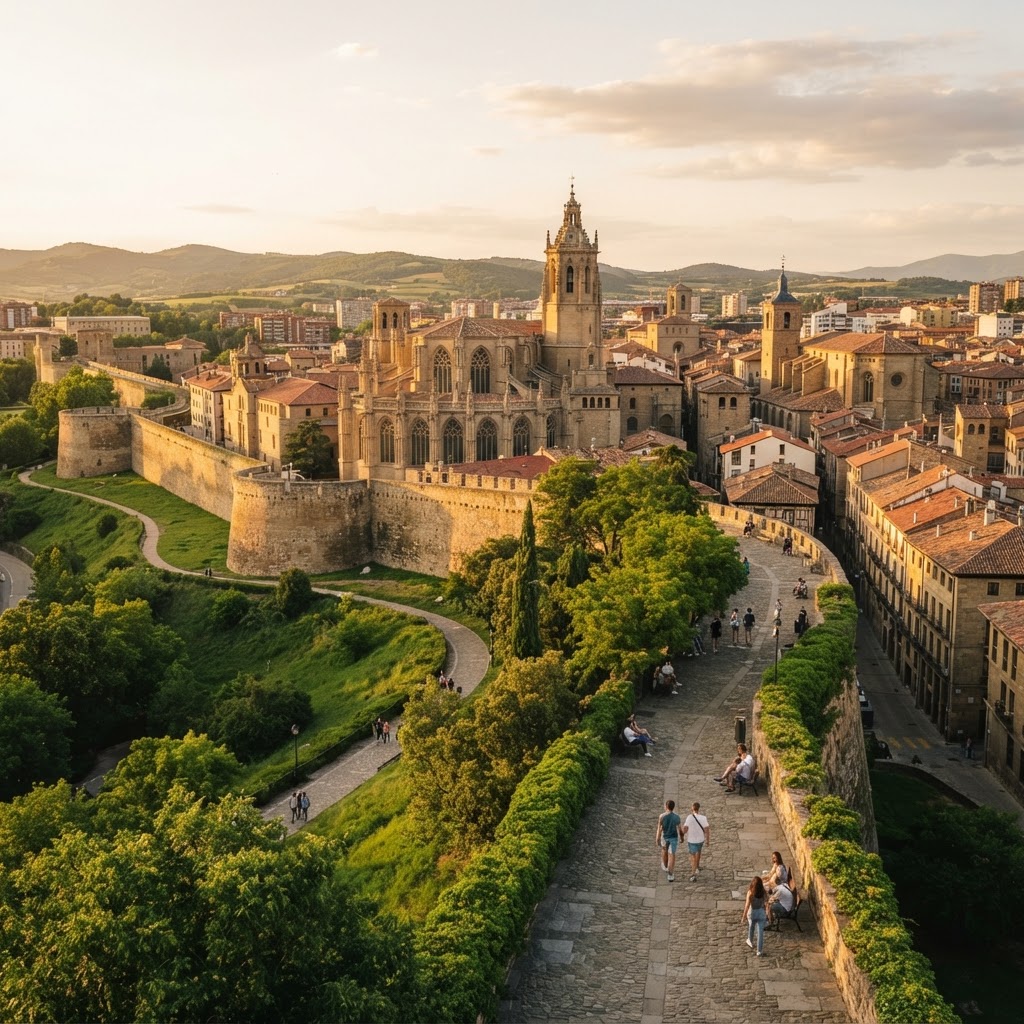
Pamplona, Spain
Spain
Beyond the bull run: a walkable fortress city of world-class pintxos, gothic cloisters, and verdant ramparts.
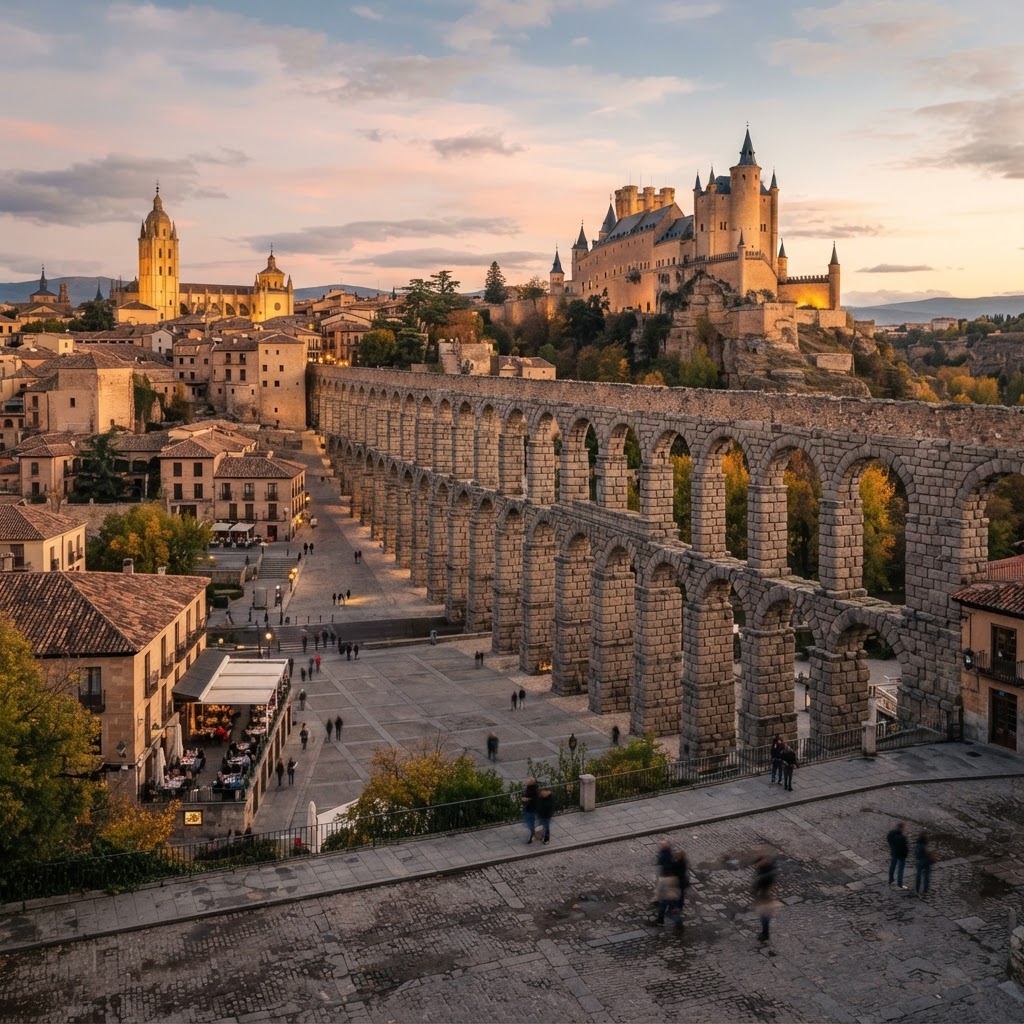
Segovia, Spain
Spain
Roman engineering, fairytale fortresses, and slow-roasted suckling pig just thirty minutes from Madrid
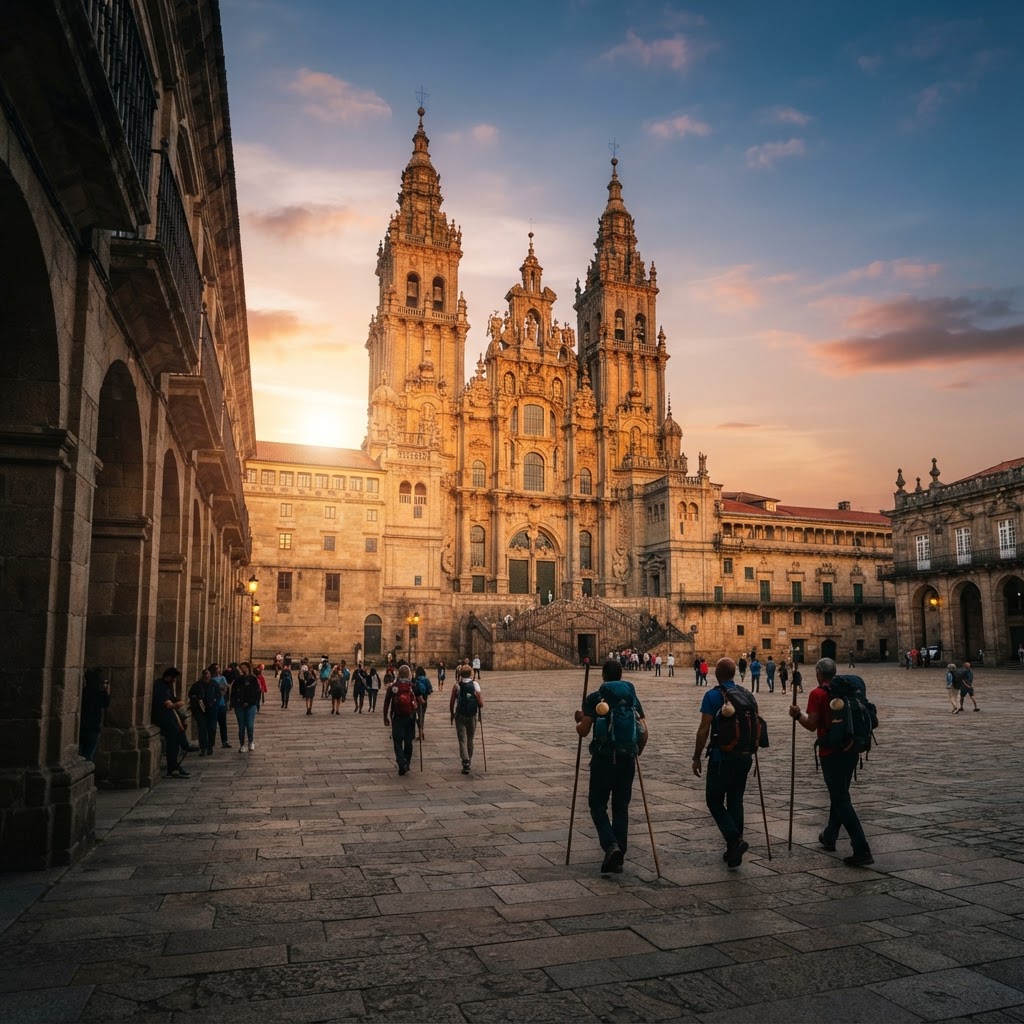
Santiago de Compostela, Galicia, Spain
Spain
Granite arcades, triumphant pilgrim squares, and Spain's most storied seafood capital.
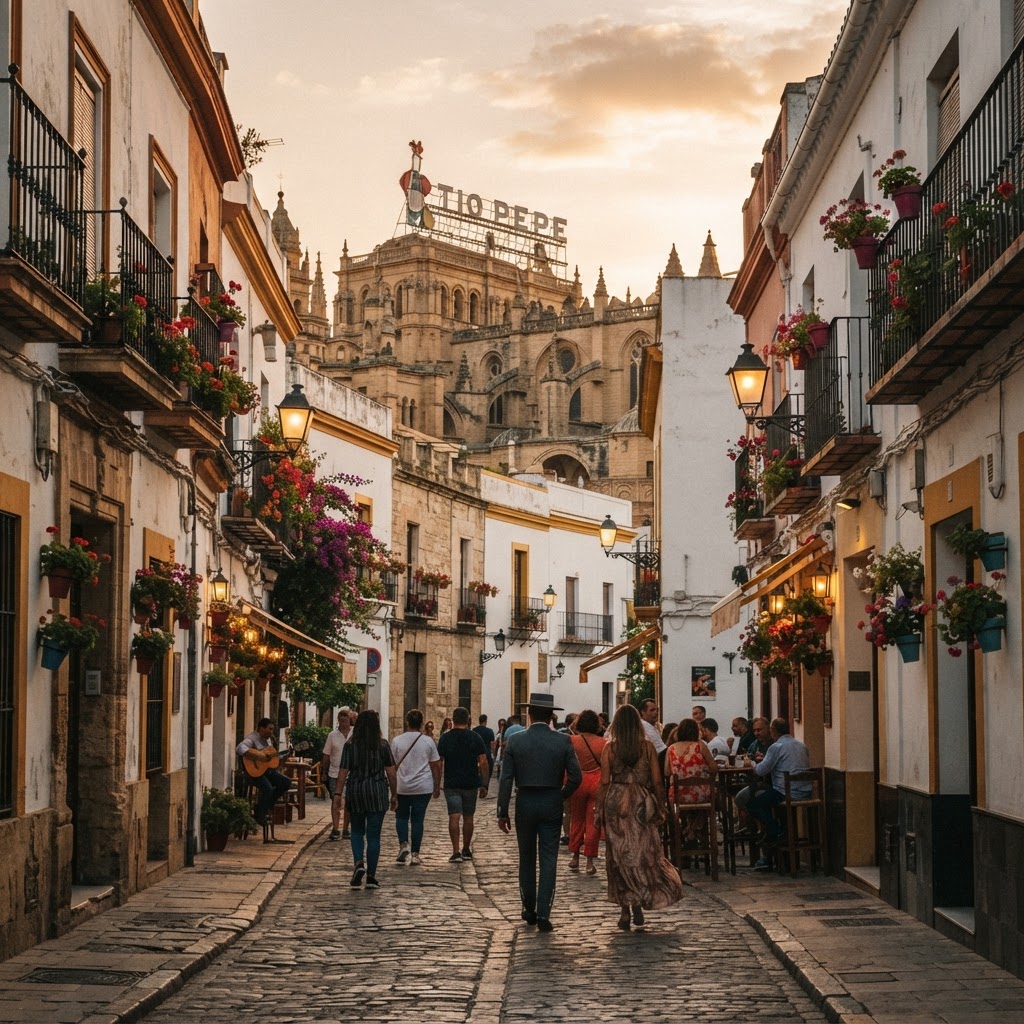
Jerez de la Frontera
Spain
The cradle of pure flamenco, cathedral-like sherry bodegas, and unfiltered Andalusian life.
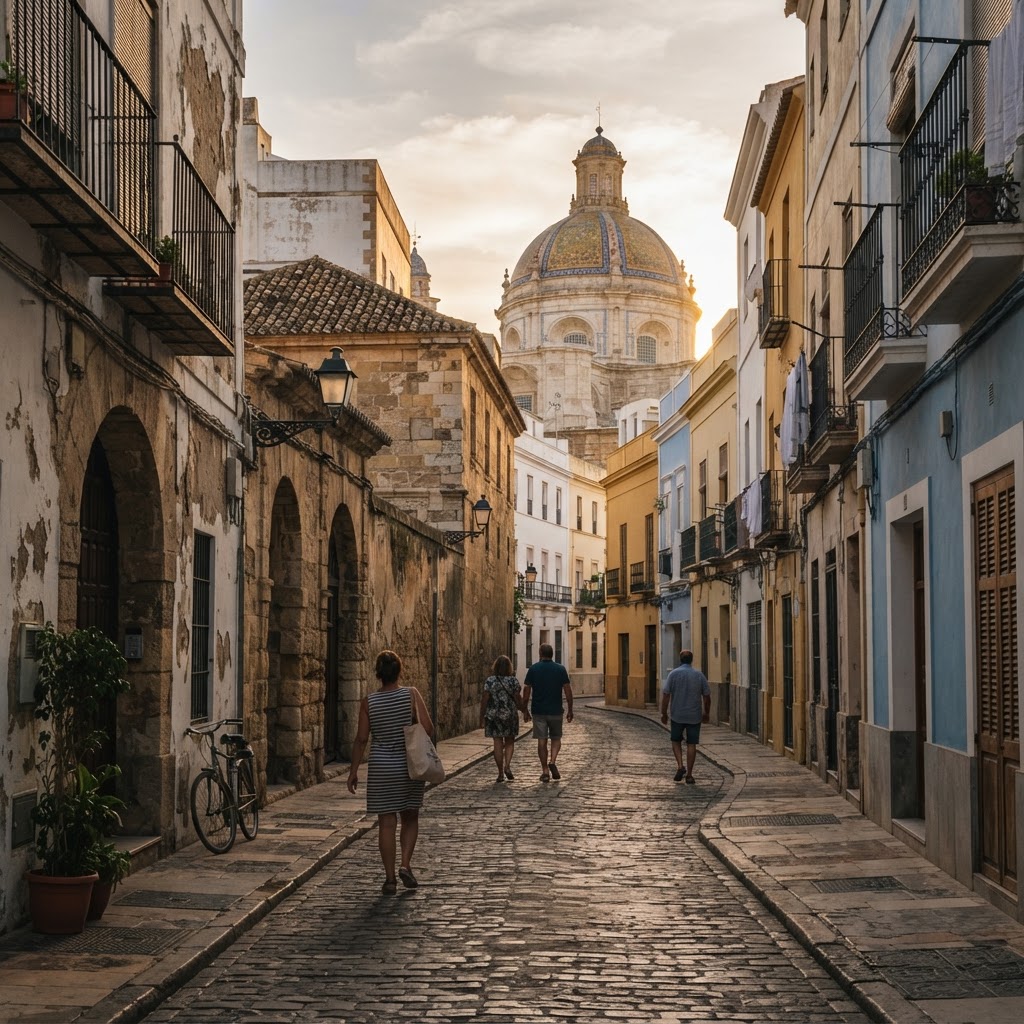
Cádiz
Spain
Europe’s oldest continuously inhabited port, stripped of pretension and wrapped in sea air
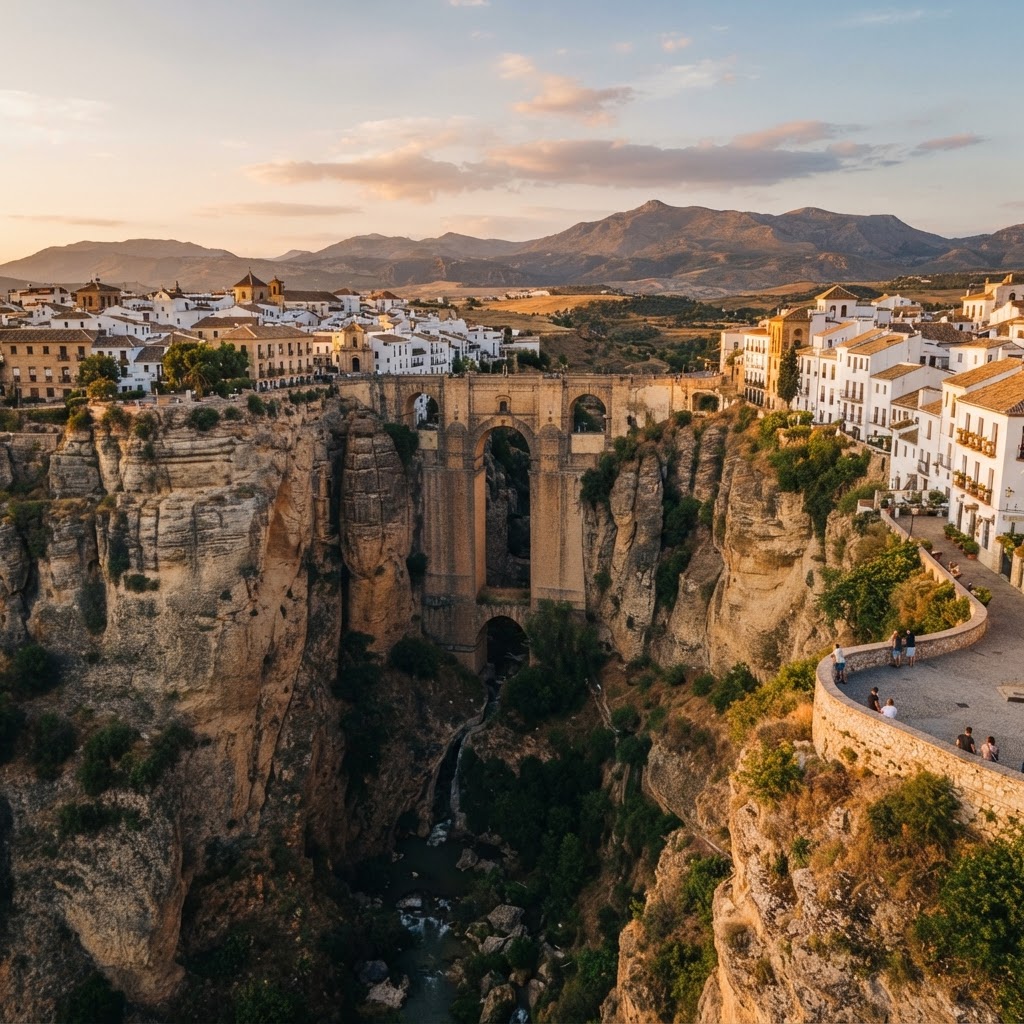
Ronda, Spain
Spain
Dramatically cleft by El Tajo gorge, Andalusia's white mountain town demands an overnight stay to truly be felt.
Readymade itineraries
Start from a tested template — then make it yours.
Ready to book
Lock in your Salamanca trip
Everything in one place. We may earn a small commission — it never costs you more.
Plan a trip to Salamanca
Pick a length and we'll build a day-by-day plan around how you travel — neighborhoods clustered, budget-aware, and editable.
Get better at planning trips like this
Occasional notes on planning smarter — no spam, unsubscribe anytime.
Plan a trip to Salamanca
Turn this guide into a day-by-day plan built around your pace, your group, and your budget.
Build my Salamanca trip