Spain
Cádiz
Europe’s oldest continuously inhabited port, stripped of pretension and wrapped in sea air
Plan & book
Sort your Cádiz trip in one place.
We point you to the booking tools we'd actually use — live prices, no markup. Or let us build the day-by-day plan around you first, then book.
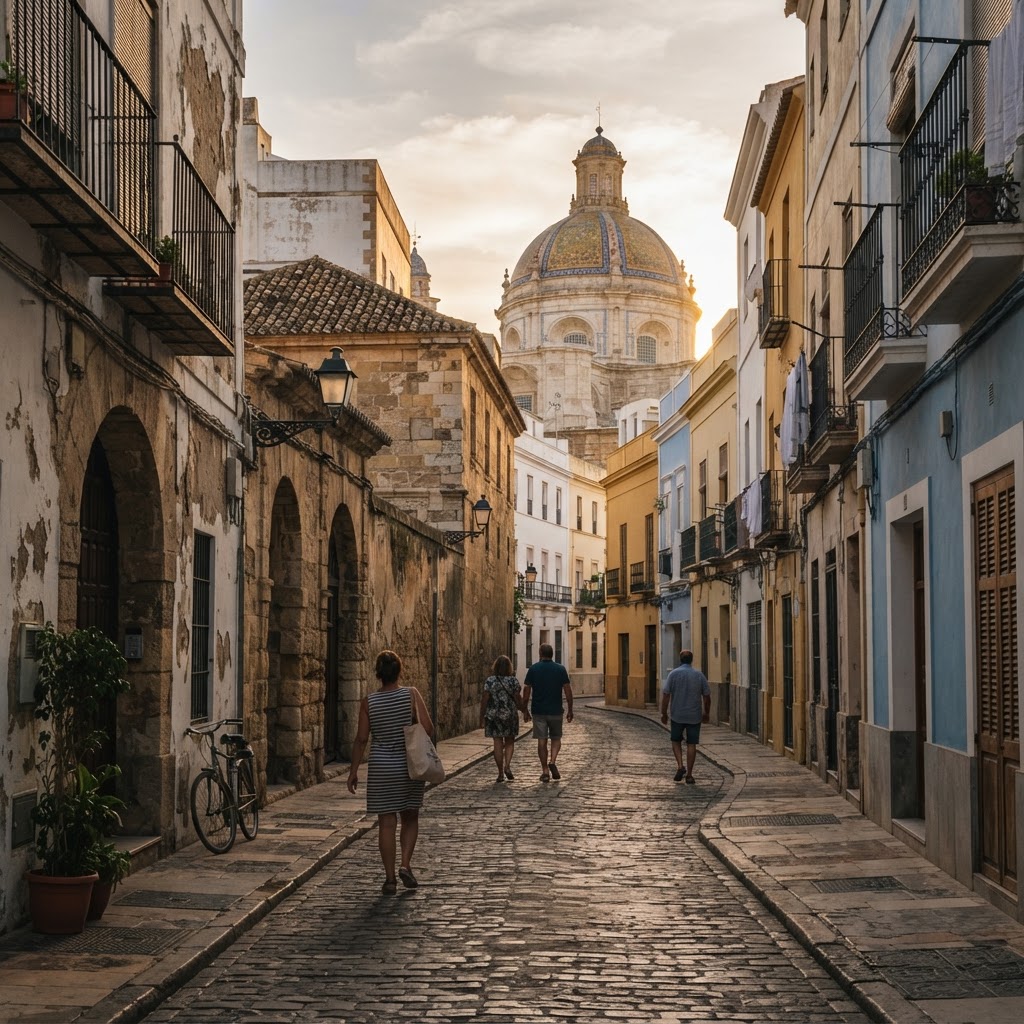
Perched at the end of a slender spit of land protruding into the Atlantic, Cádiz feels distinctly detached from mainland Andalusia’s inland heat and tourism circuit. Founded roughly 3,000 years ago by the Phoenicians, this compact maritime stronghold trades Moorish palaces for sun-bleached Havana-style sea walls, raw seafood markets, and neighborhood flamenco taverns where everyday life takes priority over tourist convenience.
3 days
Best time
May to June and September to October for warm Atlantic swimming, prime bluefin tuna, and manageable crowd levels.
Build your own trip with these prebuilt itineraries
Each one is a tested, day-by-day plan for Cádiz — start here, then make it yours.
5 Days in Cádiz: Slow Coast & Sherry Triangle Day Trips in Cádiz
Extended slow travel with regional rail day trips to Jerez and coastal preserves
3 Days in Cádiz: The Almadraba Seafood & Coastal Trail in Cádiz
Deep dive into culinary traditions, market culture, and Atlantic seafood
2 Days in Cádiz: Ancient Port & Seaside Culture in Cádiz
First-time historical highlights and walkable atmospheric old town exploration
Cádiz offers the antidote to Andalusia's monument checklist. Travelers come here to decompress along Atlantic sea walls, wander through tight medieval streets that open into stone plazas, and eat exceptional seafood—from crispy tortillitas de camarones to seasonal bluefin tuna—at prices far lower than Seville or Madrid.
Where to stay
Getting there
Getting around
Food & drink
What it costs
Things to do
Book tours & tickets in CádizSkip it if
Skip Cádiz if you require sprawling world-famous monument complexes like the Alhambra or Seville's Alcázar, or if your trip is short and taking a nearly two-hour train each way from Seville would compress your core itinerary.
When to go
Summer brings intense domestic beach crowds and elevated room rates, while winter can bring blustery Atlantic squalls and early closures. The shoulder months hit the sweet spot of dry 22°C–26°C days, outdoor terrace dining, and fresh catches from the spring Almadraba tuna harvest.
Peak (July–August & Carnaval in February/March)
July and August pack the city with vacationing Spaniards, driving hotel rates up 40-60%. February's Carnaval transforms the entire historical center into an open-air street party where quiet sleep is impossible without booking months ahead.
Shoulder (April–June & September–October)
The most balanced window. Ocean temperatures are pleasant by late May, the Almadraba tuna run brings world-class seasonal fish to local markets, and crowds thin out significantly by mid-September.
Low (November–January)
Peaceful, sun-drenched daytime walks with highs around 16°C, but Atlantic winds can bring sporadic torrential rain, and many beachside chiringuitos board up for winter.
Neighborhoods
Where you stay shapes the trip. Here's how to think about it.
El Pópulo
Medieval stone arches, narrow shadowed alleys, and quiet tapas courtyards right beside the cathedral.
Best for:First-time visitors who want history at their doorstep and minimal evening noise.
Don't miss:The excavated 1st-century BC Teatro Romano de Cádiz, tucked unobtrusively beneath residential tenements.
La Viña
Raucous, sun-drenched maritime quarter where laundry hangs across narrow lanes and fried fish aroma fills the breeze.
Best for:Seafood purists, lively night owls, and travelers who thrive on authentic street commotion.
Don't miss:Tortillitas de camarones (crispy baby shrimp fritters) on the outdoor terrace of Casa Manteca along Calle Corralón de los Rebollos.
Santa María
Gritty, authentic residential pocket steeped in traditional gitano culture and raw flamenco heritage.
Best for:Culture seekers looking to escape tourist crowds and experience working-class neighborhood pride.
Don't miss:Catching an unvarnished flamenco peña performance or visiting the 17th-century Convento de Santa María.
Mentidero & San Antonio
Leafy plazas, student cafes, and open promenades bordering Atlantic botanical gardens.
Best for:Longer stays, families needing open stroller space, and travelers who prefer calm cafe terraces.
Don't miss:Sunset drinks at Plaza del Mentidero before an evening promenade through the lush subtropical Parque Genovés.
Playa de la Victoria (New Town)
Wide 1970s beachfront boulevard lined with modern high-rises, chiringuitos, and domestic holidaymakers.
Best for:Beach-first summer vacationers who prioritize direct sand access and elevators over historic charm.
Don't miss:An evening sea-breeze paseo along the wide Paseo Marítimo, stopping for grilled sardines at beachfront chiringuitos.
Destination intelligence
Updated 9/14/2026The structured record we plan every Cádiz itinerary from.
Walkability
Exceptional. The historic center is flat, dense, and largely pedestrianized, making it entirely explorable without transit.
Transit quality
Moderate. Regional rail and bus connections are reliable, though public transit inside the compact historical center is unnecessary.
Car needed
Not required. A car is an active liability inside the old town due to extremely narrow streets and restricted zones.
Ideal duration
3 days
Minimum useful
1 day
Peak season
July to August (coastal beach crowds) and February/March (Carnaval)
Shoulder season
April to June and September to October (warm weather, manageable crowds, active tuna season)
Low season
November to January (cooler Atlantic breezes, minimal domestic tourism, short daylight hours)
Best for
Common mistakes
- Bringing a rental car into the Casco Antiguo instead of leaving it in perimeter underground parking garages like Canalejas
- Visiting during Carnaval without booking accommodations six to nine months in advance
- Assuming it is merely a beach town and skipping its Phoenician and Roman archaeological depth
- Arriving at the Mercado Central after 2:00 PM when fishmongers have shut down
Best nearby
See what a trip to Spain actually costs. Travel Budget Co.
How to plan it
- Stay strictly inside the old historic center (Casco Antiguo); staying along Playa Victoria adds a 25-minute bus ride each way just to reach the cultural core.
- Pair Cádiz with a day trip to Jerez de la Frontera, easily reached via a 35-minute direct train ride for dry sherry bodega tastings and equestrian shows.
- Book your Torre Tavira camera obscura time slot at least 3 to 5 days ahead online, as hourly entry quotas fill up fast during mid-day.
- Do not eat lunch before 1:30 PM or dinner before 8:30 PM; kitchen stoves in traditional seafood taverns rarely fire up before Spanish local meal hours.
- Time your visit to the Mercado Central de Abastos between 11:30 AM and 2:00 PM for the freshest raw seafood counter and casual stall snacking.
Questions
More in Spain

Pamplona, Spain
Spain
Beyond the bull run: a walkable fortress city of world-class pintxos, gothic cloisters, and verdant ramparts.

Segovia, Spain
Spain
Roman engineering, fairytale fortresses, and slow-roasted suckling pig just thirty minutes from Madrid
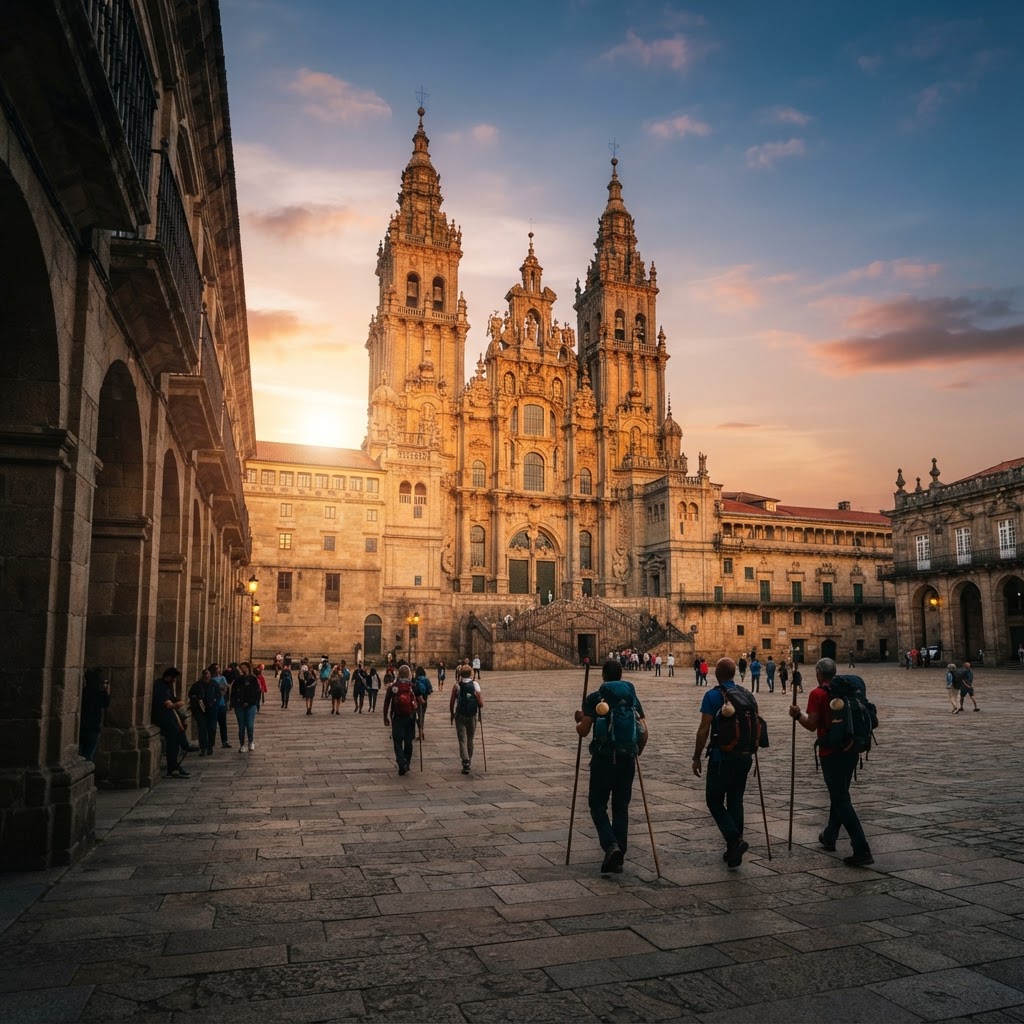
Santiago de Compostela, Galicia, Spain
Spain
Granite arcades, triumphant pilgrim squares, and Spain's most storied seafood capital.

Salamanca
Spain
Spain's golden sandstone intellectual capital with an unrivaled late-night plaza culture.

Jerez de la Frontera
Spain
The cradle of pure flamenco, cathedral-like sherry bodegas, and unfiltered Andalusian life.

Ronda, Spain
Spain
Dramatically cleft by El Tajo gorge, Andalusia's white mountain town demands an overnight stay to truly be felt.
Readymade itineraries
Start from a tested template — then make it yours.
Ready to book
Lock in your Cádiz trip
Everything in one place. We may earn a small commission — it never costs you more.
Plan a trip to Cádiz
Pick a length and we'll build a day-by-day plan around how you travel — neighborhoods clustered, budget-aware, and editable.
Get better at planning trips like this
Occasional notes on planning smarter — no spam, unsubscribe anytime.
Plan a trip to Cádiz
Turn this guide into a day-by-day plan built around your pace, your group, and your budget.
Build my Cádiz trip