Croatia
Zadar, Croatia
Roman ruins, hypnotic waterfront soundscapes, and northern Dalmatia's premier coastal base.
Plan & book
Sort your Zadar, Croatia trip in one place.
We point you to the booking tools we'd actually use — live prices, no markup. Or let us build the day-by-day plan around you first, then book.
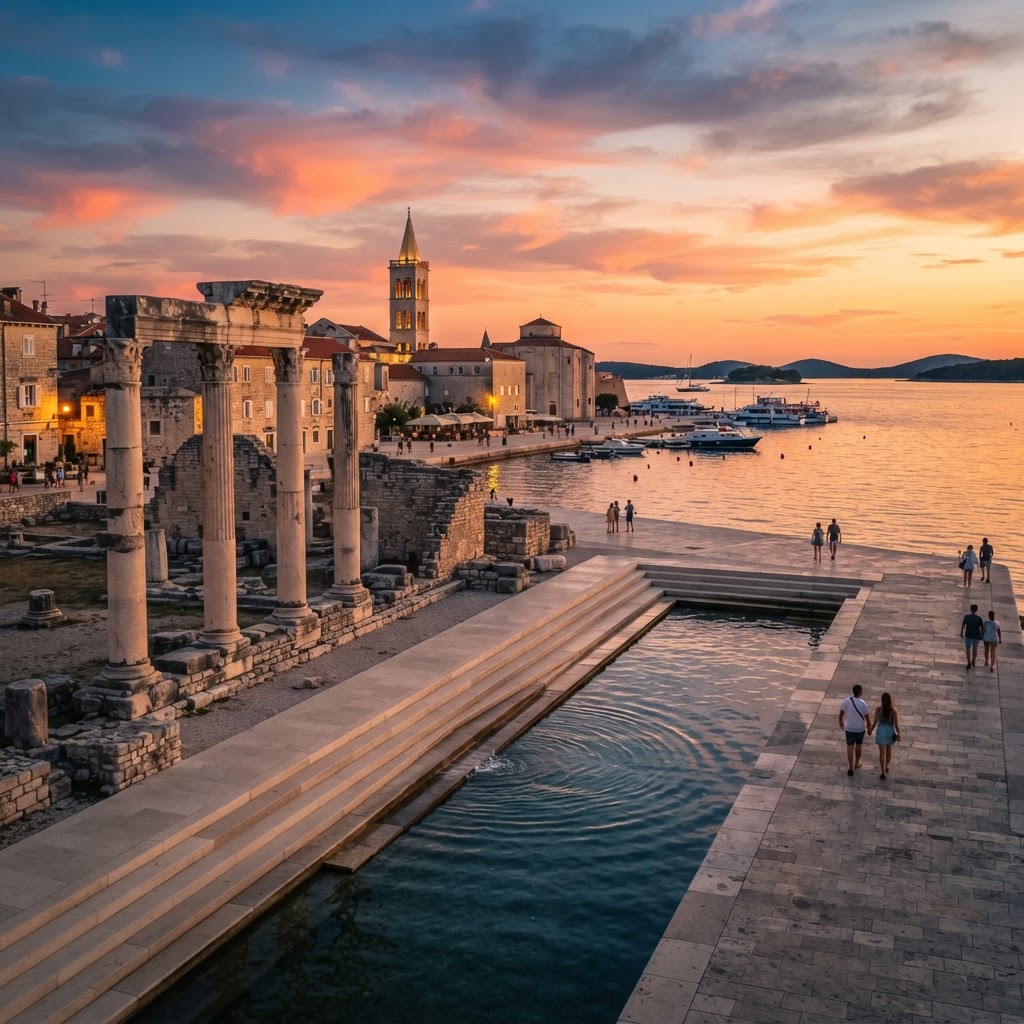
Perched on a narrow limestone peninsula, Zadar trades Split's dense mega-tourism for a calmer, deeply layered coastal rhythm. Here, 9th-century pre-Romanesque rotundas stand directly atop salvaged Roman Forum pillars, Venetian defensive bastions border bustling espresso terraces, and Nikola Bašić's celebrated Sea Organ converts Adriatic wave pressure into haunting harmonic chords. It operates both as an open-air historical catalog and an exceptionally functional launchpad for northern Dalmatia's islands and national parks.
3 days
Best time
May to June and September to early October for warm Adriatic swimming without midsummer tourist compression.
Build your own trip with these prebuilt itineraries
Each one is a tested, day-by-day plan for Zadar, Croatia — start here, then make it yours.
5 Days: Zadar, Canyons & Waterfalls in Zadar
Active regional road trip staging from Zadar to Paklenica, Krka, and Plitvice Lakes
3 Days of Zadar & The Archipelago in Zadar
Peninsula culture paired with island-hopping via local catamarans to Dugi Otok and Ugljan
2 Days in Historic Zadar in Zadar
Classical Roman-Venetian architecture, maritime art installations, and coastal walking
Zadar offers an authentic Dalmatian coastal pulse without the choking cruise crowds of Dubrovnik or the transit chaos of Split's harbor. Between the architectural dialogue of the Roman Forum and Church of St. Donatus, the twilight spectacle at Greeting to the Sun, and swift ferry connections to off-grid islands like Ugljan and Dugi Otok, it delivers high-caliber Adriatic culture in an easily walkable, unpretentious setting.
Where to stay
Getting there
Getting around
Food & drink
What it costs
Things to do
Book tours & tickets in Zadar, CroatiaSkip it if
Skip Zadar if your heart is set on sprawling white-sand beaches right out your front door, or if you demand high-energy nightlife and beach-club culture, which are better served in Split, Hvar, or Pag's Zrće Beach.
When to go
July and August pack the Riva promenade and spike rental rates while temperatures often push past 32°C. The shoulder months retain sea temperatures comfortable for swimming, keep ferry timetables fully active, and make walking the unshaded stone ruins of the Roman Forum pleasant.
Peak (July–August)
High heat, packed waterfronts at sunset, and premium room rates. Book Jadrolinija catamarans and national park tours well ahead.
Shoulder (May–June, September–October)
The definitive sweet spot. Warm water, lively outdoor cafe terraces on Kalelarga, and uncrowded access to Paklenica and Plitvice.
Low (November–April)
Peaceful, budget-friendly, and very quiet. Many seasonal gelato shops and island boat excursions pause until spring, though Old Town landmarks remain open.
Neighborhoods
Where you stay shapes the trip. Here's how to think about it.
Old Town (Poluotok)
Car-free Roman and Venetian limestone peninsula where church bells echo across smooth paving stones.
Best for:first-timers, architectural history enthusiasts, culture-focused short stays
Don't miss:The Sea Organ (Morske Orgulje) steps along the northwestern Riva promenade at dusk, followed by the nearby Sun Salutation light installation.
Kolovare
Breezy seaside residential strip just south of the walls with open pebble beaches and pines.
Best for:swimmers, budget-conscious travelers wanting walking access to Old Town, relaxed families
Don't miss:Taking an early morning dip off the concrete sunning piers at Kolovare Beach before walking 10 minutes north to the Land Gate.
Voštarnica
Authentic, everyday Croatian harbor quarter across the pedestrian bridge from the historic center.
Best for:road-trippers with cars, authentic neighborhood cafes, longer-stay digital nomads
Don't miss:Riding the legendary barkajoli rowboat ferry across the harbor inlet to Poluotok for a few coins instead of walking around.
Borik & Diklo
Northern coastal resort corridor lined with gravel coves, pine-shaded promenade bars, and holiday rentals.
Best for:families with young kids, resort seekers, travelers focused on calm swimming waters
Don't miss:Renting a sea kayak to paddle along the quiet shallows of Diklo bay away from ferry lanes.
Destination intelligence
Updated 9/14/2026The structured record we plan every Zadar, Croatia itinerary from.
Walkability
Exceptional inside the historic peninsula; entirely flat, stone-paved, and pedestrianized.
Transit quality
Moderate; efficient local buses serve residential districts and airport, while Jadrolinija catamarans handle archipelago connections seamlessly.
Car needed
Not required for exploring the city or islands, but strongly recommended if combining your stay with Paklenica, Krka, or Plitvice Lakes.
Ideal duration
3 days
Minimum useful
1 full day
Peak season
July to August (hot, crowded Riva promenade, full ferry routes, peak accommodation prices).
Shoulder season
May to June and September to October (warm swimming weather, lively terraces, manageable crowds, ideal sightseeing).
Low season
November to April (cool, quiet, many island boat lines run limited schedules, some seasonal restaurants closed).
Best for
Common mistakes
- Driving a rental car into the Old Town peninsula where lanes are pedestrianized and parking outside the gates is strictly metered and aggressively enforced.
- Treating Zadar solely as an evening transit waypoint just to see the Sea Organ and Greeting to the Sun, missing its Roman core and archipelago connections.
- Booking boat day trips to Kornati National Park from unvetted ticket kiosks along the promenade without confirming boat speed, group capacity, and exact swim stops.
- Arriving at the ferry terminal at Gaženica expecting it to be in Old Town; large car ferries depart from Gaženica (3 km south), whereas passenger catamarans leave from the peninsula quay.
Best nearby
How to plan it
- Stay directly inside Old Town (Poluotok) if you want zero commute to dinners and ferries, but choose Voštarnica if you have a rental car to avoid severe parking headaches.
- Pair Zadar with an inland hiking day at Paklenica National Park (Starigrad) or Plitvice Lakes rather than treating it merely as a beach town.
- Don't try to cram Plitvice Lakes and Krka Waterfalls into the same trip; pick Plitvice for expansive boardwalk lake views or Krka if you want a shorter 50-minute drive paired with Šibenik.
- Take the 25-minute Jadrolinija passenger ferry across the channel to Preko on Ugljan island for a quick, unhurried swim escape when city stone heats up.
- Arrive at Nikola Bašić's Sea Organ at least 45 minutes before sunset to secure stone steps right at the water line before evening crowd surges.
Questions
More in Croatia
Istria
Croatia
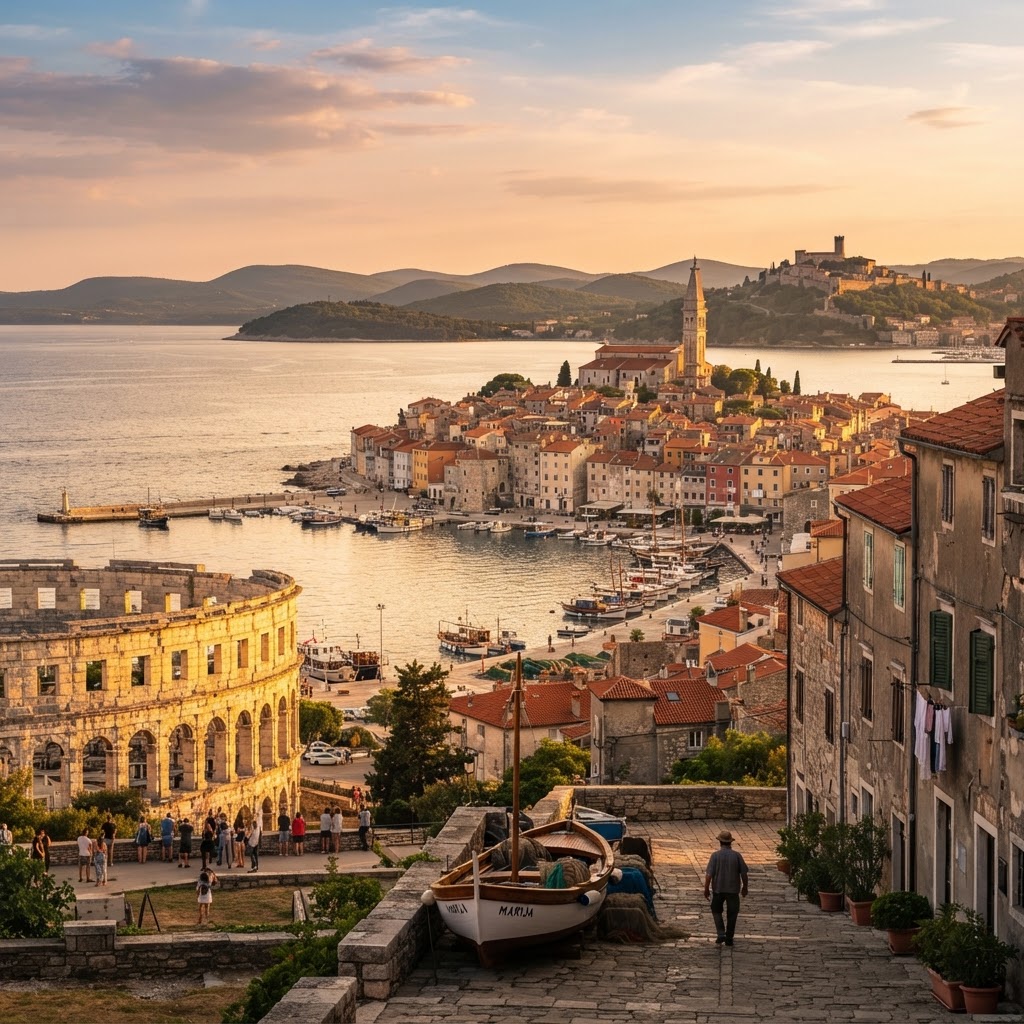
Venetian fishing ports, Roman amphitheatres, and truffle-scented interior hill towns.
Trogir, Croatia
Croatia
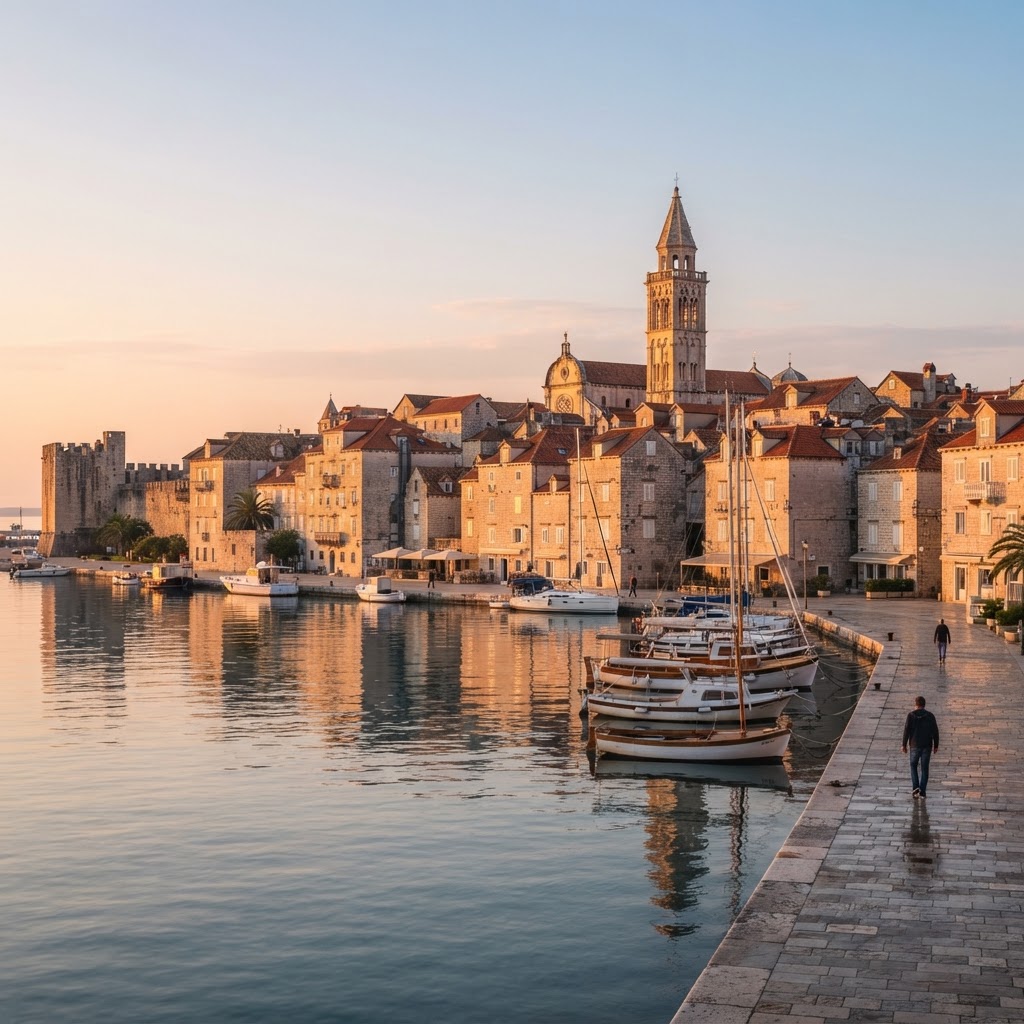
A compact UNESCO-listed island fortress with Venetian stone, quiet mornings, and easy Adriatic access.
Pula, Croatia
Croatia
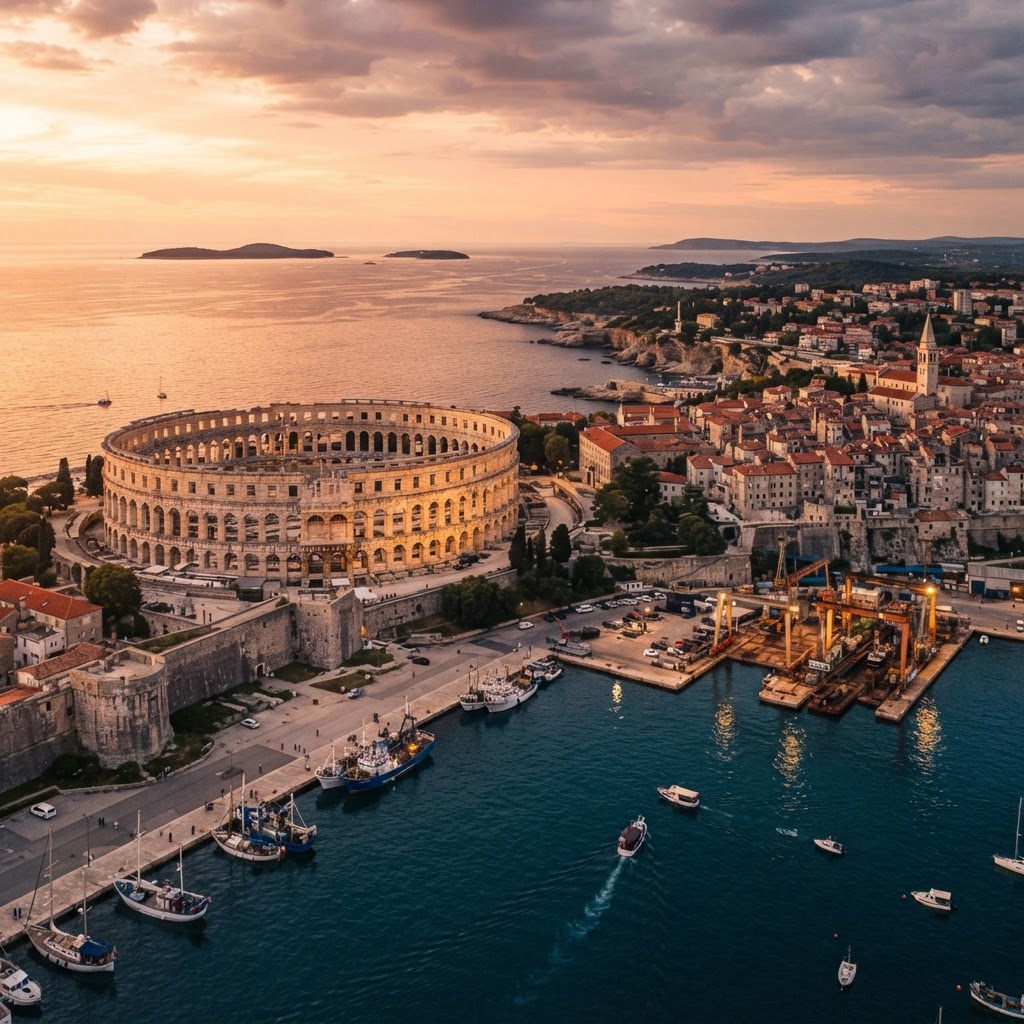
Roman engineering, rugged coves, and working-port authenticity anchor Istria's southern tip.
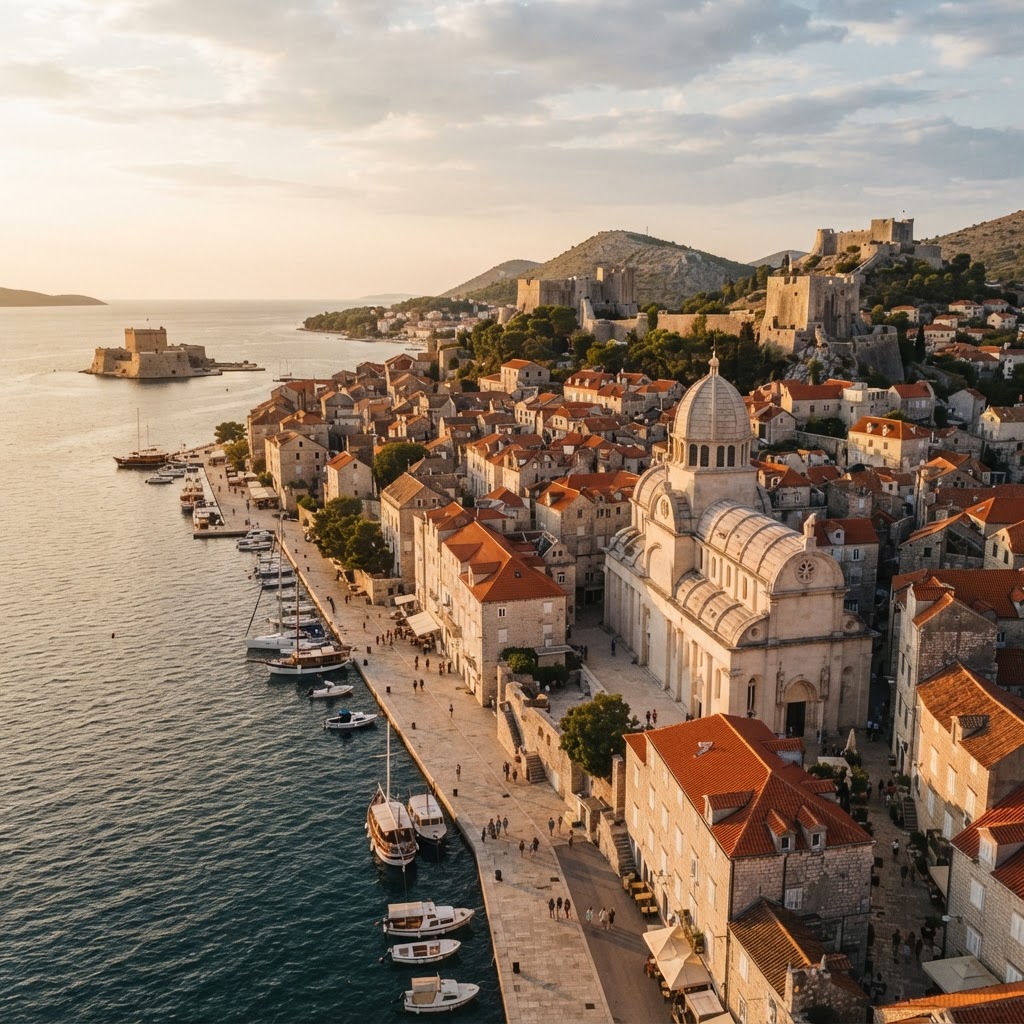
Šibenik
Croatia
Two UNESCO monuments, four Venetian fortresses, and zero cruise ship throngs.
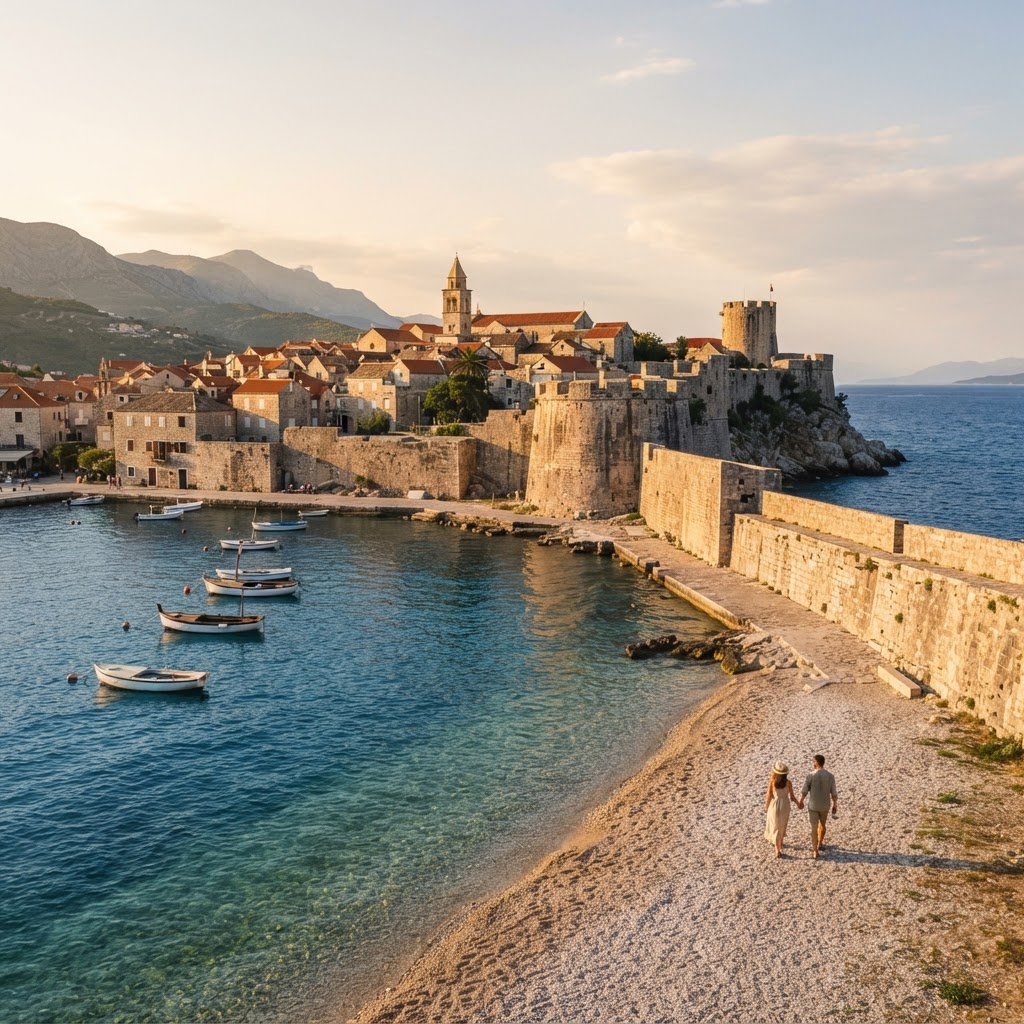
Korčula, Croatia
Croatia
Venetian stone ramparts, hyper-local indigenous wines, and secluded pebble coves without Hvar's party scene.
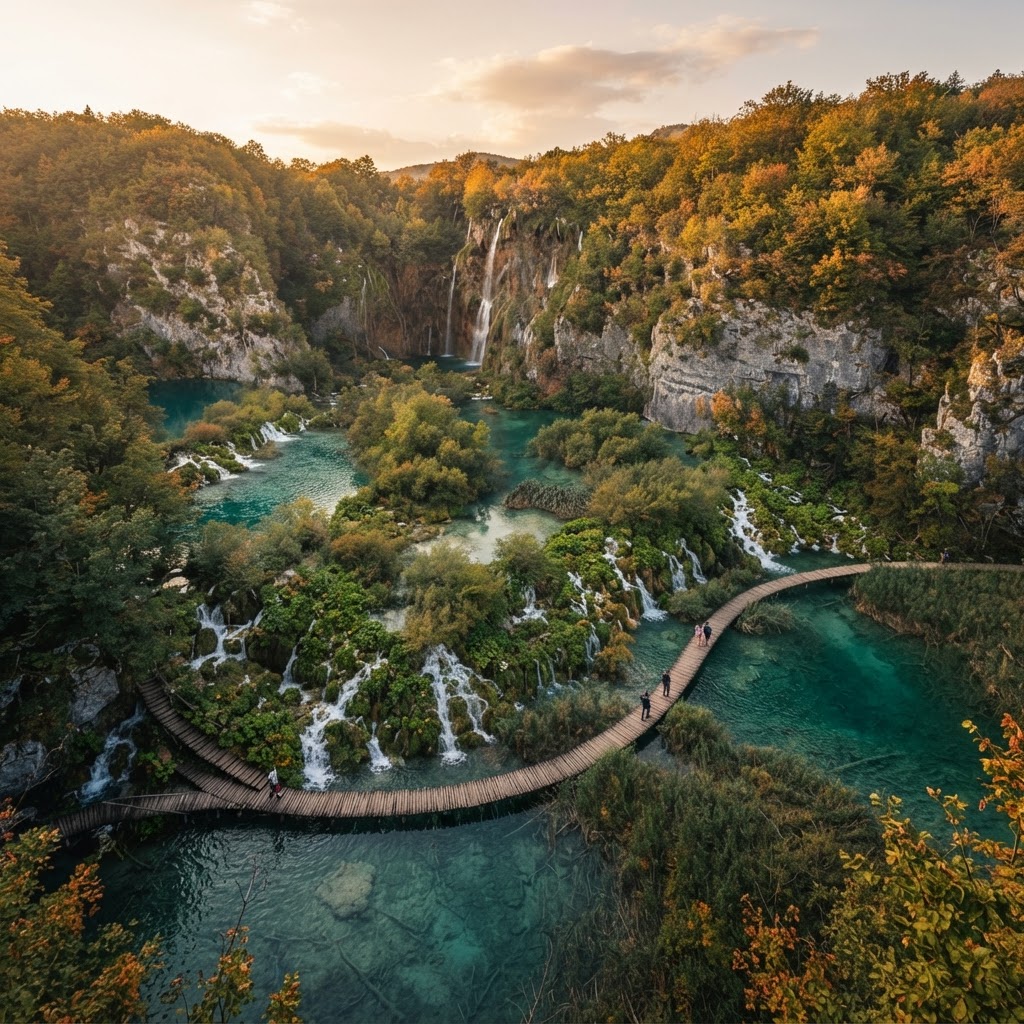
Plitvice Lakes
Croatia
Sixteen stepped travertine basins, cascading falls, and raw karst landscape.
Readymade itineraries
Start from a tested template — then make it yours.
Ready to book
Lock in your Zadar, Croatia trip
Everything in one place. We may earn a small commission — it never costs you more.
Plan a trip to Zadar, Croatia
Pick a length and we'll build a day-by-day plan around how you travel — neighborhoods clustered, budget-aware, and editable.
Get better at planning trips like this
Occasional notes on planning smarter — no spam, unsubscribe anytime.
Plan a trip to Zadar, Croatia
Turn this guide into a day-by-day plan built around your pace, your group, and your budget.
Build my Zadar, Croatia trip