Croatia
Istria
Venetian fishing ports, Roman amphitheatres, and truffle-scented interior hill towns.
Plan & book
Sort your Istria trip in one place.
We point you to the booking tools we'd actually use — live prices, no markup. Or let us build the day-by-day plan around you first, then book.
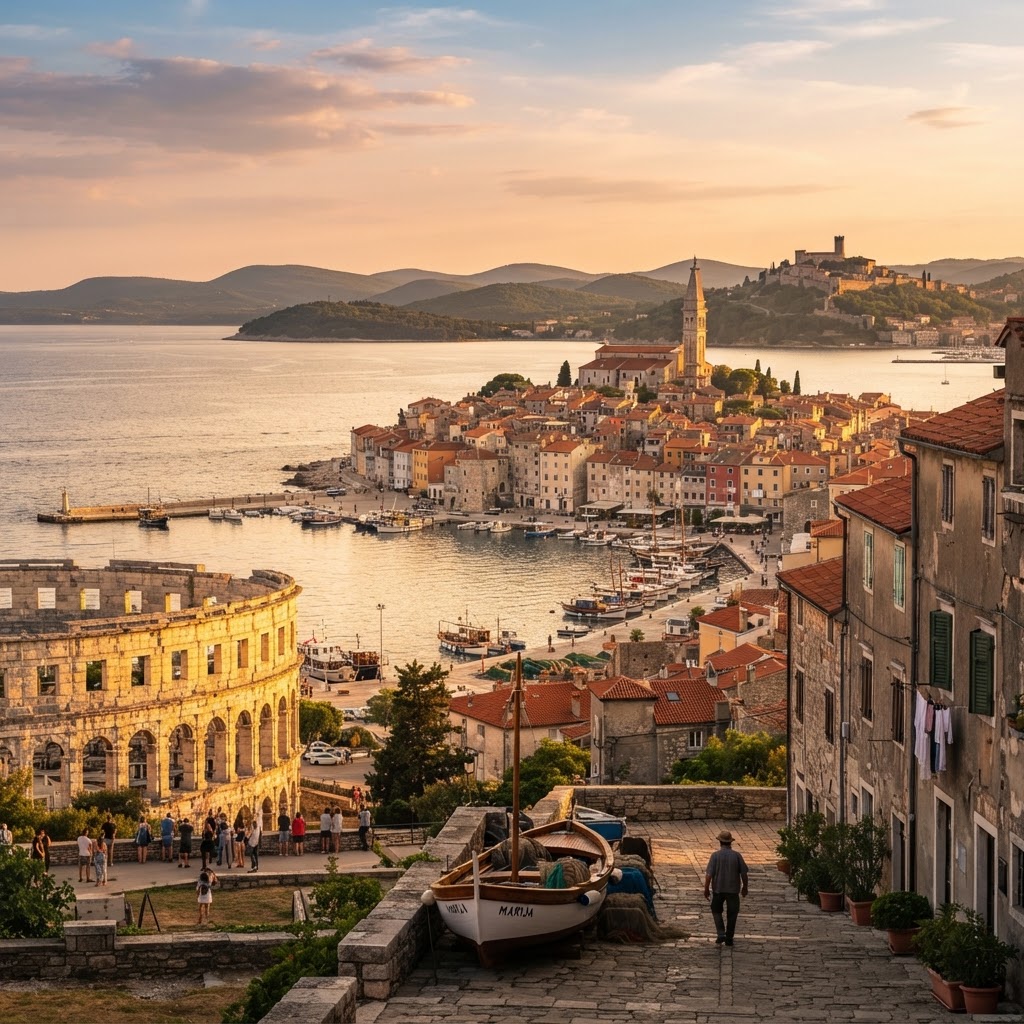
Istria is Croatia's triangular northwestern peninsula, shaped by centuries of Venetian rule and proximity to Italy. Unlike the steep limestone cliffs and cruise-ship throngs of southern Dalmatia, Istria transitions from pastel harbor towns like Rovinj and Roman relics in Pula to an interior of oak forests, terraced olive groves, and medieval hill towns like Grožnjan and Motovun. It is an unhurried, culinary-driven region that rewards travelers who rent a car, linger over cold-pressed oils and wild truffles, and divide their days between Adriatic swims and inland wine cellars.
5 to 6 days
September to early October
Build your own trip with these prebuilt itineraries
Each one is a tested, day-by-day plan for Istria — start here, then make it yours.
7 Days in Istria: Rugged Peninsula and Coastal Escapes in Istria
Active and leisurely outdoor exploration combining Kamenjak cliff jumping and secluded pebble coves with historic Poreč and southern coastal trails
5 Days in Istria: The Coastal and Hilltop Road Trip in Istria
First-time overview covering Roman landmarks in Pula, Venetian harbor strolls in Rovinj, and iconic medieval hill towns like Motovun and Grožnjan
4 Days in Istria: Truffles, Olive Oil, and Wine Country in Istria
Food and wine immersion dedicated to the Mirna River Valley, agroturizam estates, white truffle hunting, olive mills, and boutique inland stays
Go for a nuanced cross between coastal Italy and Central European Croatia without the relentless party boats of the Dalmatian islands. You can explore the remarkably preserved first-century Roman Arena in Pula in the morning, taste indigenous Malvazija Istarska in a family-run cantina by afternoon, and swim off the limestone rocks at Punta Corrente at sunset. Istria offers exceptional olive oils, world-class black and white truffles, and walkable historic cores that maintain an authentic, lived-in feel outside the peak July–August holiday wave.
Where to stay
Getting there
Getting around
Food & drink
What it costs
Things to do
Book tours & tickets in IstriaSkip it if
Skip Istria if your heart is set on broad white sand beaches, island-hopping on ferries, or high-energy late-night superclubs like those in Hvar or Ibiza. It is also not ideal for car-free backpackers relying strictly on regional trains and fast transit networks.
When to go
You skip the stifling summer camper-van traffic on the Istrian Y motorway while the Adriatic is still warm enough for swimming and the premier white truffle season begins inland.
Peak (July to August)
High heat, dense harbor crowds, and tight parking lots around Rovinj. Best for energetic beach scenes, but you must reserve coastal restaurants weeks ahead.
Shoulder (May to June & September to October)
The sweet spot. May to June brings wild asparagus and empty roads; September to October delivers grape harvests, pleasant sea temperatures, and fresh white truffles.
Low (November to April)
Quiet and atmospheric inland for winter truffle hunting, but coastal resort towns like Rovinj and Poreč see substantial seasonal closures of hotels and restaurants.
Neighborhoods
Where you stay shapes the trip. Here's how to think about it.
Rovinj Old Town
Car-free Venetian harbor with slick cobblestones, pastel facades, and steep coastal alleys.
Best for:Romantic getaways, first-timers, seafood lovers
Don't miss:The climb to the Church of St. Euphemia for sea views, followed by cliffside sunset drinks at Valentino or La Puntulina.
Pula Amphitheatre & Forum
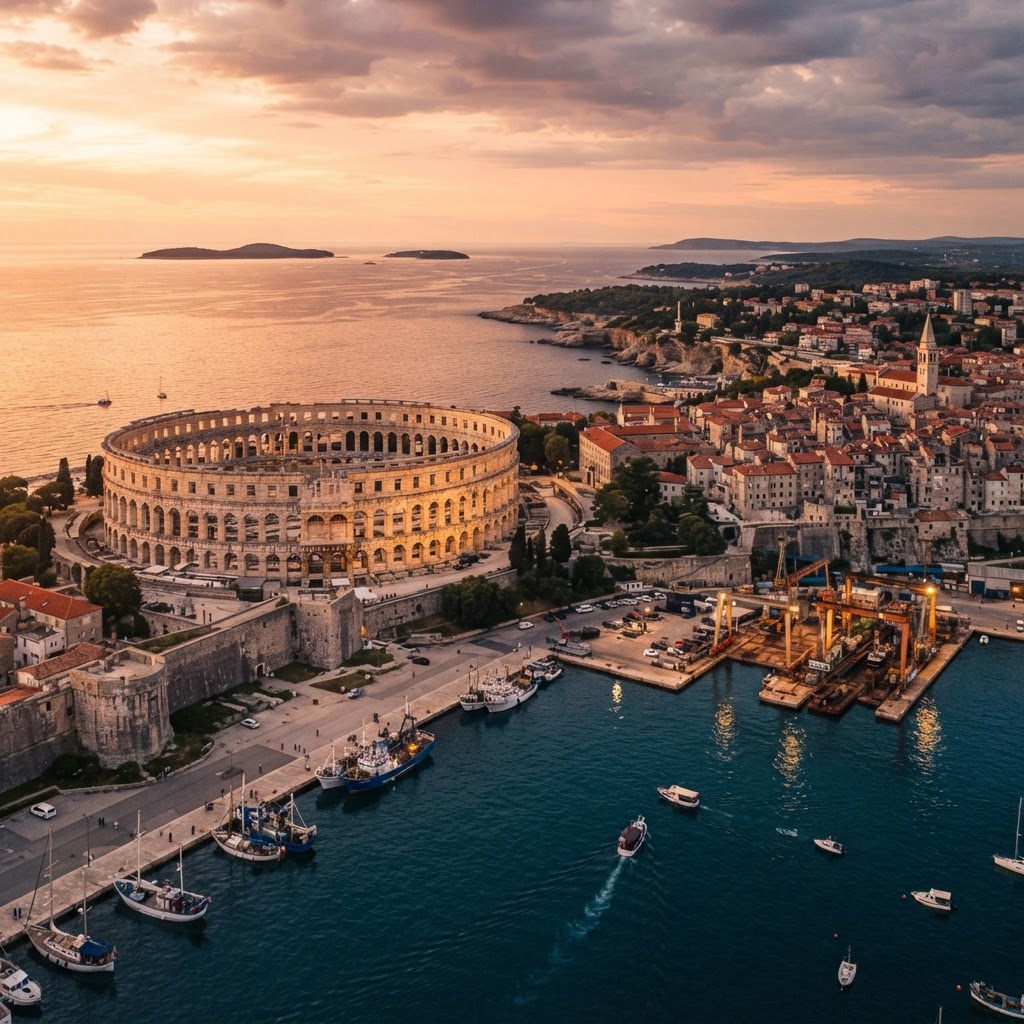
Working port grit mixed with monumental, intact Roman antiquity and bustling cafe terraces.
Best for:History buffs, transit switch points, short cultural layovers
Don't miss:The underground galleries of the Roman Arena where gladiatorial cages and ancient olive oil amphorae are displayed.
Motovun & Mirna Valley
Misty medieval ramparts towering over oak forests, truffle hunting grounds, and terraced vineyards.
Best for:Food and wine enthusiasts, scenic road-trippers, quiet escapes
Don't miss:Walking the upper town fortress walls looking over the Mirna Valley, followed by fuži with fresh truffles in nearby Livade.
Grožnjan Artists' Village
Hilltop enclave of stone ateliers, open classical music academies, and bohemian quiet.
Best for:Art buyers, quiet afternoons away from coast crowds, photography
Don't miss:Browsing open pottery and painting studios along Ulica Grisia during the summer jazz festival afternoons.
Poreč Historic Core
Classical Roman street grid packed with seaside family resorts and Byzantine treasures.
Best for:Architecture admirers, cycling staging, resort-style stays
Don't miss:The shimmering 6th-century golden wall mosaics inside the UNESCO-listed Euphrasian Basilica complex.
Premantura & Cape Kamenjak
Wild southern headland of dusty gravel tracks, rugged limestone slabs, and clear turquoise coves.
Best for:Cliff jumpers, active travelers, snorkelers
Don't miss:Finding a flat limestone slab near Mala Kolumbarica beach and grabbing a cold drink at the eccentric, bamboo-shaded Safari Bar.
Destination intelligence
Updated 9/14/2026The structured record we plan every Istria itinerary from.
Walkability
Town centers like Rovinj, Pula, and Poreč are entirely walkable on foot, but the peninsula requires a car to navigate between towns.
Transit quality
Limited. Coastal towns have standard regional bus lines, but inland villages and coastal parks lack reliable public transit.
Car needed
Yes, highly recommended. You miss the vineyards, hill towns, and nature reserves without your own vehicle.
Ideal duration
5 to 6 days
Minimum useful
3 days
Peak season
July to August (warm sea temperatures, bustling harbor scenes, heavy traffic, and crowded parking)
Shoulder season
May to June and September to October (optimal temperatures, fall truffle season, grape harvest, and pleasant swimming in early autumn)
Low season
November to April (cool, damp weather, seasonal seaside closures, though quiet inland truffle hunts continue in late autumn)
Best for
Common mistakes
- Visiting without a rental car and getting stranded strictly in coastal towns without seeing the Mirna Valley.
- Expecting sandy beaches; Istria's shoreline consists primarily of pebble coves, concrete platforms, and rocky limestone ledges requiring water shoes.
- Underestimating summer border crossing delays when driving in from Slovenia or Italy during July and August.
- Focusing entirely on the coast and skipping interior gems like Grožnjan, Oprtalj, and Motovun.
- Booking a hotel in Rovinj Old Town without confirming how luggage transfer and vehicle parking work outside the pedestrian zone.
Best nearby
How to plan it
- Base yourself in Rovinj for romantic coastal evening walks, or outside Bale/Buje on an agroturizam estate if you want immediate vineyard peace.
- Combine Grožnjan and Motovun into a single inland road-trip day, stopping for a truffle lunch in Livade along the Mirna River.
- Do not attempt to drive into Pula during peak morning commuter hours if you only want a quick look at the Roman Arena; visit late afternoon instead.
- Rent gravel-ready bikes to cycle a section of the historic Parenzana railway track between Buje and Motovun rather than driving the whole corridor.
- Pair a morning walk around the Roman forum in Pula with an afternoon swimming off the flat rocks of Cape Kamenjak at the southern tip.
Questions
More in Croatia
Trogir, Croatia
Croatia
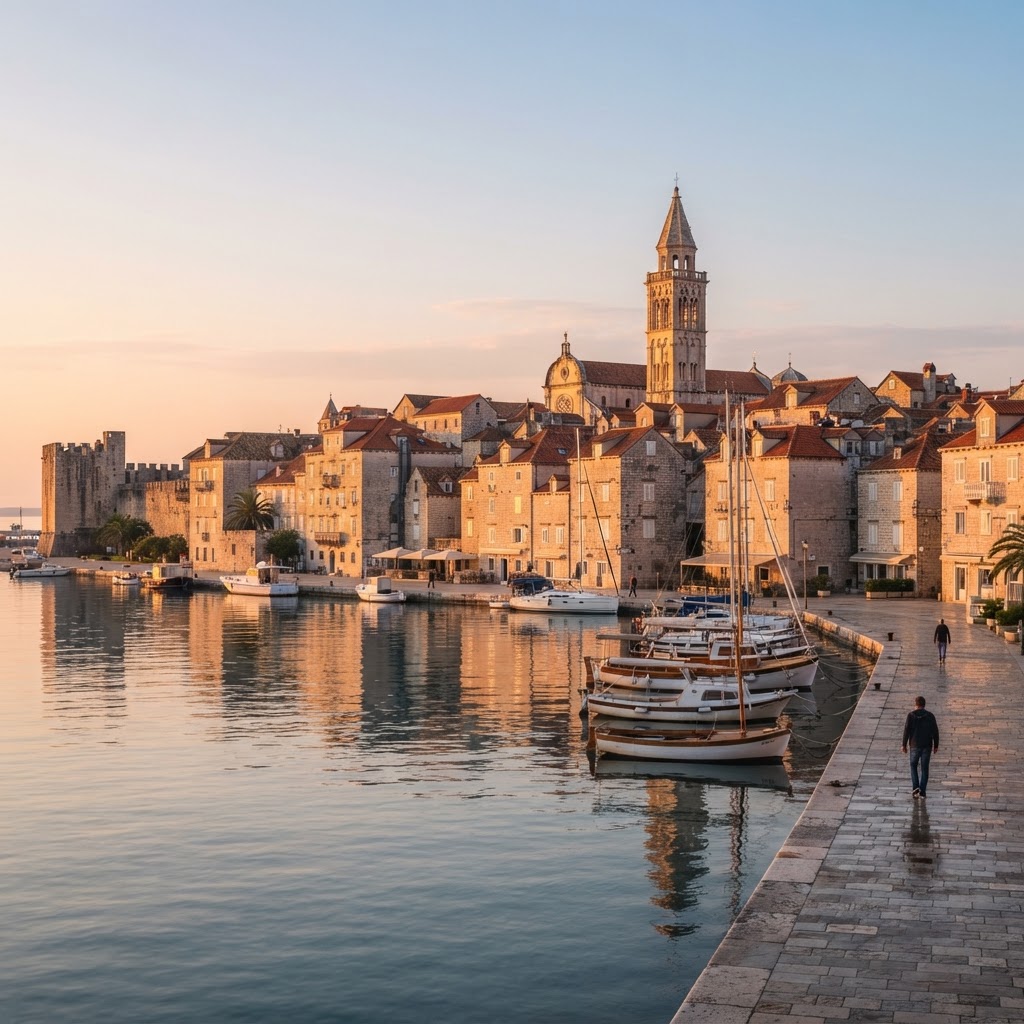
A compact UNESCO-listed island fortress with Venetian stone, quiet mornings, and easy Adriatic access.
Pula, Croatia
Croatia
Roman engineering, rugged coves, and working-port authenticity anchor Istria's southern tip.
Šibenik
Croatia
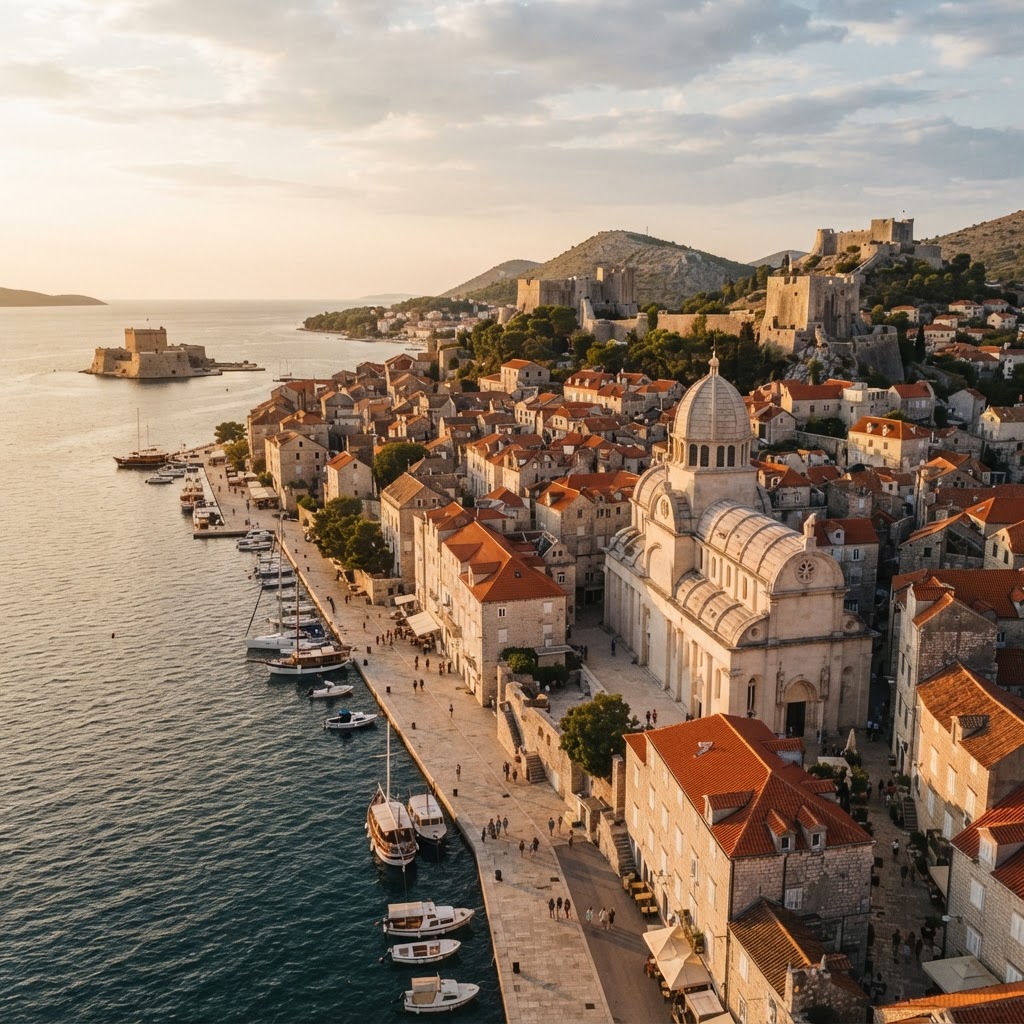
Two UNESCO monuments, four Venetian fortresses, and zero cruise ship throngs.
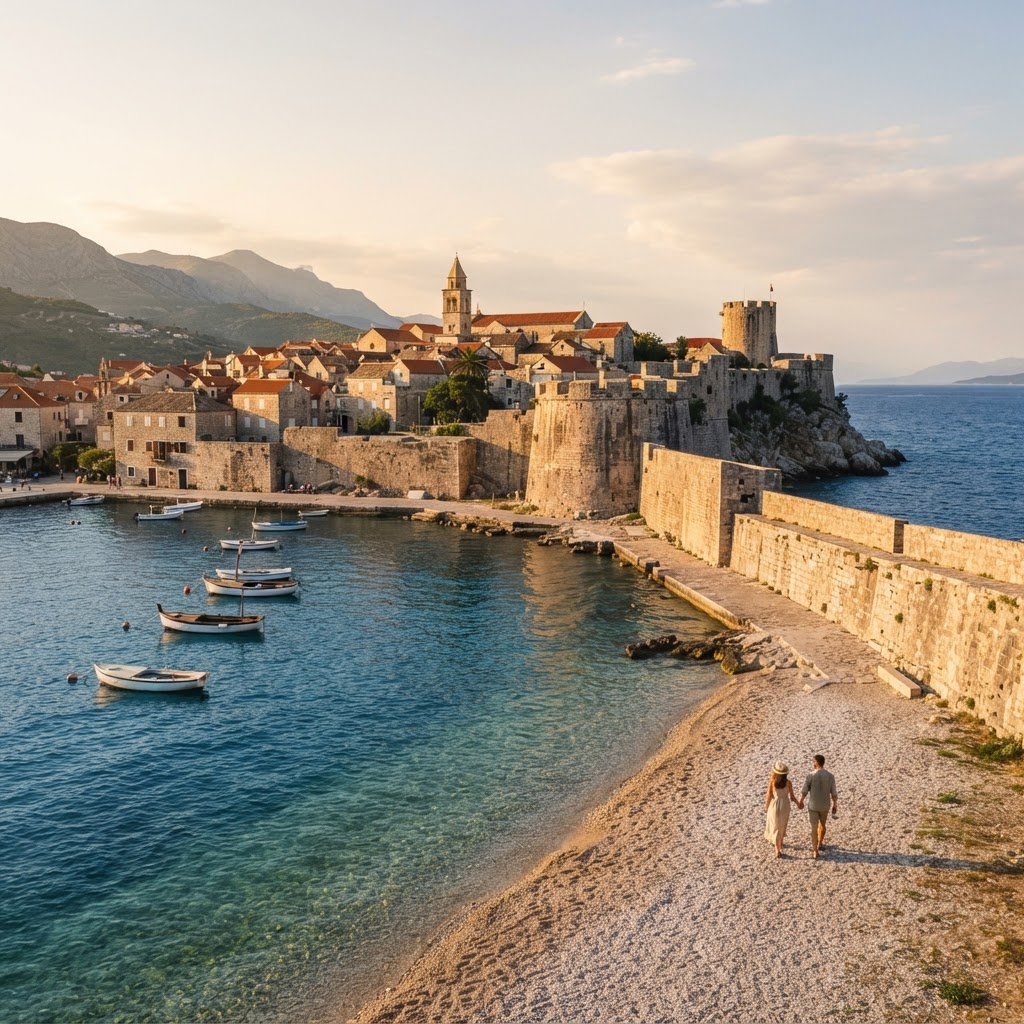
Korčula, Croatia
Croatia
Venetian stone ramparts, hyper-local indigenous wines, and secluded pebble coves without Hvar's party scene.
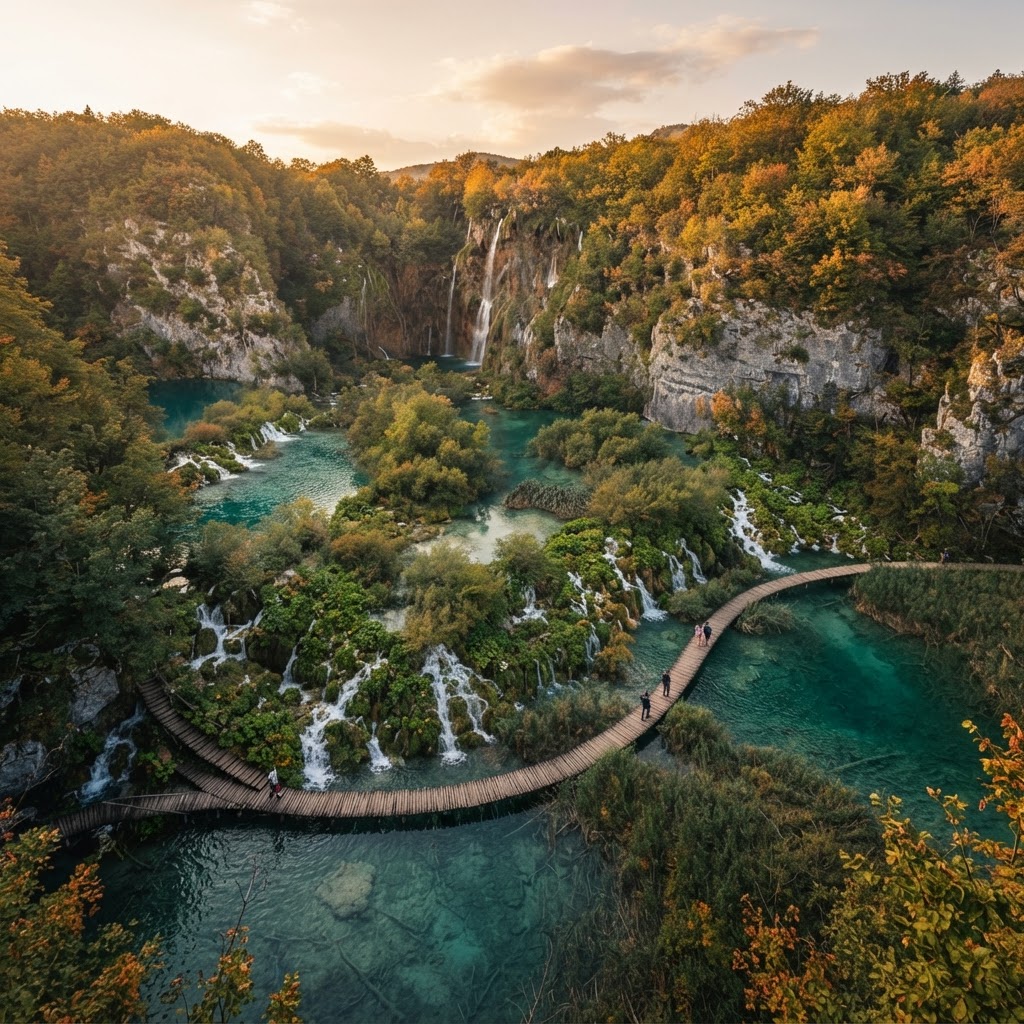
Plitvice Lakes
Croatia
Sixteen stepped travertine basins, cascading falls, and raw karst landscape.
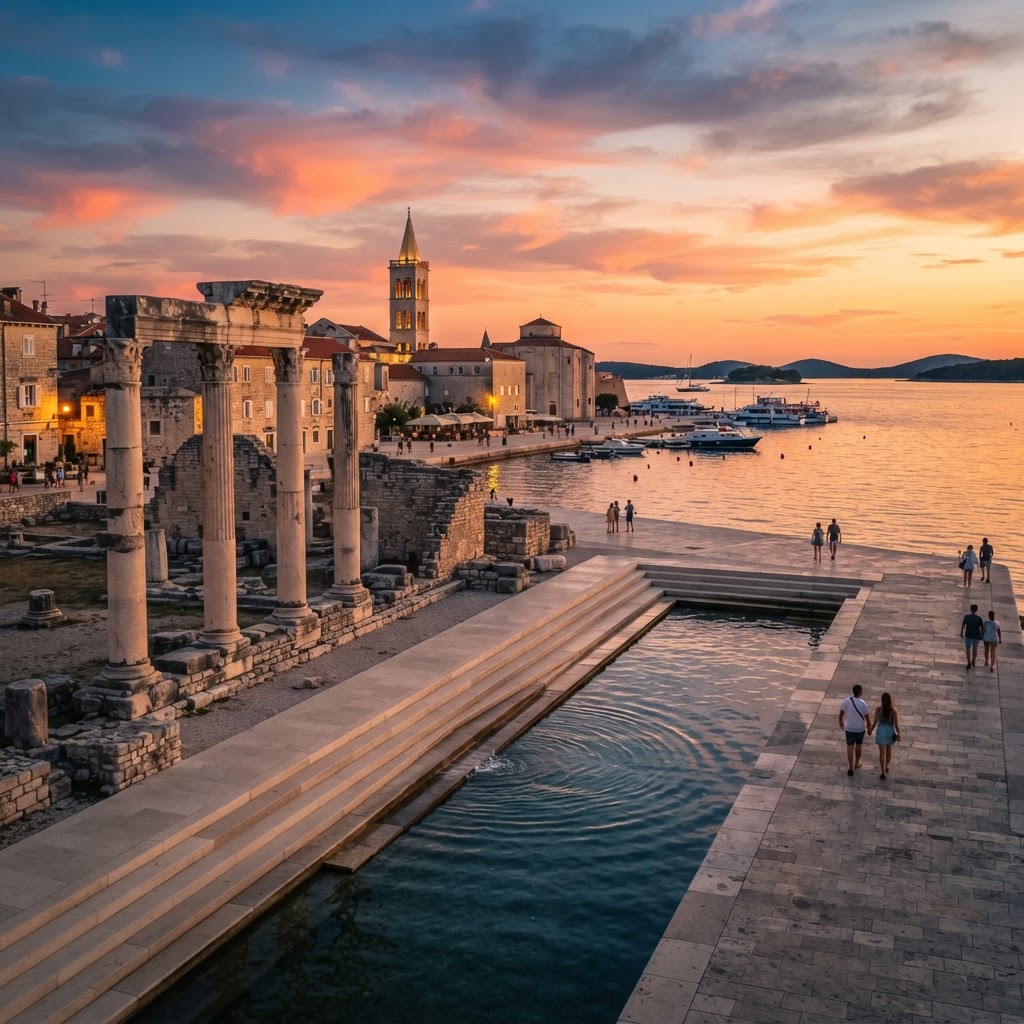
Zadar, Croatia
Croatia
Roman ruins, hypnotic waterfront soundscapes, and northern Dalmatia's premier coastal base.
Readymade itineraries
Start from a tested template — then make it yours.
Ready to book
Lock in your Istria trip
Everything in one place. We may earn a small commission — it never costs you more.
Plan a trip to Istria
Pick a length and we'll build a day-by-day plan around how you travel — neighborhoods clustered, budget-aware, and editable.
Get better at planning trips like this
Occasional notes on planning smarter — no spam, unsubscribe anytime.
Plan a trip to Istria
Turn this guide into a day-by-day plan built around your pace, your group, and your budget.
Build my Istria trip