
Portugal
Sintra Itinerary: How Many Days + Sample Plans
A fog-wrapped mountain sanctuary of Romanticist estates, mossy ramparts, and microclimates
Traveler rating
Loved by architecture and garden enthusiasts who appreciate botanical estates and eccentric revival.
Plan & book
Sort your Sintra trip in one place.
We point you to the booking tools we'd actually use — live prices, no markup. Or let us build the day-by-day plan around you first, then book.
Pick your trip length
How many days do you need in Sintra?
Each of these opens a full day-by-day plan you can make your own.
- 2 days — Two days — the essentials, no rushing.
- 3 days — Three days — the icons plus one neighborhood.
- 4 days — Four days — a full city without sprinting.
- 5 days — Five days — room for a day trip.
- 7 days — A week — the city at a human pace.
- With Kids trip — Shorter days, earlier dinners, what to skip.
- For Couples trip — Two-person pacing with evenings built in.
- Solo trip — A plan that works well on your own.
- Food trip — Meals and markets as the anchors.
- Outdoors trip — Nature, walks and open air.
- Culture trip — History, museums and the streets around them.
Perched in the granite folds of the Serra de Sintra, this royal mountain enclave has long served as Lisbon's cool, mist-cloaked summer retreat. Between the vivid Romanticist spires of Pena, the esoteric grottos of Quinta da Regaleira, and the botanical marvels of Monserrate, Sintra is an architectural showcase woven into dense subtropical forest. However, its proximity to Lisbon makes it vulnerable to severe day-tripper gridlock; experiencing its true stillness requires sleeping in town to explore outside the commuter crush.
2 days (1 to 2 nights)
Best time
Mid-April to late May or October, for ideal hiking weather, vibrant botanical blooms, and dramatically thinner queues.
Build your own trip with these prebuilt itineraries
Each one is a tested, day-by-day plan for Sintra — start here, then make it yours.
1 Day Essential Sintra Highlights in Sintra
Timed-entry sprint covering Pena Palace, the Moorish Castle, and Quinta da Regaleira without transit snarls
2 Days Romantic Estates & Historic Quintas in Sintra
Immersive overnight stay exploring lush botanical parks, evening town quietude, and Monserrate Palace
3 Days Serra & Coast Trail Trekking in Sintra
Active hiking across the forested Sintra ridge, Convent of the Capuchos, and wild Atlantic coastal paths
Sintra delivers a density of distinct architectural visions rarely seen in one landscape: 10th-century Moorish battlements, Gothic-Manueline royal apartments, 19th-century eclecticism, and Masonically inspired initiation wells, all enveloped in damp Atlantic mist and ancient pine groves. Staying overnight unlocks silent morning strolls along cobblestone alleys and unhurried visits to the outer estates while the mass tour buses remain stuck on Lisbon's beltway.
Where to stay
Getting there
Getting around
Food & drink
What it costs
Things to do
Book tours & tickets in SintraSkip it if
Skip Sintra if your itinerary allows only two days for Lisbon itself, as burning a full day in transit queues weakens your capital experience. Travelers with significant mobility constraints should approach with caution, as high curbs, cobblestones, and sheer inclines make walking difficult, and hop-on transit can require long standing queues. If hyper-manicured, crowded tourist circuits trigger frustration, spend your day trip instead in coastal Cascais or medieval Óbidos.
When to go
Summer brings punishing tour-bus gridlock, suffocating queues at Pena Palace, and humid afternoon heat along the mountain trails. Winter is tranquil and atmospheric, but dense mountain fog frequently wipes out coastal views and prolonged Atlantic rain makes mossy stone staircases slick.
Peak (June–September)
Long daylight and lively evenings, but severe vehicular gridlock, packed shuttle buses, and advance-sold time slots at major monuments.
Shoulder (April–May & October)
The prime window: pleasant temperatures for steep hillside walking, lush estate gardens at their peak, and manageable morning lines.
Low (November–March)
Eerie, quiet, and mystical with no ticket lines, though frequent chilly mists, shorter days, and damp conditions require waterproof gear.
Neighborhoods
Where you stay shapes the trip. Here's how to think about it.
Sintra Vila (Centro Histórico)
Cobblestoned pedestrian maze of pastel townhouses, traditional pastelarias, and steep alleys clustered beneath the National Palace.
Best for:First-timers, dining, and travelers without a car who want immediate access to evening restaurants.
Don't miss:Queijadas and travesseiros warm from the ovens at Casa Piriquita on Rua Padarias.
Estefânia
A grounded, residential nineteenth-century quarter framing the Sintra railway station, lined with municipal parks, authentic tascas, and modern bakeries.
Best for:Transit-focused travelers, budget seekers, and visitors arriving late by rail who want to dodge steep hill climbs with luggage.
Don't miss:The relaxed outdoor terrace dining along Avenida Heliodoro Salgado, well away from tourist markups.
São Pedro de Sintra
A quiet, leafy hilltop hamlet known for antique dealers, open-air squares, and serious regional dining.
Best for:Food-focused travelers, second-time visitors, and those seeking a quieter, village-like pace.
Don't miss:The sprawling bi-monthly Feira de São Pedro market if visiting on the second or fourth Sunday of the month.
Seteais & Monserrate Corridor
A secluded, aristocratic valley corridor defined by winding forested roads, subtropical gardens, and sprawling nineteenth-century palatial estates.
Best for:Luxury travelers, honeymooners, and garden lovers wanting quiet nights immersed in nature.
Don't miss:The panoramic neoclassical archway of Tivoli Palácio de Seteais looking straight out to the Atlantic horizon.
Destination intelligence
Updated 10/6/2026The structured record we plan every Sintra itinerary from.
Walkability
Moderate within individual districts, very strenuous between sights due to severe mountain grades and cobblestones.
Transit quality
Moderate: reliable commuter rail from Lisbon, but local buses (434/435) suffer severe seasonal congestion.
Car needed
Strictly no: personal vehicles are barred from monument access roads and create logistical headaches.
Ideal duration
2 days (1 to 2 nights)
Minimum useful
1 full day (early morning to sunset)
Peak season
June through September: long daylight hours and warm weather, but severe crowding, long queues, and midday gridlock.
Shoulder season
April to May and October: the sweet spot with lush green foliage, blooming flowers, mild hiking temperatures, and manageable crowds.
Low season
November through February: cold, humid, and frequently enveloped in dense fog or rain, but serene with virtually no ticket lines.
Best for
Common mistakes
- Treating Sintra as a generic 4-hour Lisbon afternoon excursion and trying to cram four estates into one frantic visit.
- Renting a car and getting trapped in one-way mountain loops where driving to major monuments is legally barred.
- Buying un-timed entry tickets to Pena Palace on arrival, resulting in sold-out slots or multi-hour queues in exposed mountain weather.
- Underestimating the microclimate; Sintra is consistently 3 to 6°C colder, windier, and foggier than downtown Lisbon, requiring a warm layer or waterproof shell even in July.
- Assuming sites are adjacent on a map; steep vertical climbs turn a 1-kilometer walk between the town centre and Pena Palace into an exhausting 45-minute mountaineering trek.
Best nearby
Deeper country context: Sintra in the Portugal Field Guide.
See what a trip to Portugal actually costs. Travel Budget Co.
How to plan it
- Book the earliest 09:00 or 09:30 timed ticket for Pena Palace, take an early taxi up the mountain before the 434 tourist bus route fills, and explore the terrace grounds before day-tripper coaches arrive from Lisbon around 10:30.
- Never attempt more than two major estate interiors in a single day; pair one high-elevation sight (Pena or Moorish Castle) with one lower-valley estate (Quinta da Regaleira or Monserrate) to avoid palace burnout and transit delays.
- Base yourself in Estefânia near the train station if you are traveling with rolling suitcases, as dragging luggage over the high-grade cobblestones of Sintra Vila is exhausting.
- If coastal scenery appeals, take the historic seasonal tram or local 1254 bus from Sintra out to the white-washed clifftop village of Azenhas do Mar and Praia das Maçãs on your second afternoon.
- Pack a light windbreaker and waterproof layer regardless of the forecast in Lisbon; Sintra's microclimate traps Atlantic ocean fog, often dropping temperatures 5 to 8 degrees Celsius lower than the capital.
Questions
More in Portugal
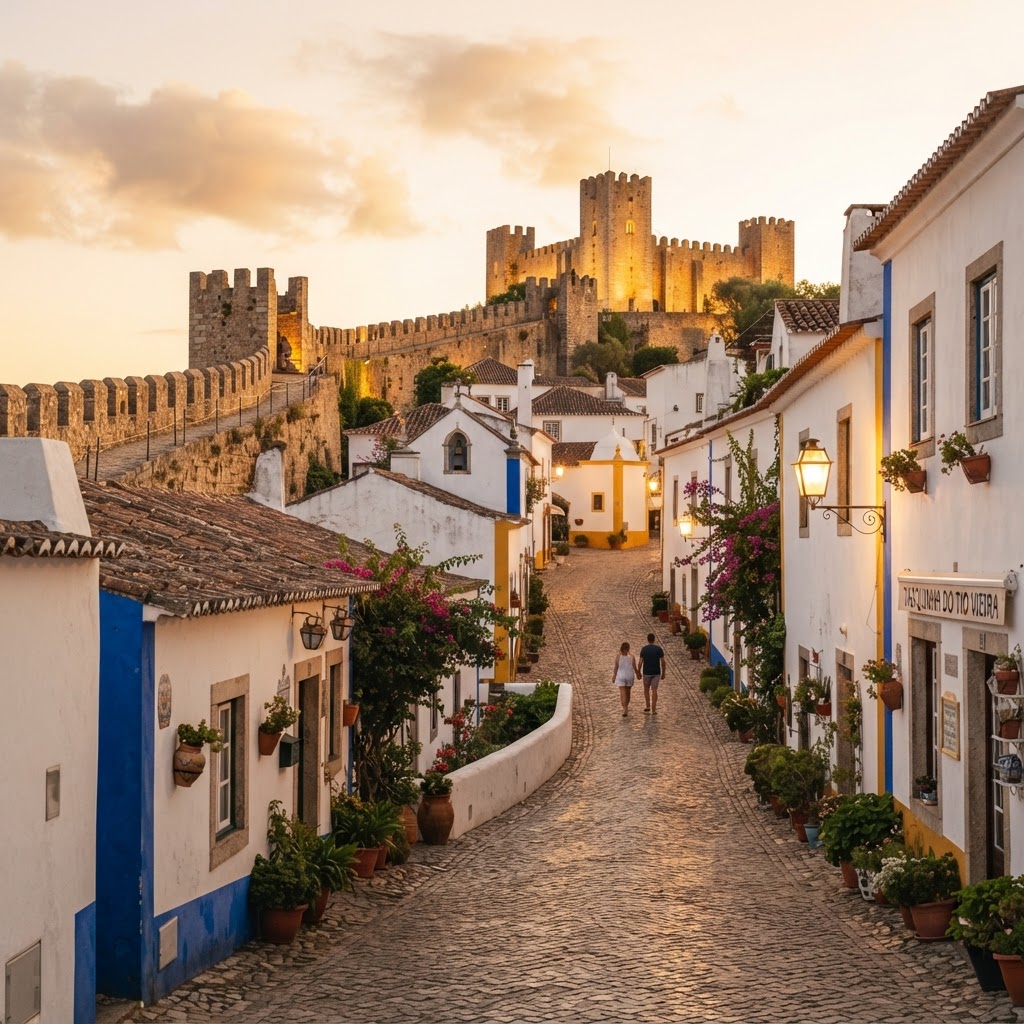
Óbidos, Portugal
Portugal
Ramparts, whitewashed lanes, and quiet evenings after the tour coaches depart
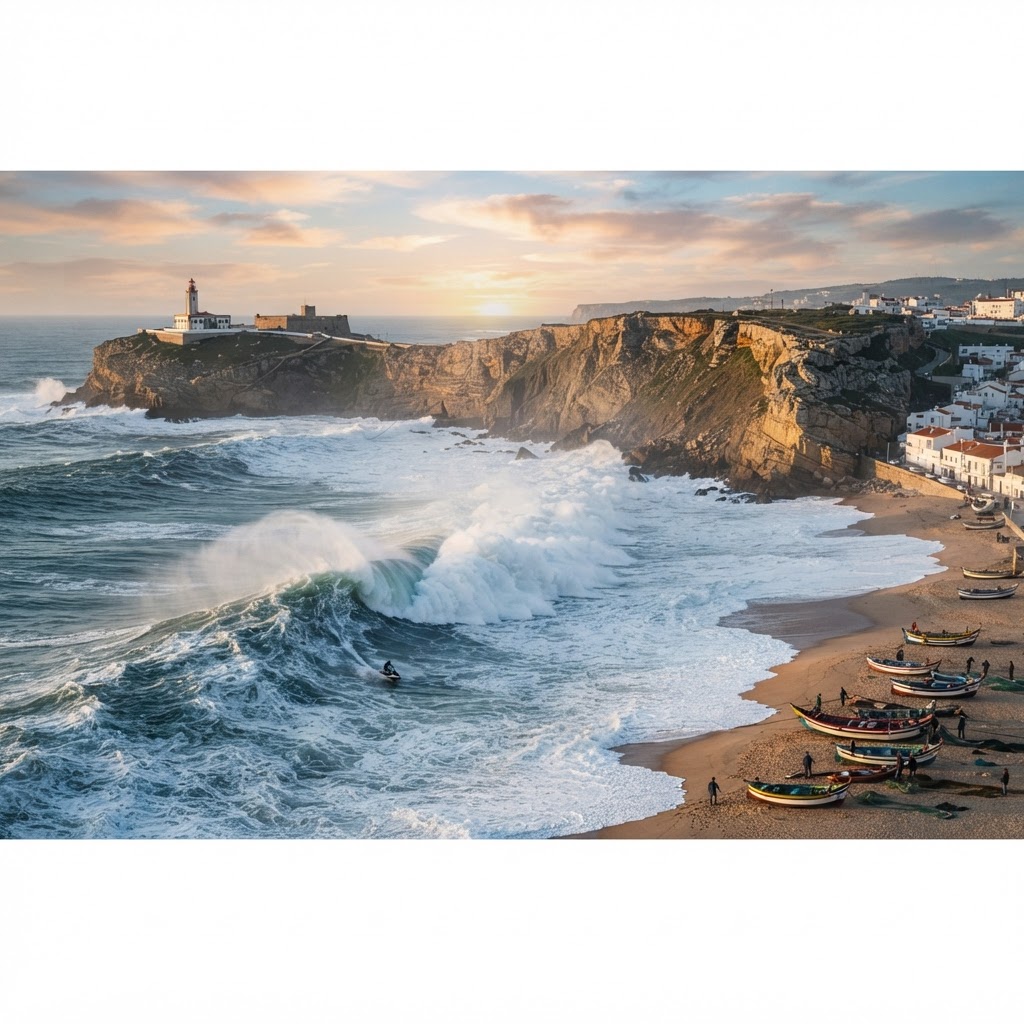
Nazaré, Portugal
Portugal
Colossal Atlantic surf, dramatic clifftops, and enduring maritime traditions
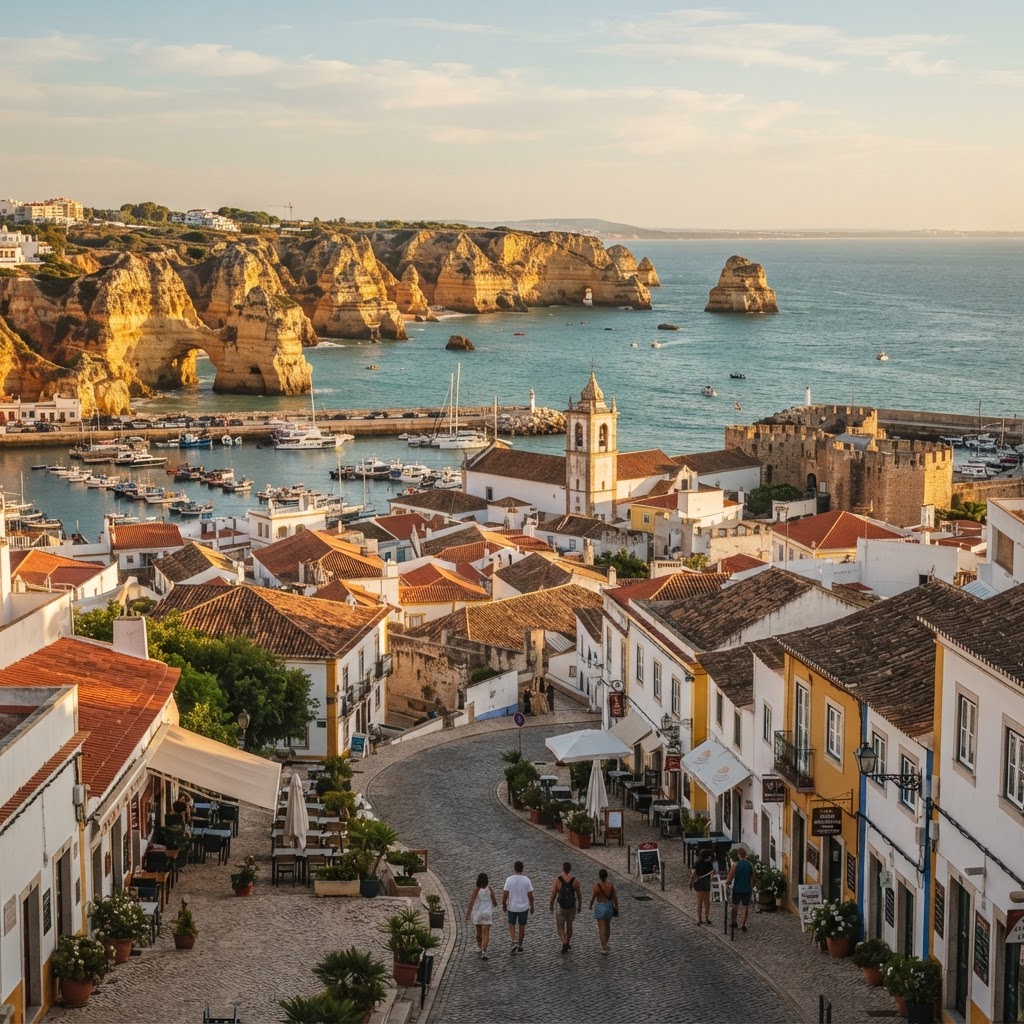
Lagos, Portugal
Portugal
Golden sea stacks, maritime history, and the Algarve’s most walkable coastal hub.
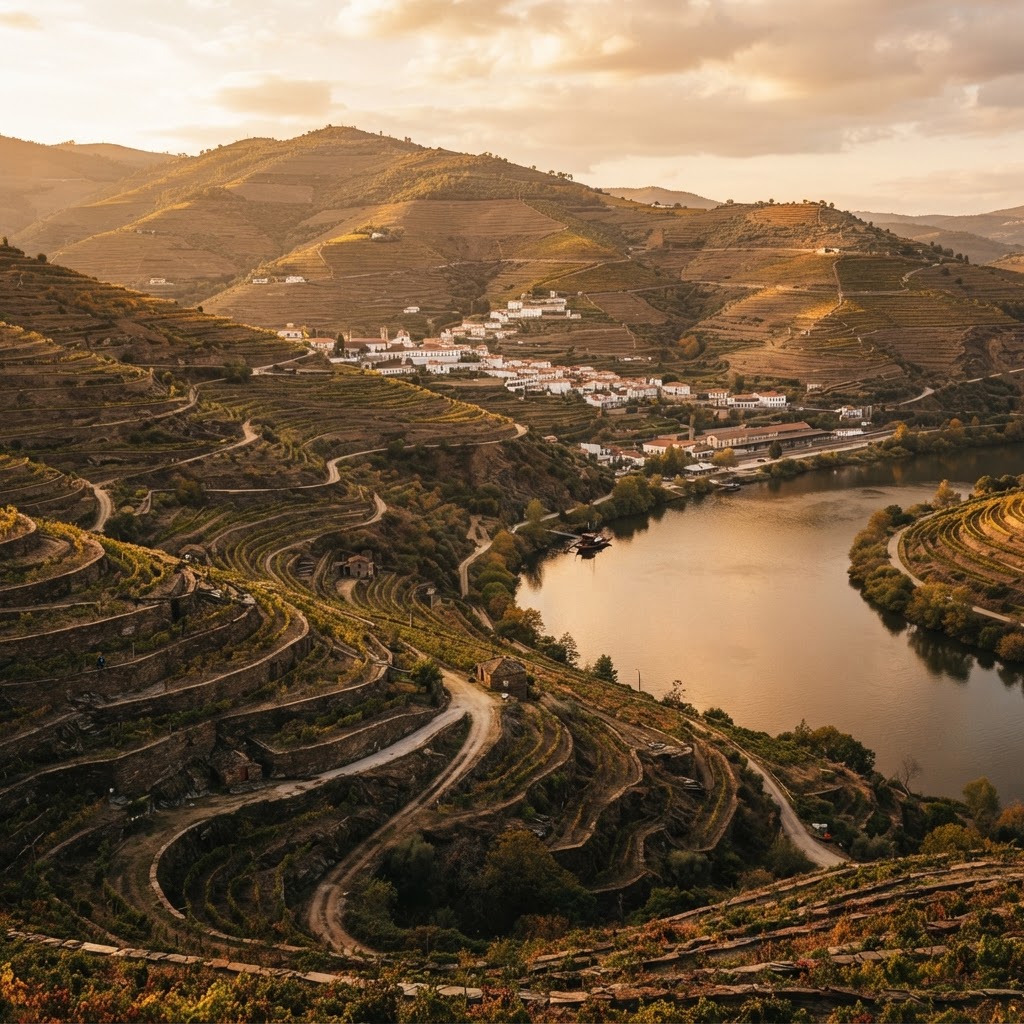
Douro Valley
Portugal
Carved slate terraces, old-vine field blends, and slow river rhythm.
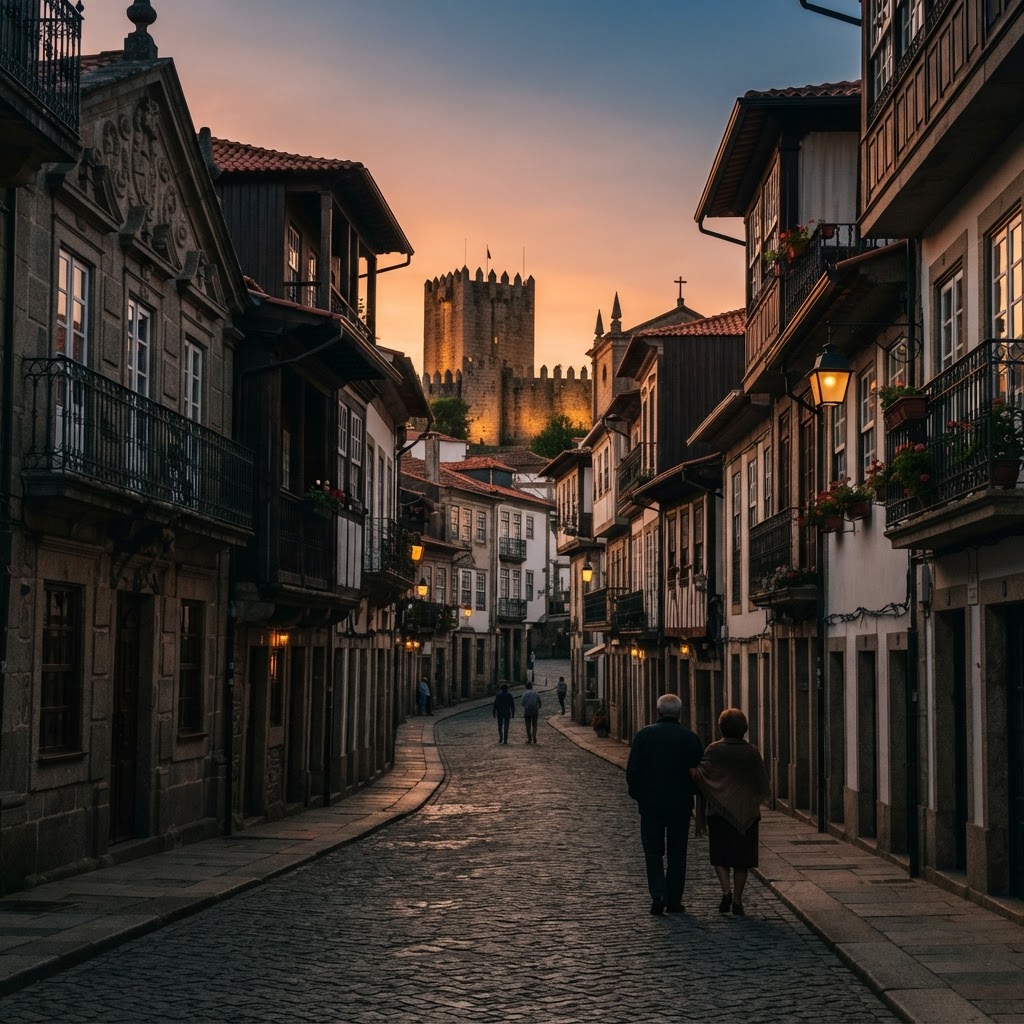
Guimarães, Portugal
Portugal
The granite-and-timber cradle of Portuguese nationhood, best experienced when day-trippers depart.
Readymade itineraries
Start from a tested template — then make it yours.
Ready to book
Lock in your Sintra trip
Everything in one place. We may earn a small commission — it never costs you more.
Plan a trip to Sintra
Pick a length and we'll build a day-by-day plan around how you travel — neighborhoods clustered, budget-aware, and editable.
Get better at planning trips like this
Occasional notes on planning smarter — no spam, unsubscribe anytime.
Plan a trip to Sintra
Turn this guide into a day-by-day plan built around your pace, your group, and your budget.
Build my Sintra trip