
Portugal
Óbidos, Portugal
Ramparts, whitewashed lanes, and quiet evenings after the tour coaches depart
Plan & book
Sort your Óbidos, Portugal trip in one place.
We point you to the booking tools we'd actually use — live prices, no markup. Or let us build the day-by-day plan around you first, then book.
Perched inside intact 14th-century crenellated stone walls, Óbidos was traditionally given by Portuguese kings to their queens as a wedding gift. By midday, its main thoroughfare Rua Direita fills with day-trippers sipping ginjinha from chocolate cups. Stay overnight, however, and the village transforms: lantern-lit cobblestones, atmospheric courtyards, and silent perimeter walks along the ramparts above the surrounding vineyards.
24 hours (1 night)
Best time
Mid-May to June or September to mid-October for ideal walking weather and evenings free of peak summer congestion.
Build your own trip with these prebuilt itineraries
Each one is a tested, day-by-day plan for Óbidos, Portugal — start here, then make it yours.
3 Days in Óbidos: Fortified Base & Silver Coast Road Trip in Óbidos
Using Óbidos as a scenic rental car base to explore the nearby lagoon, Alcobaça, and coastal cliffs
2 Days in Óbidos: UNESCO Literature & Medieval Heritage in Óbidos
In-depth cultural and literary focus exploring historic bookshops, churches, artisan ginjinha, and local history
1 Day in Óbidos: The Classic Medieval Overnight in Óbidos
Romantic overnight escape enjoying quiet dawn and dusk walks along the ramparts away from day-trippers
Óbidos offers one of the best-preserved medieval fortifications in Western Europe, but its real magic belongs exclusively to evening and early-morning travelers. Sleeping inside the walls gives you uninterrupted access to two kilometers of battlements and quiet bougainvillea-framed alleys long after the tour buses return to Lisbon.
Where to stay
Getting there
Getting around
Food & drink
What it costs
Things to do
Book tours & tickets in Óbidos, PortugalSkip it if
Travelers with limited mobility, wheelchair users, or families reliant on strollers, due to continuous rough cobblestones, steep stairways, and sheer ramparts lacking guardrails. Also skip if you dislike touristy gift shops and cannot commit to staying overnight.
When to go
Summer brings punishing midday coach crowds along Rua Direita and wall-to-wall festival stages in July and December. Spring and early autumn provide mild temperatures for climbing stone ramparts without handrails and allow you to wander quiet, empty streets by 6:00 PM.
Peak (July–August & December)
Sweltering midsummer heat and crowded narrow lanes during the July Medieval Market and December Christmas Village; book accommodation months ahead.
Shoulder (April–June & September–October)
Warm, sunny days and cool nights, optimal for walking the 1.5 km wall circuit and exploring literary bookshops without crowds.
Low (November–March, ex-holidays)
Crisp air and occasional coastal rains; cobblestones become slick, but you will share the lantern-lit alleys with almost no one.
Neighborhoods
Where you stay shapes the trip. Here's how to think about it.
Intramuros (Inside the Citadel)
Historic, enclosed, and intensely romantic after sunset, but dense with tourist coaches along the central corridor midday.
Best for:First-timers, romantic getaways, and overnight visitors who want immediate evening access to lantern-lit alleys.
Don't miss:Igreja de Santiago, a 12th-century church repurposed into an atmospheric multi-level bookstore at the foot of the castle.
West Rampart Quarter (Rua Nova & Rua da Talhada)
Quiet, residential, and steep, flanked by whitewashed cottages draped in bougainvillea and undisturbed by tour groups.
Best for:Solitude seekers, photographers, and travelers ducking the noon crowds.
Don't miss:The quiet stone stairway up to the western ramparts near Rua da Talhada for uninterrupted views across the Oeste valley.
Arrabalde (Outside the South Gate)
Practical, spacious, and relaxed, with easy road access, free municipal parking, and everyday Portuguese bakeries.
Best for:Road-trippers with heavy luggage, travelers with mobility challenges, and visitors driving rental cars.
Don't miss:The 16th-century Aqueduto de Usseira spanning the approach just outside Porta da Vila.
Lagoa de Óbidos & Foz do Arelho
Breezy coastal calm where Portugal's largest saltwater lagoon meets Atlantic breakers, 15 minutes drive northwest.
Best for:Active outdoor travelers, paddleboarders, and seafood dinners away from stone ramparts.
Don't miss:Eating fresh caldeirada (fish stew) at the lagoon-side tavernas along Avenida do Mar.
Destination intelligence
Updated 9/14/2026The structured record we plan every Óbidos, Portugal itinerary from.
Walkability
High within the walls, but physically demanding due to steep cobblestone inclines and steps without handrails.
Transit quality
Moderate. Excellent direct express coach connection from Lisbon, but rural buses connecting surrounding villages and beaches are sparse.
Car needed
Not needed if simply visiting Óbidos from Lisbon by direct coach; highly recommended if using Óbidos as a base to explore Alcobaça, Batalha, and the Silver Coast.
Ideal duration
24 hours (1 night)
Minimum useful
3 to 4 hours (as an en-route transit stop)
Peak season
June through August, plus the July Medieval Market and December Christmas Village festival periods.
Shoulder season
April to May and September to October, offering pleasant walking temperatures and thinner daytime crowds.
Low season
November through February (excluding major holidays); cool, occasional rain, but virtually empty streets at dusk.
Best for
Common mistakes
- Visiting solely between 11:00 AM and 3:30 PM, when crowds peak along Rua Direita
- Taking the train from Lisbon instead of the direct 60-minute express bus
- Attempting to push strollers or wheeled luggage along the uneven cobblestones and steep wall ascents
- Walking the high castle ramparts in wet weather or flip-flops; the stones are slick and there are sheer drops without railings
- Trying to drive a rental car past the exterior municipal parking lots into the walled town center
Best nearby
See what a trip to Portugal actually costs. Travel Budget Co.
How to plan it
- Stay inside the walls overnight; experiencing the village after the 4:00 PM tour buses leave is the entire reason to visit.
- Walk the town ramparts either at 8:30 AM before the gates congest or at golden hour when the sun drops over the western agricultural plain.
- Escape the midday crush on Rua Direita by cutting immediately west into the residential lanes of Rua Nova and Rua da Talhada.
- Pair Óbidos with Batalha and Alcobaça monasteries only if you have a rental car; rural bus links between them are slow and infrequent.
- Wear footwear with heavy rubber tread; the medieval limestone cobbles have been polished glass-smooth by centuries of foot traffic.
Questions
More in Portugal

Nazaré, Portugal
Portugal
Colossal Atlantic surf, dramatic clifftops, and enduring maritime traditions

Lagos, Portugal
Portugal
Golden sea stacks, maritime history, and the Algarve’s most walkable coastal hub.

Douro Valley
Portugal
Carved slate terraces, old-vine field blends, and slow river rhythm.
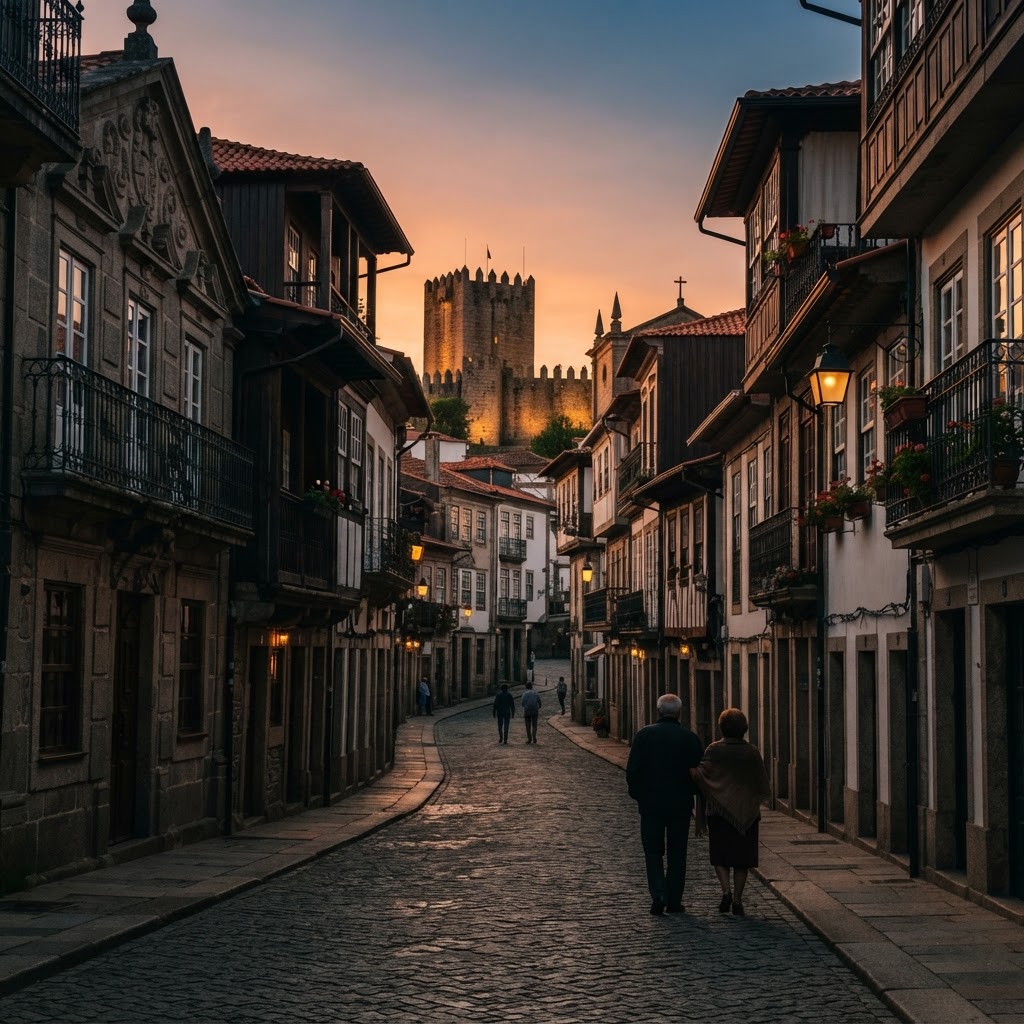
Guimarães, Portugal
Portugal
The granite-and-timber cradle of Portuguese nationhood, best experienced when day-trippers depart.
Readymade itineraries
Start from a tested template — then make it yours.
Ready to book
Lock in your Óbidos, Portugal trip
Everything in one place. We may earn a small commission — it never costs you more.
Plan a trip to Óbidos, Portugal
Pick a length and we'll build a day-by-day plan around how you travel — neighborhoods clustered, budget-aware, and editable.
Get better at planning trips like this
Occasional notes on planning smarter — no spam, unsubscribe anytime.
Plan a trip to Óbidos, Portugal
Turn this guide into a day-by-day plan built around your pace, your group, and your budget.
Build my Óbidos, Portugal trip