Cambodia
Siem Reap Itinerary: How Many Days + Sample Plans
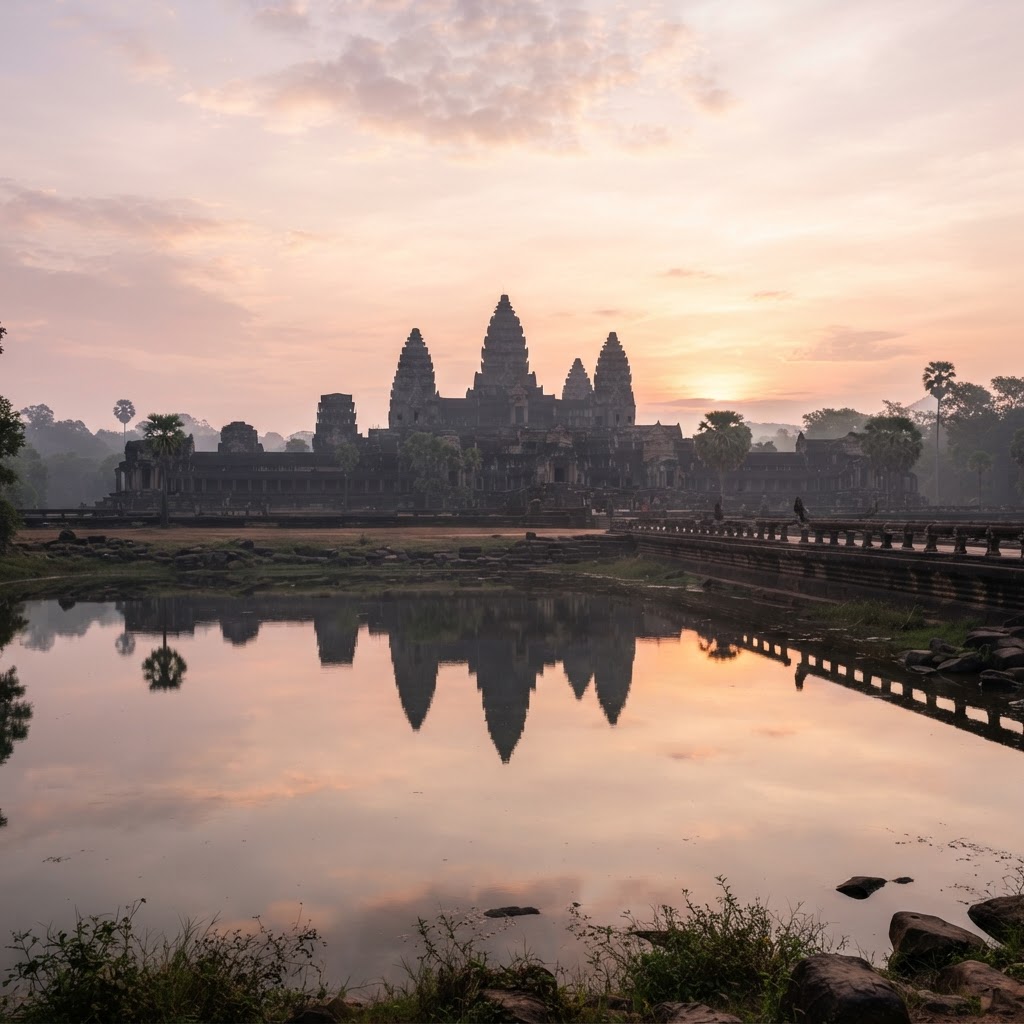
Siem Reap is Angkor Wat's town — the world's largest religious monument, and a base for a few magical days.
Traveler rating
Loved by history.
Plan & book
Sort your Siem Reap trip in one place.
We point you to the booking tools we'd actually use — live prices, no markup. Or let us build the day-by-day plan around you first, then book.
Pick your trip length
How many days do you need in Siem Reap?
Each of these opens a full day-by-day plan you can make your own.
- 2 days — Two days — the essentials, no rushing.
- 3 days — Three days — the icons plus one neighborhood.
- 4 days — Four days — a full city without sprinting.
- 5 days — Five days — room for a day trip.
- 7 days — A week — the city at a human pace.
- With Kids trip — Shorter days, earlier dinners, what to skip.
- For Couples trip — Two-person pacing with evenings built in.
- Solo trip — A plan that works well on your own.
- Food trip — Meals and markets as the anchors.
- Outdoors trip — Nature, walks and open air.
- Culture trip — History, museums and the streets around them.
Siem Reap is the gateway to Angkor — the vast Khmer temple complex that includes Angkor Wat, Bayon, and Ta Prohm, where giant trees grow through stone.
Angkor Wat at sunrise is the famous image, but the complex is enormous: a three-day pass lets you see the great temples and the quieter ones. The town itself is easy and cheap — Pub Street, night markets, and good food. A tuk-tuk driver for the day is the standard move.
It's hot year-round; the cool dry season (November–February) is the sweet spot. Go early, rest midday, and go back out in the afternoon.
2–4 days
November–February
Budget
USD 30–70 per person per day at mid-range. Angkor pass is the main cost.
Build your own trip with these prebuilt itineraries
Each one is a tested, day-by-day plan for Siem Reap — start here, then make it yours.
3 Days in Siem Reap for Angkor Wat First-Timers
3 days siem reap angkor wat first time
4 Days in Siem Reap: Angkor Deep Dive (Banteay Srei, Beng Mealea)
siem reap banteay srei beng mealea itinerary
2 Days in Siem Reap on a Budget
siem reap angkor budget itinerary
3 Days in Siem Reap with Kids (Angkor + Tonle Sap)
siem reap with kids angkor itinerary
Siem Reap is the staging ground for the Khmer Empire's colossal stone monuments, from the towering lotus towers of Angkor Wat to the jungle-swallowed root walls of Ta Prohm. Beyond the archaeological park, the riverside town has matured into one of Southeast Asia's most charming bases, packed with creative Khmer bistros, world-class boutique hotels, and an accessible arts scene. It offers rare proximity to ancient history without the logistical chaos of a massive capital.
Where to stay
Getting there
Getting around
Food & drink
What it costs
Things to do
Book tours & tickets in Siem ReapSkip it if
Skip it as a beach vacation—Siem Reap is landlocked and cultural, requiring lots of walking on uneven, sun-baked stone. Travelers unwilling to walk under tropical heat, climb steep stone stairs, or invest multiple days into archaeological history will find better value on the islands in the south.
When to go
Cool dry season — the most comfortable time to explore in heat. March–May is brutally hot; summer is wet.
Cool dry (Nov–Feb)
The sweet spot — warm days, low rain, good light. Peak crowds at sunrise.
Hot dry (Mar–May)
40°C+. Cheap and quiet, but hard to explore midday.
Wet (Jun–Oct)
Green and fewer crowds; afternoon rain, some temples quieter.
Neighborhoods
Where you stay shapes the trip. Here's how to think about it.
Old Market / Pub Street area
The tourist center — night markets, Pub Street, and the restaurants. Stay here; walk to everything in town.
Best for:First-timers, everyone
Don't miss:A night at the night market and a meal on Pub Street (once).
French Quarter / Wat Bo
Across the river — quieter, greener, and the better boutique hotels.
Best for:Couples, quiet
Don't miss:A coffee by the river and the Wat Bo temples.
Angkor Archaeological Park
Not a neighborhood but the reason you're here — 400km² of temples. Buy a 1-, 3-, or 7-day pass.
Best for:Day trips, everyone
Don't miss:Angkor Wat at sunrise, Bayon's faces, and Ta Prohm's trees.
Tonle Sap (lake day trip)
The great lake — floating villages and a different side of Cambodian life.
Best for:Day trip
Don't miss:A boat through the floating villages (Kampong Phluk).
Banteay Srei (outlying temple)
The 'citadel of women' — intricate pink sandstone, 25km north, best at golden hour.
Best for:Returning visitors, photographers
Don't miss:The pink carvings at Banteay Srei in late afternoon.
Money & essentials
Currency
Cambodian riel (KHR); USD widely accepted and preferred for big spending. Carry small USD bills.
Language
Khmer. English common in tourist areas.
Safety
Very safe. The main risks are the heat, the sun, and the roads — wear helmets if you rent a bike.
Budget range
USD 30–70 per person per day at mid-range. Angkor pass is the main cost.
Tipping
Not expected; round up or $1–2 for good service.
See what a trip to Cambodia actually costs. Travel Budget Co.
How to plan it
- Buy a 3-day Angkor pass, not a 1-day — the complex is too big for one day.
- Hire a tuk-tuk driver for the day — it's cheap, and they know the temple circuits.
- Go to Angkor Wat for sunrise, then come back into town in the midday heat.
- Carry small USD bills — they're widely accepted and easier than riel.
- Add Banteay Srei in late afternoon for the pink stone in golden light.
Questions
More in Cambodia
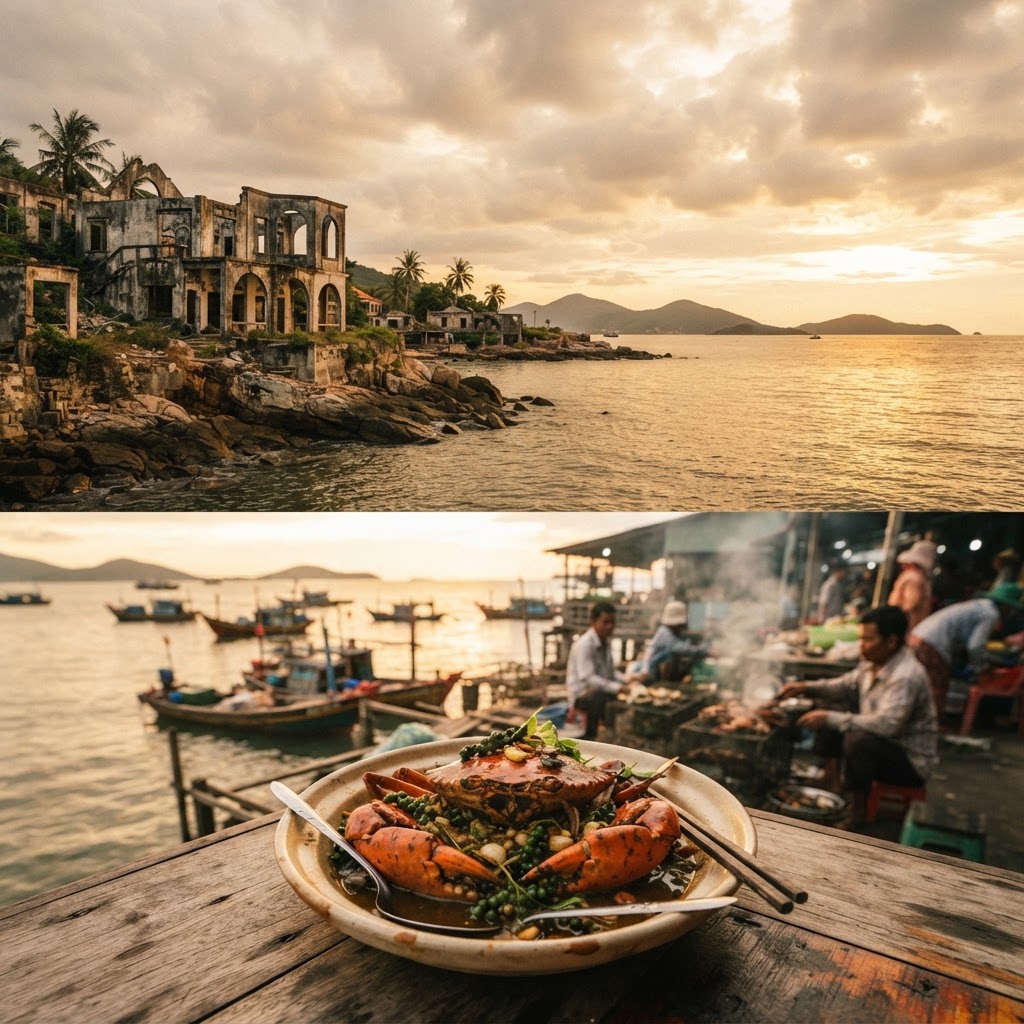
Kep
Cambodia
Salt air, ruined modernist villas, and green Kampot pepper crab.
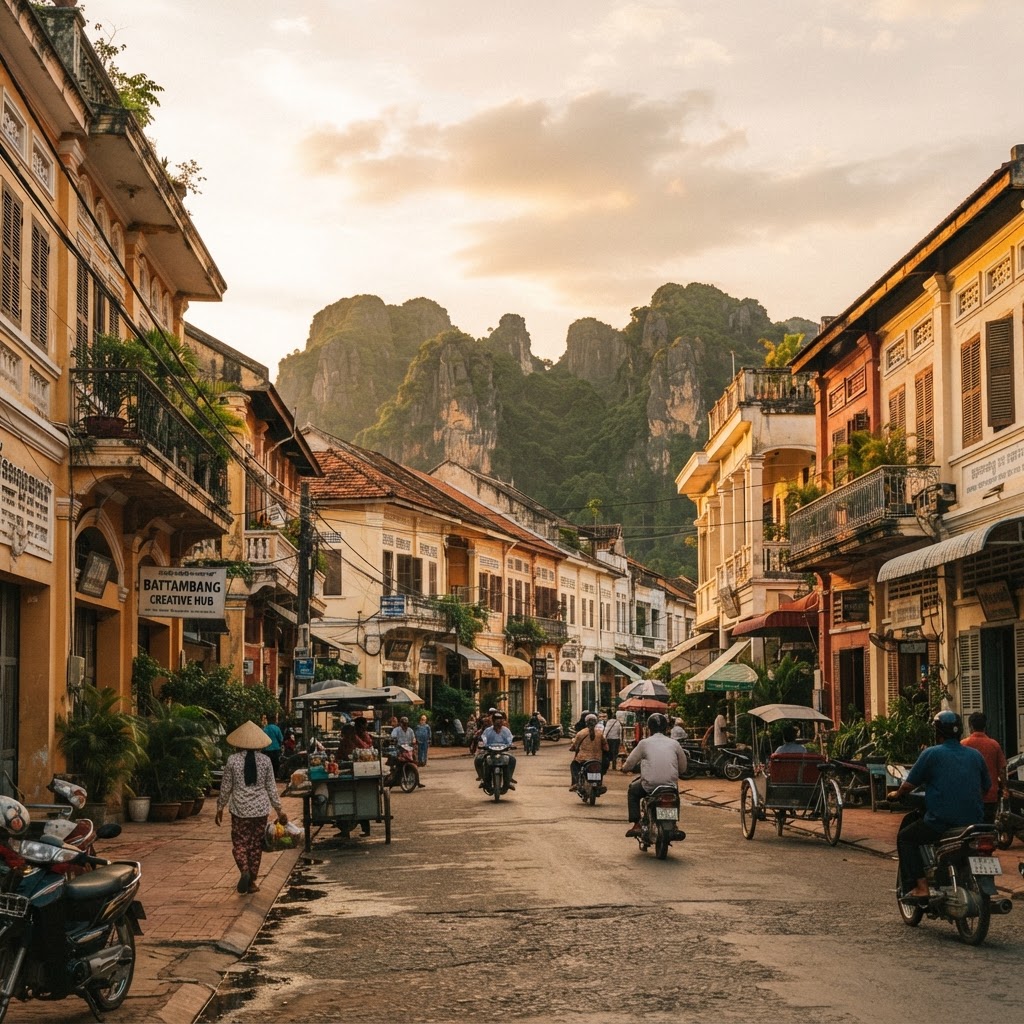
Battambang, Cambodia
Cambodia
Cambodia's creative engine, lined with French colonial shophouses and rural limestone karst landscapes.
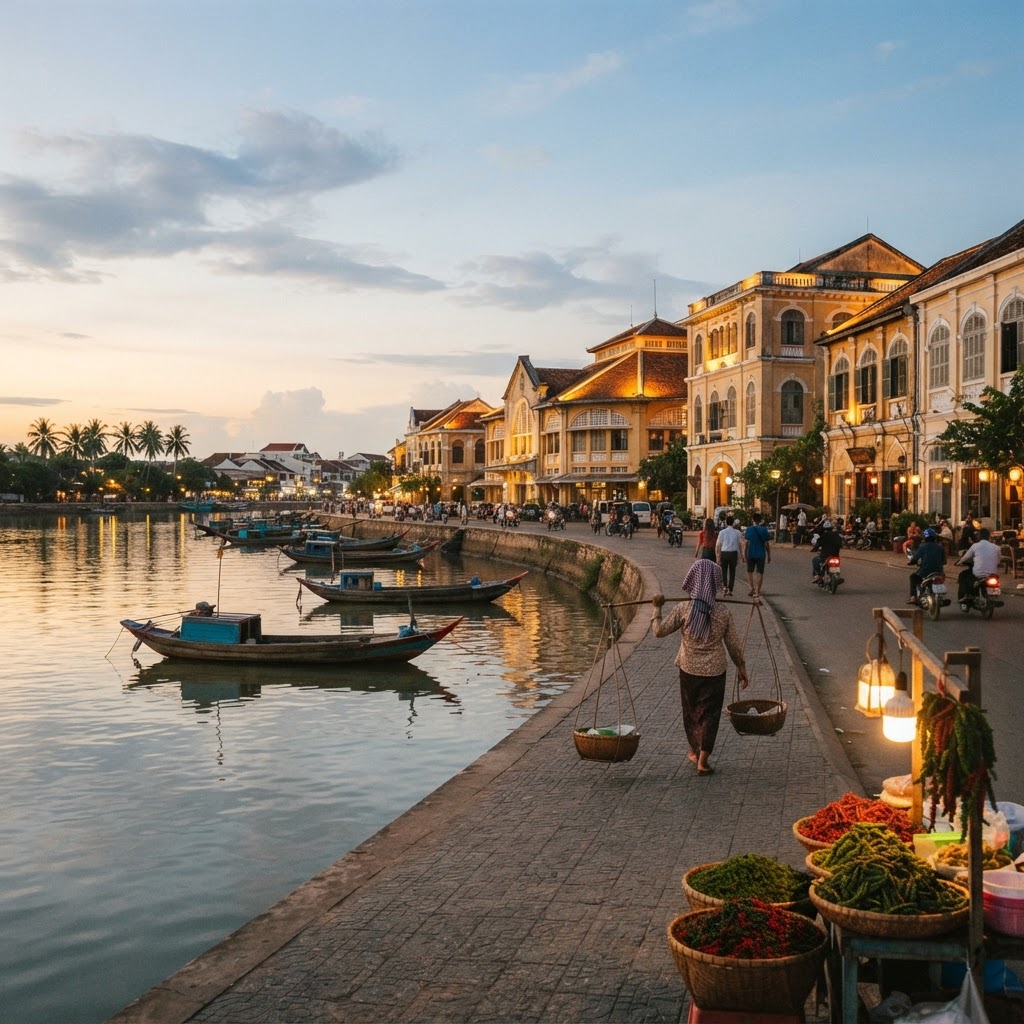
Kampot, Cambodia
Cambodia
Unhurried French colonial architecture, fiery fresh peppercorns, and tranquil riverside evenings
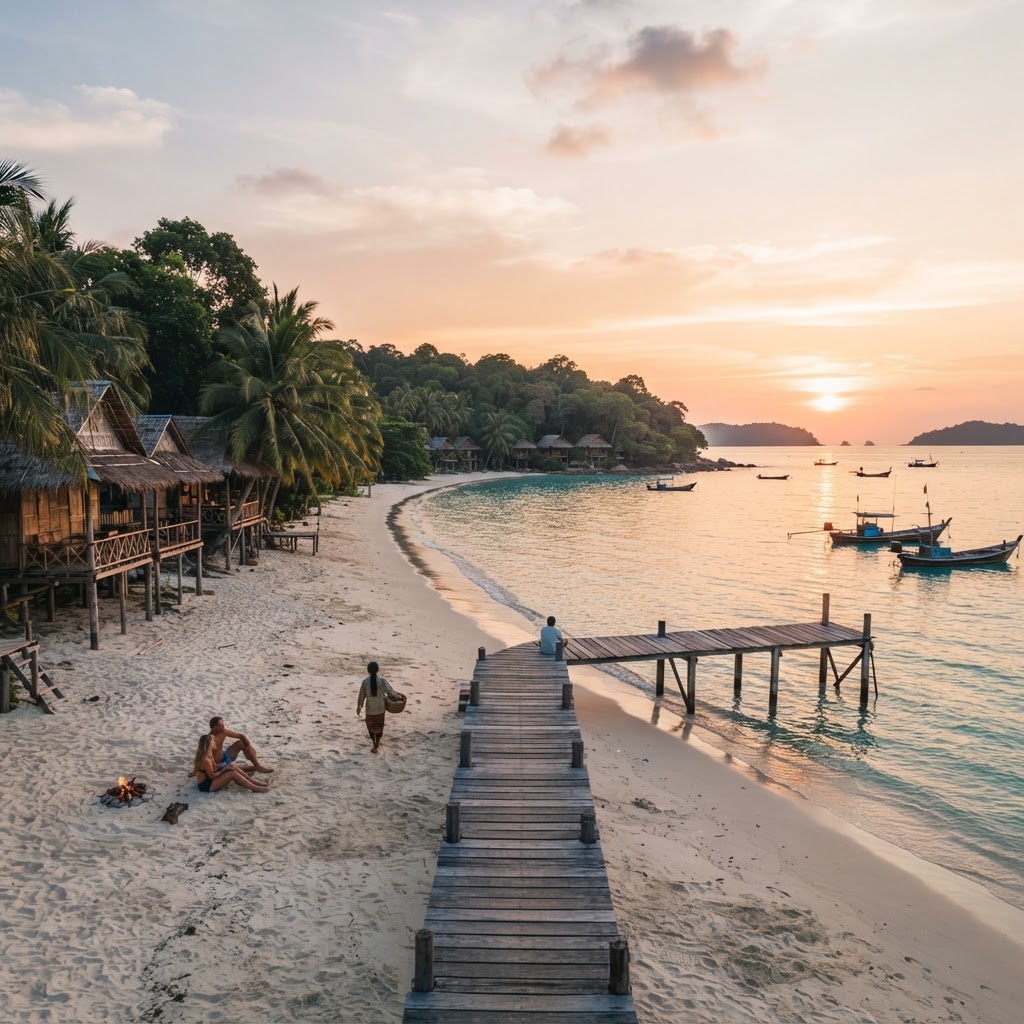
Koh Rong
Cambodia
Undeveloped white sand arcs, phosphorescent bays, and slow-paced Gulf of Thailand living.
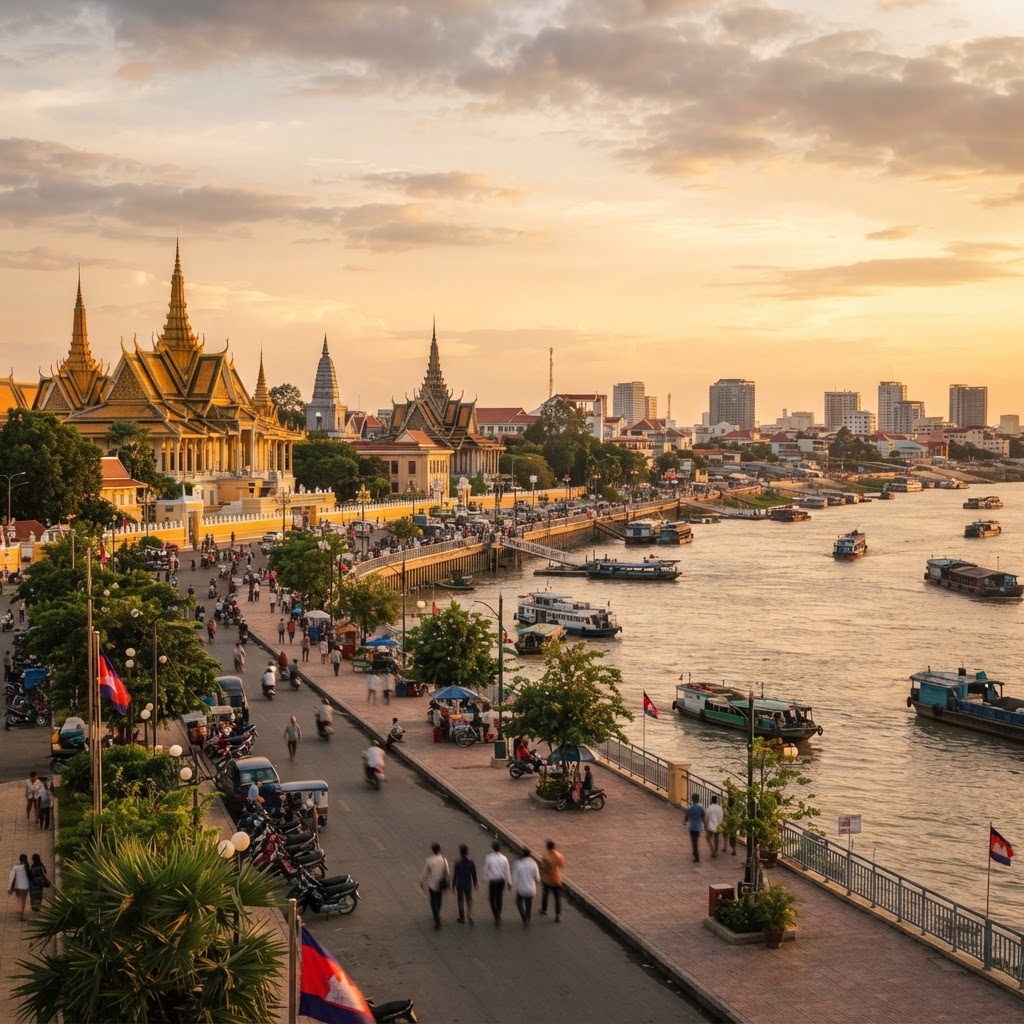
Phnom Penh
Cambodia
Raw history, buzzing riverfronts, and Cambodia's modern soul.
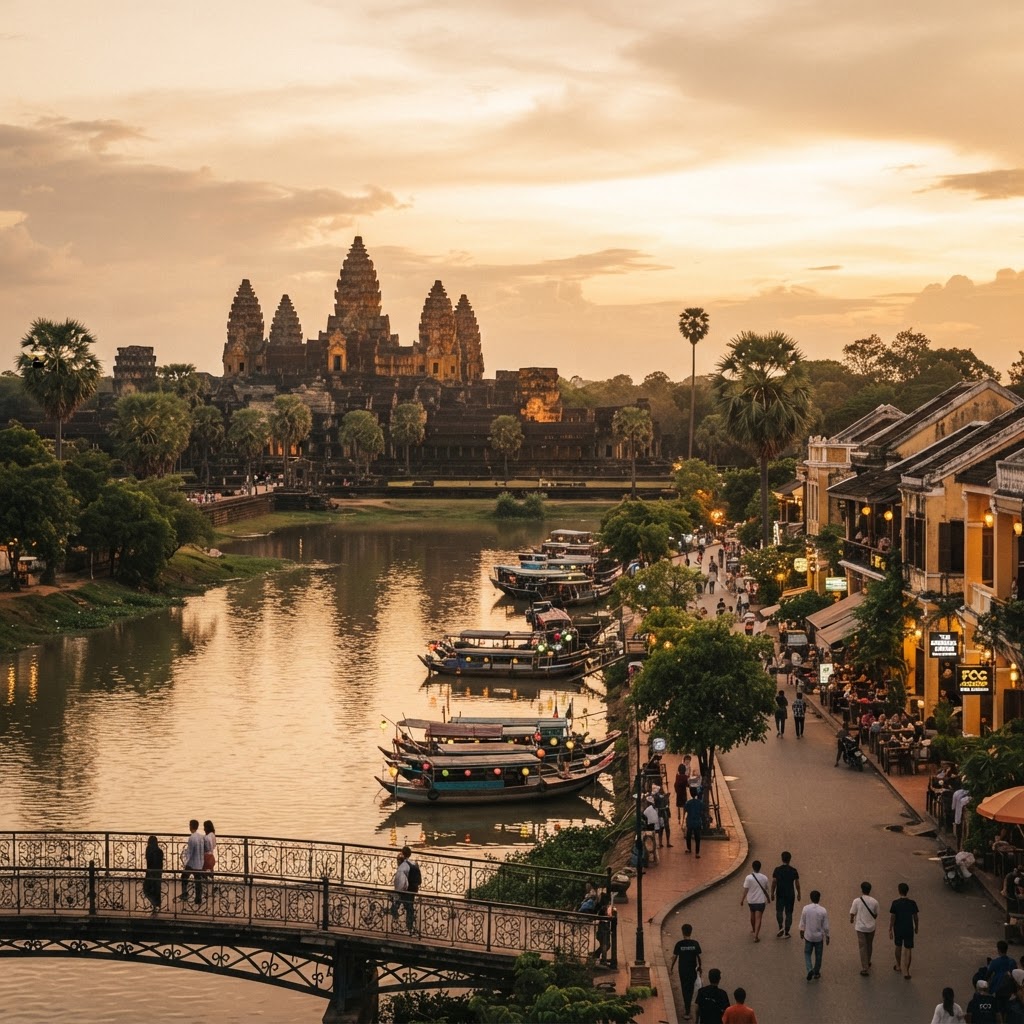
Siem Reap & Angkor
Cambodia
Monumental medieval stone temples anchored by an intimate, creative river town
Readymade itineraries
Start from a tested template — then make it yours.
Ready to book
Lock in your Siem Reap trip
Everything in one place. We may earn a small commission — it never costs you more.
Plan a trip to Siem Reap
Pick a length and we'll build a day-by-day plan around how you travel — neighborhoods clustered, budget-aware, and editable.
Get better at planning trips like this
Occasional notes on planning smarter — no spam, unsubscribe anytime.
Plan a trip to Siem Reap
Turn this guide into a day-by-day plan built around your pace, your group, and your budget.
Build my Siem Reap trip