Italy
Matera, Italy
A haunting, prehistoric canyon city reborn from poverty into stone-carved luxury.
Plan & book
Sort your Matera, Italy trip in one place.
We point you to the booking tools we'd actually use — live prices, no markup. Or let us build the day-by-day plan around you first, then book.
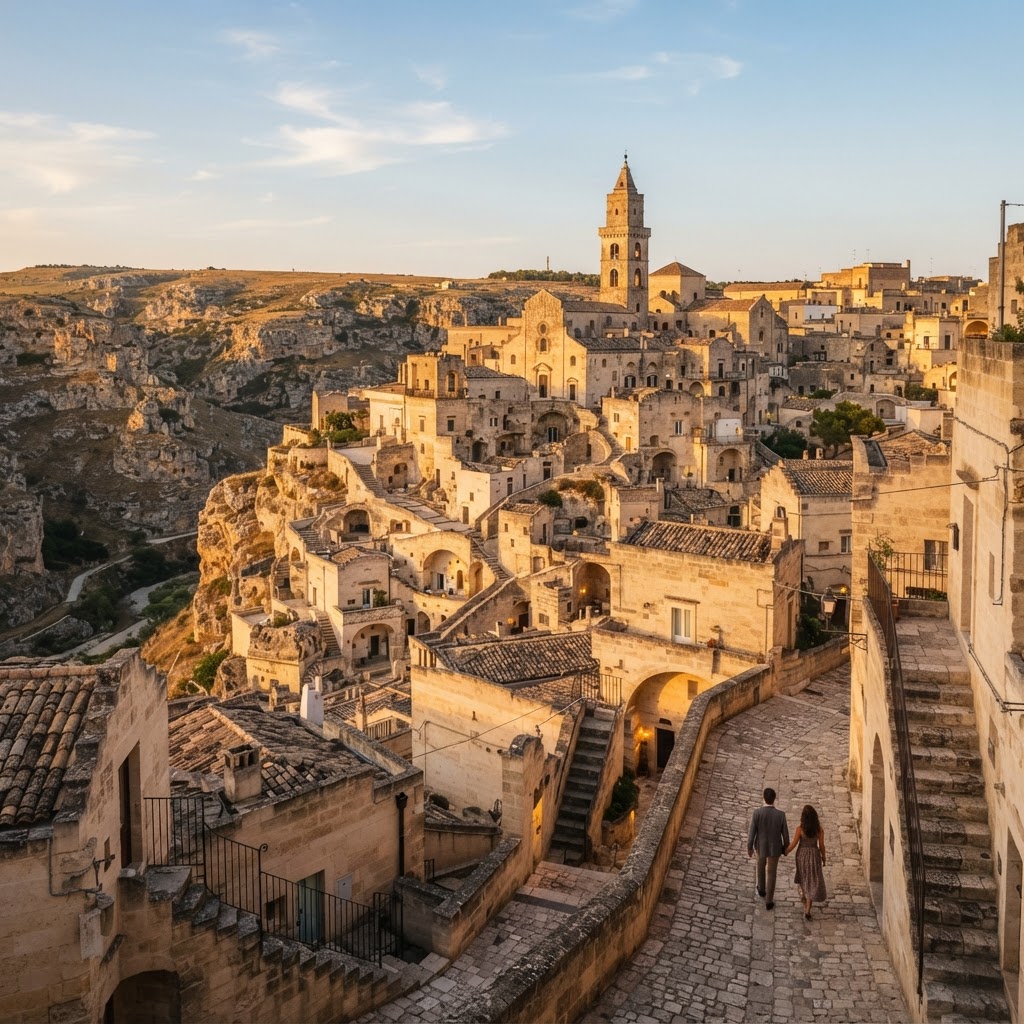
Carved into the rugged limestone walls of the Gravina river gorge, Matera represents one of the oldest continuously inhabited settlements on earth. Known historically as 'la vergogna nazionale' (the national shame) in the mid-20th century due to extreme poverty and disease within its ancient grottos, the city underwent mass evacuation in the 1950s. Today, those same troglodyte quarters—the Sassi di Matera—have transformed into a protected UNESCO landmark. Matera is neither a beach resort nor a typical Italian Renaissance showpiece; it is an austere, multi-tiered labyrinth of calcarenite rock where modern cave boutique hotels and candlelit grotto trattorias look out over wild, prehistoric ravines.
2 to 3 days
Best time
Mid-April to May or mid-September to October
Build your own trip with these prebuilt itineraries
Each one is a tested, day-by-day plan for Matera, Italy — start here, then make it yours.
4 Days: Matera & Basilicata Ghost Towns in Matera
Road-trip extension using Matera as a base to explore regional rupestrian churches, rugged calanchi landscapes, and the ghost town of Craco
3 Days of Photography, Sunsets & Scenic Ravines in Matera
Photography and scenic slow travel with ravine hiking across the Tibetan bridge to Parco della Murgia Materana and golden hour viewpoints
2 Days in Ancient Matera in Matera
First-time historical highlights and cave dwellings exploring Sasso Barisano and Caveoso at an atmospheric, unhurried pace
Matera is completely distinct from the rest of Southern Italy. While nearby Puglia trades in whitewashed trulli, olive groves, and coastal lidos, Matera delivers raw, biblical topography and visceral 20th-century history. Day-trippers rush in for photos and leave by 4:00 PM, missing the city's greatest asset: the eerie, golden silence after sunset when the canyon falls dark and the cave alleys glow under soft amber lamps. Staying overnight in a restored sassi grotto offers an architectural immersion unavailable anywhere else in Europe.
Where to stay
Getting there
Getting around
Food & drink
What it costs
Things to do
Book tours & tickets in Matera, ItalySkip it if
Skip Matera if you or anyone in your party has significant mobility issues, knee injuries, or relies on wheelchairs or strollers; the Sassi consists of endless, steep stairs with virtually no ramps or accessibility infrastructure. It is also not worth the detour if your Italian itinerary is rigidly focused on seaside swimming, Renaissance fine arts galleries, or vibrant late-night clubbing.
When to go
Matera requires constant climbing on exposed calcarenite stone stairs. The shoulder months offer mid-60s to low-70s temperatures with manageable day-tripper crowds, whereas July and August bring blistering midday heat reflecting off pale rock.
Peak (July to August)
Oppressive radiant heat on stone paths and mid-day day-tripper surges from Puglia; essential to book cave rooms with robust air conditioning and mechanical ventilation months ahead.
Shoulder (April to June & September to October)
Optimal hiking and walking weather with clear light and active evening cafe culture; booking 3 to 4 months out is recommended for top cave properties.
Low (November to February)
Cool, brooding, and atmospheric fog; hotel rates dip substantially, but check for January seasonal closures and beware slick wet stone stairways.
Neighborhoods
Where you stay shapes the trip. Here's how to think about it.
Sasso Caveoso
Raw, cliff-hanging troglodyte quarters with primitive rock facades dropping sheer into the ravine.
Best for:Romantic escapes, dramatic canyon views, and historic cave stays.
Don't miss:The rupestrian church of Chiesa di Santa Maria de Idris perched dramatically on a rock promontory.
Sasso Barisano
Slightly more manicured and active stone district, featuring restored palazzo facades, craft workshops, and grotto trattorias.
Best for:First-time visitors wanting cave immersion with slightly easier navigation and dining variety.
Don't miss:The subterranean church complex of San Pietro Barisano.
Civita
The natural high-ridge acropolis dividing the two Sassi, defined by aristocratic palaces and sweeping vantage points.
Best for:Travelers prioritizing panoramic views over sleeping deep underground.
Don't miss:The Apulian Romanesque Cattedrale di Maria Santissima della Bruna and its viewpoint across Sasso Barisano.
Piano (Modern Center / Upper Town)
Flat, 17th-to-20th-century urban core filled with lively piazzas, evening passeggiata routes, and civic architecture.
Best for:Travelers with heavy luggage, limited mobility, or those arriving by rental car or train.
Don't miss:Descending into Palombaro Lungo beneath Piazza Vittorio Veneto, the massive hand-hewn water cistern.
Destination intelligence
Updated 9/14/2026The structured record we plan every Matera, Italy itinerary from.
Walkability
Low for accessibility, high for fitness: Matera is pedestrian-only within the Sassi, but involves rigorous climbing across steep stone steps and slick inclines.
Transit quality
Fair: Matera Centrale connects efficiently to Bari via regional FAL commuter trains, but regional rail links into the rest of Basilicata are sparse.
Car needed
Not required to visit the town itself (and prohibited inside the Sassi), but highly advantageous if you plan to explore the surrounding Basilicata countryside and ghost towns.
Ideal duration
2 to 3 days
Minimum useful
1 full day with an overnight stay
Peak season
July to August: Intense dry heat bouncing off bare stone, packed tour buses around midday, and peak room rates.
Shoulder season
April to June and September to October: The ideal travel window with comfortable temperatures for staircase climbing and mild evenings.
Low season
November to February: Chilly, quiet, and atmospheric, though some seasonal cave hotels and specialty restaurants close for renovations in January.
Best for
Common mistakes
- Visiting purely as a rapid 3-hour afternoon day trip from Puglia, which means enduring peak midday heat, thick crowds, and missing the magical nighttime atmosphere when the day tours depart.
- Attempting to drag four-wheeled hard-shell luggage across hundreds of uneven calcarenite steps into the lower Sassi without arranging hotel porter transport.
- Wearing smooth-soled dress shoes or running shoes without grip; the centuries-old tufa and limestone steps become slick as ice even in dry weather.
- Driving into the Sassi with a rental car and triggering massive electronic fines for ZTL camera violations.
- Forgetting to check the Sunday schedule for the Ferrovie Appulo Lucane train connection from Bari, which swaps entirely to replacement coaches that leave from outside Bari Centrale.
Best nearby
See what a trip to Italy actually costs. Travel Budget Co.
How to plan it
- Stay in Piano if you have rolling bags or mobility constraints; choose Sasso Caveoso only if you are willing to navigate luggage down steep, uneven stone stairs.
- Pair Matera with a road trip through the Valle d'Itria or Salento, but allocate at least 2 nights here rather than treating it as an exhausting 4-hour day trip detour.
- Never attempt the Gravina suspension bridge hike to the Murgia plateau in peak summer midday heat; do it at dawn or late afternoon with sturdy, grippy trail footwear.
- Reserve signature cavern tables—like Baccanti or Trattoria del Caveoso—at least 2 to 3 weeks ahead for spring and autumn weekends.
Questions
More in Italy
Lake Garda
Italy
Fjord-like northern crags, southern olive groves, and lake life without the Como theater
Portofino
Italy
A pocket-sized Riviera cove where lingering beats sightseeing.
Pisa
Italy
Beyond the leaning marble: a lively university city of riverside palaces and quiet piazzas.
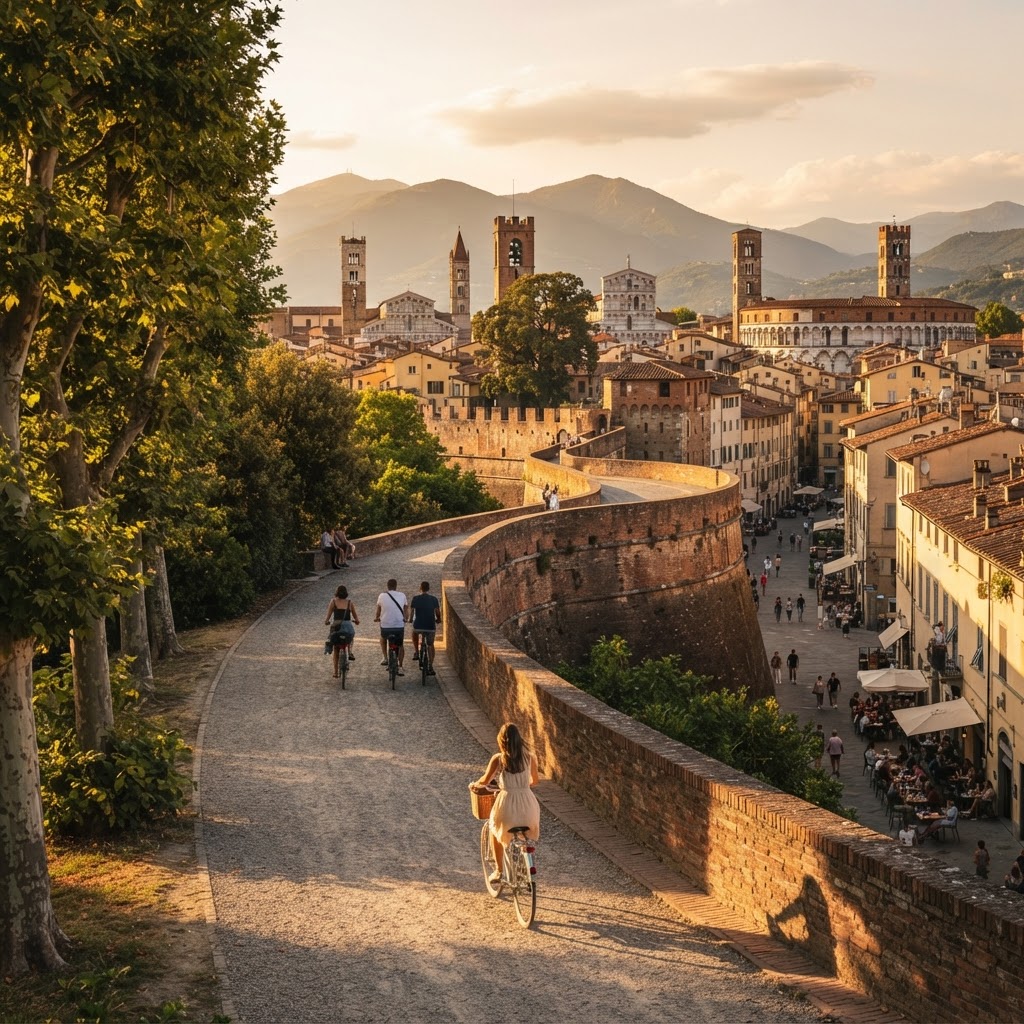
Lucca, Italy
Italy
A graceful, walled Tuscan oasis made for cycling ramparts and unhurried aperitivi.
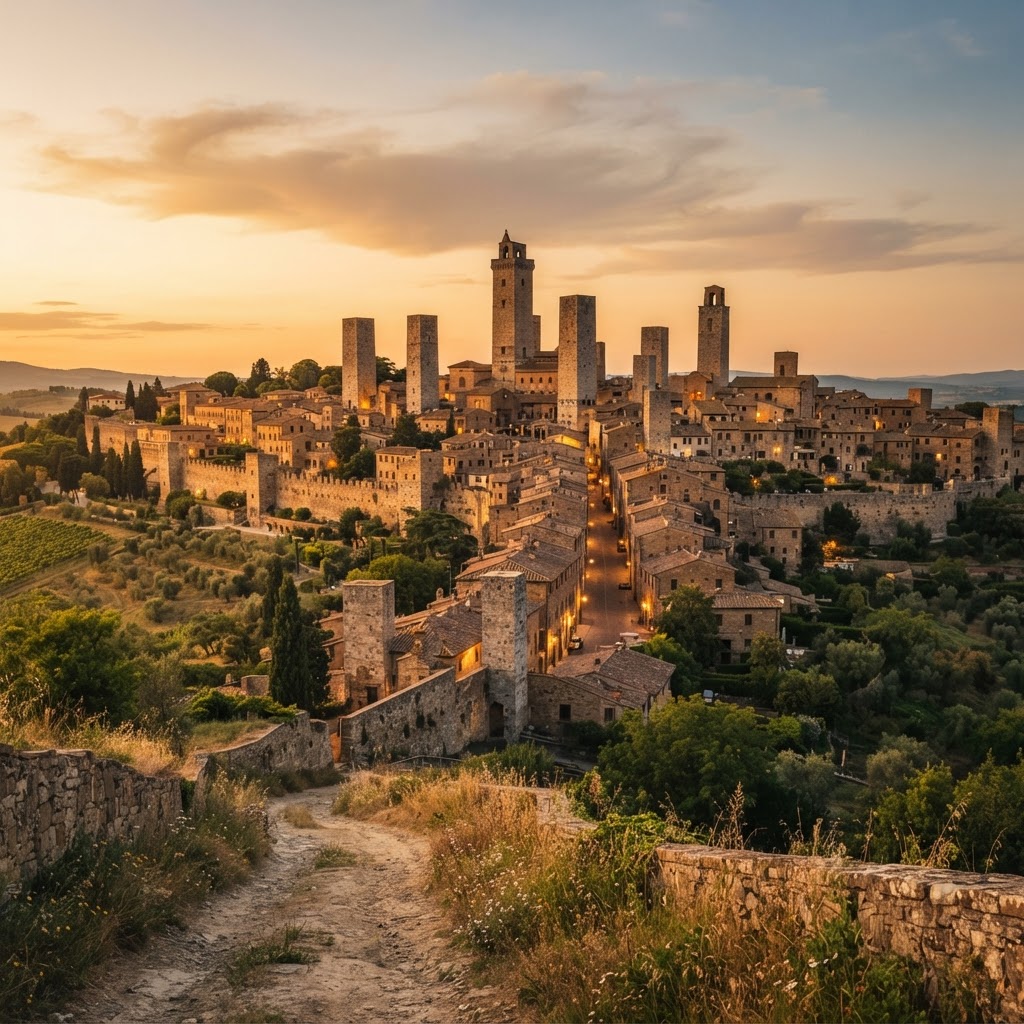
San Gimignano
Italy
Tuscany's medieval Manhattan, magical only when the day-trippers vanish
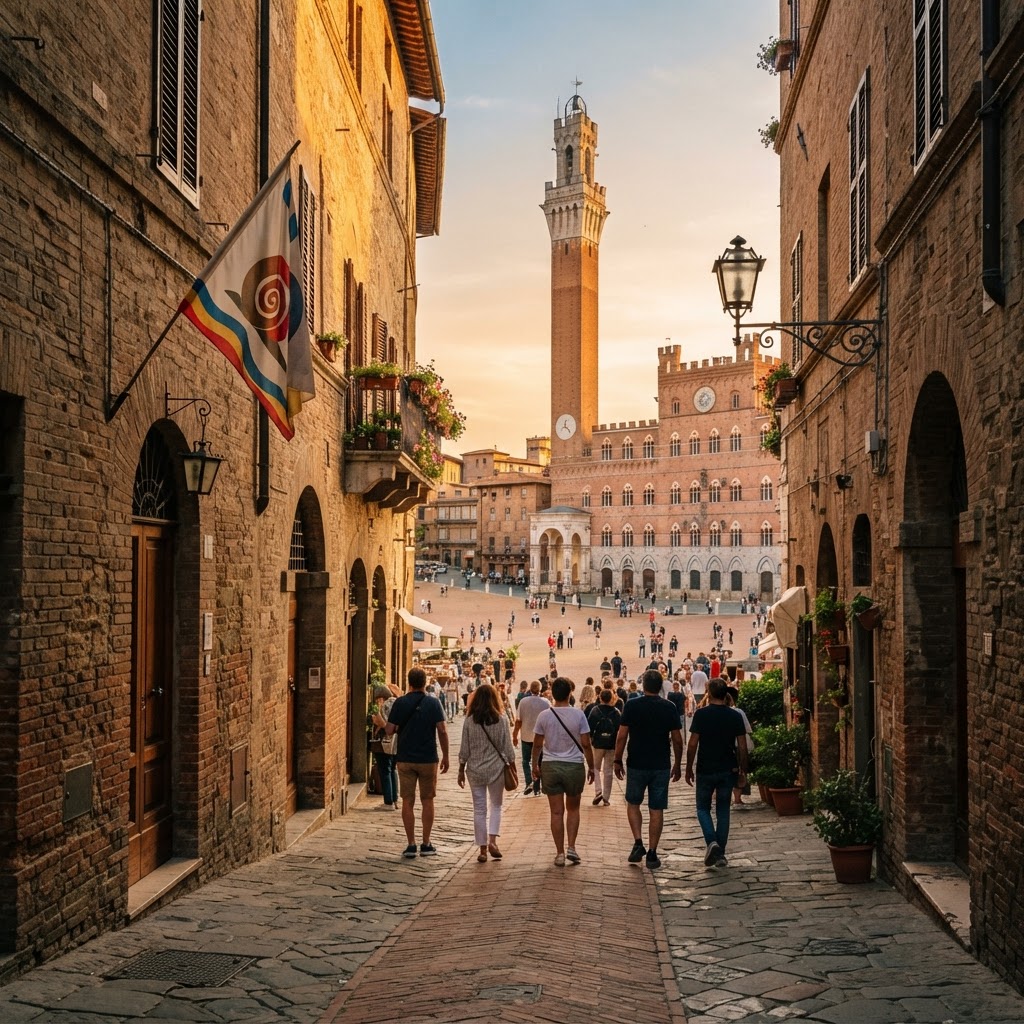
Siena, Tuscany, Italy
Italy
Gothic brick alleys, neighborhood contrada pride, and Italy's most dramatic medieval square
Readymade itineraries
Start from a tested template — then make it yours.
Ready to book
Lock in your Matera, Italy trip
Everything in one place. We may earn a small commission — it never costs you more.
Plan a trip to Matera, Italy
Pick a length and we'll build a day-by-day plan around how you travel — neighborhoods clustered, budget-aware, and editable.
Get better at planning trips like this
Occasional notes on planning smarter — no spam, unsubscribe anytime.
Plan a trip to Matera, Italy
Turn this guide into a day-by-day plan built around your pace, your group, and your budget.
Build my Matera, Italy trip