Italy
Alberobello, Puglia, Italy
A striking concentration of drystone limestone architecture, best experienced before the buses arrive.
Plan & book
Sort your Alberobello, Puglia, Italy trip in one place.
We point you to the booking tools we'd actually use — live prices, no markup. Or let us build the day-by-day plan around you first, then book.
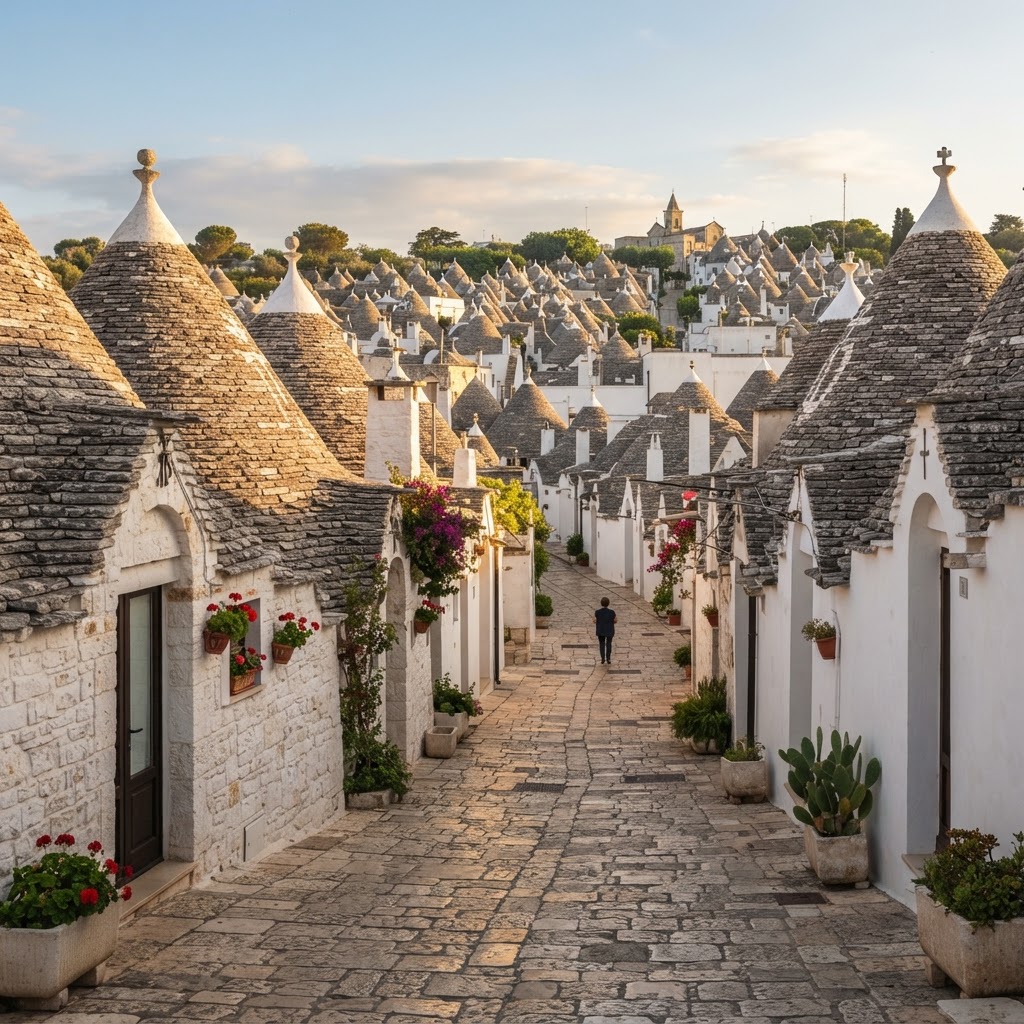
Alberobello is a small municipality in the Valle d'Itria famous worldwide for its dense collections of trulli—drystone dwellings crowned with conical limestone roofs. Designated a UNESCO World Heritage site, it holds over 1,500 of these structures across two primary quarters. While it suffers from intense midday commercialization, arriving early or sleeping in an authentic stone trullo reveals a quiet, sculptural beauty found nowhere else on earth.
24 hours (1 night)
Best time
May to June or late September to October.
Build your own trip with these prebuilt itineraries
Each one is a tested, day-by-day plan for Alberobello, Puglia, Italy — start here, then make it yours.
2 Days in Alberobello & the Valle d'Itria Countryside in Alberobello
Slower-paced heritage and food focus combining quiet town mornings with countryside olive groves and local trattorie
1 Day in Alberobello: An Overnight Trullo Experience in Alberobello
Classic first-time overnight stay avoiding peak tour buses and exploring quiet Aia Piccola at dusk
Half-Day Express: Highlights & Limestone Alleys in Alberobello
Early morning whirlwind walk through Rione Monti and vernacular architecture for road-trippers passing through
Go for the sheer visual anomaly of more than a thousand corbelled limestone domes lining undulating alleys. While isolated trulli dot the wider Valle d'Itria, Alberobello is the only place where entire urban neighborhoods were constructed using drystone peasant masonry without mortar. Experiencing this architectural geometry at dawn—before gift kiosks open and tour buses pull into the lower lots—is genuine visual magic.
Where to stay
Getting there
Getting around
Food & drink
What it costs
Skip it if
Skip staying overnight if you dislike heavily tourist-oriented retail clusters or seek active seaside nightlife. If you are on a tight 4-day Puglia schedule focused on coastal swimming and baroque cities like Lecce, Alberobello can easily be satisfied with a 2-hour morning stop or skipped in favor of driving through the rural Valle d'Itria.
When to go
Summer brings unrelenting inland heat topping 35°C and dense bus tour crowds that overwhelm the narrow limestone alleys. Shoulder season pairs comfortable walking weather with softer morning light and fewer midday tour coaches.
Peak (July to August)
Oppressive midday heat, filled car parks, and packed stone alleys from cruise and regional bus tours. Trullo hotel rates are at their highest.
Shoulder (April to June, September to October)
Ideal temperatures for walking the sloped lanes. Manageable crowds, softer light, and open seasonal restaurants.
Low (November to March)
Minimal foot traffic and atmospheric quiet, but trullo interiors can feel damp and cold; several seasonal restaurants and shops shut down.
Neighborhoods
Where you stay shapes the trip. Here's how to think about it.
Rione Monti
Densely packed hillside quarter lined with tourist trulli, souvenir stalls, and postcard stairs.
Best for:First-time visitors, photography hunters, and souvenir shoppers
Don't miss:Via Monte San Michele walking up toward the 20th-century Chiesa di Sant'Antonio, ideally before 09:00.
Rione Aia Piccola
Understated, calmer residential enclave with roughly 400 stone trulli and fewer shopfronts.
Best for:Travelers seeking authentic architecture and peaceful evening strolls
Don't miss:The quiet stone alleys between Via Duca d'Aosta and the Belvedere Santa Lucia vista point.
Piazza del Popolo & Centro Moderno
Functional, authentic 19th-century Italian civic core with standard stone apartments, everyday cafes, and town life.
Best for:Morning espresso, authentic bakery stops, and avoiding inflated heritage pricing
Don't miss:Corso Vittorio Emanuele leading to the neoclassical Basilica dei Santi Medici Cosma e Damiano.
Valle d'Itria Countryside
Agricultural olive groves and drystone walls dotted with restored rural trullo farmhouses.
Best for:Road trippers, drivers wanting pool retreats, and travelers avoiding inner-town parking hassles
Don't miss:Trullo Sovrano on the northern fringe of town, the sole two-story trullo complete with period museum rooms.
Destination intelligence
Updated 9/14/2026The structured record we plan every Alberobello, Puglia, Italy itinerary from.
Walkability
High. The entire historic district is walkable within 15–20 minutes, though marked by gentle slopes, stairs, and polished stone paths.
Transit quality
Moderate. Regional FSE train and bus connections run from Bari, but service can be slow and infrequent on Sundays. A car is far more practical.
Car needed
Not strictly required for the town center itself, but highly recommended if using Alberobello as part of a wider Valle d'Itria road trip.
Ideal duration
24 hours (1 night)
Minimum useful
3 hours
Peak season
July to August (extreme heat above 35°C, high crowd density from cruise and bus tours, full parking lots).
Shoulder season
April to June and September to October (pleasant walking weather, manageable foot traffic, ideal light).
Low season
November to March (crisp weather, dormant tourism, minimal crowds, though several seasonal shops and restaurants close).
Best for
Common mistakes
- Arriving between 10:30 AM and 3:00 PM, when day-trip tour groups clog Rione Monti.
- Spending your entire visit along Via Monte San Michele without exploring residential Aia Piccola.
- Eating lunch on the main souvenir drags where frozen tourist menus dominate, instead of booking side-street trattorie.
- Booking more than one night inside the town itself; Alberobello is too small for a long base compared to coastal Monopoli or central Locorotondo.
- Wearing smooth-soled dress shoes on polished, slippery chianche limestone alleys.
Best nearby
See what a trip to Italy actually costs. Travel Budget Co.
How to plan it
- Arrive after 16:30 for check-in to get uncrowded evening light, then explore Rione Monti at 07:30 before day-tripper buses pull in.
- Pair Alberobello as an overnight anchor between Polignano a Mare and Matera rather than spending multiple static nights here.
- Book authentic trullo accommodations 3 to 4 months in advance if traveling between May and September.
- Park at the designated lots outside the ZTL boundary near Via Piccinni rather than attempting to navigate the narrow historic perimeter.
- Reserve dinner at farm-to-table spots like Trattoria Terra Madre at least one week ahead in peak season.
Questions
More in Italy
Lake Garda
Italy
Fjord-like northern crags, southern olive groves, and lake life without the Como theater
Portofino
Italy
A pocket-sized Riviera cove where lingering beats sightseeing.
Pisa
Italy
Beyond the leaning marble: a lively university city of riverside palaces and quiet piazzas.
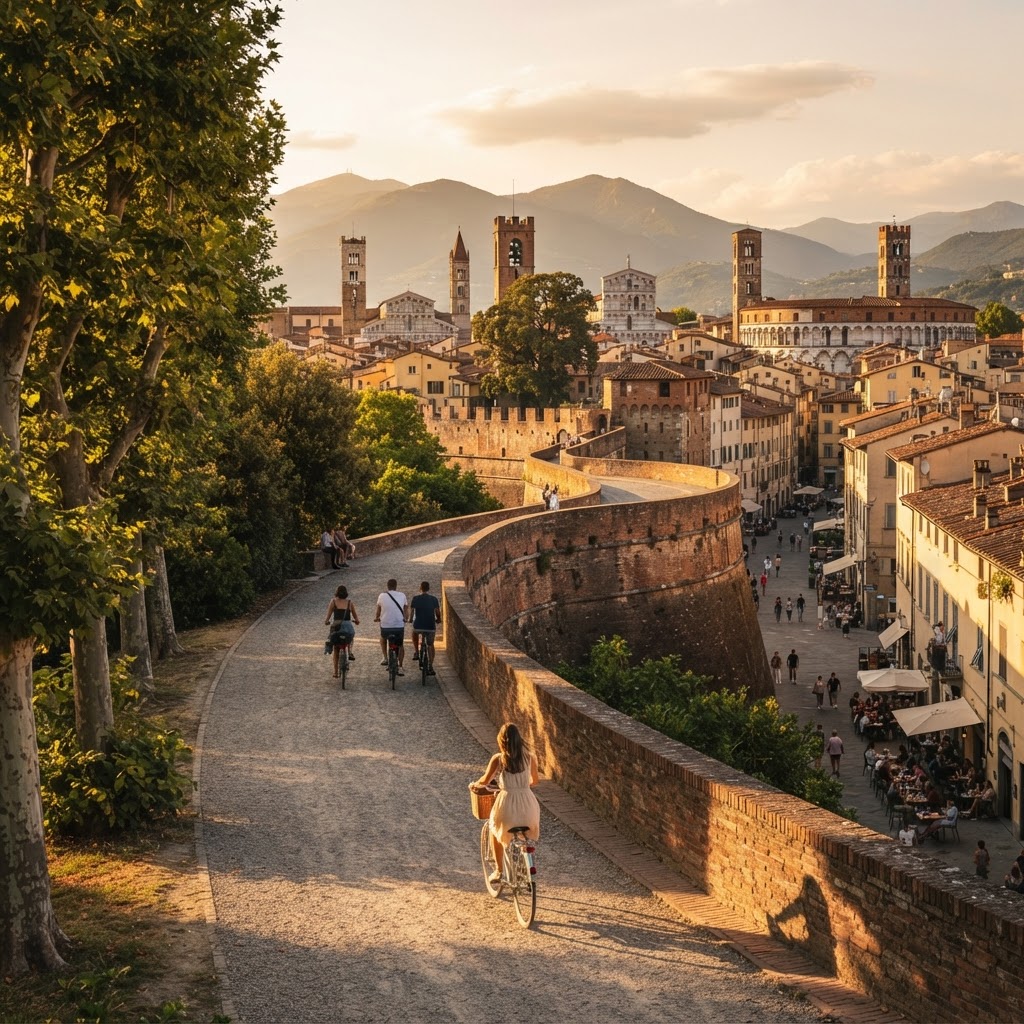
Lucca, Italy
Italy
A graceful, walled Tuscan oasis made for cycling ramparts and unhurried aperitivi.
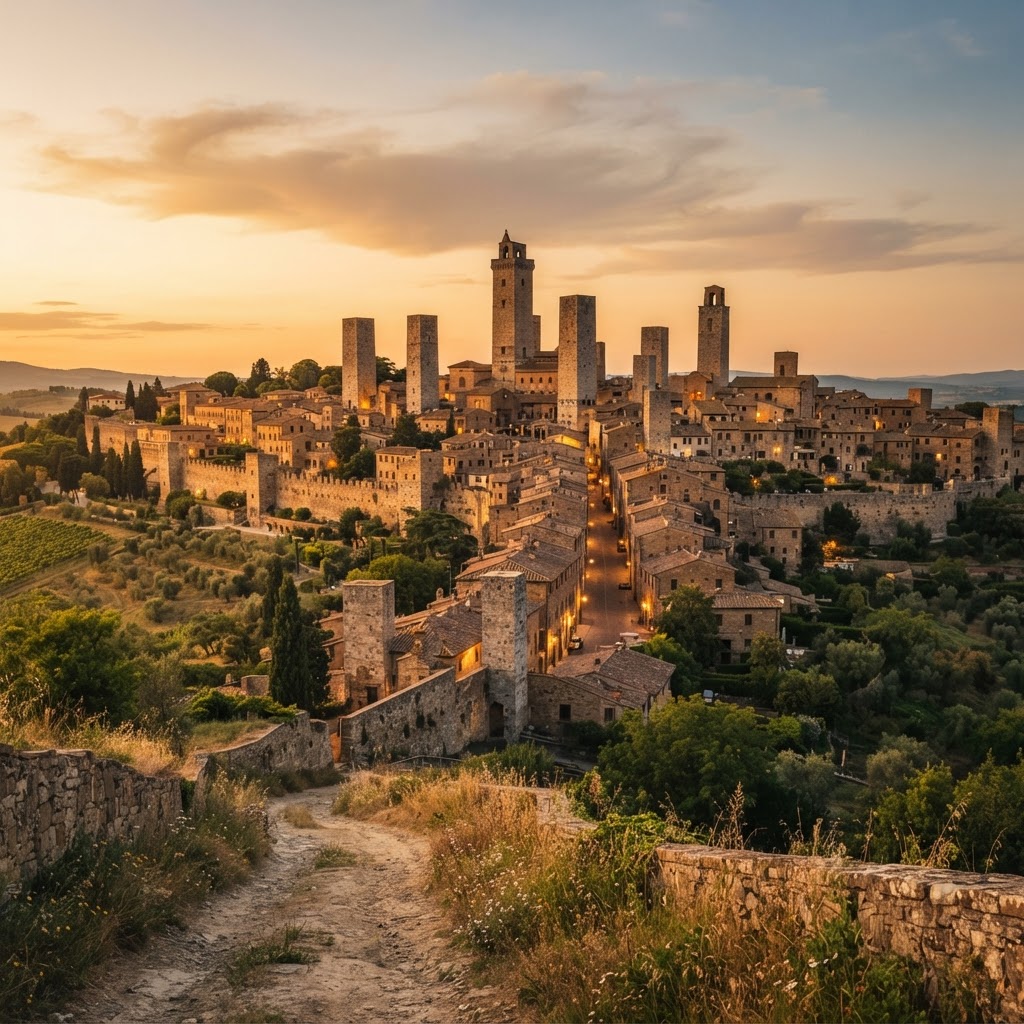
San Gimignano
Italy
Tuscany's medieval Manhattan, magical only when the day-trippers vanish
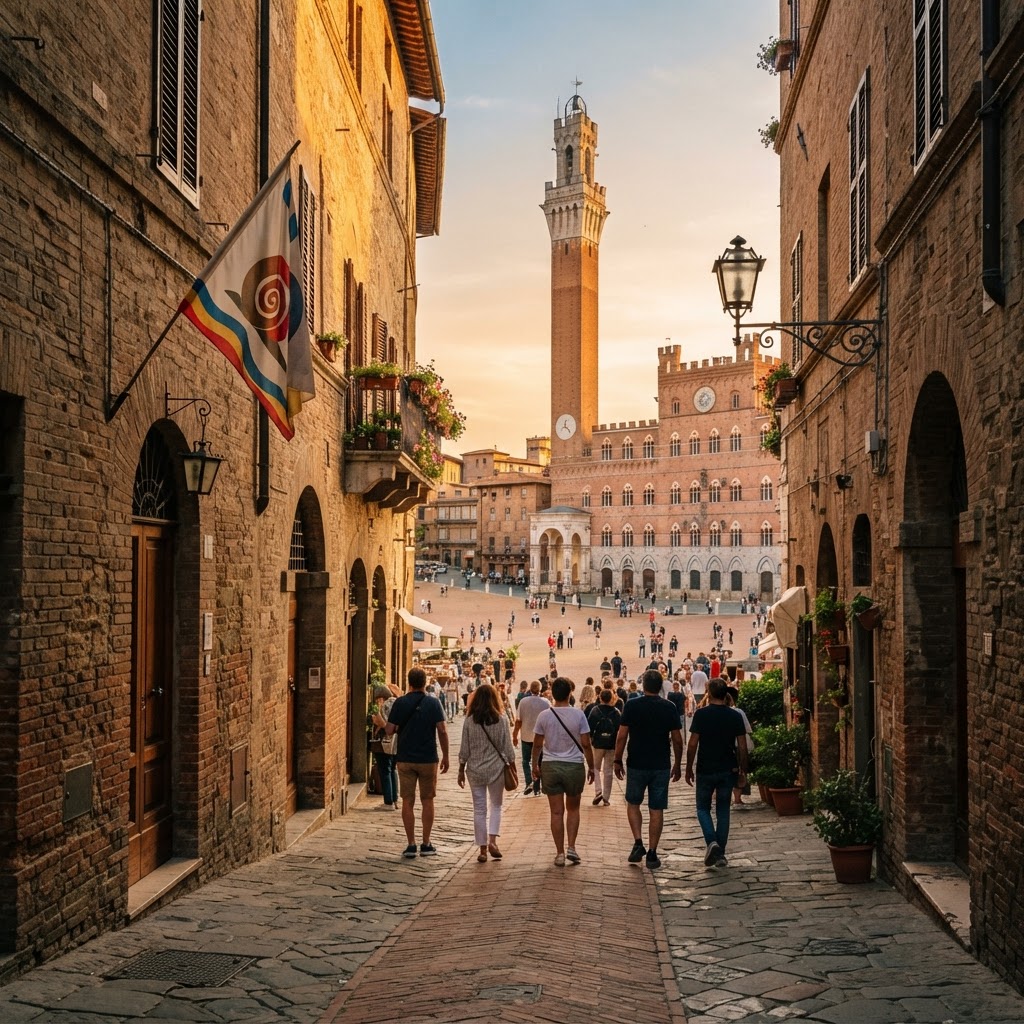
Siena, Tuscany, Italy
Italy
Gothic brick alleys, neighborhood contrada pride, and Italy's most dramatic medieval square
Readymade itineraries
Start from a tested template — then make it yours.
Ready to book
Lock in your Alberobello, Puglia, Italy trip
Everything in one place. We may earn a small commission — it never costs you more.
Plan a trip to Alberobello, Puglia, Italy
Pick a length and we'll build a day-by-day plan around how you travel — neighborhoods clustered, budget-aware, and editable.
Get better at planning trips like this
Occasional notes on planning smarter — no spam, unsubscribe anytime.
Plan a trip to Alberobello, Puglia, Italy
Turn this guide into a day-by-day plan built around your pace, your group, and your budget.
Build my Alberobello, Puglia, Italy trip