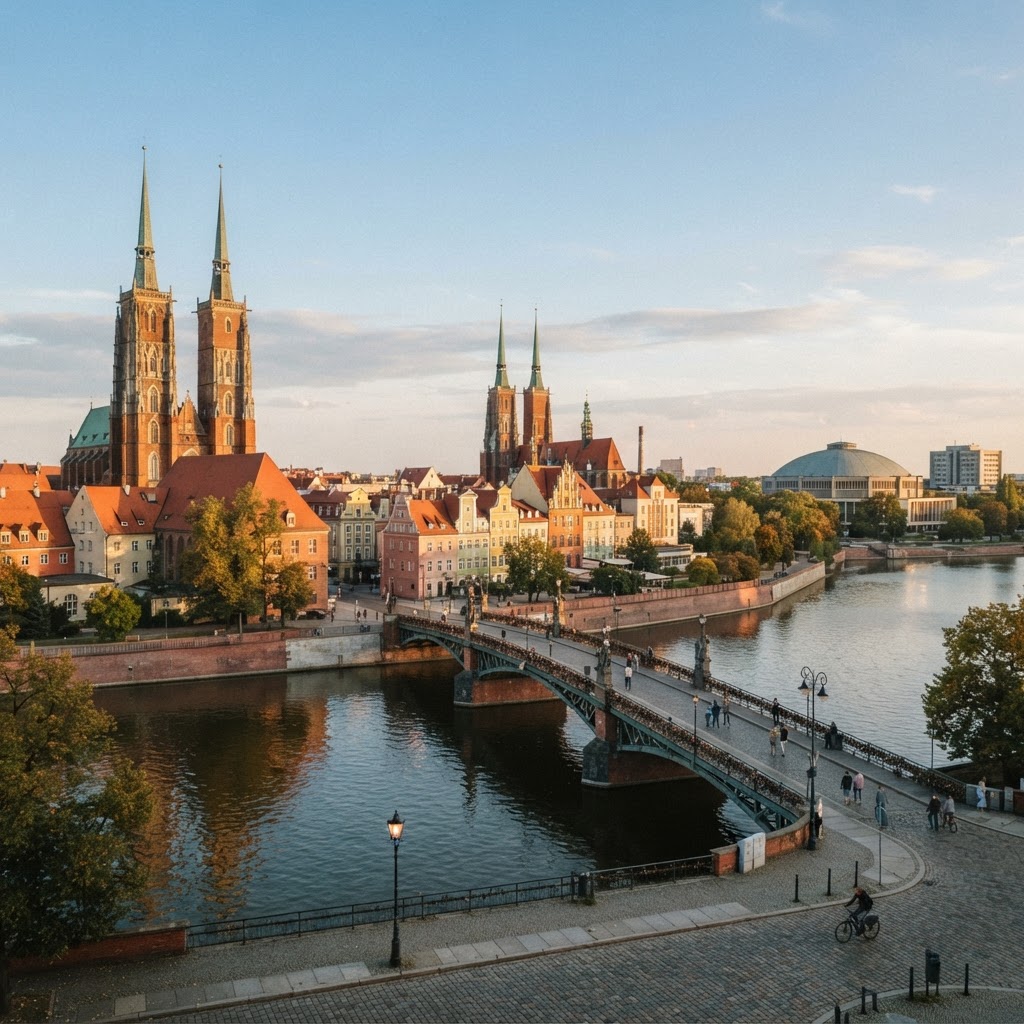
Poland
Wrocław
Gothic spires, modernist landmarks, and island footbridges minus the tourist crushes of Kraków.
Plan & book
Sort your Wrocław trip in one place.
We point you to the booking tools we'd actually use — live prices, no markup. Or let us build the day-by-day plan around you first, then book.
Wrocław delivers the architectural drama of Central Europe without the Disneyfication. Built across twelve islands in the Oder River, the Lower Silesian capital balances a reconstructed Gothic Rynek with raw industrial neighborhoods like Nadodrze, sprawling modernist milestones like Centennial Hall, and an approachable university-town cadence. It functions as a complete, walkable European city break with exceptional rail links and a thriving regional dining scene.
3 days
Best time
May to June and September to October offer the premier balance of warm sidewalk weather, lower hotel rates, and vibrant riverbank life.
Build your own trip with these prebuilt itineraries
Each one is a tested, day-by-day plan for Wrocław — start here, then make it yours.
5 Days in Wrocław: Culture, Modernism & Lower Silesian Day Trips in Wrocław
A relaxed deep dive featuring UNESCO-listed Centennial Hall, vibrant neighborhood cafe culture, and regional rail day trips
3 Days in Wrocław: The Complete Cultural Classic in Wrocław
The ideal-pace first-timer journey balancing iconic landmarks, Ostrów Tumski, the Racławice Panorama, and hidden courtyard dining
2 Days in Wrocław: Architecture & River Islands in Wrocław
A high-yield weekend focusing on Gothic to Modernist architecture, riverside strolls, and historic core highlights on foot
Wrocław provides the grand public spaces and culinary dynamism of Kraków or Prague but keeps its everyday residential pulse intact. You can view the monumental 360-degree Panorama Racławicka, cross iron footbridges to gaslit cathedral courtyards on Ostrów Tumski, and eat Silesian potato dumplings in converted meat markets, all without battling tour-bus crowds at every turn.
Where to stay
Getting there
Getting around
Food & drink
What it costs
Things to do
Book tours & tickets in WrocławSkip it if
Skip Wrocław if you have fewer than 5 days in Poland and your primary goal is checking off iconic bucket-list historical sites like Auschwitz-Birkenau and Kraków's Wawel Castle, as traveling west to Lower Silesia consumes precious transit time better spent anchoring between Warsaw and Kraków.
When to go
Summer brings high heat and regional crowds to Rynek, while winter daylight shrinks dramatically. Shoulder months yield daytime highs between 15°C and 22°C, full access to outdoor beach bars on the Oder, and thin queues at major cultural sites.
Peak (June–August & late November–December)
Wrocław is Poland's warmest city in summer, filling island terraces and beach bars, though hotel rates peak; late November through December triggers a massive tourism influx for the Rynek Christmas Market.
Shoulder (April–May & September–October)
Crisp sunny days, autumn colors along the river boulevards, easy restaurant walk-ins, and reasonable boutique lodging prices.
Low (January–March)
Chilly damp air with temperatures around freezing and early sunsets, though museum galleries are empty and central hotel prices plunge to their floor.
Neighborhoods
Where you stay shapes the trip. Here's how to think about it.
Stare Miasto (Old Town)
Cobblestones, pastel Gothic townhouses, and busy café terraces radiating outward from the monumental Rynek.
Best for:First-timers, architecture buffs, and weekend travelers prioritizing maximum walkability.
Don't miss:The Penitent Bridge (Mostek Pokutnic) between the twin towers of St. Mary Magdalene Church for an unobstructed view over Rynek's roofline.
Ostrów Tumski (Cathedral Island)
Hushed, solemn ecclesiastical quarter lit by working gas lanterns on the north bank of the Oder.
Best for:Couples and quiet evening strollers wanting historical atmosphere without nightlife noise.
Don't miss:Crossing the cast-iron Tumski Bridge at dusk to spot the cape-wearing lamplighter manually lighting the neighborhood's gas streetlamps.
Nadodrze
Unpolished nineteenth-century tenement district turned creative enclave with art studios, third-wave roasters, and muraled courtyards.
Best for:Independent travelers, coffee purists, and travelers fatigued by polished historic centers.
Don't miss:The vibrant communal ceramic and painted murals lining the back courtyards on Ulica Roosevelta.
Dzielnica Czterech Wyznań (Four Denominations District)
Culturally layered pocket southwest of Rynek featuring leafy courtyards, independent cocktail lounges, and historic houses of worship.
Best for:Foodies, late-night craft beer drinkers, and cultural history enthusiasts.
Don't miss:The courtyard of the White Stork Synagogue (Synagoga pod Białym Bocianem) for jazz performances, outdoor drinks, and Jewish heritage exhibitions.
Przedmieście Oławskie & Huby (Station District)
Transit-focused hub anchored by the neo-Gothic Wrocław Główny station, blending modern apartment hotels with emerging casual bistros.
Best for:Train-reliant travelers and business visitors needing direct airport bus access or regional rail connections.
Don't miss:The interior ticket hall and platform canopies of Wrocław Główny railway station, a landmark of mid-nineteenth-century Prussian transport design.
Destination intelligence
Updated 9/14/2026The structured record we plan every Wrocław itinerary from.
Walkability
High. The entire historic district, river islands, and station district are easily covered on foot over flat cobblestone streets and paved bridges.
Transit quality
High. Modern trams and buses run frequent lines connecting all outlying landmarks like Hala Stulecia; contactless onboard payment makes transit seamless.
Car needed
No. A car is an active hindrance within Wrocław; only rent one if you plan extended explorations into the Karkonosze Mountains or Sudetenland.
Ideal duration
3 days
Minimum useful
2 days
Peak season
June through August, plus late November through December for the sprawling Christmas Market on Rynek.
Shoulder season
April to May and September to October, offering mild walking temperatures, lower room rates, and vivid autumn foliage along the Oder.
Low season
January through March, characterized by cold damp winds, gray skies, and short daylight hours, though hotels drop to their lowest rates.
Best for
Common mistakes
- Treating the brass dwarfs as an all-day scavenger hunt and spending the afternoon staring at phone screens rather than taking in the city's complex architecture.
- Failing to reserve Panorama Racławicka tickets in advance, only to arrive and find daily entrance times fully sold out.
- Renting a car for a city-only visit, which incurs expensive parking garages and difficult navigation around pedestrian zones.
- Eating exclusively in the outer ring of Rynek restaurants, which charge inflated prices for generic menus compared to spots two blocks off the square.
Best nearby
See what a trip to Poland actually costs. Travel Budget Co.
How to plan it
- Base yourself in Stare Miasto or the Four Denominations District if you want to walk to dining and river bridges without ever taking a tram.
- Pair Wrocław with Kraków or Poznań via PKP Intercity direct trains, which take under two hours city-center to city-center.
- Do not attempt to see Centennial Hall, the Japanese Garden, and the Zoo in the same half-day as the Old Town; cross the river to Szczytnicki Park specifically for a dedicated afternoon.
- Pre-book your timed entry to the Racławice Panorama at least 14 days early, especially if visiting on a Friday, Saturday, or Sunday.
- Leave an hour before dusk on Cathedral Island to watch the traditional gas lamplighter navigate the streets around the Cathedral of St. John the Baptist.
Questions
More in Poland
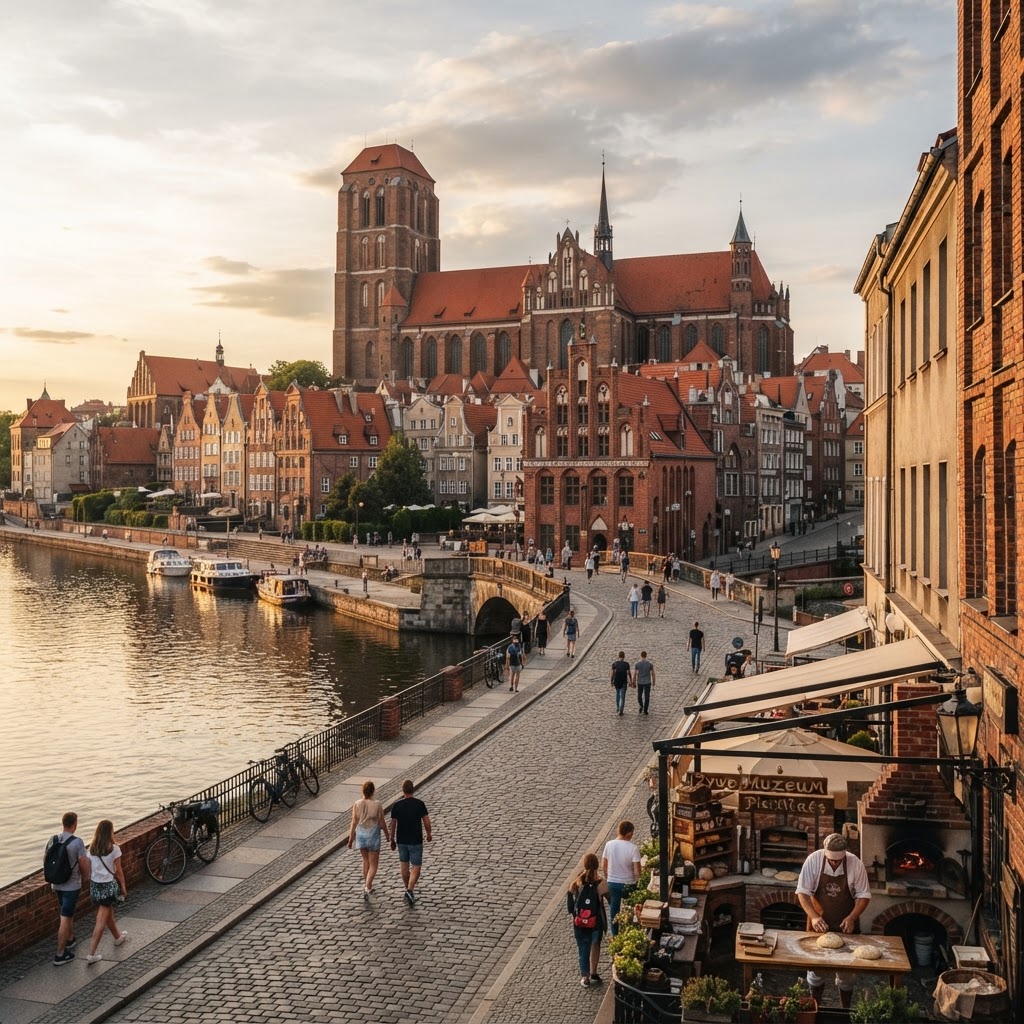
Toruń
Poland
Authentic Gothic brick, living confectionery guildcraft, and the birthplace of Copernicus on the Vistula.
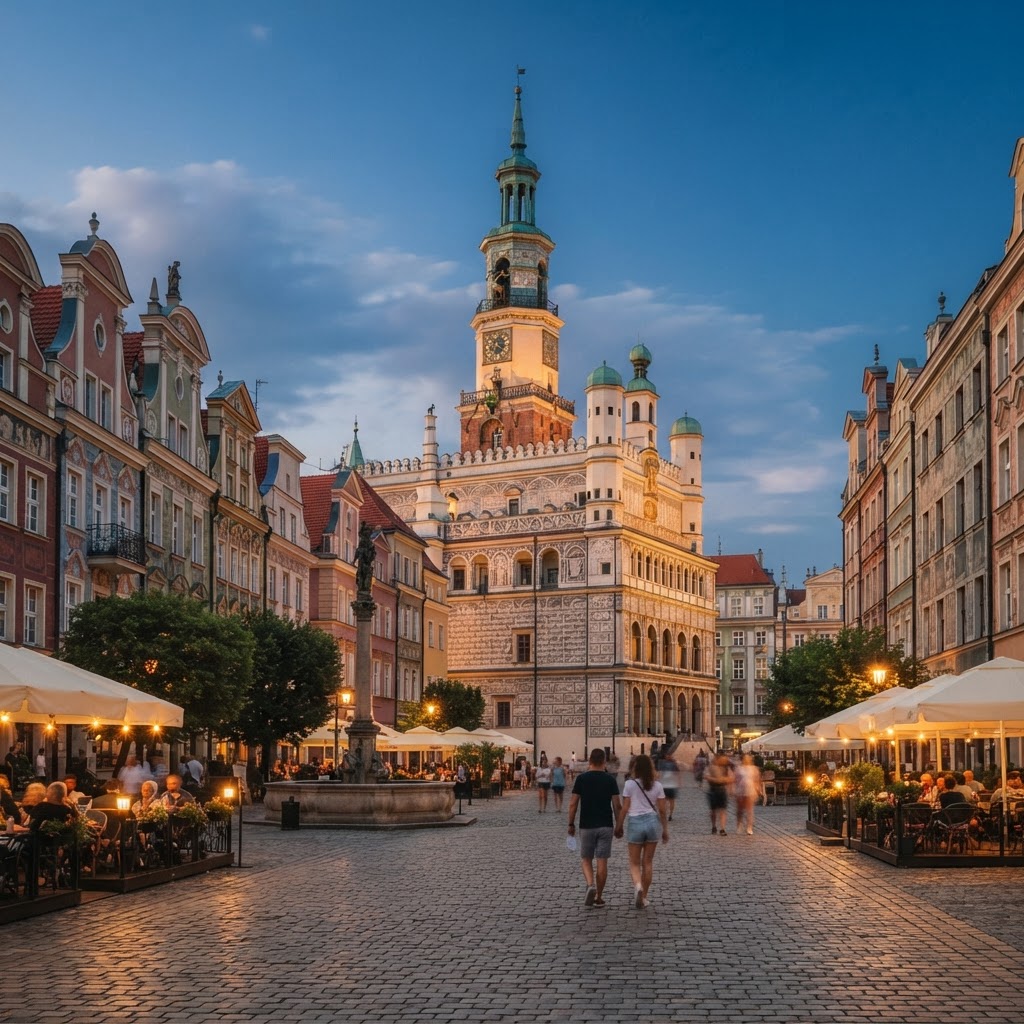
Poznań
Poland
Renaissance elegance, bohemian Art Nouveau streets, and Poland's cradle of statehood.
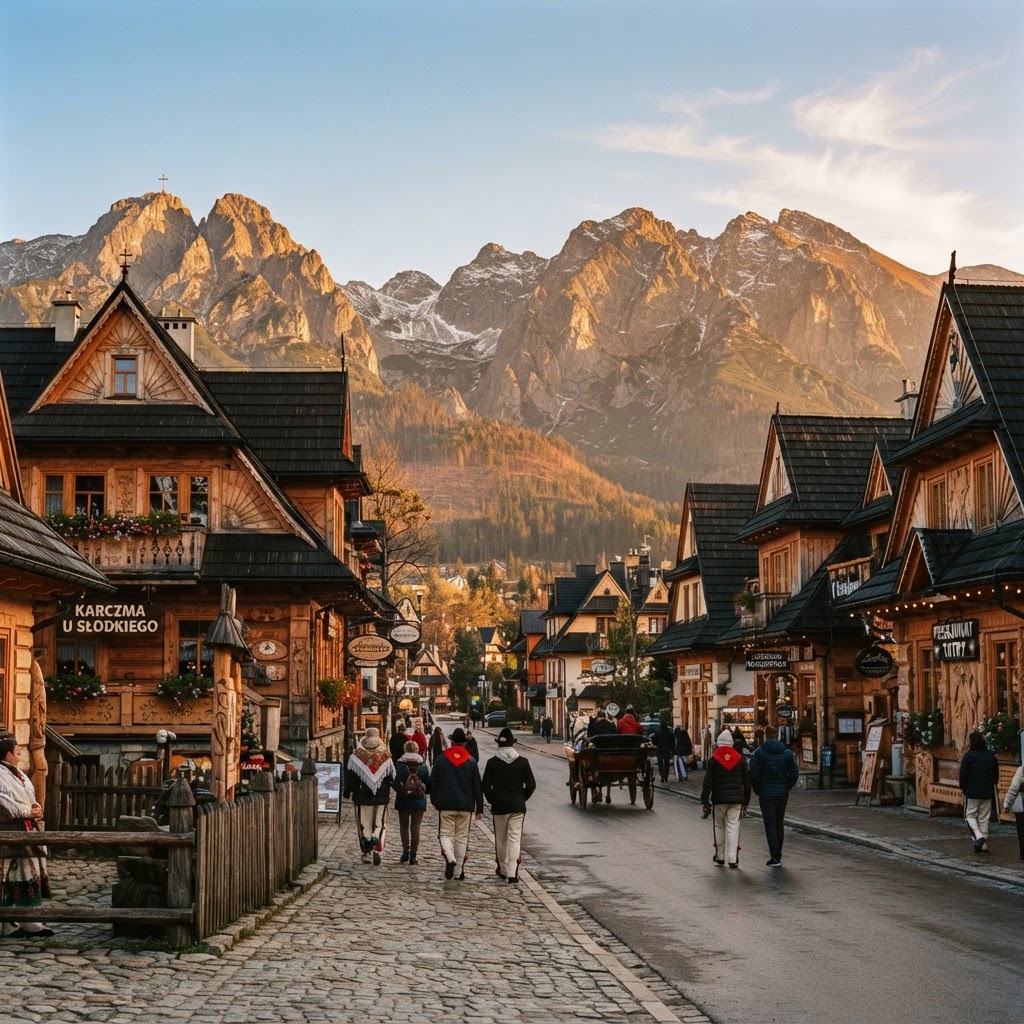
Zakopane, Poland
Poland
Tatra granite peaks, wood-carved Podhale architecture, and hearty alpine tradition.
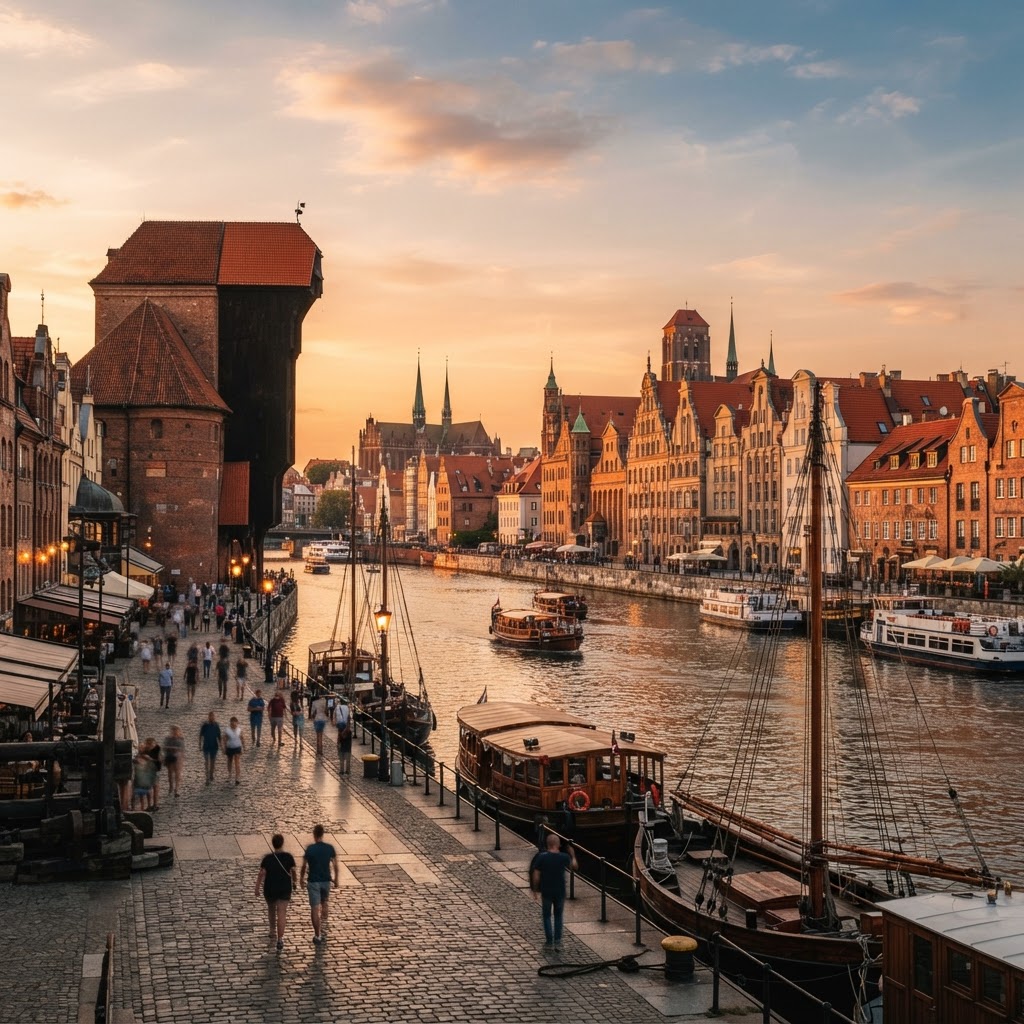
Gdańsk
Poland
Hanseatic brick architecture, maritime grit, and Poland's most compelling twentieth-century history.
Readymade itineraries
Start from a tested template — then make it yours.
Ready to book
Lock in your Wrocław trip
Everything in one place. We may earn a small commission — it never costs you more.
Plan a trip to Wrocław
Pick a length and we'll build a day-by-day plan around how you travel — neighborhoods clustered, budget-aware, and editable.
Get better at planning trips like this
Occasional notes on planning smarter — no spam, unsubscribe anytime.
Plan a trip to Wrocław
Turn this guide into a day-by-day plan built around your pace, your group, and your budget.
Build my Wrocław trip