
Nepal
Kathmandu Itinerary: How Many Days + Sample Plans
Kathmandu is a valley of temples — Durbar Squares, stupas, and the gateway to the Himalayas and Everest.
Traveler rating
Loved by culture.
Plan & book
Sort your Kathmandu trip in one place.
We point you to the booking tools we'd actually use — live prices, no markup. Or let us build the day-by-day plan around you first, then book.
Pick your trip length
How many days do you need in Kathmandu?
Each of these opens a full day-by-day plan you can make your own.
- 2 days — Two days — the essentials, no rushing.
- 3 days — Three days — the icons plus one neighborhood.
- 4 days — Four days — a full city without sprinting.
- 5 days — Five days — room for a day trip.
- 7 days — A week — the city at a human pace.
- With Kids trip — Shorter days, earlier dinners, what to skip.
- For Couples trip — Two-person pacing with evenings built in.
- Solo trip — A plan that works well on your own.
- Food trip — Meals and markets as the anchors.
- Outdoors trip — Nature, walks and open air.
- Culture trip — History, museums and the streets around them.
Kathmandu is Nepal's crowded, spiritual capital — a valley of three Durbar Squares, the Boudhanath stupa, and the Pashupatinath river ghats. It's the gateway to trekking (Everest, Annapurna) and a city of endless shrines. Go in October–November or March–April for the clearest mountain views.
2–4 days
Best time
October to November for pristine Himalayan views and crisp air, followed closely by March to April.
Budget
USD 30–80 equivalent per person per day at mid-range.
Build your own trip with these prebuilt itineraries
Each one is a tested, day-by-day plan for Kathmandu — start here, then make it yours.
2 Days of Heritage Highlights
Essential cultural landmarks and UNESCO world heritage sites for the time-pressed traveler.
8 Days of Kathmandu Valley Exploration & Nature
Focuses on escaping the city center for hiking, mountain views, and the natural beauty of the surrounding valley rim.
5 Days of Spiritual & Architectural Immersion
A deep dive into the valley's ancient history, including visits to Patan, Bhaktapur, and the major stupas.
Kathmandu is an intense collision of living medieval Hinduism, Tibetan Buddhism, and mountaineering lore set within a high-altitude Himalayan bowl. Its three ancient royal squares display world-class Newari woodcarving and brick architecture that survived multiple earthquakes. For anyone heading into the Himalayas, the sensory transition from dusty urban bazaars to sacred circumambulations around Boudhanath is an unforgettable travel baseline.
Where to stay
Getting there
Getting around
Food & drink
What it costs
Things to do
Book tours & tickets in KathmanduSkip it if
Skip spending extended time here if you have severe asthma or respiratory issues, as winter valley smog and road dust are brutal. It is also not suited for travelers expecting sterile urban infrastructure or pristine quiet outside hotel gates.
When to go
Post-monsoon autumn clears dust and haze, delivering razor-sharp mountain panoramas and dry trekking paths at peak pricing. Spring warms the valley and blooms rhododendrons, but afternoon haze builds up before the summer rains.
Peak (October–November)
Crystal-clear mountain visibility, comfortable 20°C daytime temps, and Dashain/Tihar festival atmosphere; book hotels and Lukla flights months in advance.
Shoulder (March–April & February)
Warmer days, colorful rhododendrons, and manageable trails; air can get hazy in late spring, obscuring distant peaks.
Low (June–September & December–January)
Monsoon summer brings torrential downpours, flight delays, and valley mud; winter (Dec–Jan) brings biting cold nights (near 0°C) and thick morning inversion smog.
Neighborhoods
Where you stay shapes the trip. Here's how to think about it.
Thamel
Chaotic, pedestrianized traveler grid packed with gear shops, bakeries, rooftop bars, and rickshaws.
Best for:First-timers, gear shopping, solo travelers, and nightlife
Don't miss:Stocking up on trekking gear on Tridevi Marg and grabbing tea in the hidden courtyard of the Kathmandu Guest House.
Boudha
Serene Tibetan enclave centered around the massive whitewashed stupa, humming with butter lamps and chanting monks.
Best for:Spiritual seekers, culture enthusiasts, and travelers looking for an unhurried, calm base
Don't miss:Joining the morning or dusk kora (circumambulation) around Boudhanath Stupa followed by Tibetan tingmo and butter tea at a rooftop cafe.
Patan (Lalitpur)
Artisanal, brick-paved historic city across the Bagmati River with preserved Newari courtyards and sleek modern cafes.
Best for:Architecture buffs, design-focused travelers, and boutique hotel lovers
Don't miss:The Patan Museum courtyard inside Keshav Narayan Chowk, arguably the best-curated museum in South Asia.
Lazimpat
Upscale diplomatic boulevard just north of the madness, offering polished dining and peaceful garden retreats.
Best for:Business travelers, upscale stays, and travelers who want proximity to Thamel without the street noise
Don't miss:Dinner at the restored Rana-era complex of Baber Mahal Revisited nearby, or high-end Newari dining off Lazimpat Road.
Bhaktapur
Living medieval open-air museum of red-brick alleys, potter squares, and towering multi-tiered pagoda roofs.
Best for:History buffs, photographers, and overnight visitors escaping midday tour buses
Don't miss:Eating fresh juju dhau (sweet 'king curd') out of a clay pot near the five-story Nyatapola Temple at dusk.
Money & essentials
Currency
Nepalese rupee (NPR). Cash essential; cards at hotels.
Language
Nepali. English common in tourist areas.
Safety
Violent crime is rare, but watch for aggressive street dogs at night, check taxi meters, and take basic precautions against petty pickpocketing around crowded temples.
Budget range
USD 30–80 equivalent per person per day at mid-range.
Tipping
Tipping is customary: 10% is standard in upscale restaurants (if service charge is not included); tip private drivers $5–$10/day and temple guides $10–$15/day.
See what a trip to Nepal actually costs. Travel Budget Co.
How to plan it
- Base yourself in Patan or Boudha if you prefer spiritual mornings and quiet courtyards over Thamel's nightlife and hawkers.
- Dedicate Bhaktapur to an afternoon and overnight stay rather than a hurried two-hour tour bus stop—it empties out magically once day-trippers leave.
- Do not group Pashupatinath and Swayambhunath on the same morning; cross-valley traffic will burn two hours in transit. Pair Boudhanath with Pashupatinath on the east side instead.
- Visit Pashupatinath during the 6:30 PM evening Aarti ritual on the Bagmati River ghats for the most intense, moving atmosphere.
- Always schedule your Kathmandu layover at the end of a mountain trek, giving you an organic buffer day in case Lukla or Pokhara flights get weathered out.
Questions
More in Nepal
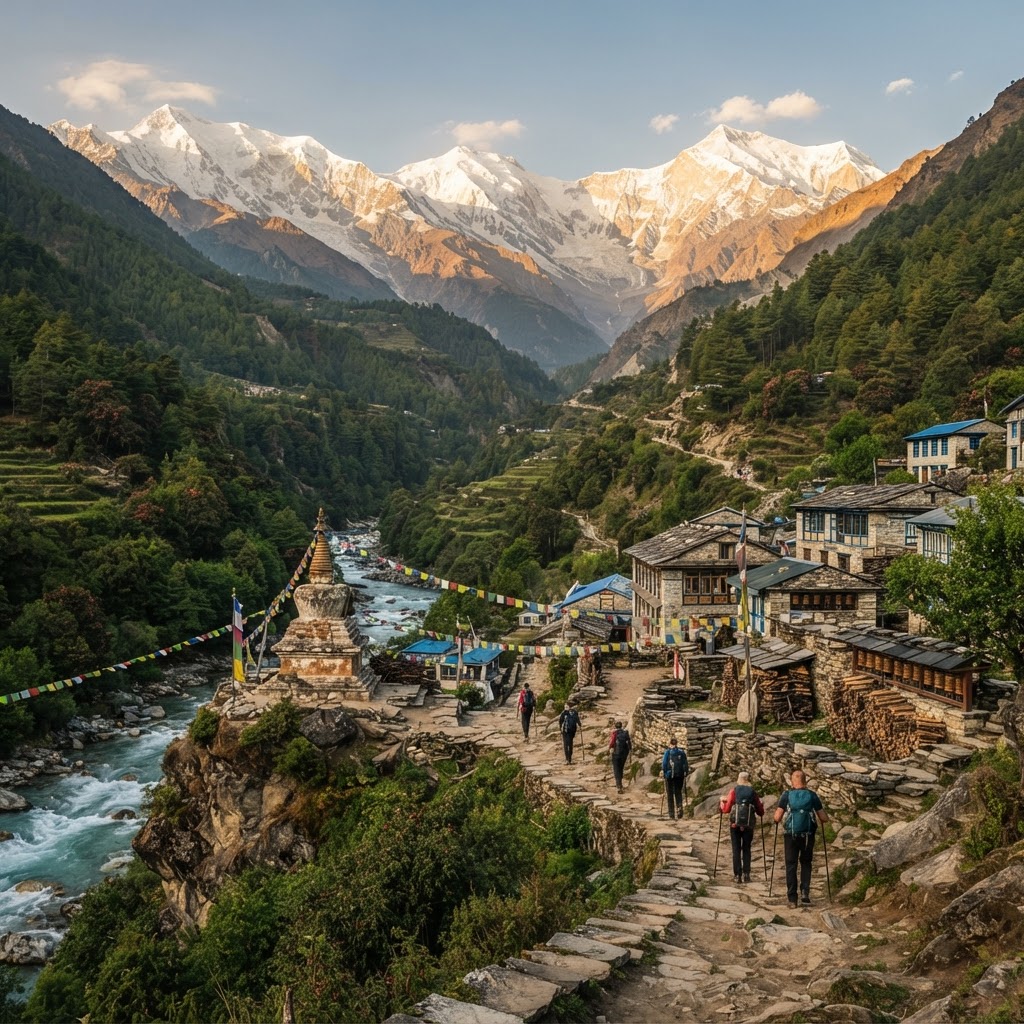
Annapurna Region, Nepal
Nepal
Trek through subtropical river valleys up to glaciated Himalayan high passes.
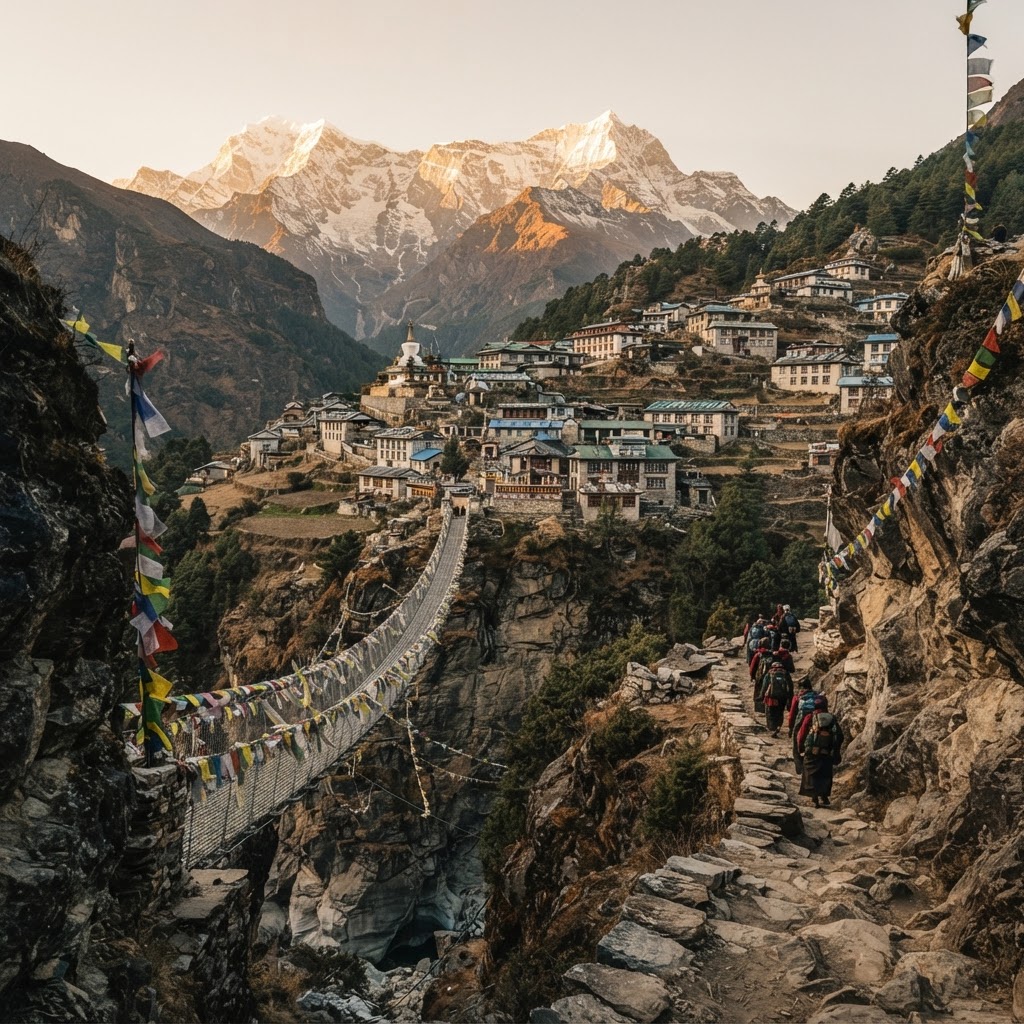
Everest Region (Khumbu)
Nepal
A high-altitude pilgrimage of Sherpa heritage, suspension bridges, and raw Himalayan rock.
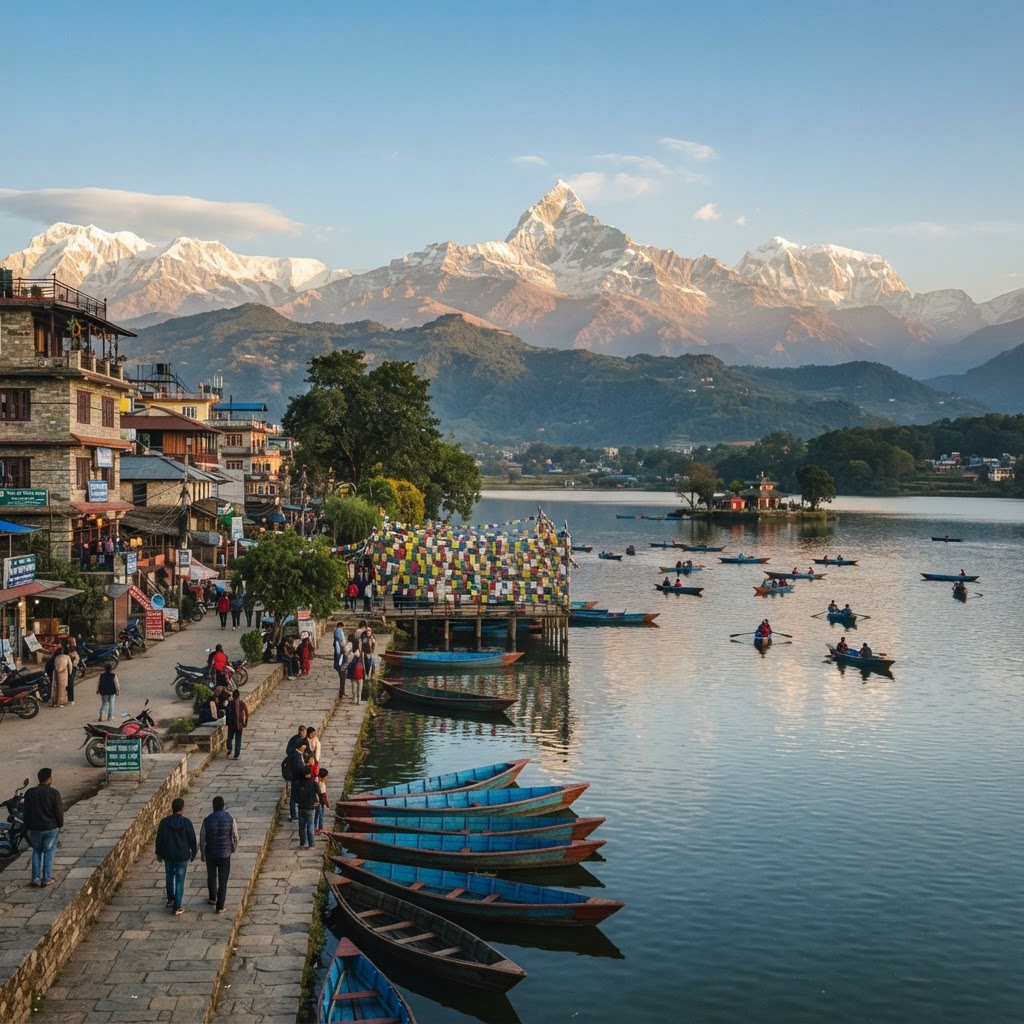
Pokhara, Nepal
Nepal
The low-altitude springboard to the Annapurnas, where Himalayan reflections meet relaxed lakeside living.
Readymade itineraries
Start from a tested template — then make it yours.
Ready to book
Lock in your Kathmandu trip
Everything in one place. We may earn a small commission — it never costs you more.
Plan a trip to Kathmandu
Pick a length and we'll build a day-by-day plan around how you travel — neighborhoods clustered, budget-aware, and editable.
Get better at planning trips like this
Occasional notes on planning smarter — no spam, unsubscribe anytime.
Plan a trip to Kathmandu
Turn this guide into a day-by-day plan built around your pace, your group, and your budget.
Build my Kathmandu trip