Nepal
Everest Region (Khumbu)
A high-altitude pilgrimage of Sherpa heritage, suspension bridges, and raw Himalayan rock.
Plan & book
Sort your Everest Region (Khumbu) trip in one place.
We point you to the booking tools we'd actually use — live prices, no markup. Or let us build the day-by-day plan around you first, then book.
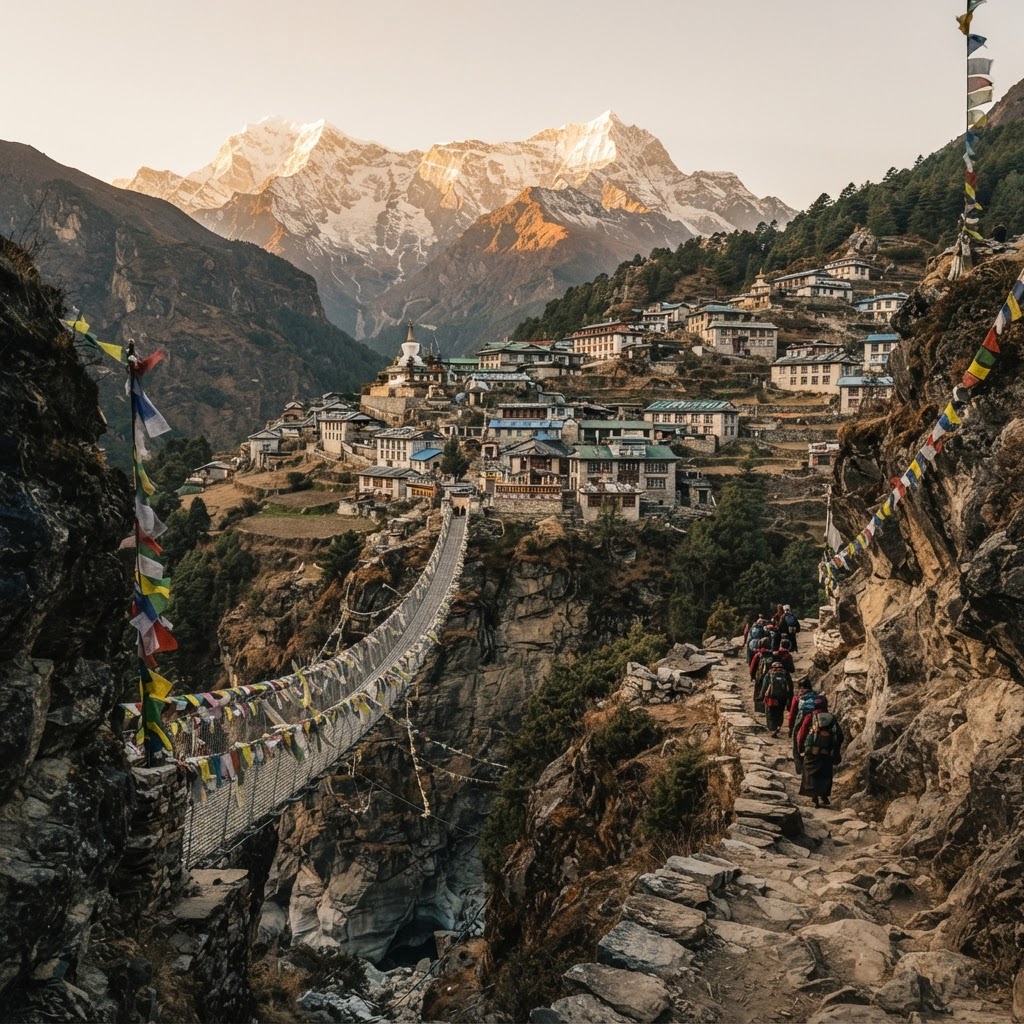
The Everest Region, known locally as the Khumbu, is not a casual mountain getaway but an immersive, pedestrian-only realm defined by elevation, Buddhist monasteries, and severe alpine topography. Stretching from the airstrip at Lukla up to the Khumbu Glacier beneath Mount Everest (Sagarmatha), travel here is measured in footpaths, acclimatization days, and teahouse dining rooms heated by yak dung. It demands genuine physical grit, flexible timelines, and respect for mountain physiology.
14 to 16 days
Best time
Late October to mid-November delivers the clearest skies, stable weather, and reliable flight schedules.
Build your own trip with these prebuilt itineraries
Each one is a tested, day-by-day plan for Everest Region (Khumbu) — start here, then make it yours.
Go for an unfiltered immersion into the high Himalaya where no roads exist, and daily life operates on foot and hoof. Beyond the bucket-list magnetism of Everest itself, the real draw is walking through living Sherpa valleys—passing prayer wheels in Namche Bazaar, listening to dusk chanting at Tengboche Monastery, and watching Ama Dablam shift colors across alpine ridgelines.
Where to stay
Getting there
Getting around
Food & drink
What it costs
Things to do
Book tours & tickets in Everest Region (Khumbu)Skip it if
Skip this destination if you have unstable cardiovascular or pulmonary conditions, cannot handle sustained daily uphill walking with basic squat toilets and unheated bedrooms, or have an inflexible work schedule that cannot absorb multi-day flight delays caused by Himalayan weather.
When to go
Spring (April to May) brings warmer days and climbing expeditions but cloudier afternoons, while October offers crystal visibility at the cost of crowded teahouses and sub-zero nights. Avoid mid-winter when high passes close, and avoid the summer monsoon entirely due to leeches and grounded flights.
Peak (October–November & April–May)
Crisp visibility and active trail life; expect fully booked teahouses, busy trails, and freezing nights above 4,000 meters.
Shoulder (March & late September / early December)
Fewer crowds and reasonable trail space, but March can be bitterly cold and late September may catch lingering tail-end monsoon rains.
Low (June–August & January–February)
Monsoon brings perpetual cloud cover, trail-washing landslides, and grounded Lukla flights; winter brings severe sub-zero cold (-20°C or lower) and shut teahouses.
Neighborhoods
Where you stay shapes the trip. Here's how to think about it.
Namche Bazaar (3,440m)
The bustling, terraced Sherpa capital set into a natural mountain amphitheater, complete with bakeries, gear shops, and prayer wheels.
Best for:Acclimatization layovers, gear rentals, cafe culture, and market browsing
Don't miss:The steep morning hike up to the Hotel Everest View terrace for morning panorama shots of Ama Dablam and Everest.
Tengboche & Debuche (3,867m - 3,820m)
Spiritual, windswept ridge overlooking sacred rhododendron forests and the towering spire of Ama Dablam.
Best for:Monastic immersion, dawn photography, and quiet reflection
Don't miss:Attending the afternoon monk chanting service inside Tengboche Monastery (Dawa Choling Gompa).
Dingboche (4,410m)
A wide, stone-walled high alpine farming valley exposed to dramatic light and freezing evening gusts.
Best for:Crucial high-altitude acclimatization, active day hikes, and landscape photography
Don't miss:The steep acclimatization climb up Nangkartshang Peak (5,083m) for views of Makalu and Island Peak.
Gokyo Valley & Lakes (4,750m)
Serene, dramatic, and far less crowded than the main trunk route, bordered by turquoise glacial tarns.
Best for:Trekkers seeking solitude, dramatic lake vistas, and challenging ridge lines
Don't miss:A pre-dawn ascent of Gokyo Ri (5,357m) for reflections across the Ngozumpa Glacier and an unobstructed view of four 8,000-meter peaks.
Gorak Shep & EBC (5,164m - 5,364m)
Austere, lunar outpost on frozen sand beds beside the shifting Khumbu Icefall.
Best for:Peak expedition atmosphere, glacier viewing, and bucket-list completions
Don't miss:Pushing past the rocky glacial flats of Base Camp to summit Kala Patthar (5,644m) for the classic close-up view of Everest's south face.
Destination intelligence
Updated 9/14/2026The structured record we plan every Everest Region (Khumbu) itinerary from.
Walkability
100% pedestrian-only network; every transfer between villages is executed entirely on mountain footpaths.
Transit quality
No public transit exists; logistics are limited to foot travel, pack animals, and high-cost helicopter charters.
Car needed
No roads exist in the Khumbu beyond lower foothills; standard cars and vehicles cannot be used.
Ideal duration
14 to 16 days
Minimum useful
7 to 8 days
Peak season
October to November (crisp, post-monsoon visibility) and April to May (warming temperatures, rhododendrons, and active climbing expeditions).
Shoulder season
March (crisp mornings, late winter chill) and late September / early December (clear skies with plunging sub-zero nights).
Low season
June through August (heavy monsoon rains, leeches, obscured peaks, grounded flights) and January to February (extreme sub-zero cold, snowbound passes, closed teahouses).
Best for
Common mistakes
- Ascending faster than 300–500 meters of sleeping elevation per day once above 3,000 meters, which risks Acute Mountain Sickness (AMS)
- Failing to build buffer days (at least 2 days) at the end of the trip for weather-related flight delays or cancellations at Lukla Airport
- Eating non-vegetarian meat dishes past Namche Bazaar, where all meat is carried up on foot without refrigeration
- Neglecting specialized travel insurance that explicitly covers unassisted medical evacuation up to 6,000 meters
Best nearby
See what a trip to Nepal actually costs. Travel Budget Co.
How to plan it
- Never skip the acclimatization rest days at Namche Bazaar (3,440m) and Dingboche (4,410m); ascending faster sharply raises your risk of medical evacuation.
- Build at least two flexible buffer days at the end of your trip in Kathmandu to account for notorious weather groundings at Tenzing-Hillary Airport in Lukla.
- Branch off toward Gokyo Lakes and the Cho La Pass instead of the classic out-and-back trail if you want sweeping turquoise glacial lakes and half the foot traffic.
- Start your daily trail segments by 7:30 AM; Himalayan weather consistently clouds over by early afternoon, bringing biting winds and drop-offs in visibility.
- Rent heavy-duty gear (such as -20°C sleeping bags and down jackets) in Kathmandu's Thamel district rather than buying new gear you will rarely use again.
Questions
More in Nepal
Annapurna Region, Nepal
Nepal
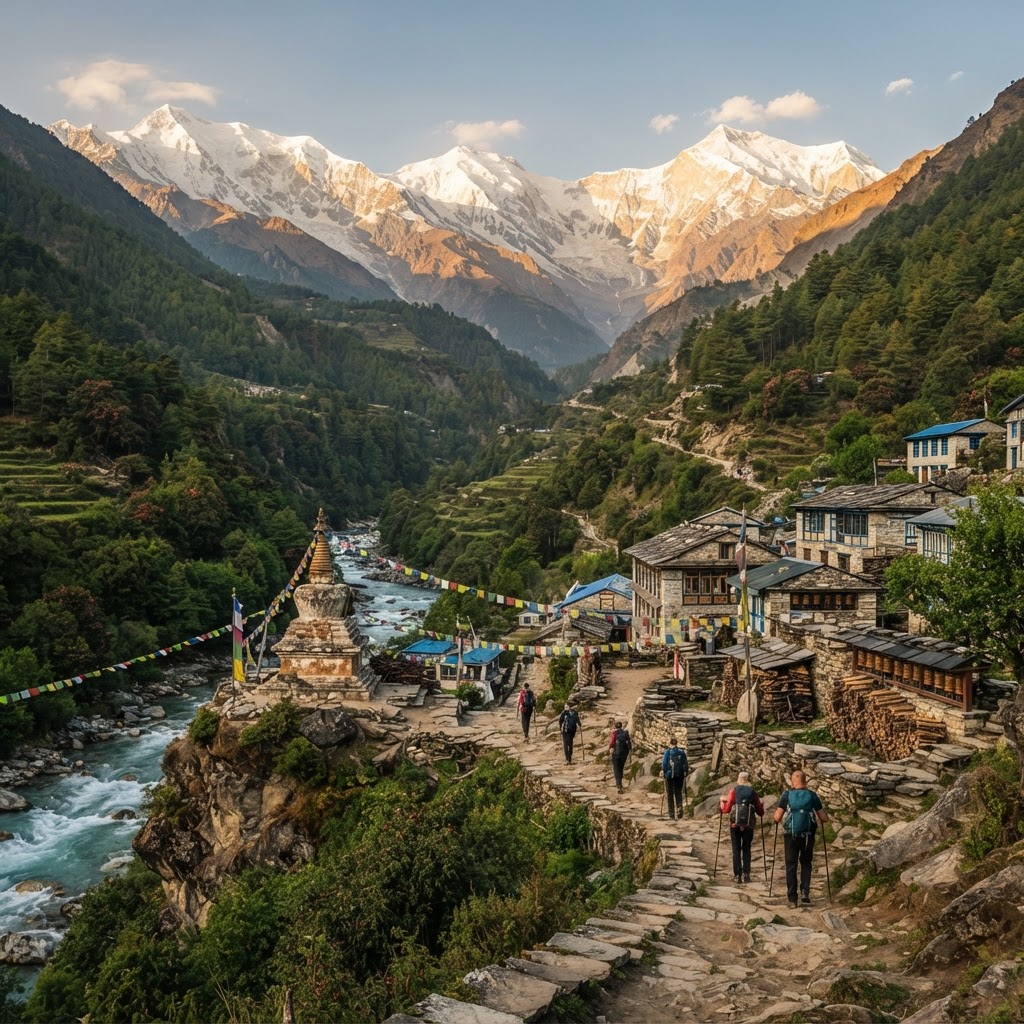
Trek through subtropical river valleys up to glaciated Himalayan high passes.
Pokhara, Nepal
Nepal
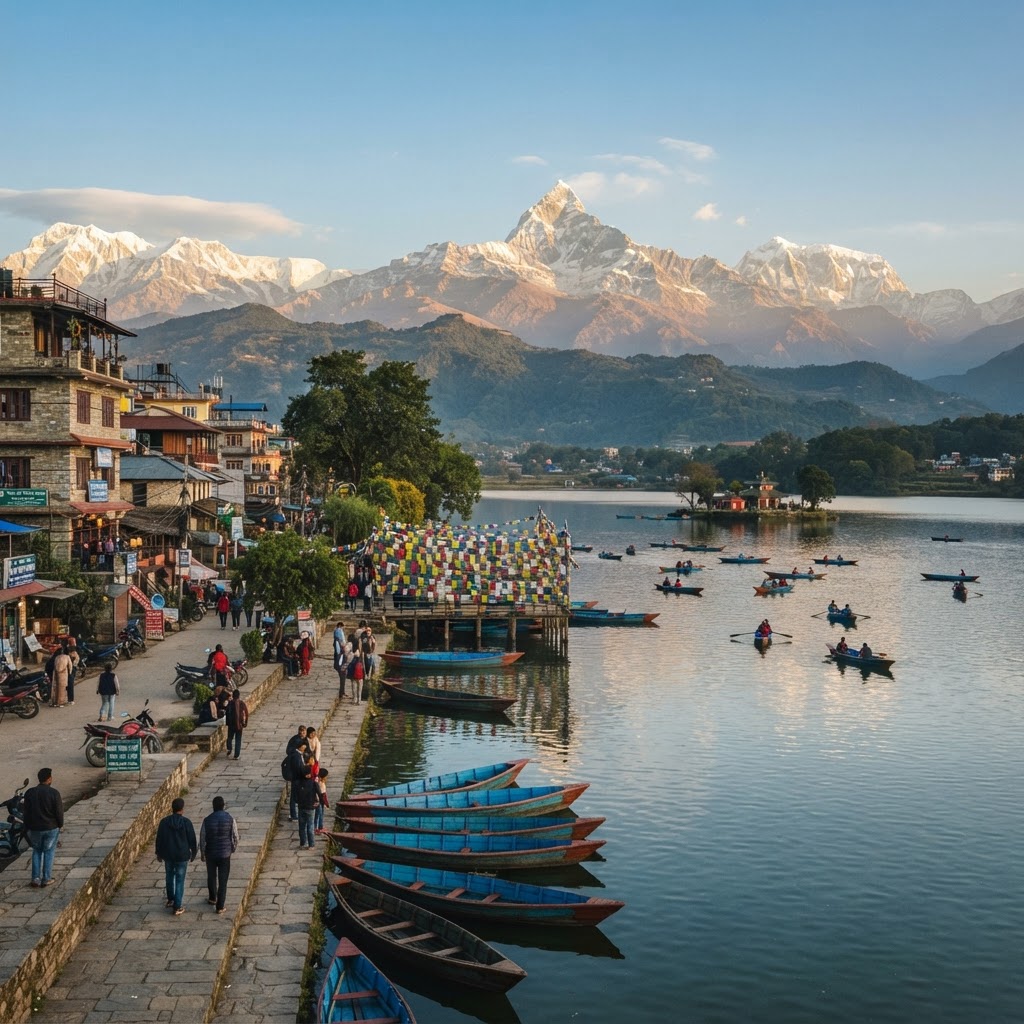
The low-altitude springboard to the Annapurnas, where Himalayan reflections meet relaxed lakeside living.
Readymade itineraries
Start from a tested template — then make it yours.
Ready to book
Lock in your Everest Region (Khumbu) trip
Everything in one place. We may earn a small commission — it never costs you more.
Plan a trip to Everest Region (Khumbu)
Pick a length and we'll build a day-by-day plan around how you travel — neighborhoods clustered, budget-aware, and editable.
Get better at planning trips like this
Occasional notes on planning smarter — no spam, unsubscribe anytime.
Plan a trip to Everest Region (Khumbu)
Turn this guide into a day-by-day plan built around your pace, your group, and your budget.
Build my Everest Region (Khumbu) trip