Nepal
Pokhara, Nepal
The low-altitude springboard to the Annapurnas, where Himalayan reflections meet relaxed lakeside living.
Plan & book
Sort your Pokhara, Nepal trip in one place.
We point you to the booking tools we'd actually use — live prices, no markup. Or let us build the day-by-day plan around you first, then book.
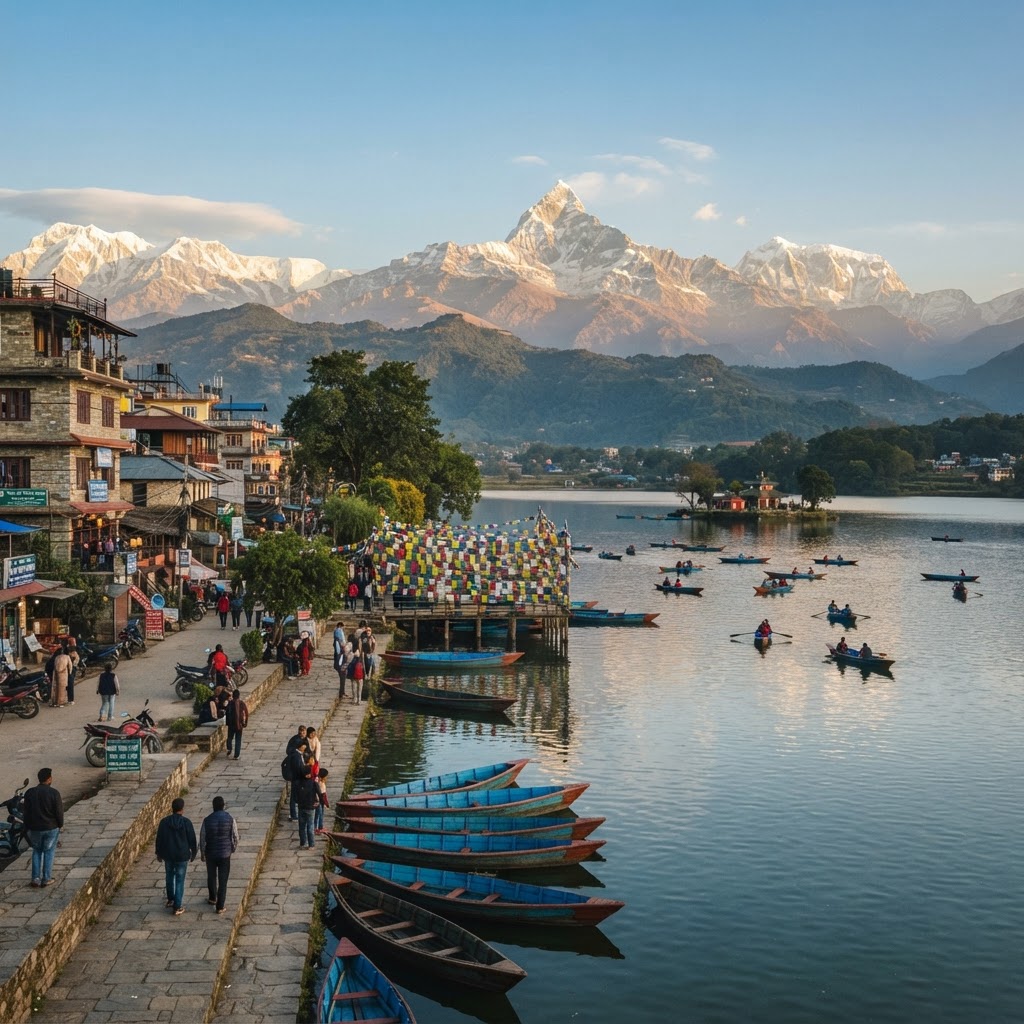
Perched on the shores of Phewa Lake at roughly 820 meters, Pokhara serves as Nepal’s premier adventure base and recovery sanctuary. Dramatically cleaner, quieter, and less chaotic than Kathmandu, the city is framed by the serrated massif of the Annapurnas, dominated by the sacred, unclimbed pyramid of Machapuchare (Fishtail). Whether preparing for a multi-week alpine circuit or recharging weary knees over fresh Tibetan momos, Pokhara offers an easygoing blend of outdoor pursuits, lakeside promenades, and panoramic viewpoints.
4 to 5 days (excluding trek days)
Best time
October to November for supreme mountain clarity, followed closely by March to April for warm hiking days and rhododendrons.
Build your own trip with these prebuilt itineraries
Each one is a tested, day-by-day plan for Pokhara, Nepal — start here, then make it yours.
5 Days in Pokhara: Pre/Post-Trek Slow Travel & Cultural Foothills in Pokhara
Relaxed recovery and immersion with Tibetan settlement visits, day hikes to the Peace Pagoda, cafe culture, and sunrise ridge viewpoints.
3 Days in Pokhara: Scenic Highlights & Lakeside Chill in Pokhara
First-timer essentials focusing on classic valley viewpoints, tranquil lake boating, and walkable Lakeside relaxation without high-altitude trekking.
4 Days in Pokhara: Action & Adventure Sports in Pokhara
Adrenaline-fueled exploration featuring tandem paragliding from Sarangkot, mountain biking ridge trails, and Seti River white-water paddling.
Pokhara delivers unobstructed, eye-level Himalayan views from subtropical elevation without requiring days of high-altitude acclimatization. It is the undisputed operational hub for trekking the Annapurna Conservation Area, paragliding off Sarangkot, and slow-paced lakeside exploration along Phewa Tal.
Where to stay
Getting there
Getting around
Food & drink
What it costs
Things to do
Book tours & tickets in Pokhara, NepalSkip it if
Skip Pokhara if your sole reason for visiting Nepal is exploring ancient Newari palace architecture, Hindu pilgrimage temples, and historic urban courtyards—Kathmandu and Patan deliver that far better. Also skip it if you cannot tolerate bumpy, prolonged overland transit and refuse to take small domestic flights.
When to go
Post-monsoon autumn washes the air clear of dust and humidity, presenting the sharpest Himalayan silhouettes, while spring brings vibrant flora and longer daylight. The tradeoff is steep: peak autumn commands crowded trails and firm hotel pricing, whereas shoulder winter brings chilly nights but deserted viewpoints, and summer monsoon obscures mountains entirely behind relentless rain.
Peak (Oct–Nov & Mar–Apr)
Crystal-clear vistas of the Annapurna range, dry skies, and optimal paragliding conditions; expect busy trailheads and full domestic flights.
Shoulder (Dec–Feb)
Sunny afternoons and crisp, crisp air, though nights drop near freezing and high alpine passes close due to snow; excellent for budget hotel deals.
Low (Jun–Aug)
Heavy monsoon rains soak the valley, leeches cover lower hiking paths, and the Annapurnas remain blanketed by thick cloud cover.
Neighborhoods
Where you stay shapes the trip. Here's how to think about it.
Central Lakeside (Baidam)
Bustling traveler hub packed with gear shops, bakeries, travel agencies, and direct water access.
Best for:First-timers, dining, and trek logistics
Don't miss:Renting a wooden doonga rowboat at the central boat ghat to cross over to the Tal Barahi island temple.
North Lakeside
Mellow, leafy, and noticeably quieter with relaxed boutique guesthouses and open garden cafes.
Best for:Slow travelers, couples, and post-trek recovery
Don't miss:Espresso and fresh pastries at French-run bakeries along the quieter north walking path before the mid-day heat.
Sarangkot Ridge
Breezy mountaintop perch with panorama viewpoints facing Machapuchare and the Annapurna range.
Best for:Early risers, paragliders, and mountain panoramas
Don't miss:Catching the sunrise alpine glow on Annapurna I and Machapuchare directly from the ridge viewing tower at 05:45.
Damside (South Lakeside)
Residential, tranquil pocket with unobstructed south-facing lake reflections and traditional local teahouses.
Best for:Budget-minded travelers seeking quiet without leaving walking distance
Don't miss:The early-morning mirror reflection of Machapuchare on Phewa Lake near the dam before afternoon wind creates chop.
Old Pokhara (Purano Bazar)
Historic Newari brick architecture, bustling local bazaars, and zero tourist-oriented gear shops.
Best for:Culture seekers and architecture enthusiasts
Don't miss:The 17th-century Bindhyabasini Temple perched on a quiet knoll, followed by sampling fresh Newari samosas in the bazaar.
Destination intelligence
Updated 9/14/2026The structured record we plan every Pokhara, Nepal itinerary from.
Walkability
High in Lakeside; very low across the wider valley requiring taxis for outlying hills and temples.
Transit quality
Basic. Abundant taxis and cheap local minibuses exist, but there is no mass transit or rail system.
Car needed
No. Self-driving is inadvisable; walk locally and hire taxis or private drivers for ridge viewpoints.
Ideal duration
4 to 5 days (excluding trek days)
Minimum useful
2 full days
Peak season
October to November (autumn trekking, crisp crystal-clear mountain vistas) and March to April (spring rhododendron blooms, comfortable temperatures).
Shoulder season
December to February: chilly mornings, pleasant afternoons, thin crowds, and crisp mountain views, though higher passes freeze.
Low season
June to August: summer monsoon brings heavy rainfall, cloud cover obscuring peaks, leeches on foothill trails, and landslide-prone highways.
Best for
Common mistakes
- Underestimating the overland bus trip from Kathmandu: budget a full travel day, as construction delays routinely turn a 6-hour ride into a 10-hour ordeal.
- Scheduling tight domestic flight connections on the same day as international departures, ignoring seasonal morning fog and cloud delays in the Pokhara valley.
- Buying essential technical alpine gear in the tourist shops along Lakeside without checking for counterfeit membranes and zippers.
- Assuming every day guarantees mountain views: visibility during the monsoon (June–August) and pre-monsoon hazy days can obscure the peaks completely.
Best nearby
See what a trip to Nepal actually costs. Travel Budget Co.
How to plan it
- Base yourself in North Lakeside if you value quiet sleep over nightlife; choose Central Lakeside if you want walking access to gear rentals and bus stops.
- Do not book your Sarangkot sunrise taxi days in advance; check the evening weather forecast first to confirm the cloud ceiling is high enough to see the peaks.
- Combine the World Peace Pagoda and Pumdikot Shiva Statue into a single half-day morning taxi hire rather than splitting them across multiple days.
- If taking the Prithvi Highway tourist bus back to Kathmandu, reserve front or middle seats at least 48 hours early to avoid the rougher back-axle bumps.
- Pair Pokhara with a 4-day Poon Hill trek or a low-altitude Australian Camp walk if you want Annapurna views without committing to a two-week circuit.
Questions
More in Nepal
Annapurna Region, Nepal
Nepal
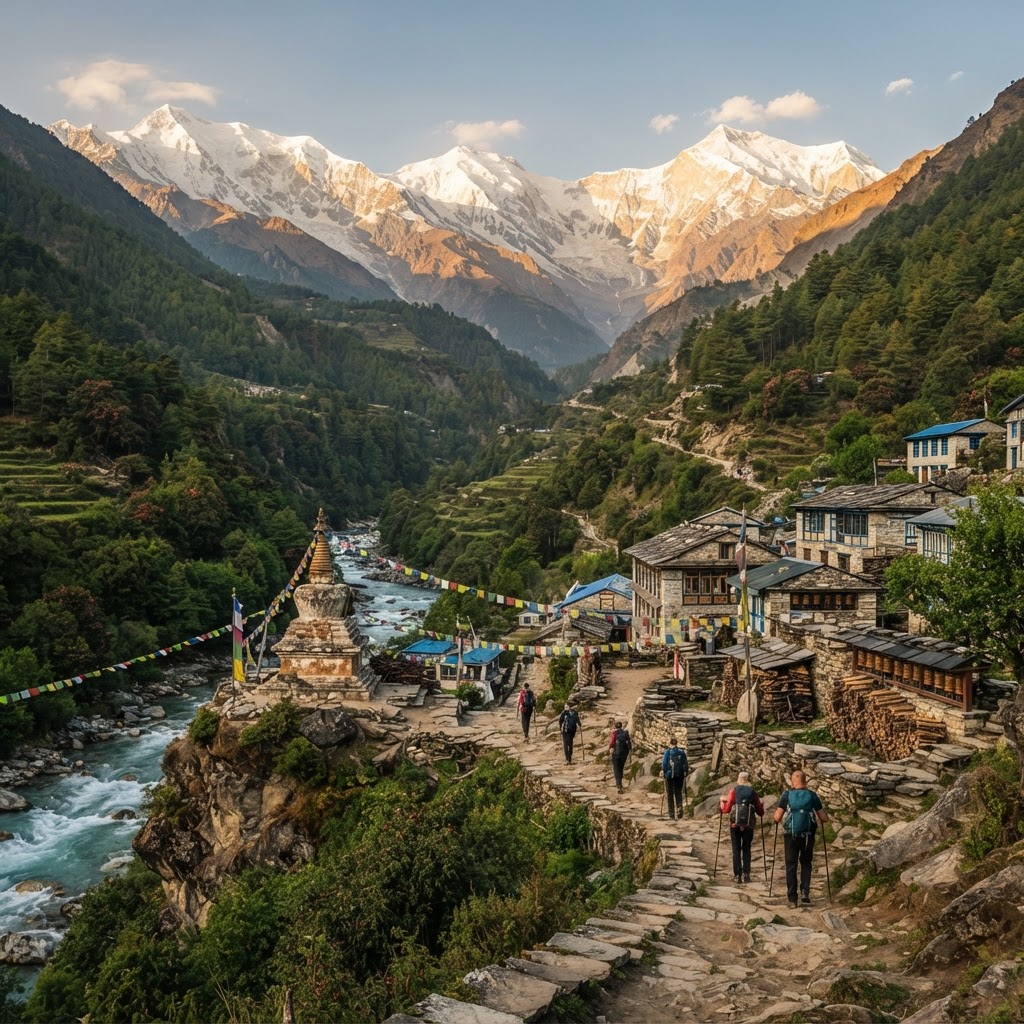
Trek through subtropical river valleys up to glaciated Himalayan high passes.
Everest Region (Khumbu)
Nepal
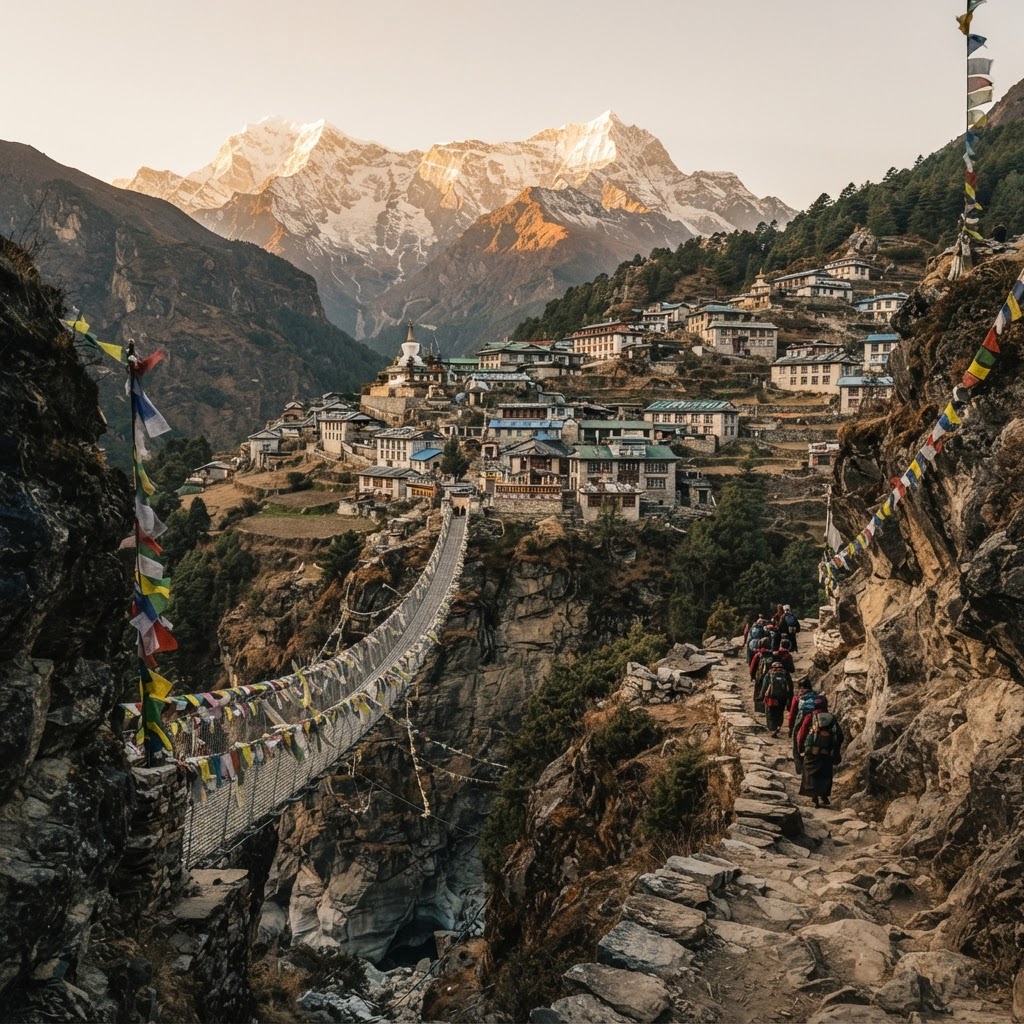
A high-altitude pilgrimage of Sherpa heritage, suspension bridges, and raw Himalayan rock.
Readymade itineraries
Start from a tested template — then make it yours.
Ready to book
Lock in your Pokhara, Nepal trip
Everything in one place. We may earn a small commission — it never costs you more.
Plan a trip to Pokhara, Nepal
Pick a length and we'll build a day-by-day plan around how you travel — neighborhoods clustered, budget-aware, and editable.
Get better at planning trips like this
Occasional notes on planning smarter — no spam, unsubscribe anytime.
Plan a trip to Pokhara, Nepal
Turn this guide into a day-by-day plan built around your pace, your group, and your budget.
Build my Pokhara, Nepal trip