Switzerland
Interlaken Itinerary: How Many Days + Sample Plans
The ultimate Swiss rail hub between two lakes, traded off against village charm
Traveler rating
Loved by logistics-focused travelers who want seamless rail access across the entire Bernese Oberland.
Plan & book
Sort your Interlaken trip in one place.
We point you to the booking tools we'd actually use — live prices, no markup. Or let us build the day-by-day plan around you first, then book.
Pick your trip length
How many days do you need in Interlaken?
Each of these opens a full day-by-day plan you can make your own.
- 2 days — Two days — the essentials, no rushing.
- 3 days — Three days — the icons plus one neighborhood.
- 4 days — Four days — a full city without sprinting.
- 5 days — Five days — room for a day trip.
- 7 days — A week — the city at a human pace.
- With Kids trip — Shorter days, earlier dinners, what to skip.
- For Couples trip — Two-person pacing with evenings built in.
- Solo trip — A plan that works well on your own.
- Food trip — Meals and markets as the anchors.
- Outdoors trip — Nature, walks and open air.
- Culture trip — History, museums and the streets around them.
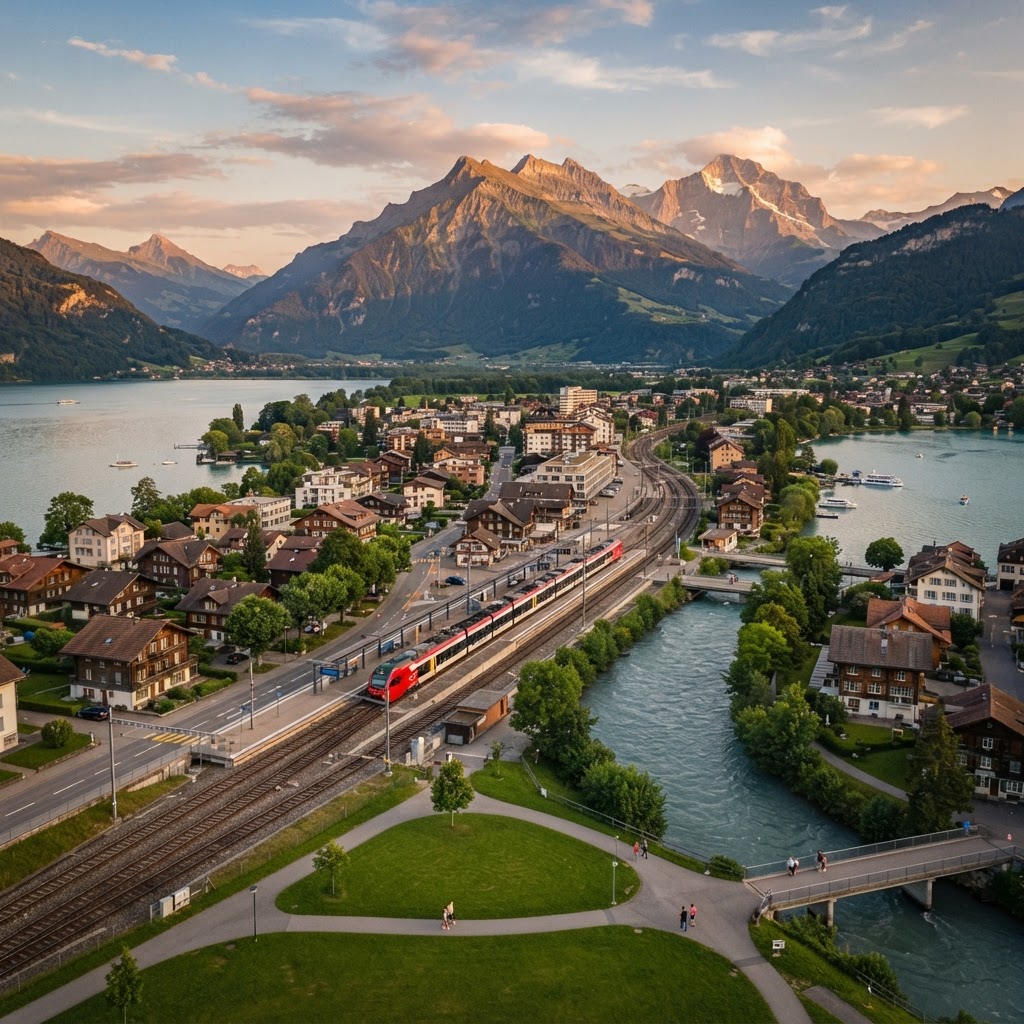
Interlaken sits in a flat alluvial valley between Lake Thun and Lake Brienz, framed by the peaks of the Eiger, Mönch, and Jungfrau. While purists argue it lacks the storybook alpine romance of car-free villages like Wengen or Mürren, Interlaken serves a ruthlessly practical purpose: it is the unrivaled transit interchange for the Bernese Oberland. With direct rail links to Zurich, Geneva, and Lucerne, plus ferry terminals connecting both lakes, it offers maximum logistical flexibility, dependable bad-weather day trips, and Switzerland's highest concentration of outdoor adventure operators.
4 days
Best time
Mid-June through September for full high-alpine trail access and lake boats; late December to February for winter sports.
Build your own trip with these prebuilt itineraries
Each one is a tested, day-by-day plan for Interlaken — start here, then make it yours.
5 Days in Interlaken: Alpine Lakes & Valley Explorations in Interlaken
Family-friendly, scenic transit pace across Lake Brienz, Lake Thun, and car-free villages
4 Days in Interlaken: The Classic Bernese Oberland Hub in Interlaken
First-time overview using rail passes for Jungfraujoch, Schilthorn, and lake cruises
2 Days in Interlaken: The Adrenaline Thrills in Interlaken
Action-packed adventure base: tandem paragliding, canyoning, and via ferratas
Go for tactical mobility. Interlaken lets you pivot effortlessly based on daily alpine weather forecasts: if the Jungfraujoch summit is socked in clouds, you can board a paddle steamer across Lake Brienz to Giessbach Falls or take a 50-minute train into medieval Bern. It also delivers the easiest access to high-adrenaline sports like tandem paragliding directly over the Höhematte park.
Where to stay
Getting there
Getting around
Food & drink
What it costs
Things to do
Book tours & tickets in InterlakenSkip it if
Skip Interlaken if your priority is a peaceful, secluded Swiss chalet experience with alpine cowbells outside your window; book Wengen, Mürren, or higher Lauterbrunnen instead. Skip it also if you want a culturally rich European city break with major art museums and nightlife, as Interlaken is functionally a daytime outdoor staging ground.
When to go
Peak summer brings perfect hiking weather and open mountain passes but inflicts peak hotel rates and dense platform crowds between 10:00 and 15:00. May and October provide quiet streets and lower prices, but high-altitude cable cars and ridge trails frequently close for maintenance or snow cover.
Peak (Mid-June to August)
All high-elevation cable cars, cog railways, and lake ferries operate on full schedules; expect dense crowds, afternoon thunderstorms, and peak lodging rates requiring 2-3 months advance booking.
Shoulder (May to early June & September to October)
Crisp weather and manageable crowds; September offers the year's best trail stability, while May brings lush valleys but lingering snow on trails above 2,000 meters.
Low (November to mid-December & April)
A transition lull where low-valley fog is frequent, many mountain lifts undergo maintenance shutdowns, and lake boat timetables run on minimal skeleton service.
Neighborhoods
Where you stay shapes the trip. Here's how to think about it.
Interlaken Ost
High-efficiency transit nucleus with mega-supermarkets and departure platforms for every alpine valley.
Best for:early morning hikers, train buffs, day-trippers prioritizing zero commute friction
Don't miss:The morning rail departures to Lauterbrunnen and Grindelwald, plus the Lake Brienz boat departure docks directly behind the station.
Unterseen
Historic, medieval timber-framed village feel across the Aare River with quiet cobblestones and river weirs.
Best for:couples, quiet evenings, diners seeking traditional Swiss taverns away from tour buses
Don't miss:Crossing the wooden lock bridges over the emerald-green Aare to reach the quiet Stadthausplatz.
Interlaken West & Central Postgasse
Bustling town commercial center with lively cafes, casual bakeries, and retail stores.
Best for:budget travelers, hostel seekers, travelers using Lake Thun boat services and regional buses
Don't miss:Boarding the Lake Thun passenger paddle-steamer at the West quay for the scenic cruise toward Spiez and Thun.
Höheweg / Höhematte Promenade
The grand Victorian hotel strip fronting a protected 35-acre alpine meadow with front-row Jungfrau vistas.
Best for:luxury travelers, people-watching, first-timers who want open mountain panoramas
Don't miss:Grabbing a terrace bench facing the Höhematte to watch tandem paragliders touch down against the Jungfrau backdrop.
Matten bei Interlaken
Laid-back residential fringe peppered with budget hostels, adventure outfitters, and local climbing gyms.
Best for:adventure seekers, backpackers, travelers wanting lower lodging rates within walking distance of both stations
Don't miss:The outdoor adventure headquarters on Hauptstrasse for booking canyoning and tandem paragliding jumps.
Goldswil & Ringgenberg Edge
Quiet lake-terrace suburb overlooking the turquoise water of Lake Brienz.
Best for:families, nature lovers, road-trippers and campervans looking to escape central foot traffic
Don't miss:The hillside ruin of Burg Ringgenberg for elevated views over the turquoise waters of Lake Brienz.
Destination intelligence
Updated 10/6/2026The structured record we plan every Interlaken itinerary from.
Walkability
High. The town is completely flat and pedestrian-friendly, with marked pathways spanning the 1.5-kilometer distance between Interlaken West and Interlaken Ost in roughly 20 minutes.
Transit quality
World-class. High-frequency SBB trains, regional mountain railways, panoramic express routes, postal buses, and lake ferries operate with precision clockwork schedules.
Car needed
Not required and strongly discouraged. High-elevation highlights like Wengen and Mürren are car-free, and scenic railways reach every major valley faster than driving.
Ideal duration
4 days
Minimum useful
2 days
Peak season
Mid-June through August (hiking, paragliding, lake cruises, peak trail accessibility) and late December through February (regional ski base). Crowds and hotel prices reach their absolute maximum.
Shoulder season
May to early June and September through October. Ideal for crisp valley hiking, scenic train rides, and lake ferries with significantly thinner crowds and lower hotel rates.
Low season
November through mid-December and April. Low cloud cover and fog are common; many high-altitude cable cars and mountain restaurants shut down for annual maintenance.
Best for
Common mistakes
- Buying a Jungfraujoch or Schilthorn ticket in advance without checking the morning summit webcams, only to pay over 150 CHF to sit inside total fog.
- Expecting a quaint, car-free alpine village; Interlaken is a flat transit town and road corridor, not a sleepy mountain hamlet.
- Renting a car to tour the region, only to leave it parked in an expensive garage because higher-elevation towns like Wengen and Mürren ban cars.
- Failing to purchase a regional transport pass (such as the Swiss Travel Pass or Berner Oberland Pass), leading to astronomical per-ride fares on cable cars and mountain railways.
- Staying entirely in the center of town during clear weather instead of using Interlaken as a launching pad to get high up into the peaks.
Best nearby
How to plan it
- Stay within a 7-minute walk of Interlaken Ost station if your daily priority is catching early morning mountain connections into Lauterbrunnen or Grindelwald.
- Don't purchase high-elevation tickets (like Jungfraujoch or Schilthorn) weeks in advance; check the morning live webcams at the station before spending 100+ CHF on a whiteout.
- Pair a morning high-altitude hike with a late-afternoon boat cruise on Lake Brienz to Giessbach Falls when mountain cloud cover builds up.
- If traveling during July and August, depart on trains before 08:30 to bypass the tour group bottlenecks at Lauterbrunnen and Grindelwald Terminal.
- Download the SBB Mobile app to track train occupancy ratings and platform changes in real time across the Bernese Oberland network.
Questions
More in Switzerland
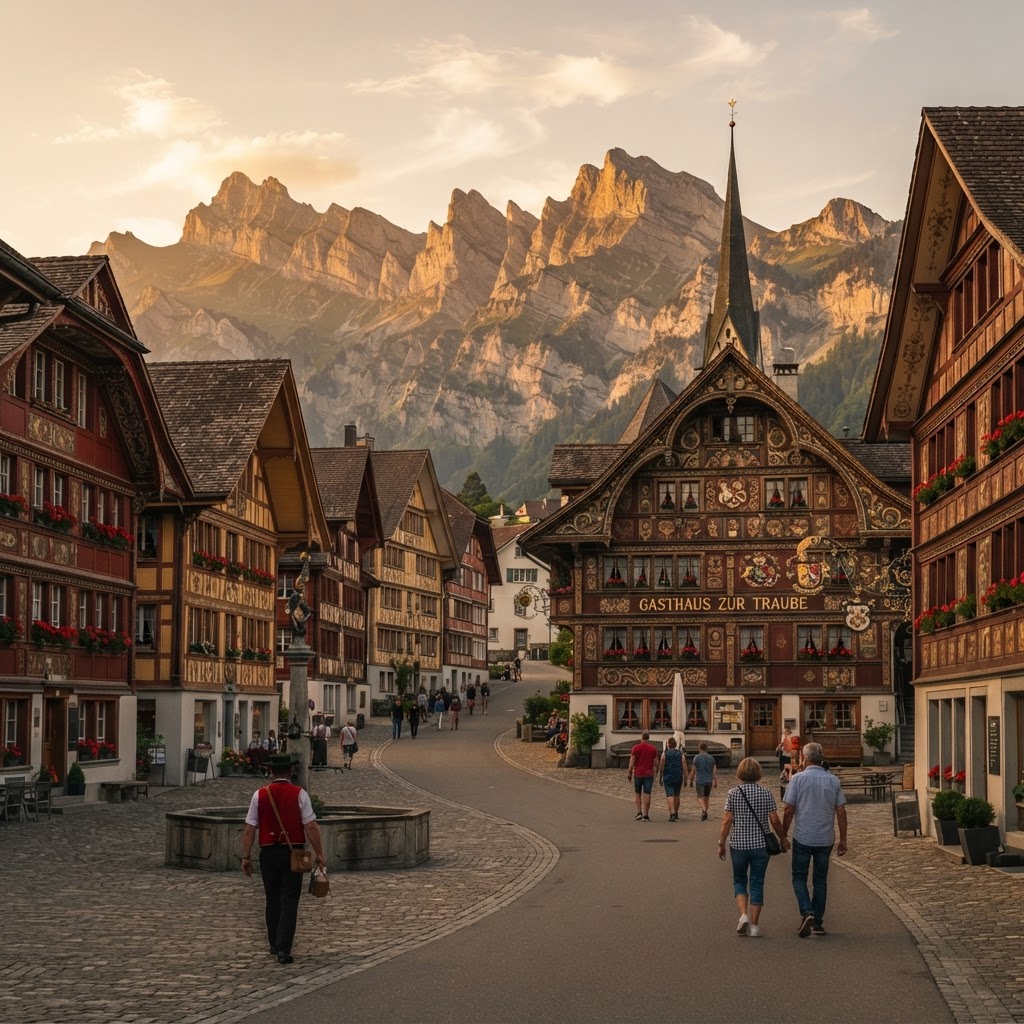
Appenzell
Switzerland
Carved timber facades, fierce traditions, and dramatic Alpstein limestone ridges.
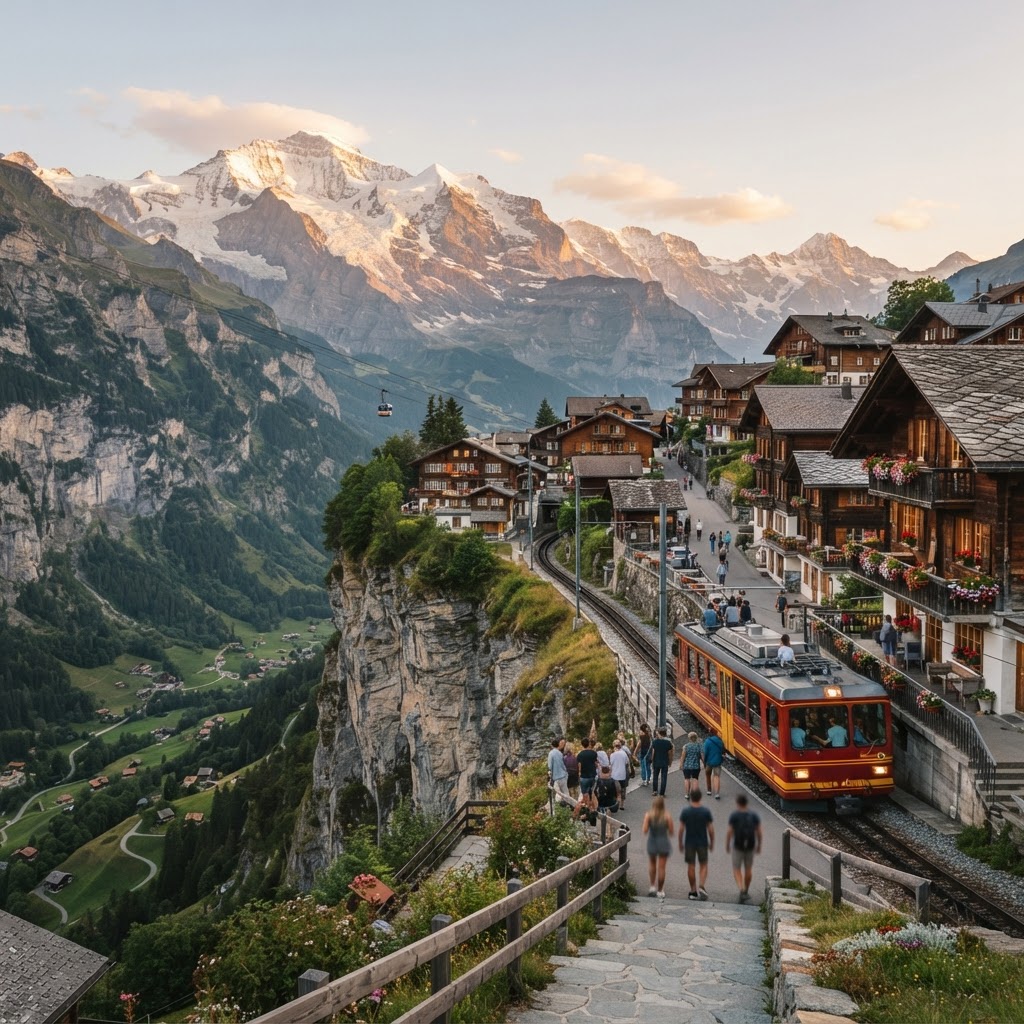
Jungfrau Region, Switzerland
Switzerland
Car-free cliffside villages, vertical alpine walls, and clockwork mountain railways.
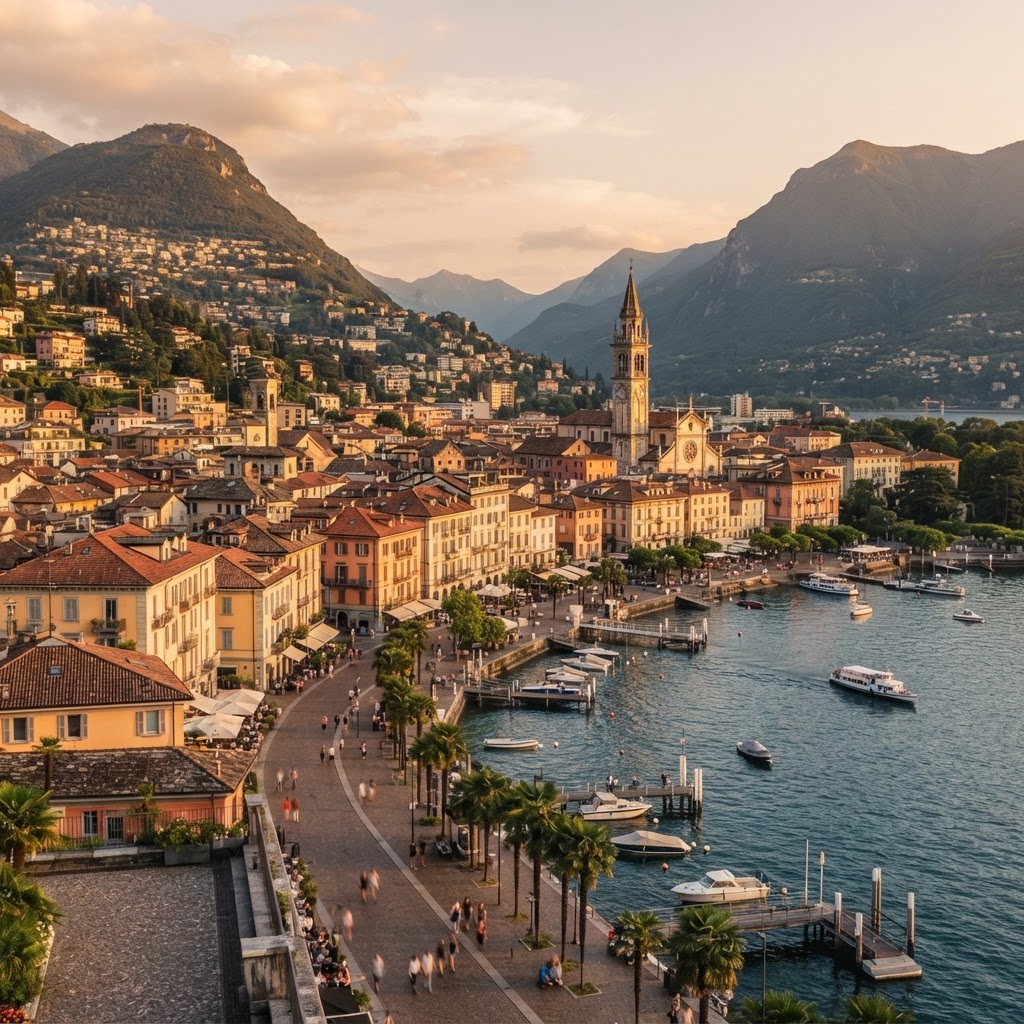
Lugano
Switzerland
Lombard warmth meets Swiss punctuality across a glacial lake framed by sub-Alpine peaks.
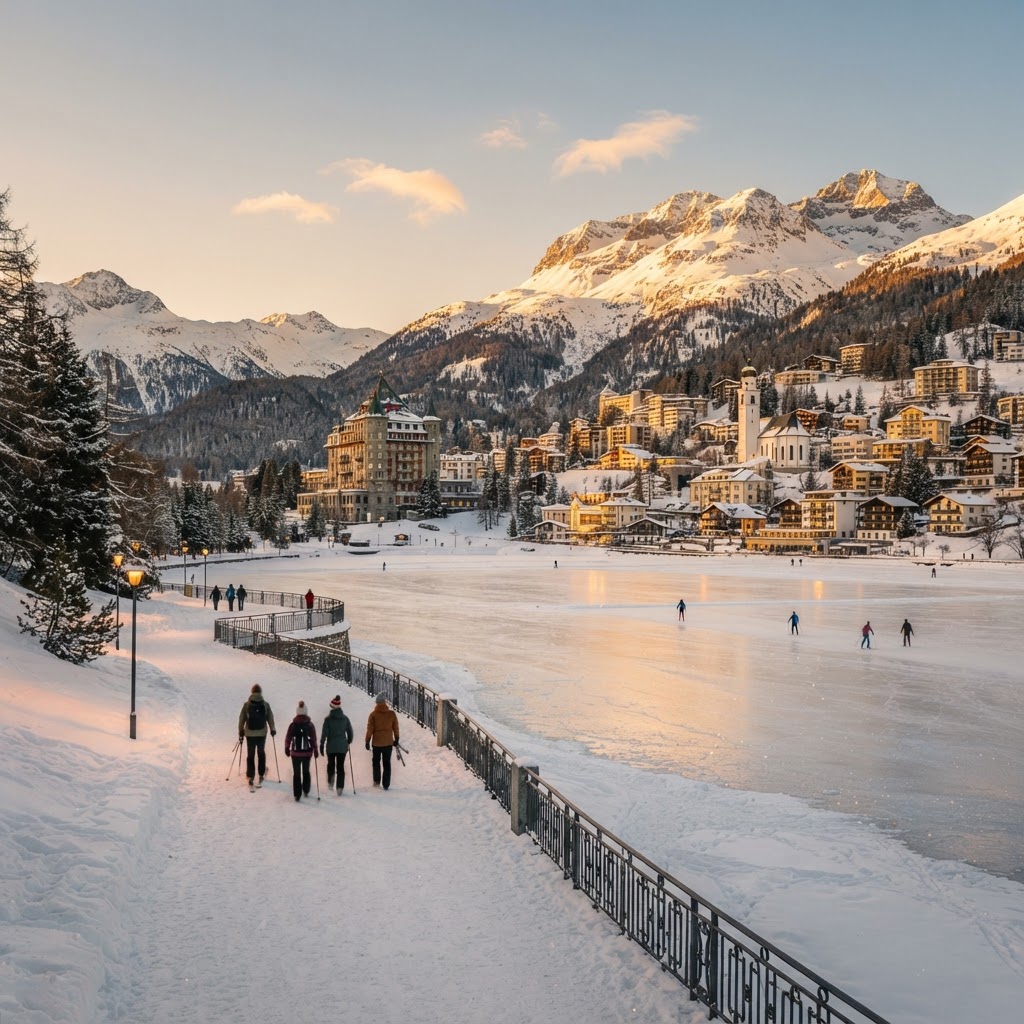
St. Moritz
Switzerland
High-altitude Engadine alpine elegance, world-class winter sports, and sparkling lakeside trails
Readymade itineraries
Start from a tested template — then make it yours.
Ready to book
Lock in your Interlaken trip
Everything in one place. We may earn a small commission — it never costs you more.
Plan a trip to Interlaken
Pick a length and we'll build a day-by-day plan around how you travel — neighborhoods clustered, budget-aware, and editable.
Get better at planning trips like this
Occasional notes on planning smarter — no spam, unsubscribe anytime.
Plan a trip to Interlaken
Turn this guide into a day-by-day plan built around your pace, your group, and your budget.
Build my Interlaken trip