Cologne, Germany

Germany

Cologne, Germany

Gothic grandeur, lively brewery halls, and artsy neighborhood grit along the Rhine.

Museum and modern art enthusiastsBeer culture purists and beer-hall socializersGothic and Roman architecture buffsRail travelers connecting across Western Europe

Share this guide

Plan & book

Sort your Cologne, Germany trip in one place.

We point you to the booking tools we'd actually use — live prices, no markup. Or let us build the day-by-day plan around you first, then book.

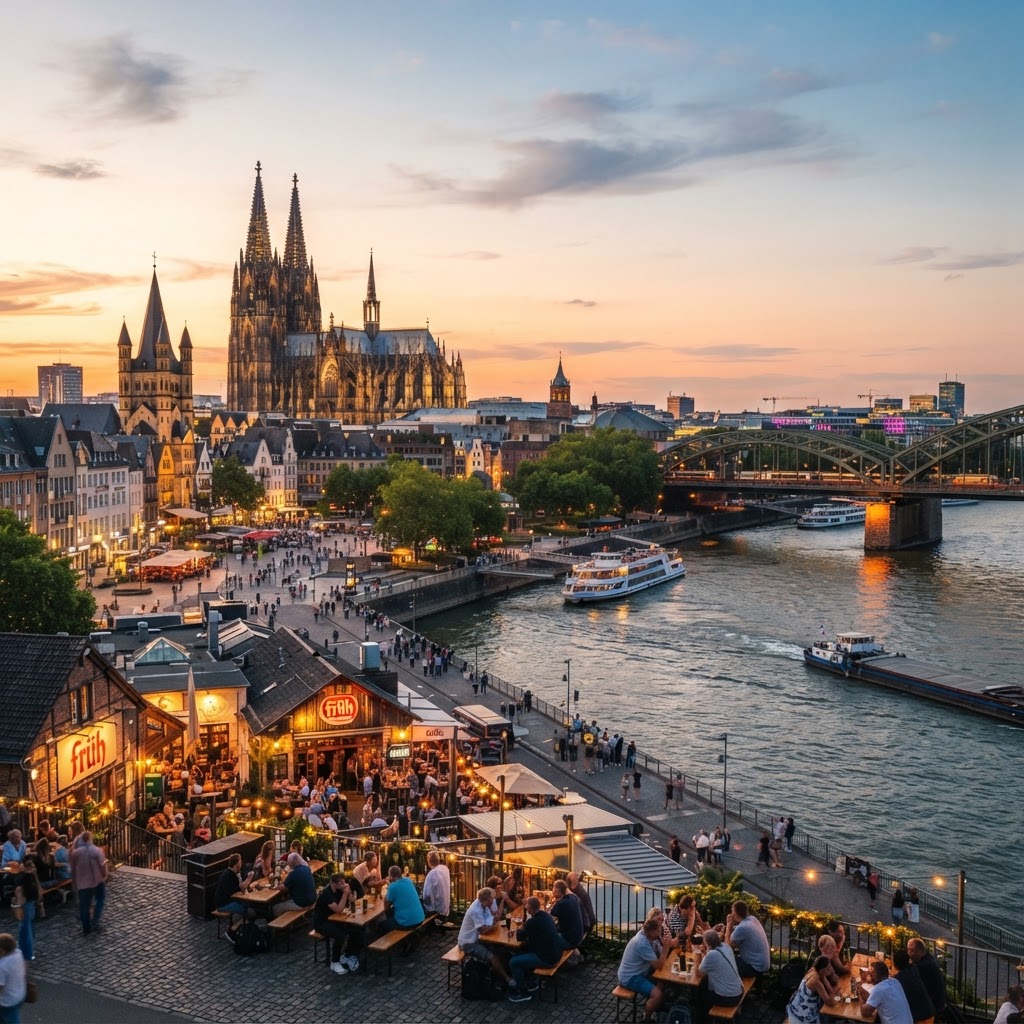
Cologne is frequently misunderstood by travelers who only sprint through its twin-spired cathedral on a two-hour train layover. While post-war reconstruction stripped much of its historic fabric, what remains is Germany's warmest, most easygoing metropolis. Between the cavernous Gothic vaulting of Kölner Dom, modern art bastions like Museum Ludwig, and the distinctive Brauhaus ritual of fresh Kölsch poured by deadpan Köbes waiters, Cologne delivers an unpretentious, culturally dense urban break that rewards lingering beyond the central station.

How long

3 days

Go for world-class high culture paired with Germany's most convivial everyday social scene. In a single afternoon, you can stand before the Shrine of the Three Kings inside one of Europe's largest cathedrals, walk two minutes to admire an exceptional collection of Picassos and Pop Art at Museum Ludwig, and finish at a communal wooden table in Brauhaus Päffgen sipping 0.2-liter stanges of freshly tapped Kölsch. Its distinct neighborhoods—from the boutiques of the Belgian Quarter to the street murals of Ehrenfeld—reveal an expressive, vibrant city life that sterile business hubs cannot match.

Where to stay

First-time visitors with packed cultural itineraries should stay in the Altstadt or near Neumarkt for immediate pedestrian access to the cathedral, Rhine promenade, and main museums. Independent travelers and couples wanting boutique dining, independent fashion, and intimate cocktail bars should base themselves in the Belgisches Viertel (Belgian Quarter). Travelers seeking a youthful, creative atmosphere with indie clubs and cafes should look at Ehrenfeld, while Südstadt offers a quieter, leafy neighborhood feel with classic beer taverns.

Getting there

Cologne is one of Western Europe's most connected rail hubs. Köln Hauptbahnhof sits directly adjacent to the cathedral, receiving high-speed ICE, Thalys/Eurostar, and ÖBB Nightjet services connecting directly to Frankfurt (1 hour), Brussels (1 hour 50 minutes), Amsterdam (2 hours 40 minutes), and Paris (3 hours 20 minutes). Cologne Bonn Airport (CGN) lies 15 kilometers southeast and connects to the city center via S-Bahn lines S19 and regional trains in roughly 15 minutes. Long-haul international arrivals typically fly into Frankfurt (FRA) or Düsseldorf (DUS) and transfer via direct high-speed train.

Getting around

Cologne is exceptionally walkable within its historic core and inner ring districts. The KVB public transit network operates an integrated system of U-Bahn (underground metro), street trams (Straßenbahn), and buses that reach every outlying district efficiently. Biking is very popular, with dedicated lanes and widespread KVB bike-share stations. Renting a car is an active hindrance due to tight parking, pedestrianized zones, and low-emission vehicle requirements.

Food & drink

Cologne's culinary scene revolves around hearty Rhenish tavern specialties served alongside freshly tapped Kölsch. Key traditional dishes include Himmel un Ääd (black pudding with fried onions, mashed potatoes, and stewed apples), Halve Hahn (a rye bread roll served with aged Gouda, butter, and mustard), and Rheinischer Sauerbraten (marinated pot roast traditionally prepared with sweet-and-sour raisin gravy). Beyond traditional brewery cooking, Südstadt and the Belgian Quarter feature inventive modern European dining and natural wine bars, while the student hub around Zülpicher Platz is anchored by local institutions like Bei Oma Kleinmann for massive, freshly breaded schnitzel.

What it costs

Moderate. Cologne is generally more affordable than Munich or Frankfurt, though lodging prices spike drastically during major trade fairs (Messe) and February Karneval.
1Climb the 533 stone steps of Kölner Dom's South Tower for sprawling views over the Rhine, then inspect the gilded 13th-century Shrine of the Three Kings and Gerhard Richter's stained-glass window inside the cathedral nave.
2Explore Museum Ludwig, situated directly behind the cathedral, which houses one of the largest Picasso collections in Europe alongside extensive Pop Art masterpieces by Warhol and Lichtenstein.
3Walk across the pedestrian path of the Hohenzollern Bridge to admire thousands of engraved love locks and take in the iconic skyline view from the KölnTriangle panorama deck in Deutz.
4Experience traditional Kölsch drinking ritual at historic taverns like Brauhaus Päffgen on Friesenstraße or Brauhaus Sion in the Altstadt, keeping your beer mat atop your glass to signal you have had enough.
5Browse the independent streetwear boutiques, vinyl shops, and specialty cafes along Brüsseler Straße in the Belgian Quarter.
6Visit the Kolumba Museum, an architectural masterpiece by Peter Zumthor constructed over the ruins of a Romanesque church destroyed in WWII.
7Stroll along the revitalized docklands of Rheinauhafen to view the cantilevered Kranhäuser (Crane Houses) and tour the Imhoff Chocolate Museum.

Skip it if

Skip Cologne if you are seeking a postcard-perfect medieval German fairytale town with timber-framed alleys on every corner; places like Bamberg, Rothenburg ob der Tauber, or Monschau deliver that aesthetic, whereas Cologne is a bustling, post-war reconstructed modern city. Skip it as well if you dislike urban grit or rail corridors, or if your priority is dramatic alpine scenery.

Destination intelligence

Updated 9/13/2026

The structured record we plan every Cologne, Germany itinerary from.

Walkability

High. The central district encompassing the Altstadt, cathedral, Rhine riverfront, and Belgian Quarter is completely walkable, with wide pedestrian shopping streets and river paths.

Transit quality

Excellent. The KVB network provides extensive, punctual underground (Stadtbahn) and tram services operating frequently from early morning until late night across all districts.

Car needed

No. A personal car is an active disadvantage in Cologne due to restricted traffic zones, one-way systems, and high parking garage fees.

Ideal duration

3 days

Minimum useful

1 day

Peak season

May to September (warm outdoor cafe and beer-garden weather), November to December (Christmas markets), and February (Karneval week).

Shoulder season

April and October (mild temperatures, fewer tour groups, though trade fair dates still influence hotel rates).

Low season

January to March (excluding the week of Karneval); cold, grey weather with the lowest hotel prices of the year.

Best for

SoloExceptional. Compact layout, safe streets, communal seating in historic brewery halls, and social kiosk (Büdchen) culture make solo exploring effortless and welcoming.
CouplesVery good. Offers atmospheric Rhine walks, high-caliber museum days, candlelit wine bars in the Belgian Quarter, and easy weekend rail getaways.
FamiliesGood. Cobbled cathedral squares, pedestrianized waterfronts, the Chocolate Museum, Rhine river cruises, and nearby Phantasialand cater well to children.
GroupsOutstanding. The city's famous Brauhaus culture, lively seasonal beer gardens, and legendary Karneval celebrations are tailor-made for groups.

Common mistakes

  • Leaving your beer mat on the table instead of putting it on top of your glass; Köbes waiters will automatically replace your empty 0.2-liter Kölsch stange until capped.
  • Ordering a large beer or asking for an Altbier (the rival beer of nearby Düsseldorf) in a traditional Cologne brauhaus.
  • Booking hotels without checking the Koelnmesse trade fair calendar; hotel room rates frequently triple during major expos like Gamescom, Photokina, or Anuga.
  • Assuming the entire city is quaint and historic; heavy WWII bombing resulted in practical 1950s reconstruction throughout much of the inner core outside specific pockets.
  • Renting a car for inner-city sightseeing; parking is scarce, strictly enforced, and public transit is vastly quicker.

Best nearby

Bonn: The former West German capital, located 30 minutes south by regional train, home to Beethoven's birthplace and the Haus der Geschichte.Brühl: Just 15 minutes away by train, home to the UNESCO-listed Rococo palaces of Schloss Augustusburg and Falkenlust, plus the Phantasialand theme park.Düsseldorf: 30 minutes north by regional train, ideal for comparing contemporary Rhenish lifestyles, high-end shopping on the Königsallee, and traditional Altbier in the historic Altstadt.Aachen: 50 minutes west by direct regional express, renowned for Charlemagne's imperial cathedral and thermal baths near the Belgian and Dutch borders.

More in Germany

Berchtesgaden, Germany

Berchtesgaden, Germany

Germany

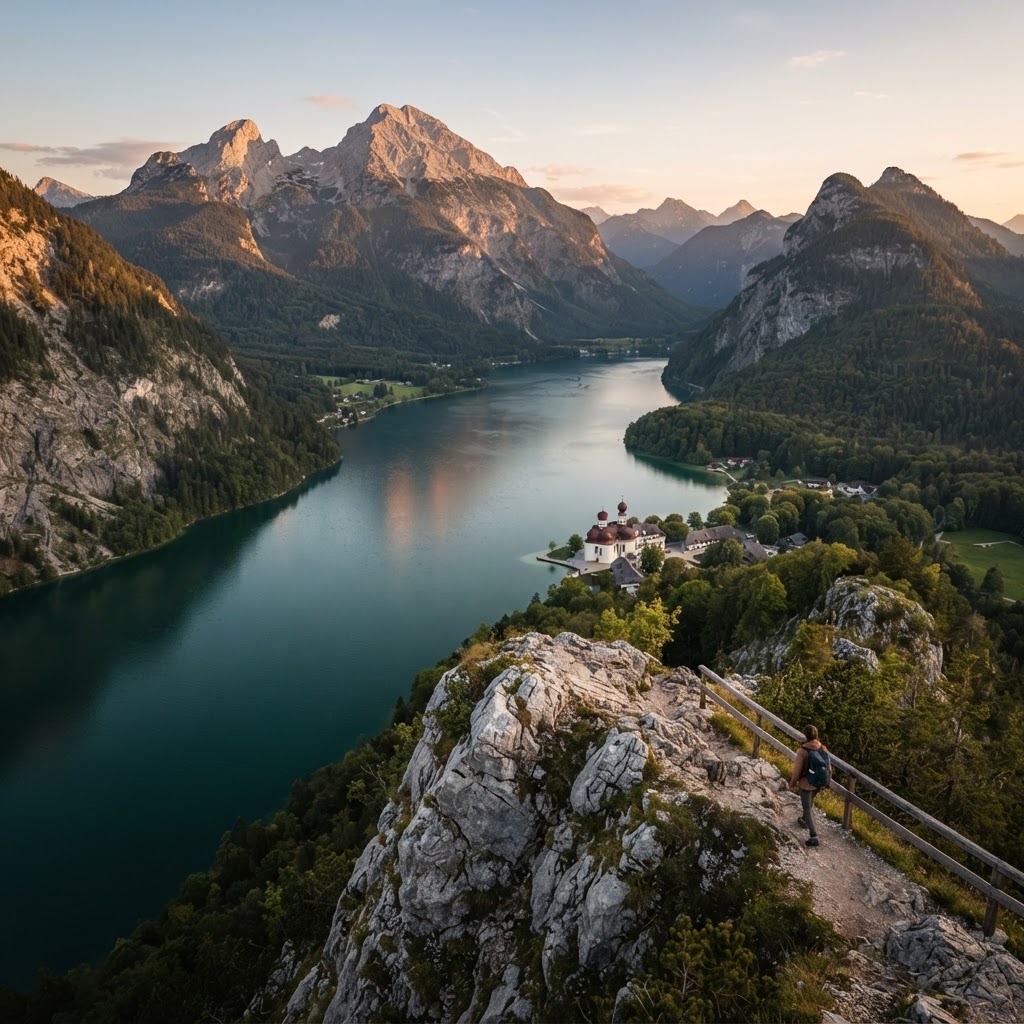
Fjord-like alpine lakes, haunting WW2 history, and serious summit trails on the Austrian frontier.
Day hikers and trail trekkers targeting National Park routes and Watzmann viewpointsWW2 and modern European history enthusiastsTravelers seeking an alpine base with easy cross-border rail/bus links to Salzburg
3 nightsRead guide
Garmisch-Partenkirchen

Garmisch-Partenkirchen

Germany

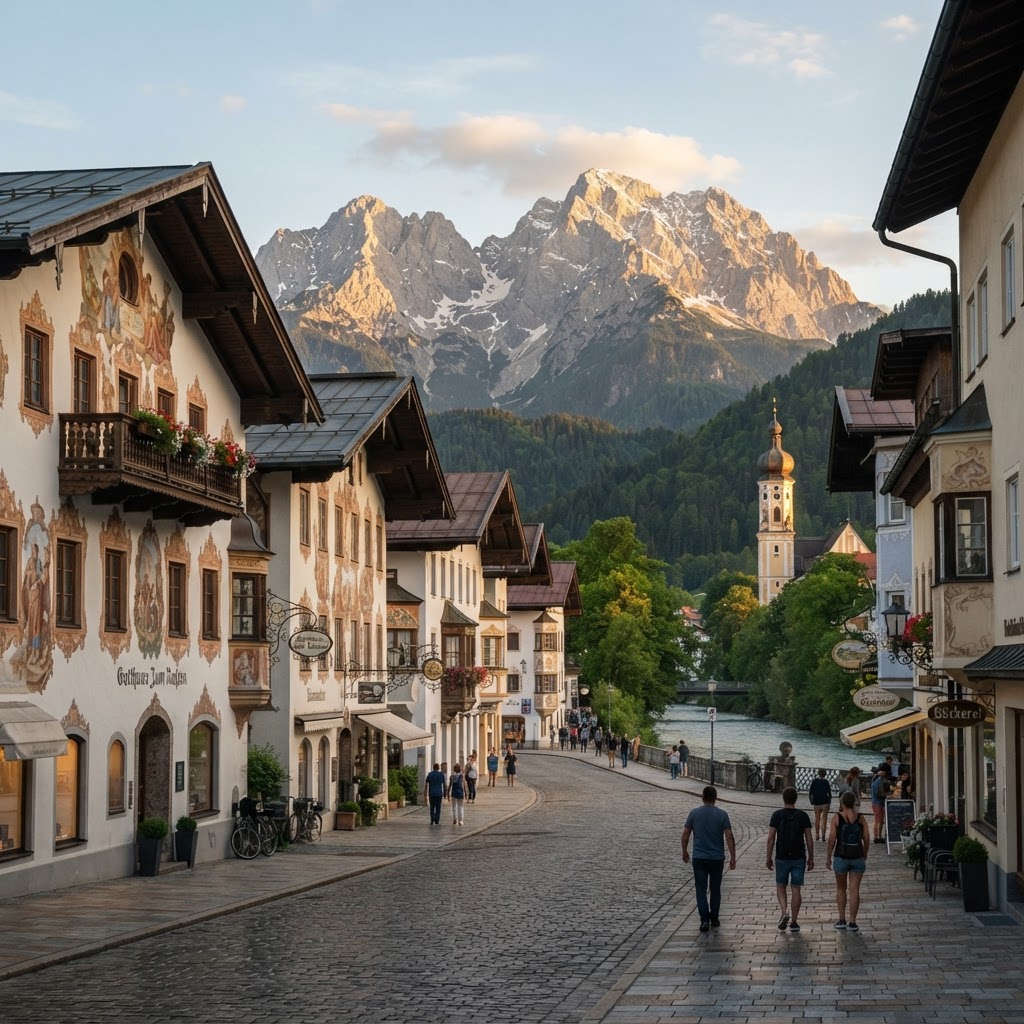
Twin alpine towns beneath Germany's highest peaks, balancing rugged gorges with frescoed taverns.
Alpine day hikers looking for varied day trails with hut diningSkiers and snowboarders wanting glacial snow reliabilityTravelers seeking authentic Bavarian tavern culture outside Munich
4 daysRead guide
Freiburg im Breisgau, Germany

Freiburg im Breisgau, Germany

Germany

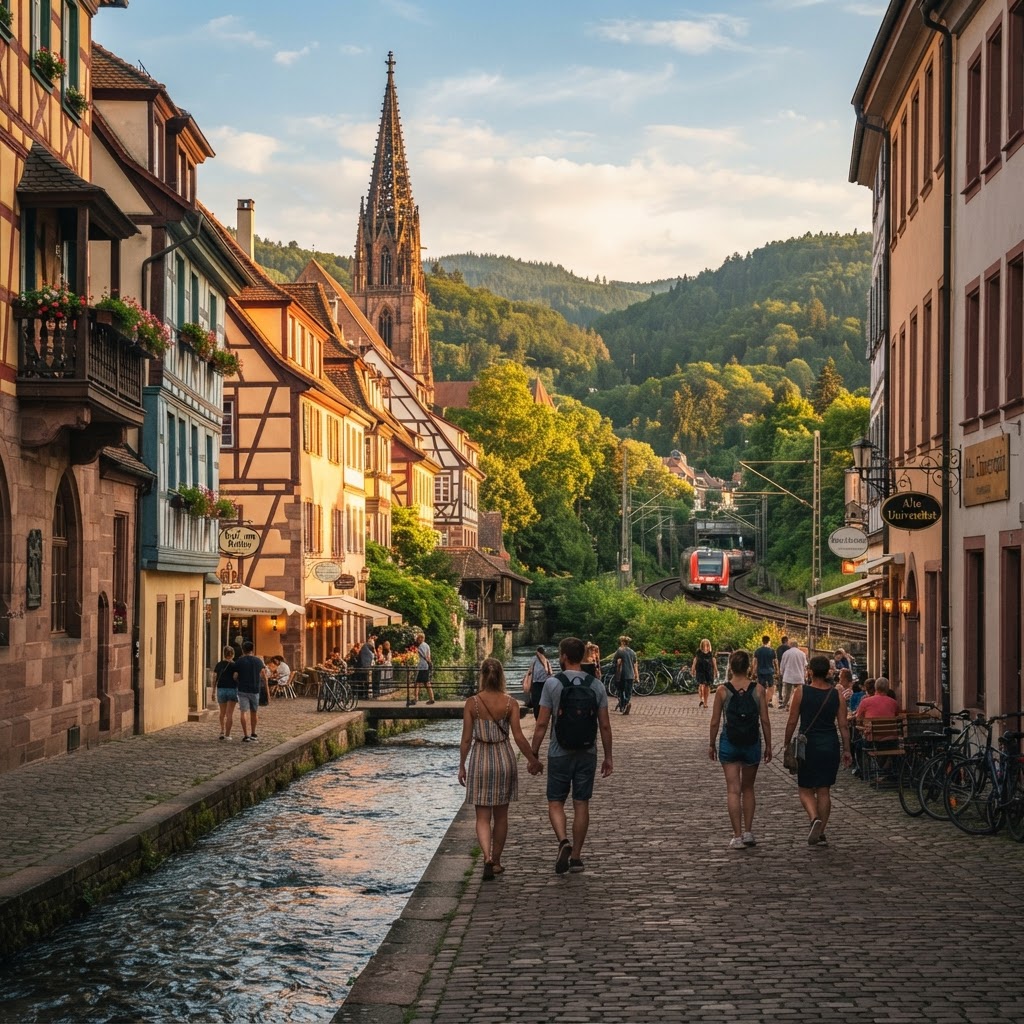
Sun-drenched university streets, medieval canals, and the direct railway gate into the Black Forest.
Independent rail travelers exploring the Black Forest without renting a carHikers and active travelers who want mountain trails by day and lively wine taverns by nightUrbanists interested in world-leading green architecture and car-free neighborhoods like Vauban
3 daysRead guide
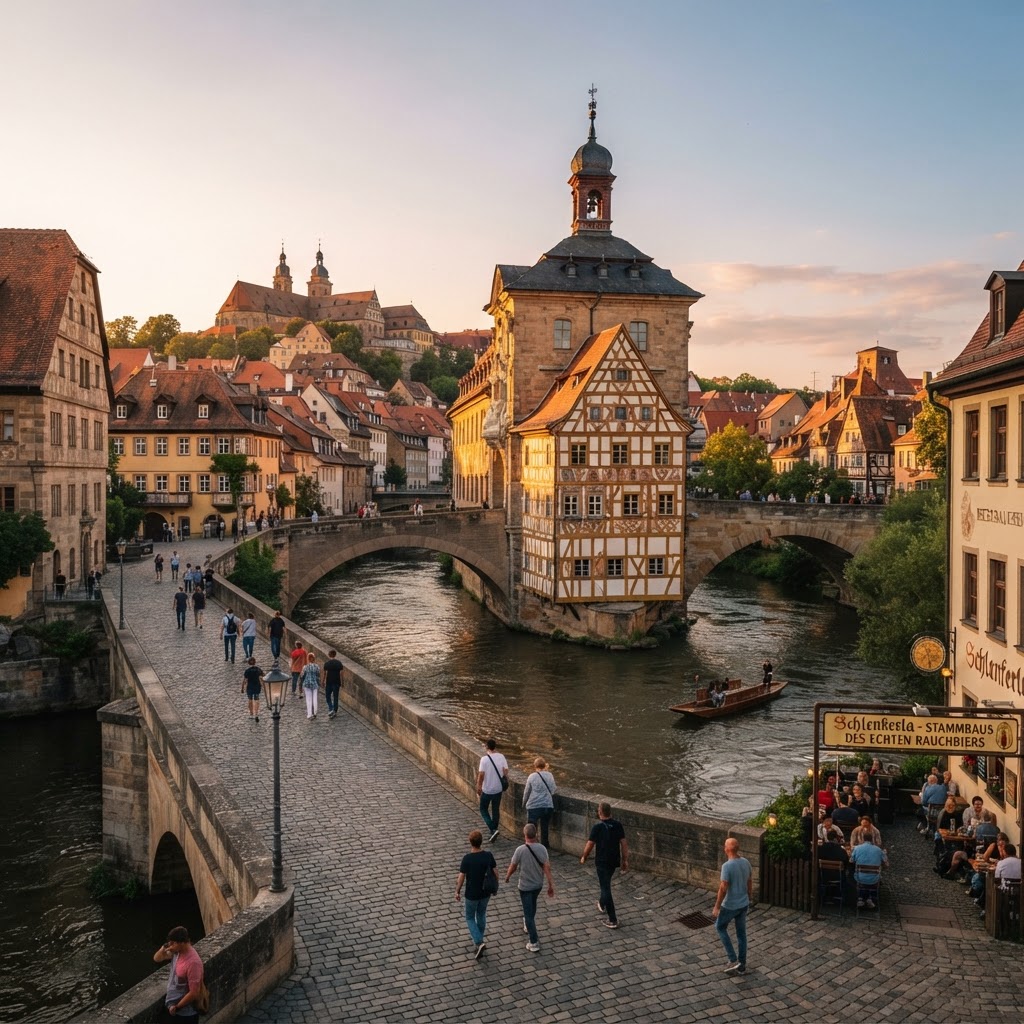
Bamberg

Bamberg

Germany

Centuries of untouched medieval architecture fueled by beechwood-smoked beer
Historic architecture enthusiasts looking for unbombed medieval and baroque quartersDedicated beer travelers eager to experience historic Rauchbier (smokebeer) at traditional brauerei tavernsIndependent travelers seeking an accessible, walk-everywhere base in northern Bavaria
2 daysRead guide
Leipzig

Leipzig

Germany

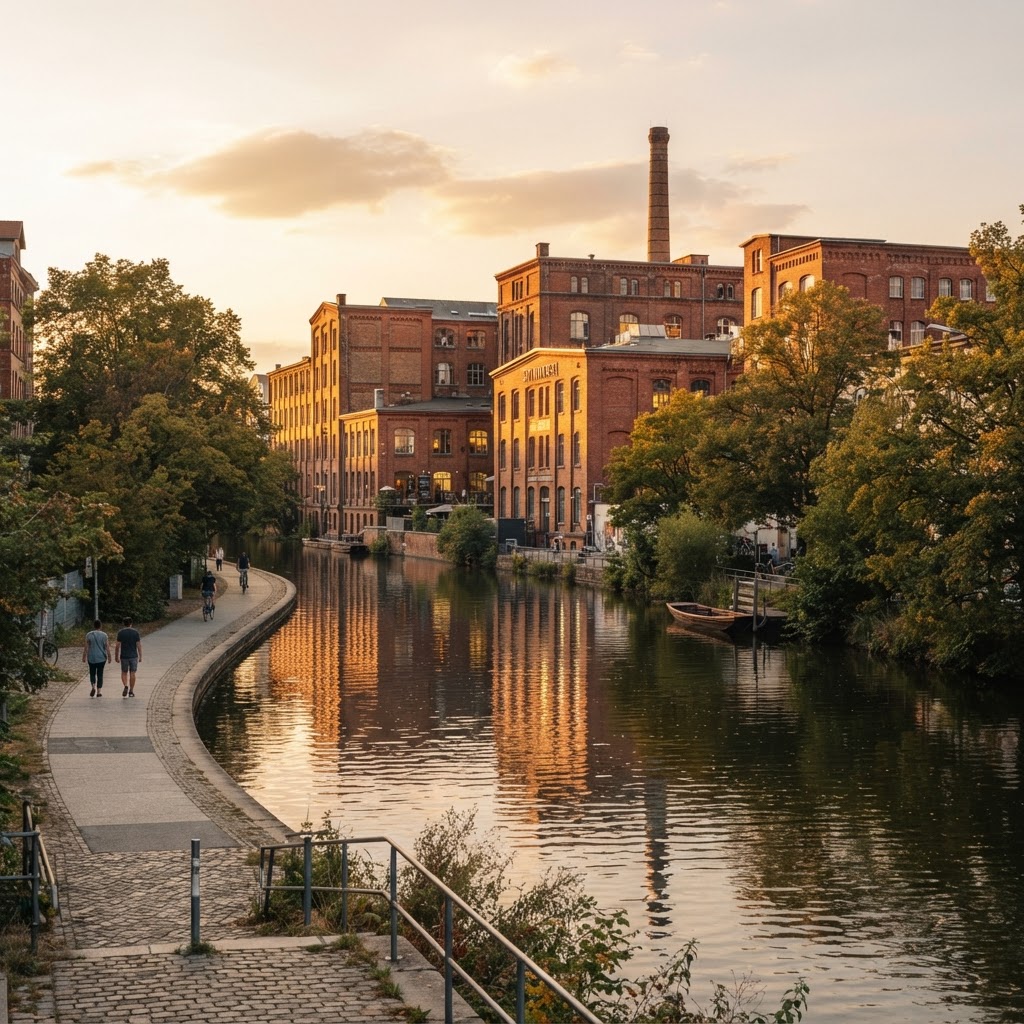
Industrial grit turned creative powerhouse with peerless musical heritage and quiet canals.
Classical music aficionados following Bach, Mendelssohn, and WagnerContemporary art enthusiasts drawn to the New Leipzig School and industrial conversionsUrban cyclists and kayakers seeking green spaces integrated directly into city life
3 daysRead guide
Baden-Baden

Baden-Baden

Germany

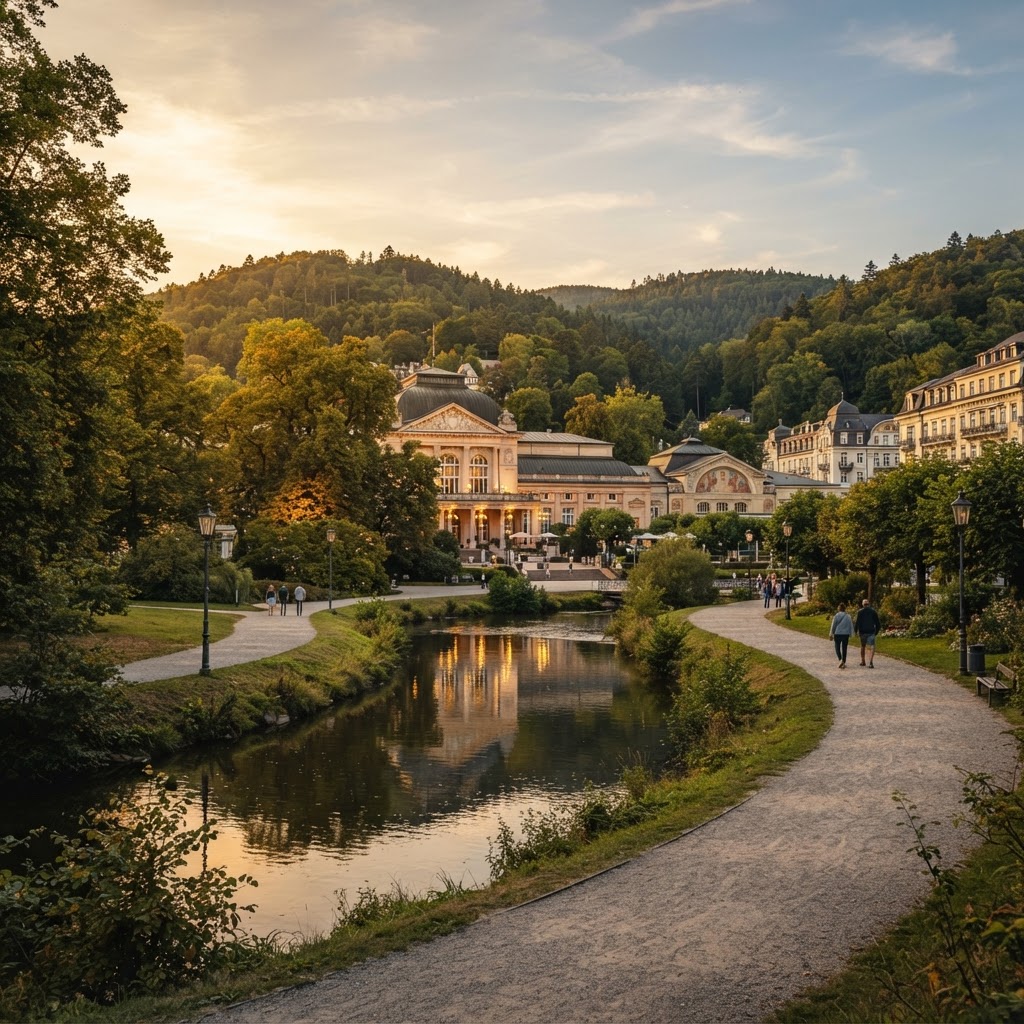
Thermal waters, Belle Époque grandeur, and unhurried woodland walks in the Black Forest foothills.

Thermal bath and wellness enthusiastsOpera, classical music, and casino history buffsCouples seeking a relaxed, slow-paced retreat
3 daysRead guide

Readymade itineraries

Start from a tested template — then make it yours.

Ready to book

Lock in your Cologne, Germany trip

Everything in one place. We may earn a small commission — it never costs you more.

Plan a trip to Cologne, Germany

Pick a length and we'll build a day-by-day plan around how you travel — neighborhoods clustered, budget-aware, and editable.

Get better at planning trips like this

Occasional notes on planning smarter — no spam, unsubscribe anytime.

Plan a trip to Cologne, Germany

Turn this guide into a day-by-day plan built around your pace, your group, and your budget.

Build my Cologne, Germany trip