
Malta
Valletta Itinerary: How Many Days + Sample Plans
Valletta is a fortress city of the Knights — golden stone, harbors, and 7,000 years of history on a tiny island.
Traveler rating
Loved by history.
Plan & book
Sort your Valletta trip in one place.
We point you to the booking tools we'd actually use — live prices, no markup. Or let us build the day-by-day plan around you first, then book.
Pick your trip length
How many days do you need in Valletta?
Each of these opens a full day-by-day plan you can make your own.
- 2 days — Two days — the essentials, no rushing.
- 3 days — Three days — the icons plus one neighborhood.
- 4 days — Four days — a full city without sprinting.
- 5 days — Five days — room for a day trip.
- 7 days — A week — the city at a human pace.
- With Kids trip — Shorter days, earlier dinners, what to skip.
- For Couples trip — Two-person pacing with evenings built in.
- Solo trip — A plan that works well on your own.
- Food trip — Meals and markets as the anchors.
- Outdoors trip — Nature, walks and open air.
- Culture trip — History, museums and the streets around them.
Valletta is a tiny fortified capital built by the Knights of Malta — golden stone streets, two great harbors, and a dense layer of history. Malta packs Neolithic temples older than the pyramids into a week. Use Valletta as the base; the whole island is a bus ride.
2–4 days
Best time
April to May and October to early November deliver warm sunshine without oppressive summer heat or peak holiday gridlock.
Budget
€70–130 per person per day at mid-range.
Build your own trip with these prebuilt itineraries
Each one is a tested, day-by-day plan for Valletta — start here, then make it yours.
2 Days in Valletta: Historic Core and Cultural Immersion
A high-intensity cultural deep dive focusing on the UNESCO World Heritage status, St. John's Co-Cathedral, and the city's military fortifications.
4 Days in Valletta: Maritime Heritage and Harbor Exploration
An experience centered on the Grand Harbour, involving boat trips to the Three Cities, ferry crossings, and maritime history.
Valletta packs five centuries of military and architectural history into an open-air fortress peninsula jutting between two deep natural harbors. Built from uniform golden globigerina limestone by the Order of St. John, it pairs monumental baroque churches with compact, highly walkable streets. It functions both as an intact UNESCO World Heritage city and an efficient transit springboard for exploring Malta's prehistoric temples and walled medieval towns.
Where to stay
Getting there
Getting around
Food & drink
What it costs
Things to do
Book tours & tickets in VallettaSkip it if
Skip Valletta as a primary base if you want an all-inclusive beach-resort vacation with sandy shores on your doorstep, or if steep, stepped cobblestones create major accessibility issues.
When to go
Summer brings unrelenting Mediterranean humidity and thick crowds, while winter is mild but prone to blustery winds. Shoulder seasons allow comfortable walking through Valletta's steep, stepped alleys and reasonable room rates.
Spring (April–May)
Crisp sunny days, daytime temperatures around 18–24°C, and manageable walking conditions across the city's steep limestone grid.
Summer (June–August)
Scorching midday heat, high humidity, packed harbor ferries, and peak room rates; stone streets trap radiant heat.
Autumn (September–November)
The sea stays warm enough for coastal swimming in September and October, while crowds thin sharply across museums.
Winter (December–March)
Low accommodation pricing and empty historic sites, but brisk coastal winds and occasional rains disrupt harbor ferry schedules.
Neighborhoods
Where you stay shapes the trip. Here's how to think about it.
Upper Valletta (City Gate & Republic Street)
Paved monumental plazas, limestone palazzos, and steady foot traffic flowing past open-air cafés.
Best for:First-timers, architecture buffs, and short-break travelers who want effortless transit access.
Don't miss:The noontime gun salute fired from the Saluting Battery directly below Upper Barrakka Gardens.
Lower Valletta (Fort St. Elmo & St. Elmo Bay)
Sea-breezy, quieter residential fringe framed by massive bastions and drying laundry on traditional wooden balconies.
Best for:Travelers seeking quiet nights away from daytime cruise ship crowds.
Don't miss:The National War Museum housed inside Fort St. Elmo, overlooking the Grand Harbour entrance.
The Waterfront & Marina Fringe
Restored 18th-century baroque Pinto Wharf vaults hosting dockside dining and passenger boat connections.
Best for:Dine-out evenings, boat enthusiasts, and scenic evening walks along the harbor basin.
Don't miss:Taking the panoramic Barrakka Lift from the water level straight up to Upper Barrakka Gardens.
The Three Cities (Birgu, Senglea, Bormla)
Sleepy, honey-stone alleys and quiet maritime docks across the water, showing a slower medieval side of Malta.
Best for:History purists and travelers who prefer residential stillness over commercial streets.
Don't miss:A traditional wooden dgħajsa water taxi crossing across the Grand Harbour directly into Birgu's waterfront.
Floriana
Spacious, administrative garden suburb situated just outside Valletta's outer defensive ditch and City Gate.
Best for:Budget-conscious travelers needing proximity to the central bus terminus without paying Valletta room rates.
Don't miss:Strolling through the shaded arches and greenery of Argotti Botanic Gardens.
Money & essentials
Currency
Euro (EUR). Cards accepted.
Language
Maltese and English (both official).
Safety
Very safe; standard vigilance against minor pickpocketing in crowded bus hubs like Triton Fountain is all that is required.
Budget range
€70–130 per person per day at mid-range.
Tipping
5% to 10% is customary in sit-down restaurants when service is not included; rounding up small cash amounts is appreciated in cafés and taxis.
How to plan it
- Book the Ħal Saflieni Hypogeum 2 to 3 months before departure; tickets are strictly capped per hour and sell out weeks ahead.
- Stay inside Valletta's walls if you want quiet, atmospheric evenings after the cruise ship crowds clear at 5:00 PM.
- Take the 10-minute public ferry across to Birgu instead of booking an organized coach tour of the Three Cities.
- Pair a morning in Valletta with a late-afternoon bus trip to Mdina, timing your arrival for golden hour when the day-trippers depart.
- Never drive to Valletta; use the central bus terminus at Triton Fountain or ride-hailing apps like Bolt and eCabs to bypass parking headaches.
Questions
More in Malta
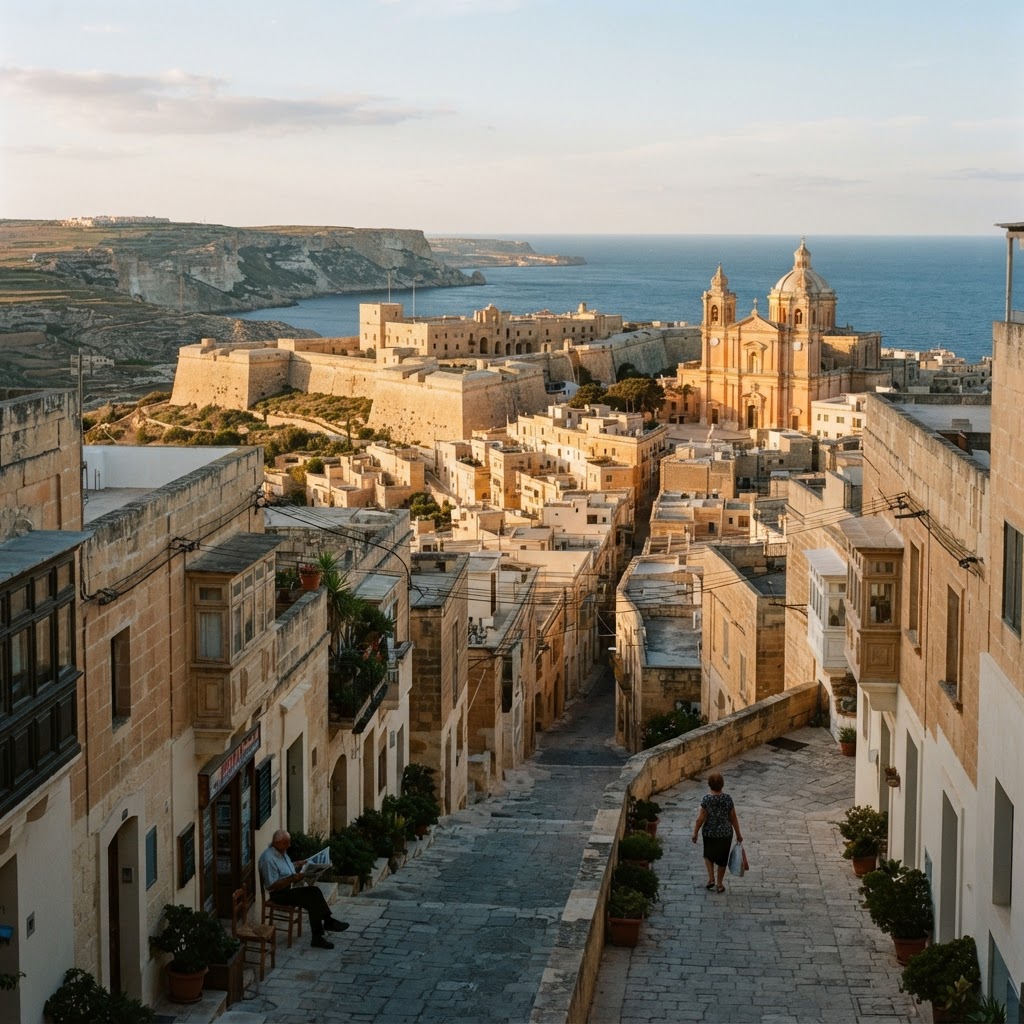
Gozo, Malta
Malta
Limestone bastions, coastal cliffs, and slow-paced village life off Malta's northern shore
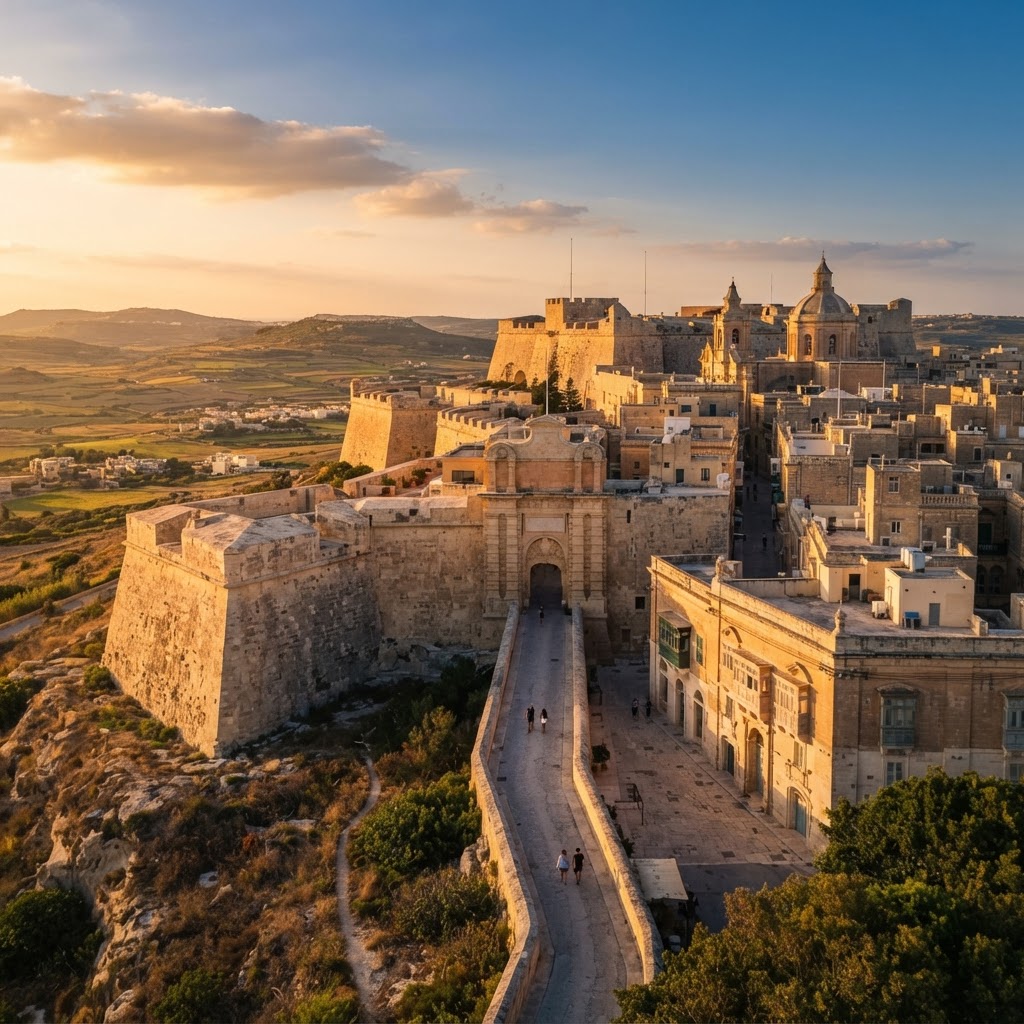
Mdina
Malta
A car-free honey-limestone fortress suspended above Malta's central plateau.
Readymade itineraries
Start from a tested template — then make it yours.
Ready to book
Lock in your Valletta trip
Everything in one place. We may earn a small commission — it never costs you more.
Plan a trip to Valletta
Pick a length and we'll build a day-by-day plan around how you travel — neighborhoods clustered, budget-aware, and editable.
Get better at planning trips like this
Occasional notes on planning smarter — no spam, unsubscribe anytime.
Plan a trip to Valletta
Turn this guide into a day-by-day plan built around your pace, your group, and your budget.
Build my Valletta trip