Malta
Mdina
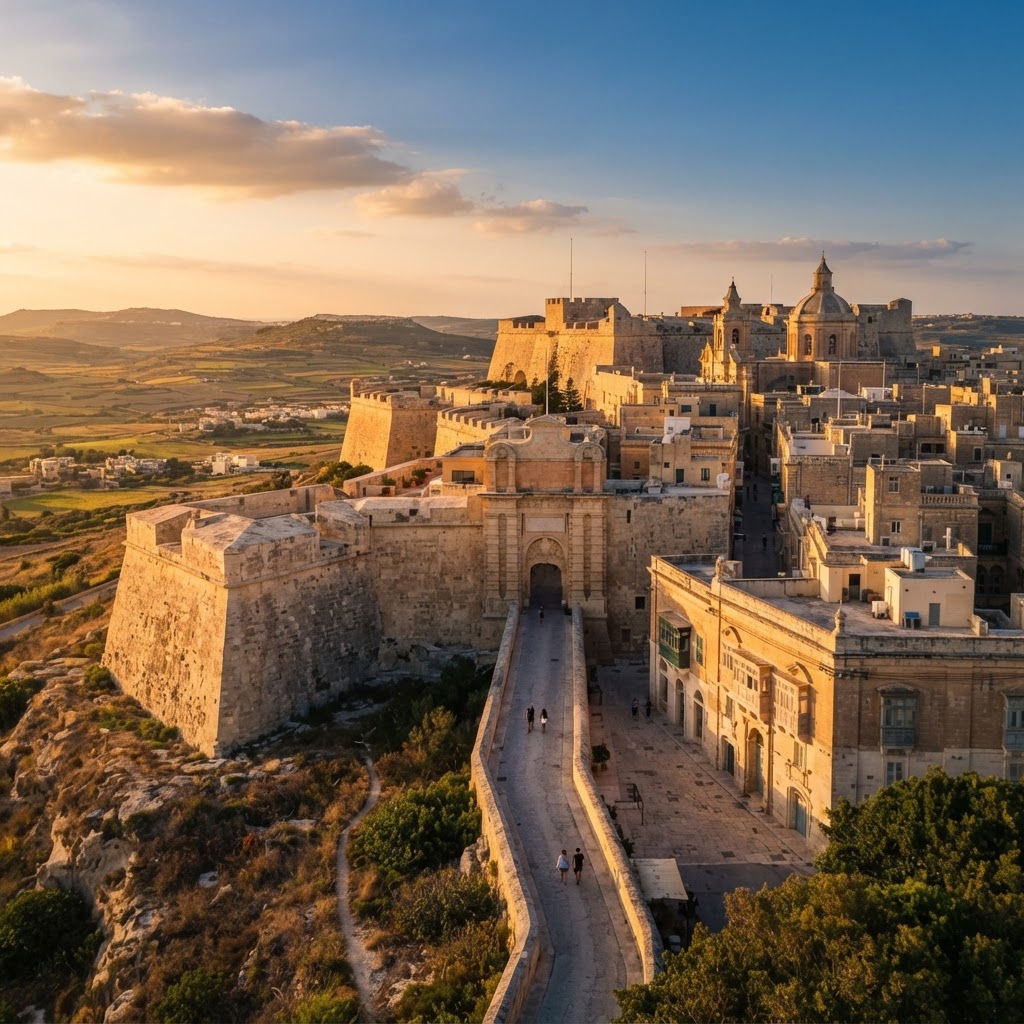
A car-free honey-limestone fortress suspended above Malta's central plateau.
Plan & book
Sort your Mdina trip in one place.
We point you to the booking tools we'd actually use — live prices, no markup. Or let us build the day-by-day plan around you first, then book.
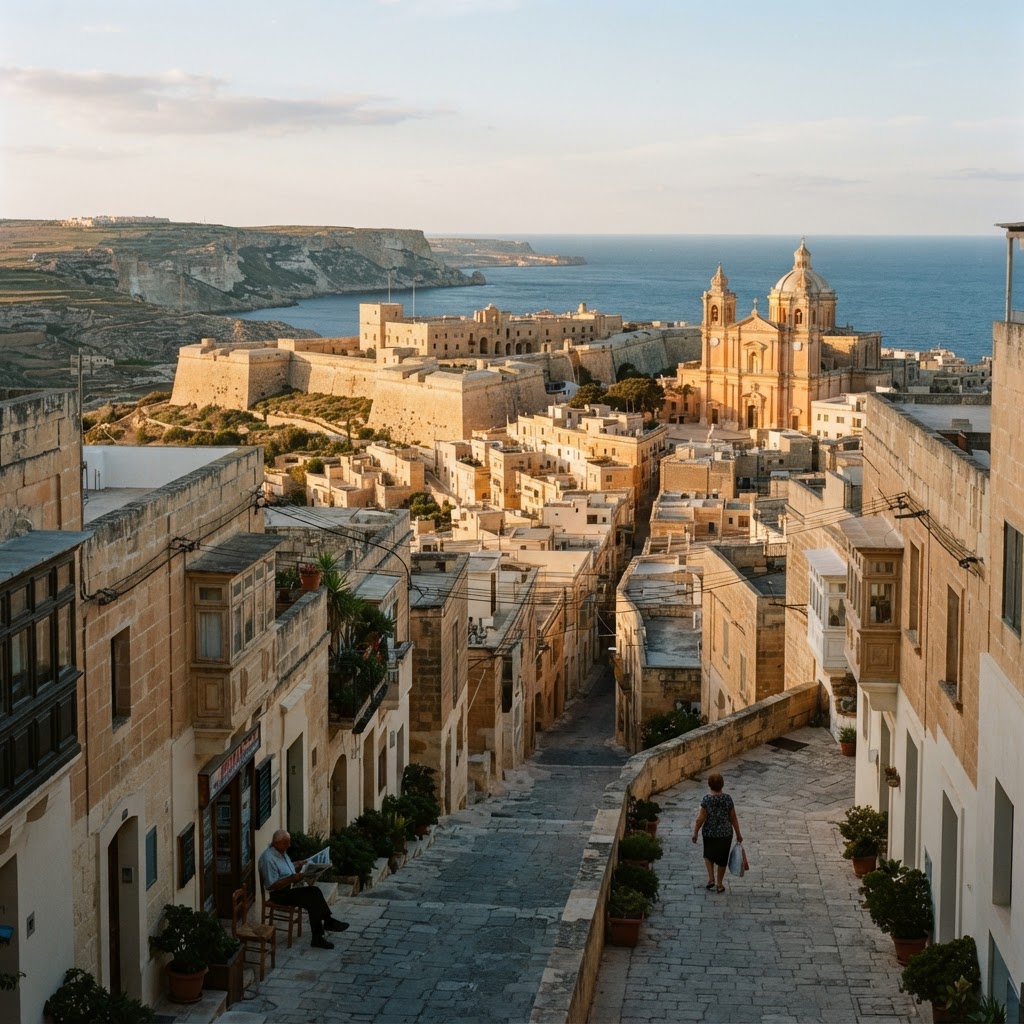
Perched on one of Malta's highest inland plateaus, Mdina was the island's fortified capital from antiquity through the Middle Ages. Known as the 'Silent City,' its enclosed perimeter contains fewer than 300 residents and excludes private non-resident vehicles. What remains within the Baroque gateway is a preserved labyrinth of Norman and Sicilian-Baroque noble palaces, shaded flagstone alleys, and wide bastion lookouts that face out toward the Mediterranean. While most tourists sweep through in two hours on a midday coach tour, staying late or basing overnight unlocks an atmospheric, stone-quiet relic detached from Malta's coastal sprawl.
How long
1 full day (combining Mdina inside the walls and Rabat outside the moat)
Best time
Mid-April to early June, or throughout October.
Build your own trip with these prebuilt itineraries
Each one is a tested, day-by-day plan for Mdina — start here, then make it yours.
3 Days in Mdina & Central Malta: Historic Footpaths & Countryside in Mdina
A cultural and outdoor balance combining walled history, traditional Rabat pastizzi bakeries, Dingli Cliffs coastal hiking, and ancient cart ruts.
2 Days in Mdina: Romantic Nights & Deep Heritage in Mdina
An immersive, slow-paced stay inside the Silent City, prioritizing early-morning photography, historic noble palazzos, and candlelit courtyard dining after the tour buses depart.
1 Day in Mdina & Rabat: Highlights & Medieval Bastions in Mdina
The definitive full-day route blending Mdina's quiet morning alleys, panoramic bastion views, and Rabat's underground catacombs before lantern-lit dusk.
Mdina offers an uncompromised spatial step into pre-modern Mediterranean aristocracy. Unlike Valletta, which bustles with commerce and government administration, Mdina is deliberately low-tempo, car-free, and contained within intact medieval and Baroque defenses. It provides the island's best vantage point across Malta's central plains from Bastion Triq is-Sur, while serving as the gateway to the early Christian catacombs and traditional bakery culture of adjoining Rabat.
Where to stay
Getting there
Getting around
Food & drink
What it costs
Things to do
Book tours & tickets in MdinaSkip it if
Skip staying overnight if you require active nightlife, sandy beaches, or family-friendly resort amenities at your doorstep. Mdina shuts down early and offers no seaside access.
When to go
Spring and autumn bypass the baking 34°C heat that turns the unshaded limestone bastions into a furnace, while avoiding the midday tour-bus surges of midsummer. You gain mild 21–24°C days for walking, evening breezes, and open tables at bastion restaurants without booking months in advance.
Peak (July to August)
Oppressive midday heat radiating off limestone flagstones, crowded alleys between 10:30 AM and 4:00 PM, and high accommodation rates. Only enjoyable if you tour before 9:30 AM or after nightfall.
Shoulder (April–June & September–October)
The sweet spot: comfortable walking weather, low rainfall, long twilight hours, and atmospheric evenings once day-trippers return to coastal resorts.
Low (November to March)
Dramatic, windy, and quiet. Bastion lookouts can be fiercely blustery, but you will have the illuminated alleys entirely to yourself after 6:00 PM.
Neighborhoods
Where you stay shapes the trip. Here's how to think about it.
Mdina Citadel (Within the Walls)
Echoing, amber-lit medieval canyons with almost zero vehicle traffic and fewer than 300 residents.
Best for:Romantic overnights, architecture purists, early-morning photographers
Don't miss:The panoramic lookout from Bastion Square at dusk, followed by drinks in the courtyard of The Xara Palace.
Rabat Village Core (Misraħ il-Parroċċa)
Lived-in, traditional Maltese town life with corner pastizzerijas, wooden gallariji balconies, and elderly locals debating outside parish band clubs.
Best for:Authentic dining, budget-conscious travelers, everyday street scenes
Don't miss:A warm pastizz straight from the oven at Is-Serkin (Crystal Palace Bar) right opposite the Roman Villa.
The Catacomb Quarter (Rabat South)
Quiet residential alleys masking subterranean Early Christian rock-cut chambers and paleochristian burials.
Best for:Archaeology buffs, independent walkers avoiding tour bus routes
Don't miss:St. Paul's Catacombs for its extensive rock-hewn hypogea and ancient agape dining tables.
Howard Gardens & the Ditch
The green buffer zone along the dry defensive moat, bridging the contrast between medieval nobility and working-class village life.
Best for:Shaded daytime breaks, families with toddlers needing open room to run
Don't miss:Walking the lowered pathway directly inside the fortified ditch beneath the Mdina Main Gate bridge.
Destination intelligence
Updated 9/14/2026The structured record we plan every Mdina itinerary from.
Walkability
10/10 inside the walls. 100% pedestrian-only cobblestone alleys with zero through traffic.
Transit quality
7/10. Direct, high-frequency bus lines arrive at the Rabat/Mdina terminal from Valletta, though island traffic can lengthen commute times.
Car needed
Not required. Driving inside is forbidden, and bus links or rideshares (Bolt, Uber) from Valletta and Sliema are straightforward.
Ideal duration
1 full day (combining Mdina inside the walls and Rabat outside the moat)
Minimum useful
3 to 4 hours (morning stroll, cathedral, and bastion overview)
Peak season
July to August: hot (frequently exceeding 32°C/90°F), packed midday alleys, and intense sun on open limestone bastions.
Shoulder season
April to June and September to October: comfortable 20–26°C weather, mild breezes, and ideal walking conditions.
Low season
November to March: quiet, cooler days with occasional rain and wind along the exposed bastions; zero crowds after dark.
Best for
Common mistakes
- Visiting strictly between 11:00 AM and 2:00 PM when cruise excursions and bus tours clog the main alleys.
- Trying to drive a rental car up to the gate without researching Rabat's exterior parking bays.
- Treating Rabat merely as a parking lot instead of exploring its historic bakeries, catacombs, and quiet streetscapes.
- Skipping the evening atmosphere when day-trippers depart and street lanterns turn on along silent stone walls.
Best nearby
How to plan it
- Arrive at 3:30 PM if you are on a half-day trip; you will hit Palazzo Falson before its final entry, catch dusk over the island from Bastion Square, and get the alleys after tour groups leave.
- Pair your visit with the Dingli Cliffs (bus 201 from the Rabat interchange, a 15-minute ride) for an open-sea sunset before returning to Mdina for an illuminated evening dinner.
- Do not eat lunch inside the Mdina gates if you want value; cross the ditch into Rabat to eat ftira or pastizzi alongside local mechanics and shopkeepers at Is-Serkin.
- Reserve dinner at De Mondion or The Medina at least two weeks out if traveling between May and October; bastion-view tables sell out well before arrival.
- Avoid scheduling your visit on Sundays if you want to see Palazzo Falson or quiet museum interiors, as interior museum hours are abbreviated and local domestic day-trippers pack the main spine.
Questions
More in Malta
Readymade itineraries
Start from a tested template — then make it yours.
Ready to book
Lock in your Mdina trip
Everything in one place. We may earn a small commission — it never costs you more.
Plan a trip to Mdina
Pick a length and we'll build a day-by-day plan around how you travel — neighborhoods clustered, budget-aware, and editable.
Get better at planning trips like this
Occasional notes on planning smarter — no spam, unsubscribe anytime.
Plan a trip to Mdina
Turn this guide into a day-by-day plan built around your pace, your group, and your budget.
Build my Mdina trip