Malta
Gozo, Malta
Limestone bastions, coastal cliffs, and slow-paced village life off Malta's northern shore
Plan & book
Sort your Gozo, Malta trip in one place.
We point you to the booking tools we'd actually use — live prices, no markup. Or let us build the day-by-day plan around you first, then book.
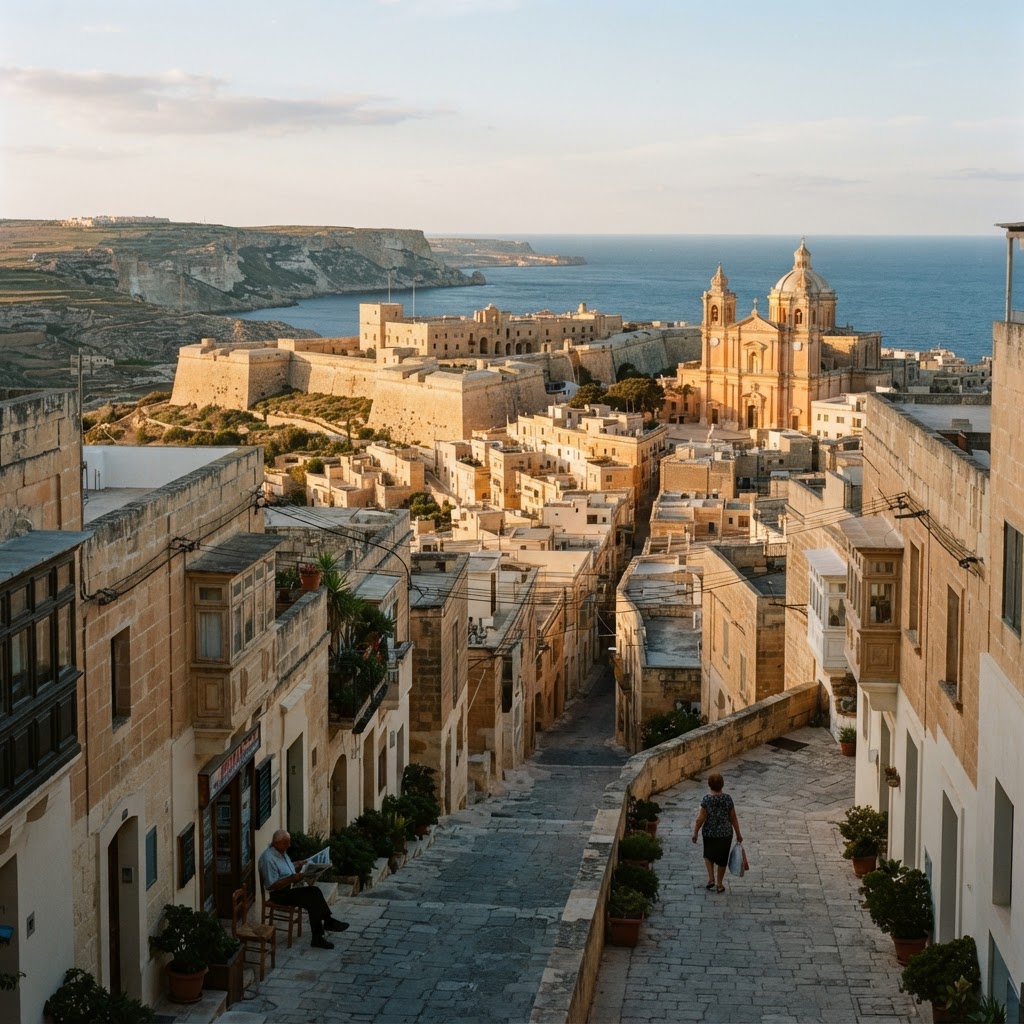
Gozo is Malta's rural sister island, separated by a 25-minute channel crossing and an entirely different tempo of life. Spanning just 14 by 7 kilometers, it is defined by terraced hills, baroque church domes rising over sleepy village squares, and dramatic marine geography carved into globigerina limestone. While main-island Malta leans toward dense urban coastal sprawls and high-energy nightlife, Gozo remains pastoral, maritime, and deeply traditional.
3 to 4 days
Best time
May to June and September to mid-October provide the ideal balance of swimmable sea temperatures, active hiking conditions, and quiet village life.
Build your own trip with these prebuilt itineraries
Each one is a tested, day-by-day plan for Gozo, Malta — start here, then make it yours.
5 Days in Gozo: Slow Living & Farmhouse Retreat in Gozo
Relaxed countryside escape prioritizing historic stone farmhouses, local village squares, culinary traditions, and secluded sunset spots
4 Days in Gozo: Coastal Treks & Submerged Caves in Gozo
Outdoor adventure and water-focused trip featuring cliffside hikes, salt pans, and world-class diving spots
3 Days in Gozo: Citadel, Coves & Coastal Heritage in Gozo
First-timer highlights focusing on fortified Victoria, megalithic temples, and iconic coastal swim coves
Travelers cross to Gozo to experience the Maltese archipelago without the car traffic of Sliema or the commercial frenzy around St. Julian's. The island offers world-class diving at marine drop-offs like the Blue Hole and Inland Sea, coastal swimming in secluded limestone inlets like Wied il-Għasri, and the fortified historic core of the Citadella in Victoria. It is a haven for travelers who want farmhouse stays, slow coastal seafood lunches, and empty clifftop trails.
Where to stay
Getting there
Getting around
Food & drink
What it costs
Things to do
Book tours & tickets in Gozo, MaltaSkip it if
Skip staying on Gozo if your priority is vibrant nightlife, resort beach clubs, or packed shopping boulevards. Travelers with limited mobility may also find the steep alleys, rugged cliff descents, and cobblestone steps of historic towns challenging without private transport.
When to go
Peak summer brings intense heat above 32°C and crowded coves, while mid-winter can bring ferry-halting Mediterranean winds. Shoulder months offer low-20s daytime walking weather, comfortably warm water for diving, and uncrowded village squares.
Peak (July to August)
Scorching midday heat, high accommodation rates, and packed swimming bays, but unmatched for evening parish festas and fireworks.
Shoulder (April to June, September to October)
The prime sweet spot: wildflowers bloom along sea cliffs in spring, while autumn offers sea temperatures around 23°C with thinning visitor numbers.
Low (November to March)
Cool, green hillsides ideal for solitary cliff walking, but several coastal eateries close and northern gales occasionally suspend ferry connections.
Neighborhoods
Where you stay shapes the trip. Here's how to think about it.
Victoria (Rabat)
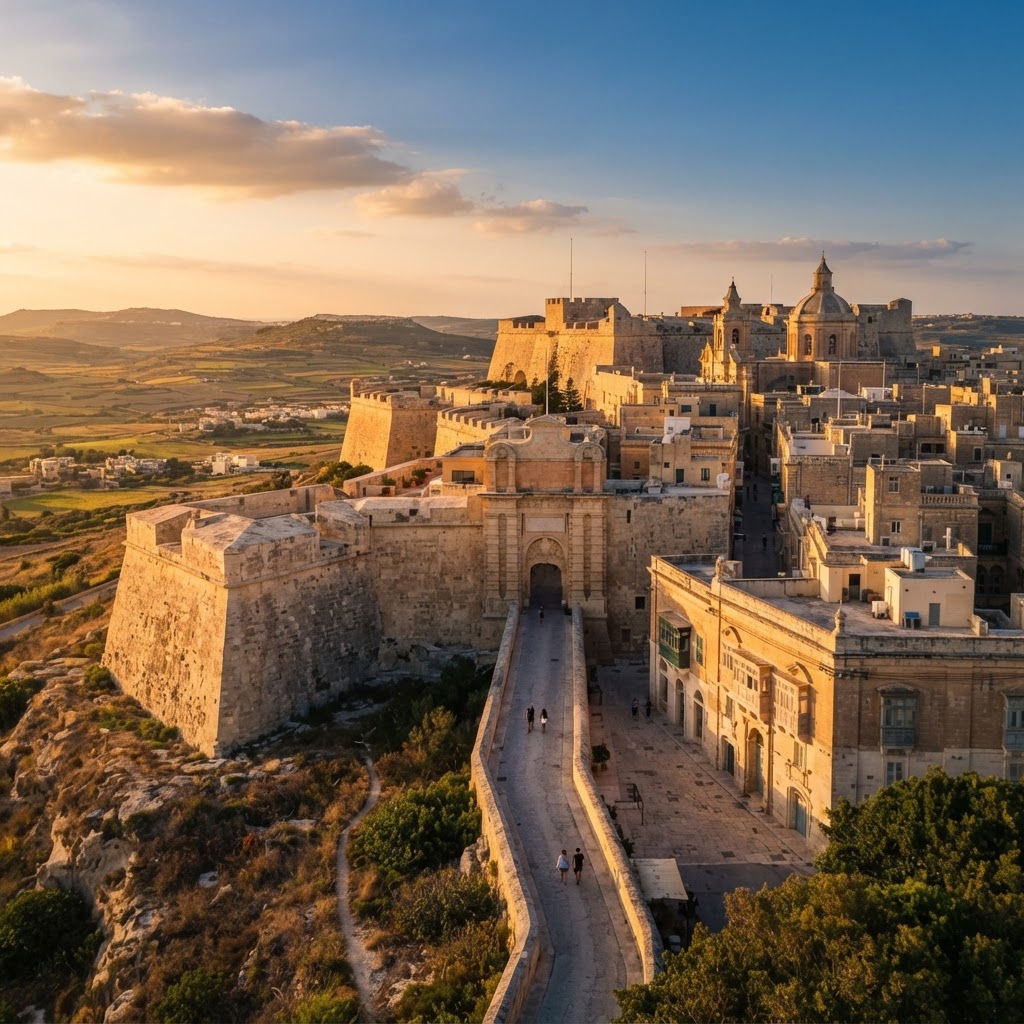
Historic fortress hub with bustling morning cafe culture and tangled medieval alleys
Best for:car-free travelers and central dining
Don't miss:Walking the restored limestone bastions of the Citadel at dusk for 360-degree views across the entire island
Xagħra
Traditional hilltop village centered around a lively parish piazza and prehistoric roots
Best for:culture seekers and food lovers wanting a village base
Don't miss:The UNESCO-listed Ġgantija Temples, followed by local wine and rabbit stew on Pjazza Il-Vitorja
Xlendi
Steep fjord-like cove packed with seafront seafood trattorias and dive shops
Best for:scuba divers and sunset dining
Don't miss:The clifftop trail past the 17th-century Xlendi Tower out toward the sea caves of Carolina Cave
Marsalforn
Unfussy, active fishing harbor that turns into a casual summer promenade
Best for:families and active water-sports enthusiasts
Don't miss:The 350-year-old chequerboard salt pans stretching west along the coast toward Qbajjar Bay
Nadur
High-ridge agricultural community known for artisanal bakeries and sweeping valley vistas
Best for:farmhouse rentals and bakery runs
Don't miss:Picking up wood-fired traditional potato-and-cheese ftira from Maxokk Bakery before heading down to San Blas Bay
Destination intelligence
Updated 9/14/2026The structured record we plan every Gozo, Malta itinerary from.
Walkability
Low overall across the island due to hilly rural topography, but high within individual village centers like Victoria and Xagħra.
Transit quality
Fair: clean, air-conditioned public buses connect all villages to Victoria, but frequencies are hourly on non-primary routes.
Car needed
Optional but recommended: an economy rental car or scooter significantly cuts transit time between remote coastal spots.
Ideal duration
3 to 4 days
Minimum useful
1 day (ferry day-trip from Malta)
Peak season
July to August (hot weather, bustling coastal bays, vibrant village festas, peak accommodation prices)
Shoulder season
April to June and September to October (ideal hiking weather, warm Mediterranean swimming, manageable crowds)
Low season
November to March (crisp, quiet, green hillsides, cooler sea temperatures, occasional ferry weather disruptions)
Best for
Common mistakes
- Visiting only as a rushed 4-hour bus tour day-trip from mainland Malta and missing the island's best hours at dusk.
- Relying solely on buses to reach remote swimming inlets where services run only once an hour or require steep hill climbs.
- Expecting sandy resort beaches everywhere; most Gozitan swimming spots are rocky platforms, stone inlets, and pebble coves.
- Overlooking Sunday afternoon closures when many independent village bakeries and rural eateries shut down.
Best nearby
How to plan it
- Base yourself in Victoria if you are not renting a car, as all island bus routes originate from its central terminus.
- Pair Gozo with mainland Malta by scheduling Gozo at the tail end of your trip to decompress from Valletta's dense urban pace.
- Do not attempt Dwejra Bay, Ramla Bay, and the Ta' Ċenċ Cliffs on the same day if relying on public buses; stick to one coastal sector per day.
- Book a traditional wood-fired ftira bakery slot at Maxokk or Mekren in Nadur 1 to 2 hours before you plan to pick it up, as locals preorder entire batches.
Questions
More in Malta
Readymade itineraries
Start from a tested template — then make it yours.
Ready to book
Lock in your Gozo, Malta trip
Everything in one place. We may earn a small commission — it never costs you more.
Plan a trip to Gozo, Malta
Pick a length and we'll build a day-by-day plan around how you travel — neighborhoods clustered, budget-aware, and editable.
Get better at planning trips like this
Occasional notes on planning smarter — no spam, unsubscribe anytime.
Plan a trip to Gozo, Malta
Turn this guide into a day-by-day plan built around your pace, your group, and your budget.
Build my Gozo, Malta trip