Tanzania
Serengeti National Park
Earth's greatest wildlife theater across boundless, predator-dense plains
Plan & book
Sort your Serengeti National Park trip in one place.
We point you to the booking tools we'd actually use — live prices, no markup. Or let us build the day-by-day plan around you first, then book.
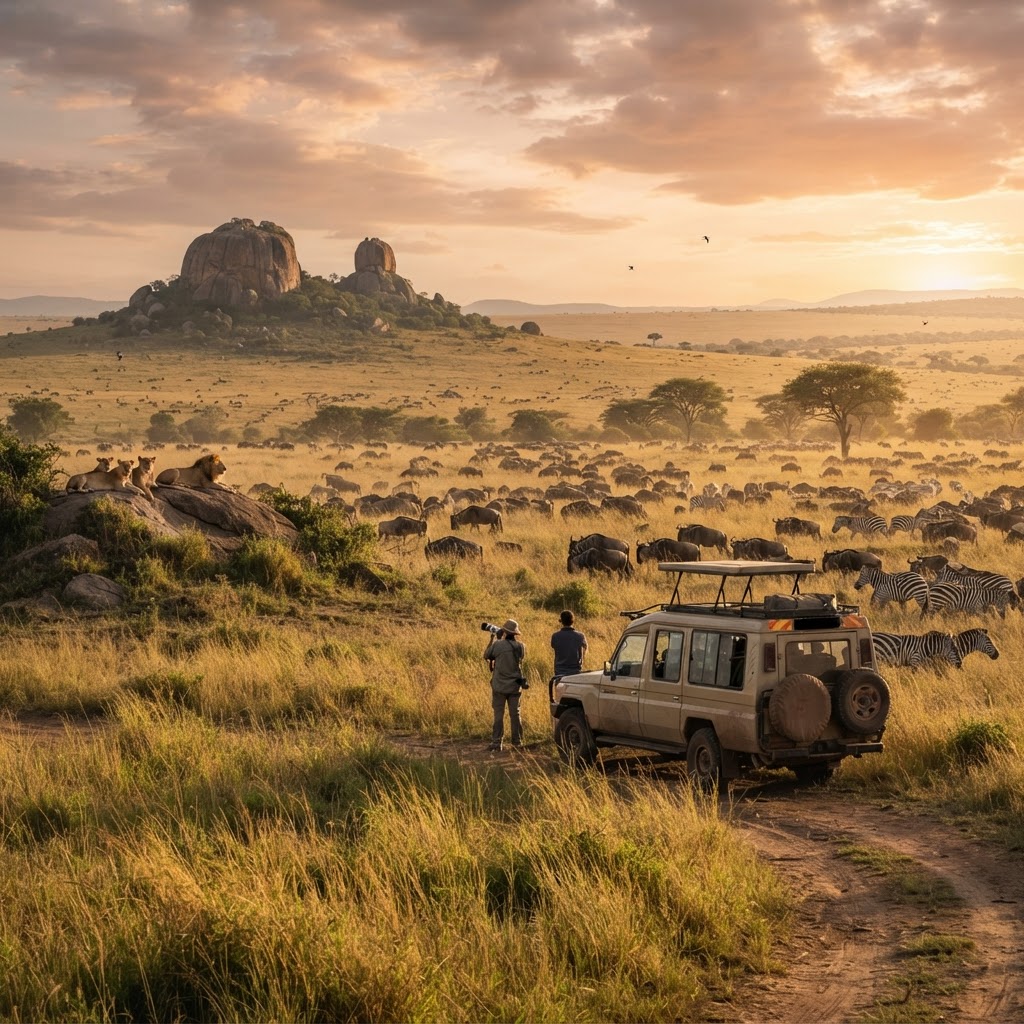
Covering nearly 15,000 square kilometers of savanna, granite kopjes, and riverine woodlands, Serengeti National Park is the benchmark for African wildlife safaris. It is home to the Great Migration—a perpetual circuit of 1.5 million wildebeest and hundreds of thousands of zebras and gazelles pursued by apex predators. Visiting requires navigating massive distances, rough dirt tracks, and distinct seasonal sectors, demanding precise timing and logistics.
4 to 5 days
Best time
July to October for northern river crossings, or January to March for southern calving.
Build your own trip with these prebuilt itineraries
Each one is a tested, day-by-day plan for Serengeti National Park — start here, then make it yours.
5 Days Great Migration Safari in Serengeti National Park
Seasonal wildlife tracking focused on the herds, dramatic river crossings or calving plains, and remote mobile camps
3 Days Quick Bush & Wildlife Escape in Serengeti National Park
Fast-paced fly-in wildlife immersion for travelers short on time wanting intensive 4x4 predator tracking
4 Days in Central Serengeti & Seronera in Serengeti National Park
First-time classic safari focused on resident big cats and central savanna game drives via bush flight
To witness the planet's most dramatic terrestrial migration and the highest concentration of large carnivores in Africa. Whether observing a pride of lions lounging atop the Moru Kopjes, tracking cheetah hunts across the Seronera grass plains, or waiting on the banks of the Mara River for wildebeest crossings, the Serengeti offers scale, raw ecological drama, and unmatched wildlife density.
Where to stay
Getting there
Getting around
Food & drink
What it costs
Things to do
Book tours & tickets in Serengeti National ParkSkip it if
Budget backpackers looking for casual self-guided independence, travelers suffering from chronic back issues irritated by hours of severe bumpy tracks (the 'African massage'), and families with toddlers who cannot tolerate long drives enclosed inside a safari vehicle without restroom stops.
When to go
The Serengeti cannot be summarized in a single season because your dates must mirror the herd movements. Choosing July to October gives you crisp dry weather, thinned vegetation, and Mara River crossings, but requires booking a year out to dodge punishing lodge markups. January to March trades the river drama for lush green plains, newborn calves, and intense cheetah activity at slightly lower lodge competition.
Dry Season (July to October)
Peak river crossing season in Kogatende. Weather is cool and bone-dry with minimal malaria risk, but park airstrips and prime riverbanks get crowded with Land Cruisers.
Calving Season (January to March)
The herds settle on the short-grass southern plains around Ndutu. Roughly 8,000 calves are born daily, driving exceptional predator action under warm, green-season skies.
Shoulder Months (June & November)
June catches the mating rut moving west; November brings brief afternoon showers that turn the dust green. Both deliver strong resident wildlife with far fewer vehicles.
Long Rains / Low Season (April to May)
Monsoonal downpours turn tracks into impassable black cotton mud and mobile tented camps close down, but open lodges slash rates by 30-50%.
Neighborhoods
Where you stay shapes the trip. Here's how to think about it.
Central Serengeti (Seronera Valley)
Wildlife-dense savanna hub packed with big cats, acacia-lined riverbanks, and steady safari vehicle traffic.
Best for:First-timers wanting dependable year-round lion, leopard, and cheetah sightings
Don't miss:Tracking leopards lounging in the sausage trees along the Seronera River early in the morning.
Northern Serengeti (Kogatende & Mara River)
Dramatic frontier of rocky ridges, open woodlands, and chaotic river crossing spectacle.
Best for:Safari veterans and migration photographers prioritizing high-stakes river drama over solitude
Don't miss:Waiting along crossing points 4 or 7 on the Mara River to witness wildebeest plunging through crocodile waters.
Southern Serengeti & Ndutu Plains
Vast short-grass horizon buzzing with hundreds of thousands of newborn calves and hyper-active predators.
Best for:Travelers visiting January to March who want cheetah chases, off-road tracking, and birthing spectacles
Don't miss:Driving out across the Lake Ndutu alkaline flats to watch cheetah mothers hunt gazelle fawns.
Western Corridor (Grumeti River)
Ribbon of lush riverine forest, massive Nile crocodiles, and quiet safari trails away from the masses.
Best for:June travelers catching the rut and anyone prioritizing secluded luxury lodges
Don't miss:Spotting resident pods of hippos and monstrous river crocs near the Kirawira stretch of the Grumeti River.
Moru Kopjes
Towering granite rock islands punctuating wide grasslands, shrouded in early morning bush mist.
Best for:Big-cat enthusiasts wanting striking landscape photography and rare black rhino tracking
Don't miss:Checking the granite boulders for basking lion prides and looking for resident endangered black rhinos with TANAPA rangers.
Destination intelligence
Updated 9/14/2026The structured record we plan every Serengeti National Park itinerary from.
Walkability
Non-existent. You cannot walk unattended in the park due to dangerous wild predators; walking is strictly restricted to designated short lodge grounds or specially permitted armed-ranger bush walks.
Transit quality
No public transit exists within the national park. All transportation is handled via scheduled bush flight charters to internal airstrips and customized private 4x4 safari vehicles.
Car needed
Yes, an off-road 4x4 safari vehicle operated by a professional driver-guide is mandatory for exploring the park safely and effectively.
Ideal duration
4 to 5 days
Minimum useful
3 days
Peak season
July to October (dry season, river crossings in the North) and January to March (calving season on the Southern plains).
Shoulder season
June and November (dry-to-wet transition months; good wildlife viewing and thinner vehicle traffic).
Low season
April to May (the 'long rains'; many mobile camps pack up, roads turn to deep mud, but central resident wildlife viewing remains lush and affordable).
Best for
Common mistakes
- Booking accommodations in the wrong sector of the park relative to the season and the Great Migration's location.
- Driving overland both ways from Arusha, spending two full, grueling days on washboard roads instead of flying at least one leg via bush plane.
- Overpacking rigid luggage—bush planes enforce strict 15 kg (33 lb) limits in soft-sided duffel bags.
- Attempting a rushed 1-to-2 day drive-through itinerary that leaves you exhausted and sitting in transit rather than game viewing.
- Packing vibrant white or dark blue and black clothing, which either attracts safari dust or draws biting tsetse flies.
Best nearby
How to plan it
- Anchor your lodging to the migration's seasonal location: book Kogatende from July to October, Ndutu from January to March, and Seronera for general resident wildlife outside those windows.
- Do not attempt to drive from the Ngorongoro Conservation Area to the Mara River in a single day; split the journey with at least one night in Seronera to avoid spending 9 hours on corrugated dirt roads.
- Pair the Serengeti with Ngorongoro Crater and Tarangire National Park for a complete 7-to-8 day northern circuit that hits distinct geological environments without unnecessary backtracking.
- Limit camp switches to once every three nights; packing up bags and changing sectors eats valuable dawn and dusk game-viewing hours.
- Book an open-sided safari vehicle through a bush-based fly-in operator rather than a closed pop-top van if your primary focus is wildlife photography.
Questions
More in East Africa
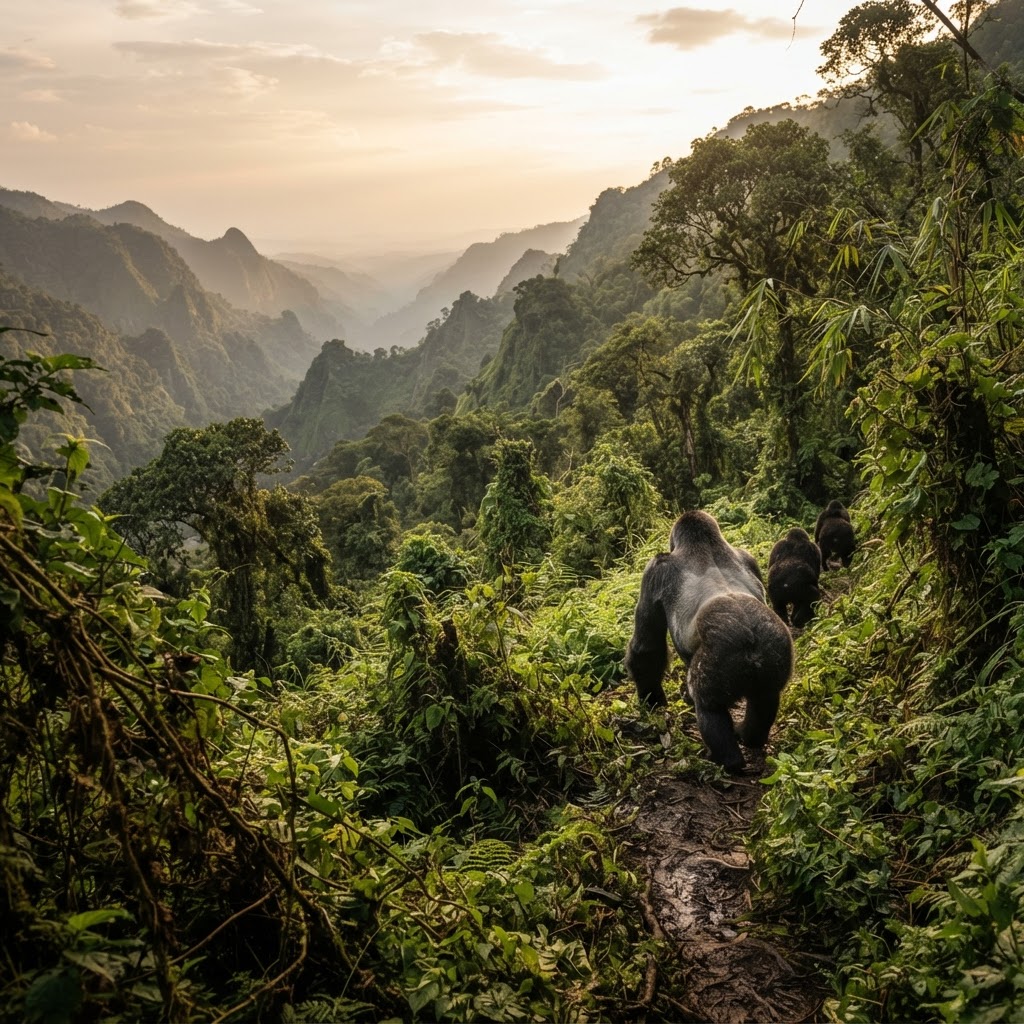
Bwindi Impenetrable Forest, Uganda
Uganda
Steep primal jungle, razor ridges, and heart-stopping wild gorilla encounters.
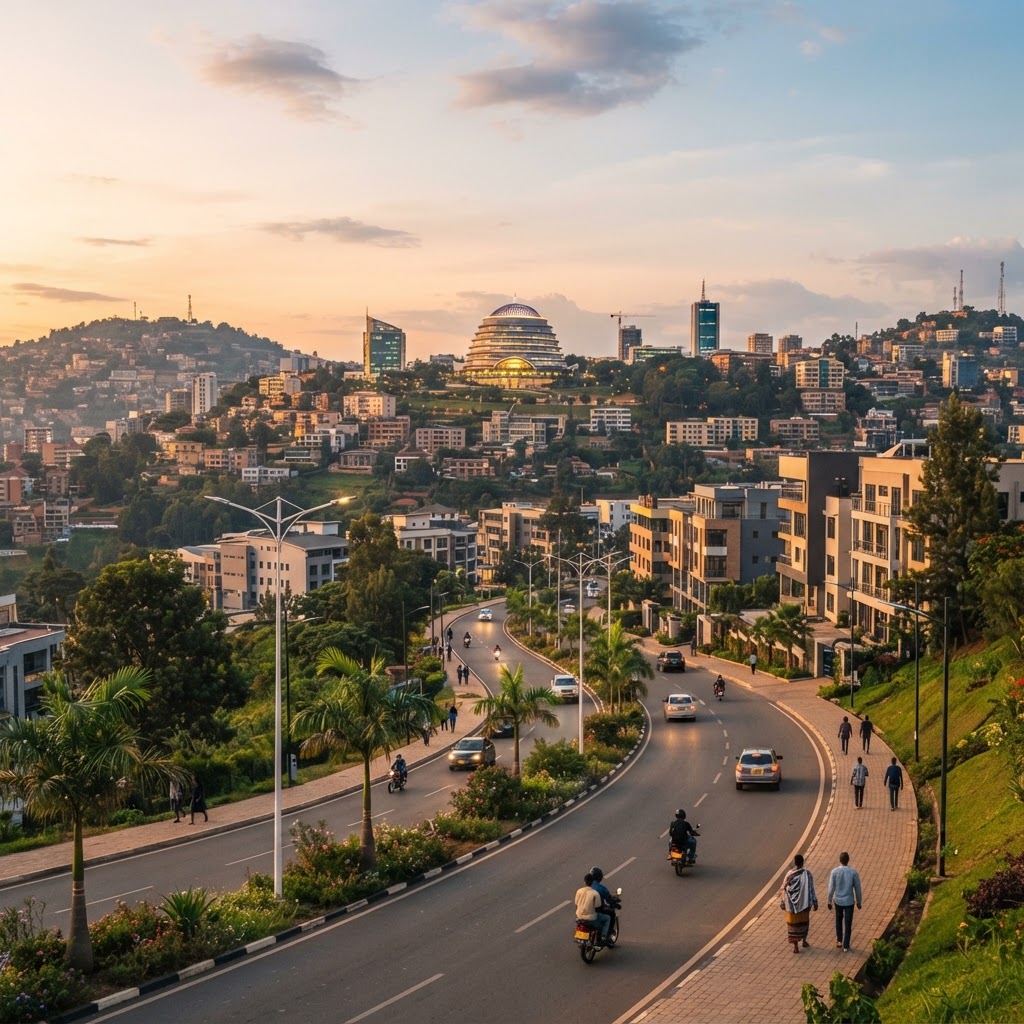
Kigali, Rwanda
Rwanda
A spotless, hill-crested capital trading chaos for creative energy and modern African urbanism.
Readymade itineraries
Start from a tested template — then make it yours.
Ready to book
Lock in your Serengeti National Park trip
Everything in one place. We may earn a small commission — it never costs you more.
Plan a trip to Serengeti National Park
Pick a length and we'll build a day-by-day plan around how you travel — neighborhoods clustered, budget-aware, and editable.
Get better at planning trips like this
Occasional notes on planning smarter — no spam, unsubscribe anytime.
Plan a trip to Serengeti National Park
Turn this guide into a day-by-day plan built around your pace, your group, and your budget.
Build my Serengeti National Park trip