Rwanda
Kigali, Rwanda
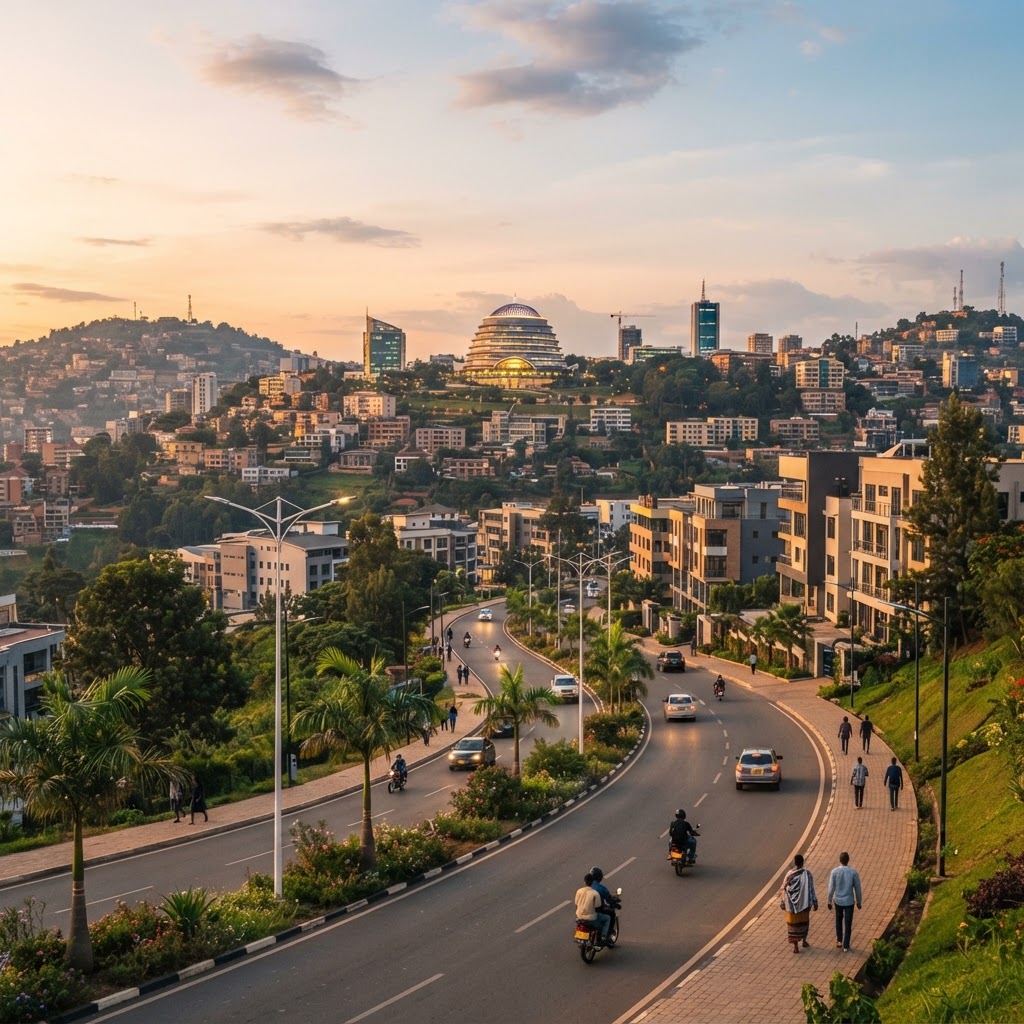
A spotless, hill-crested capital trading chaos for creative energy and modern African urbanism.
Plan & book
Sort your Kigali, Rwanda trip in one place.
We point you to the booking tools we'd actually use — live prices, no markup. Or let us build the day-by-day plan around you first, then book.
Set across rolling ridges at 1,500 meters altitude, Kigali defies the stereotypes of East African capitals. There are no snarled four-hour gridlocks or litter-strewn pavements here; instead, you find manicured roundabouts, solar-lit boulevards, a burgeoning contemporary art movement, and a world-class cafe culture. Long treated merely as a mandatory overnight before tracking mountain gorillas in the north, Kigali has matured into a compelling destination in its own right—one defined by sober historical reckonings, immense civic pride, and an energetic tech-and-arts renaissance.
3 days
Best time
June to September for dry hill walks and clear skies, followed by mid-December to February.
Build your own trip with these prebuilt itineraries
Each one is a tested, day-by-day plan for Kigali, Rwanda — start here, then make it yours.
3 Days in Kigali: Contemporary Culture & History in Kigali
First-timer essential introducing Kigali's poignant historical memorials, buzzing art galleries, and vibrant cafe culture without rushing off to safari parks.
5 Days in Kigali: Deep Heritage & Community Immersion in Kigali
A slower-paced deep dive into community-led social enterprises, walking tours of Nyamirambo, artisan craft workshops, and quiet residential neighborhood life.
2 Days in Kigali: Coffee, Cuisine & Design in Kigali
A curated, sensory weekend focused on single-origin specialty roasters, local fashion boutiques, creative studios, and modern East African dining.
Go to experience one of the cleanest, safest, and most ambitious urban reinventions on the African continent. Kigali offers essential historical context at the Kigali Genocide Memorial that transforms how you perceive modern Rwanda, matched by a dynamic creative scene in places like Inema Arts Center, exceptional specialty coffee culture, and welcoming neighborhoods best navigated on the back of electric moto-taxis.
Where to stay
Getting there
Getting around
Food & drink
What it costs
Things to do
Book tours & tickets in Kigali, RwandaSkip it if
Skip staying more than 24 hours if your sole priority is immediate wilderness immersion, wildlife tracking, and rugged safari adventure with zero interest in African urban culture, history, or modern dining.
When to go
Dry seasons deliver reliable mobility across Kigali's steep ridgelines and pair seamlessly with tracking conditions in Volcanoes or Akagera. Shoulder months bring dramatic rainstorms that turn the valleys verdant but can complicate open-air plans.
Peak (June–September & mid-December–February)
Dry roads, pleasant 26°C daytime temperatures, and bustling cultural spaces; accommodation books months out due to gorilla trekking schedules.
Shoulder (October–November)
Lush green scenery with short afternoon cloudbursts; cafe patios remain pleasant, hotel rates soften, and city sights are uncrowded.
Low (March–May)
Heavy tropical rains and damp, slick hill slopes; manageable in urban Kigali via cabs, but off-road links elsewhere in the country become difficult.
Neighborhoods
Where you stay shapes the trip. Here's how to think about it.
Kimihurura
Paved leafy avenues packed with dynamic dining, open-air garden bistros, and diplomatic residences.
Best for:First-timers, foodies, and evening socializers wanting central access.
Don't miss:Dinner on the veranda at Repub Lounge paired with views over illuminated hills.
Kiyovu
Old-world diplomatic hill shaded by jacarandas, housing historic residences, upscale hotels, and quiet paved lanes.
Best for:Luxury travelers, business visitors, and walkers wanting calm, green streets.
Don't miss:A pour-over single-origin cup and pastry at Question Coffee Gishushu or Bourbon Coffee near the ridge.
Nyamirambo
Kigali's most vibrant Muslim quarter, defined by lively street culture, barbershops, tailored wax prints, and milk bars.
Best for:Culture seekers, street-food lovers, and travelers craving unvarnished energy.
Don't miss:A guided walking tour with the Nyamirambo Women's Center ending with a home-cooked lunch.
Kacyiru
The administrative and creative hill, where major embassies and ministries sit alongside contemporary studios and quiet cafes.
Best for:Contemporary art buyers, remote workers, and embassy visitors.
Don't miss:Exploring the contemporary gallery and rooftop cafe at Inema Arts Center.
Remera
Bustling, high-decibel commercial and nightlife hub wrapping around Amahoro National Stadium near the airport.
Best for:Night owls, budget travelers, and sports enthusiasts wanting cheap local brochettes and cold Primus beer.
Don't miss:Fresh goat brochettes with grilled plantains (ibirayi) at a local open-air bar along Gisimenti strip.
Destination intelligence
Updated 9/14/2026The structured record we plan every Kigali, Rwanda itinerary from.
Walkability
Low to Moderate. Individual micro-neighborhoods like Kiyovu and commercial strips in Kimihurura are pleasant and paved, but Kigali's vast hills and sprawling distances make city-wide walking impractical.
Transit quality
Moderate. There is a regulated, card-based city bus network along major arteries, but visitors rely primarily on licensed moto-taxis and app-based cabs (Move, Yego).
Car needed
No. Point-to-point ride hailing and ubiquitous moto-taxis make hiring a self-drive vehicle inside Kigali completely unnecessary and stressful.
Ideal duration
3 days
Minimum useful
1 day
Peak season
June to September and mid-December to February (the main dry seasons, aligned with premier gorilla trekking conditions in the north).
Shoulder season
October to November (the short rainy season brings lush green hills, brief afternoon showers, and fewer crowds).
Low season
March to May (the long rainy season, featuring heavy rains that impact hiking trails throughout the country).
Best for
Common mistakes
- Treating Kigali merely as a landing pad for a late flight and departing instantly for Volcanoes National Park without taking 24 hours to grasp Rwanda's modern cultural context.
- Bringing single-use plastic bags into the country—Rwanda enforces a strict nationwide ban, and luggage is routinely inspected at customs in Kigali International Airport.
- Taking photos of government buildings, military personnel, and official installations, which is strictly prohibited.
- Attempting to walk long distances across the city underestimating the steep gradient and 1,500-meter altitude.
Best nearby
How to plan it
- Stay in Kimihurura if you want to walk out to dinner and drinks, or choose Kiyovu for quiet, shaded morning strolls.
- Do not visit the Kigali Genocide Memorial in a rush; reserve at least three unhurried hours and avoid scheduling intense sightseeing immediately afterward.
- Pair your city stay with an eastern safari detour to Akagera National Park (2.5 hours driving) rather than treating Kigali solely as a gorilla layover.
- Book an afternoon walking tour with Nyamirambo Women's Center at least three days ahead during peak summer months.
- Avoid scheduling cross-town tours or transfers on the final Saturday morning of the month due to the country's Umuganda clean-up curfew.
Questions
More in Rwanda
More in East Africa
Readymade itineraries
Start from a tested template — then make it yours.
Ready to book
Lock in your Kigali, Rwanda trip
Everything in one place. We may earn a small commission — it never costs you more.
Plan a trip to Kigali, Rwanda
Pick a length and we'll build a day-by-day plan around how you travel — neighborhoods clustered, budget-aware, and editable.
Get better at planning trips like this
Occasional notes on planning smarter — no spam, unsubscribe anytime.
Plan a trip to Kigali, Rwanda
Turn this guide into a day-by-day plan built around your pace, your group, and your budget.
Build my Kigali, Rwanda trip