Rwanda
Volcanoes National Park, Rwanda
Untamed Virunga volcanic slopes and the world's most intimate mountain gorilla encounters.
Plan & book
Sort your Volcanoes National Park, Rwanda trip in one place.
We point you to the booking tools we'd actually use — live prices, no markup. Or let us build the day-by-day plan around you first, then book.
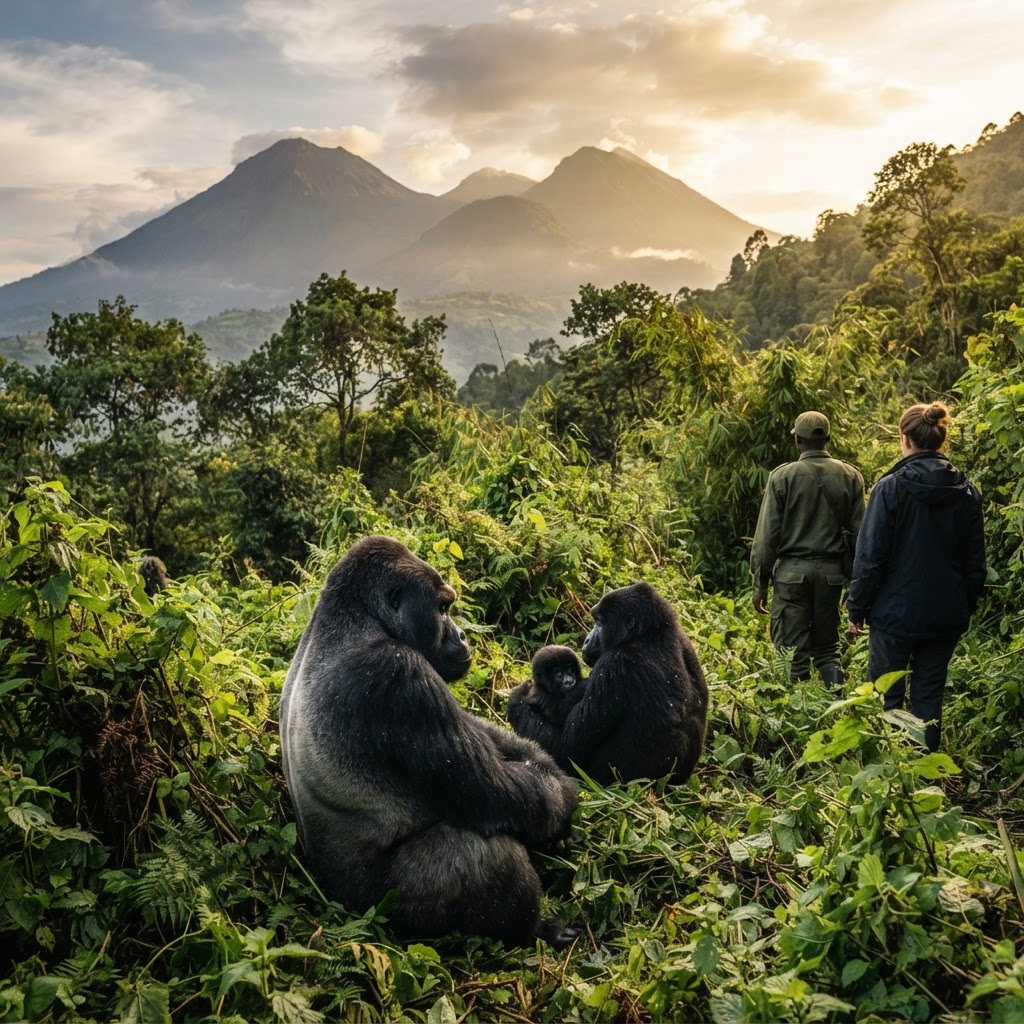
Set along the misty, bamboo-cloaked slopes of the Virunga Massif in northwestern Rwanda, Volcanoes National Park is the epicenter of global mountain gorilla conservation. A high-altitude sanctuary framed by five towering volcanic peaks, it pairs intense rainforest trekking with East Africa's most tightly managed, low-volume wildlife encounters.
3 days
Best time
June to September and mid-December to February for the firmest footing and clearest mountain visibility.
Build your own trip with these prebuilt itineraries
Each one is a tested, day-by-day plan for Volcanoes National Park, Rwanda — start here, then make it yours.
5 Days: Virunga Volcanoes Hiking & Wildlife Expedition in Volcanoes National Park
High-Altitude Volcanic Summits & Double Primate Trekking
3 Days: Primates & Dian Fossey Heritage in Volcanoes National Park
Gorillas, Golden Monkeys & Historic Conservation Legacy
2 Days: The Essential Gorilla Trek in Volcanoes National Park
Classic Mountain Gorilla Encounter & Acclimatized Express
Volcanoes National Park offers arguably the most accessible and ethically regulated mountain gorilla trekking on earth. Just a 2.5-hour paved drive from Kigali International Airport, it eliminates multi-day transfers common to other safari hubs. You track habituated gorilla families alongside expert trackers and armed rangers through dense bamboo forest, culminating in a strictly observed, life-altering 60 minutes just feet from silverbacks.
Where to stay
Getting there
Getting around
Food & drink
What it costs
Skip it if
Skip this destination if you have severe mobility limitations or cardiovascular issues, as treks demand uphill hiking through pathless jungle at high elevations. Budget backpackers unable or unwilling to spend $1,500 on a single wildlife permit should also bypass Volcanoes in favor of Uganda's Bwindi or general game reserves.
When to go
Dry seasons offer manageable trail mud and crisp Virunga panoramas, but permits book out six months early. Shoulder months exchange damp volcanic dirt for lower luxury lodge rates and smaller crowds.
Peak (June–September & mid-December–February)
Crisp skies, firmer volcanic trails, and near-zero permit flexibility; secure trekking slots at least 6 months ahead.
Shoulder (October–November)
Short mountain downpours and thick mist create atmospheric photography; lodge availability opens up slightly.
Low (March–May)
Heavy tropical rains turn trailheads into slippery bogs, but gorillas frequently forage lower down the bamboo belt.
Neighborhoods
Where you stay shapes the trip. Here's how to think about it.
Kinigi
Earthy, high-altitude outpost buzz with early-morning anticipation around the official park gates.
Best for:Trek convenience and luxury lodge access
Don't miss:The 7:00 AM park headquarters briefing before convoys disperse to volcanic trailheads.
Musanze Town (Ruhengeri)
Lively provincial hub framed by volcanic ridgelines, filled with market stalls and bustling street corners.
Best for:Budget travelers, independent dining, and practical supply runs
Don't miss:Fresh goat brochettes with grilled plantains at a local Musanze town grill.
Nyange & Bisate Slopes
Ultra-private, misty agricultural hills dotted with world-class conservation architectural lodges.
Best for:Luxury retreat seekers and serious wildlife photographers
Don't miss:Panoramic twilight views of Mount Bisoke and Karisimbi looming directly above the terraces.
Twin Lakes (Burera & Ruhondo)
Deep-blue crater water, dramatic mountain reflections, and quiet village tracks removed from gorilla foot-traffic.
Best for:Post-trek decompression and slow scenic afternoons
Don't miss:A late-afternoon wooden boat crossing on Lake Ruhondo beneath the volcano ridgeline.
Destination intelligence
Updated 9/14/2026The structured record we plan every Volcanoes National Park, Rwanda itinerary from.
Walkability
Low. Sprawling volcanic terrain requires a vehicle to travel between lodges, park headquarters, and trailheads.
Transit quality
Low within the park perimeter; intercity transit between Kigali and Musanze is reliable, but park roads demand private 4x4 vehicles.
Car needed
Yes. A 4x4 vehicle with private driver-guide is mandatory to reach dawn briefings and rugged forest trailheads.
Ideal duration
3 days
Minimum useful
2 days
Peak season
June to September and mid-December to February: dry weather yields firmer footing, clearer skies, and less treacherous trekking conditions.
Shoulder season
October to November: short rains bring dramatic mountain mists, green landscapes, and slightly lower luxury lodge occupancy.
Low season
March to May: heavy long rains create deeply muddy tracks, though gorilla groups frequently descend to lower elevations to feed on fresh bamboo.
Best for
Common mistakes
- Failing to hire a local porter at the trailhead ($15–$20 fee provides vital traction on mud slopes and supports conservation-adjacent village economies)
- Wearing lightweight sneakers or ankle socks instead of sturdy, waterproof high-ankle hiking boots with gaiters to protect against fire ants and stinging nettles
- Underestimating the elevation (starting above 2,200m) and trying to do a gorilla trek on day one without acclimating in Kigali or Musanze
- Booking gorilla trekking permits at the last minute; permits are strictly capped at 96 people per day across 12 habituated groups and sell out months ahead
Best nearby
How to plan it
- Stay in Kinigi or the Nyange foothills rather than Musanze town if you want to eliminate early-morning transit stress to the 7:00 AM park briefing.
- Pair gorilla trekking with golden monkey tracking on consecutive mornings rather than attempting two consecutive gorilla treks, saving significant money while exploring distinct bamboo habitats.
- Hire an official porter at the trailhead for $15–$20 even if you feel fit; they stabilize you through deep mud bogs and carry your daypack, directly supporting ex-poacher community livelihoods.
- Don't try to summit Mount Bisoke and track gorillas on the same day; both are demanding high-altitude excursions that finish past midday and drain your leg reserves.
- Reserve your RDB gorilla permit before committing to non-refundable luxury lodge bookings, as dates fill up months in advance.
Questions
More in Rwanda
Readymade itineraries
Start from a tested template — then make it yours.
Ready to book
Lock in your Volcanoes National Park, Rwanda trip
Everything in one place. We may earn a small commission — it never costs you more.
Plan a trip to Volcanoes National Park, Rwanda
Pick a length and we'll build a day-by-day plan around how you travel — neighborhoods clustered, budget-aware, and editable.
Get better at planning trips like this
Occasional notes on planning smarter — no spam, unsubscribe anytime.
Plan a trip to Volcanoes National Park, Rwanda
Turn this guide into a day-by-day plan built around your pace, your group, and your budget.
Build my Volcanoes National Park, Rwanda trip