South Korea
Seoul
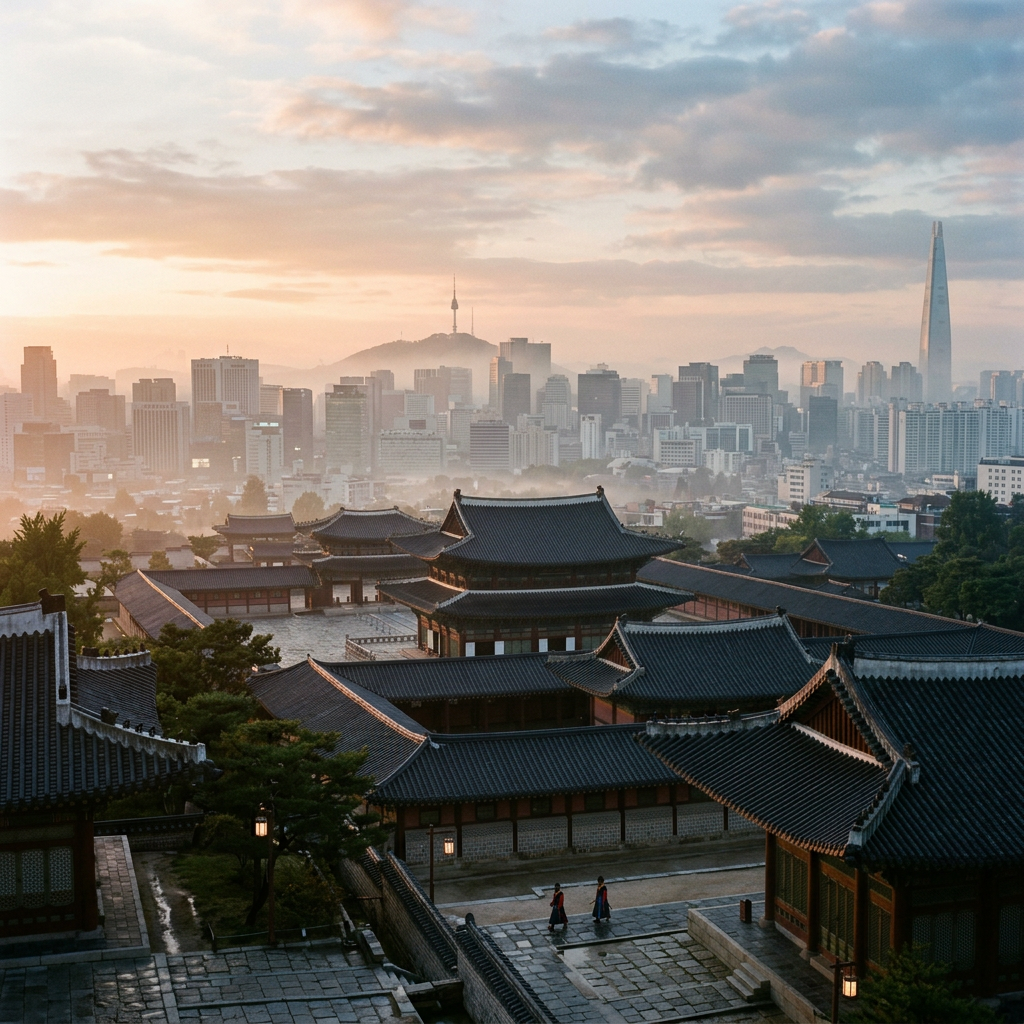
Seoul is ancient and neon — palaces at dawn, markets at noon, barbecue and soju at night.
Seoul is a city where a 14th-century palace sits beside a 24-hour shopping district, and the contrast is the whole point. It's safe, efficient, and has one of the great food cultures in the world.
The rhythm: palaces and neighborhoods by day, markets and barbecue by night. The subway is world-class; use it. Eat Korean barbecue with a group, street food alone, and never skip a coffee — the café scene here is unmatched.
Plan around neighborhoods, not monuments. One area a day, a meal you didn't expect, and you'll get why people fall for Seoul.
How long
3–5 days
Best time
April–May and September–October
When to go
Cherry blossoms in spring, autumn leaves — both mild and gorgeous. Summer is hot and humid; winter is cold, dry, and quiet.
Spring (Apr–May)
Cherry blossoms and mild weather — peak for a reason.
Fall (Sep–Oct)
Clear, cool, and the foliage — our pick.
Summer
Hot and humid with monsoon rains in July.
Winter
Cold and dry; cheap, quiet, and great for food and cafés.
Neighborhoods
Where you stay shapes the trip. Here's how to think about it.
Jongno & Insadong
First-timers, cultureThe historic core — palaces, traditional arts, and teahouses. Best in the morning.
Don't miss: Gyeongbokgung Palace at the morning guard ceremony.
Myeongdong
ShoppersThe shopping and street-food heart — crowded, neon, and fun in the evening.
Don't miss: A street-food crawl through Myeongdong after dark.
Hongdae
Nightlife, young travelersThe youth and indie district by the university — buskers, cafés, and nightlife.
Don't miss: Live music and a late-night bite in Hongdae.
Itaewon
Food, nightlifeThe international district — global food, expat bars, and the most varied dining.
Don't miss: A world-cuisine dinner and a rooftop bar.
Gangnam
Returning visitors, shoppersThe sleek, modern south — skyscrapers, K-pop, and upscale shopping.
Don't miss: A walk along Gangnam's designer boulevards (Garosu-gil).
Practical
Currency
South Korean won (KRW). Cards common but carry cash for markets and small places. ATMs in convenience stores.
Language
Korean. English signage on transit; translation apps help in restaurants.
Getting around
The subway is world-class — clean, cheap, and everywhere. Get a Tmoney card. Taxis are cheap; ride apps (KakaoT) work.
Safety
Extremely safe, day and night. One of the safest major cities in the world.
Budget range
₩80,000–150,000 per person per day at mid-range. Food is the highlight and surprisingly affordable.
Tipping
No tipping. It can be refused. Good service is simply included.
See what a trip to South Korea actually costs. Travel Budget Co.
How to plan it
- Get a Tmoney card for the subway — load once, tap everywhere.
- Eat Korean barbecue with a group — order dwaeji galbi or samgyeopsal and soju.
- Do palaces in the morning; markets and food streets at night.
- Use a translation app's camera for menus — it transforms ordering.
- Visit a jjimjilbang (Korean sauna) once — a uniquely Seoul experience.
Questions
How many days in Seoul?
Three to five. Three covers the core; five adds palaces, markets, and a day trip.
Is Seoul expensive?
Moderate by developed-Asian-capital standards. Food is affordable; hotels are the main cost.
Is Seoul safe at night?
Very — among the safest major cities anywhere. Walking late is fine everywhere.
Do I need cash in Seoul?
Cards are widely accepted; carry some cash for markets, street food, and small cafés.
More in South Korea

More in Asia

El Nido / Palawan
Philippines
El Nido is Palawan's dramatic corner — limestone cliffs over lagoons, and island-hopping in turquoise water.

Kathmandu
Nepal
Kathmandu is a valley of temples — Durbar Squares, stupas, and the gateway to the Himalayas and Everest.

Da Nang
Vietnam
Da Nang is Vietnam's beach-and-bridge city — the central coast base for Hoi An, Hue, and the Marble Mountains.

Mount Fuji
Japan
Mount Fuji is the icon — a perfect cone you can climb in summer, or admire from hot springs and a lake the rest of the year.

Nagasaki
Japan
Nagasaki is Japan's port city — the bomb's other memorial, a hillside of churches, and a trading history with the world.

Colombo & Galle
Sri Lanka
Sri Lanka is an island in one trip — tea hills, leopard safaris, Galle's fort, and a beach on every coast.
Readymade itineraries
Start from a tested template — then make it yours.
Where to book
Plan a trip to Seoul
Pick a length and we'll build a day-by-day plan around how you travel — neighborhoods clustered, budget-aware, and editable.
Get better at planning trips like this
Occasional notes on planning smarter — no spam, unsubscribe anytime.
Plan a trip to Seoul
Turn this guide into a day-by-day plan built around your pace, your group, and your budget.
Build my Seoul trip