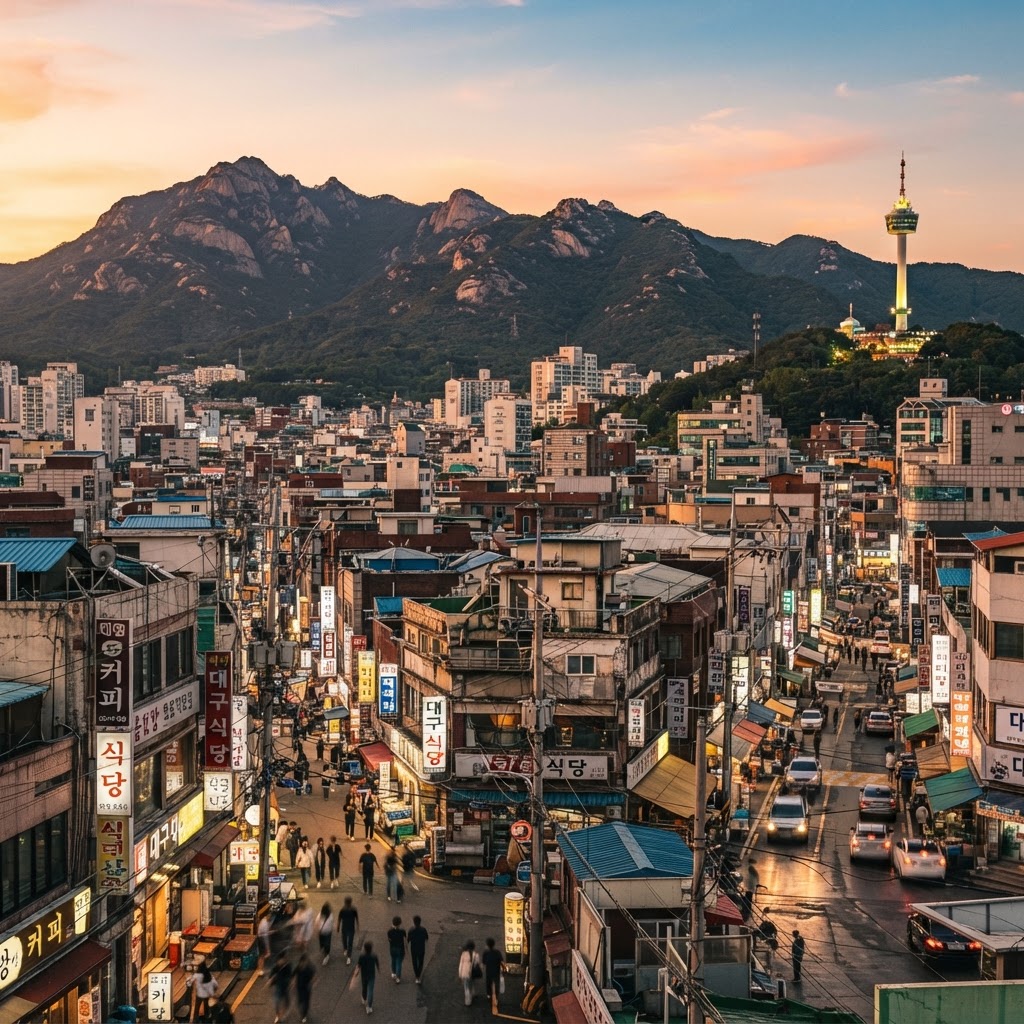
South Korea
Daegu
A gritty mountain-ringed textile hub turned coffee capital and culinary heavyweight
Plan & book
Sort your Daegu trip in one place.
We point you to the booking tools we'd actually use — live prices, no markup. Or let us build the day-by-day plan around you first, then book.
South Korea's third-largest metropolitan basin is often bypassed entirely on the high-speed rail run between Seoul and Busan. That is a tactical error for travelers who prioritize food culture, modern history, and urban mountain landscapes. Daegu trades the hyper-touristy sheen of the capital for a distinct local personality anchored by dramatic foothill temples, an energetic downtown walking grid, and an uncompromising regional dining scene famous for roasted offal, raw beef, and flat dumplings.
2 to 3 days
Best time
Mid-October to early November for crisp air, clear skies, and brilliant autumn foliage across the surrounding mountains.
Build your own trip with these prebuilt itineraries
Each one is a tested, day-by-day plan for Daegu — start here, then make it yours.
3 Days in Daegu: Mountains, Temples & Peak Views in Daegu
An outdoor and cultural route balancing ancient Buddhist mountain sanctuaries like Palgongsan with sunset panoramic ridge viewpoints at Apsan
3 Days in Daegu: Foodie Alleys & Indie Cafes in Daegu
A culinary deep dive built around weekday mungtigi, spicy jjimgalbi, makchang grills, and Daegu's thriving specialty bakery and coffee scene
2 Days in Daegu: Urban Heritage & Iconic Flavors in Daegu
A high-energy urban weekend covering modern history alleys, scenic Monorail views, and signature food streets like Anjirang Gopchang
Daegu offers one of the best high-speed rail pit stops in Korea for travelers craving deep regional immersion without massive tour crowds. It balances sacred mountain escapes like Palgongsan and Donghwasa Temple with a compact urban center where indie roasteries, traditional medicine markets (Yangnyeongsi), and legendary night markets (Seomun Market) thrive within steps of each other. Furthermore, food-focused travelers come specifically for Daegu's '10 Tastes,' which represent some of the country's boldest street and pub fare.
Where to stay
Getting there
Getting around
Food & drink
What it costs
Things to do
Book tours & tickets in DaeguSkip it if
Skip Daegu if your itinerary is limited to 7 days in South Korea and you have never visited Seoul or Busan, as Daegu lacks the coastal beaches of Busan and the sprawling royal palaces of Seoul. Skip it as well if you are seeking postcard-perfect coastal scenery or quiet pastoral countryside.
When to go
Daegu sits in an enclosed inland basin that traps summer heat and winter wind. Visiting in mid-autumn guarantees comfortable walking weather in Jung-gu and spectacular maple leaf displays on Palgongsan without the stifling humidity of midsummer.
Peak (April to May & October to early November)
Spring cherry blossoms in Duryu Park and fall foliage on Palgongsan bring the best weather of the year; hotel rates near Dongdaegu Station rise, so book 3 to 4 weeks ahead.
Shoulder (Late March & September)
Pleasant conditions with lighter domestic tourist foot traffic, though late March can carry chilly gusts and September retains late-summer humidity.
Low (July to August & January to February)
Daegu is notoriously dubbed 'Daefrica' due to sweltering basin heat reaching well over 35°C (95°F) in midsummer, while January brings dry, biting sub-zero cold.
Neighborhoods
Where you stay shapes the trip. Here's how to think about it.
Dongseong-ro (Jung-gu)
Dense, pedestrian-only commercial district buzzing with indie cafes, youth fashion, and late-night izakayas.
Best for:First-timers, cafe lovers, and urban walkers wanting everything within reach.
Don't miss:Ordering flat dumplings (napjak mandu) drenched in spicy sauce at Jungang Tteokbokki, followed by filter coffee along Dongseong-ro Cafe Alley.
Gyo-dong & Bukseong-ro
Industrial-heritage district where mid-century tool workshops now flank hip natural wine bars and converted warehouse roasteries.
Best for:Design fans, night-owls, and travelers who appreciate gritty urban renewal over polished malls.
Don't miss:Late-night bulgogi grilled over open charcoal paired with udon noodles at the Bukseong-ro street carts.
Bangcheon Market & Daebong-dong
Arty, acoustic enclave centered around folk-music tributes, craft workshops, and quiet side-street dining.
Best for:Art travelers, slower afternoons, and folk-music fans.
Don't miss:Strolling the 350-meter Kim Gwang-seok Memorial Street lined with painted murals and buskers playing vintage Korean folk guitar.
Anjirang (Nam-gu)
Raucous, smoke-filled culinary strip dedicated almost entirely to one iconic grilled street dish.
Best for:Food obsessives, late-night drinkers, and adventurous carnivores.
Don't miss:Grilling marinated pork small intestines over open briquettes along Anjirang Gopchang Alley with local makgeolli.
Apsan (Nam-gu)
Leafy residential foothill zone lined with design-forward bakeries and residential-scale specialty cafes.
Best for:Couples, hikers, and travelers seeking scenic sunset viewpoints away from downtown bustle.
Don't miss:Riding the Apsan Cable Car up to the observation deck just before twilight for a sweeping panoramic view across the entire Daegu basin.
Destination intelligence
Updated 9/14/2026The structured record we plan every Daegu itinerary from.
Walkability
Moderate-High. Jung-gu downtown and historical alleys are entirely walkable on foot; outer mountain sites like Palgongsan and Apsan require short bus or taxi transfers.
Transit quality
High. Modern 3-line subway network (including the scenic elevated Line 3 monorail), frequent city buses, and world-class high-speed rail connections via Dongdaegu Station.
Car needed
Not required. The subway system, city buses, and readily available taxis handle everything within the city basin and outer temple trailheads.
Ideal duration
2 to 3 days
Minimum useful
1 full day (or an overnight layover between Seoul and Busan)
Peak season
Spring (April to May) for mild temperatures and mountain blossoms; Autumn (October to early November) for vivid fall foliage across Palgongsan.
Shoulder season
Late March and September, offering comfortable sightseeing weather before and after summer heat spikes.
Low season
July to August (extreme basin humidity and heat) and January to February (dry, biting winter cold).
Best for
Common mistakes
- Visiting in July or August without preparing for extreme heat; the city's basin topography makes it the hottest urban pocket in Korea, earning it the nickname 'Daefrica.'
- Booking a stay near Daegu Station instead of Dongdaegu Station when relying heavily on high-speed KTX/SRT services.
- Skipping dinner at specialized dining alleys like Anjirang Gopchang Alley or Dongin-dong Jjimgalbi Street in favor of standard chain restaurants.
- Trying to order mungtigi (raw sliced beef) on weekends; butcher shops are closed on Saturdays and Sundays, meaning the meat cannot be served freshly slaughtered.
Best nearby
See what a trip to South Korea actually costs. Travel Budget Co.
How to plan it
- Stay within walking distance of Banwoldang Station if you want to walk to the modern history trails, Seomun Market, and Dongseong-ro without riding transit every morning.
- Pair Daegu with Gyeongju or Busan—Dongdaegu Station connects to Gyeongju in 18 minutes and Busan in 45 minutes via KTX, making it an easy multi-city anchor.
- Do not attempt Palgongsan (Donghwasa Temple) and Apsan Park on the same day; they sit on opposite northern and southern mountain ridges of the basin.
- Plan your Seomun Market visit for Friday or Saturday evening to experience both the heritage fabric stalls by day and the massive outdoor night food market by night.
- Download Naver Map or KakaoMap before you arrive; Google Maps does not provide reliable walking or transit navigation inside South Korea.
Questions
More in South Korea
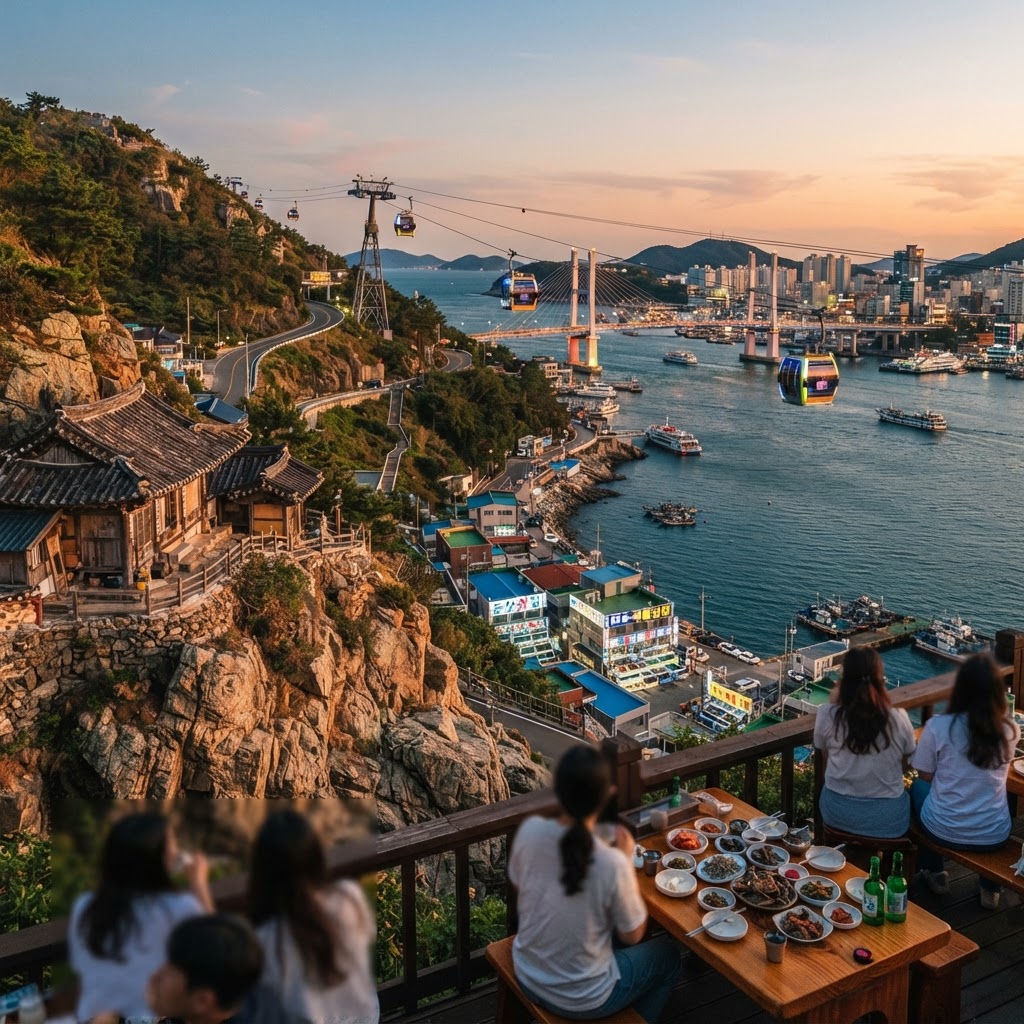
Yeosu, South Korea
South Korea
Korea's southern maritime retreat of cliffside hermitages, sea cable cars, and coastal banchan
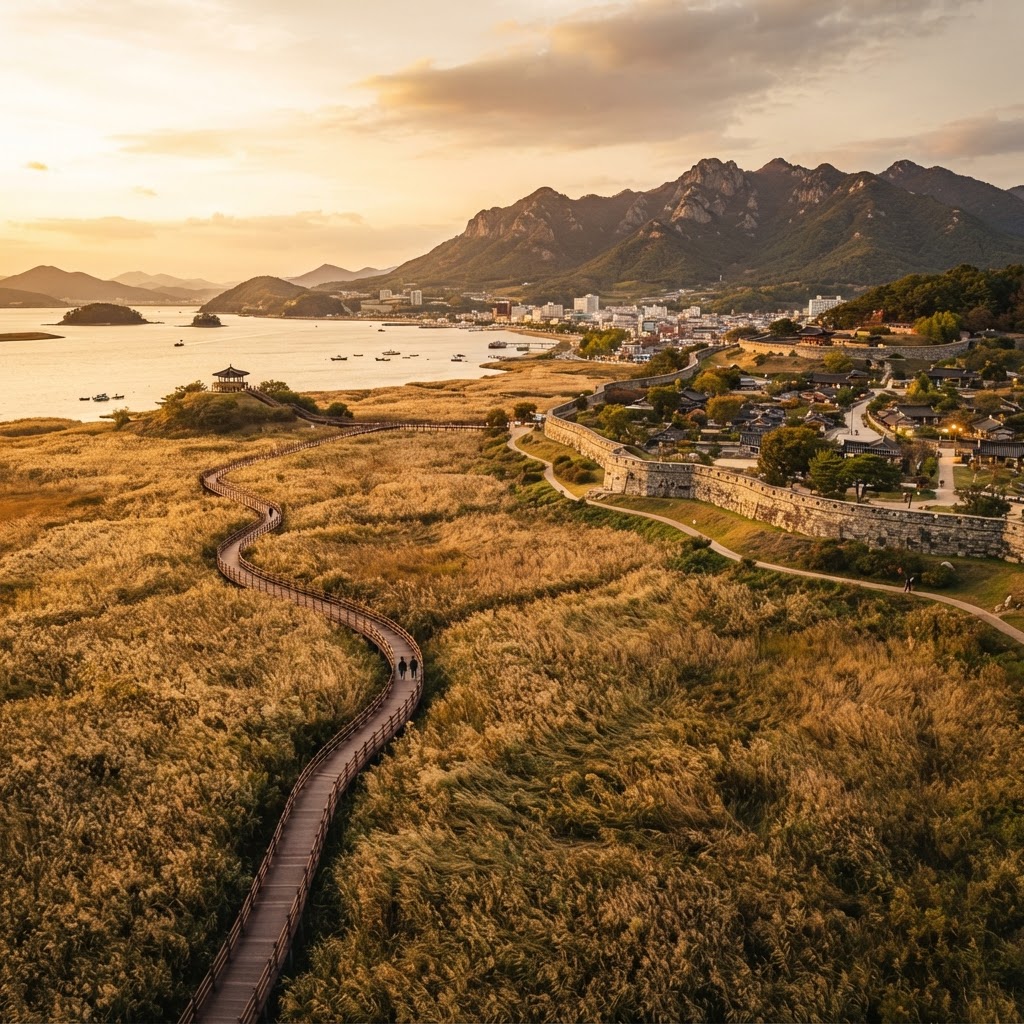
Suncheon, South Korea
South Korea
Expansive coastal reed beds, living fortress walls, and quiet southern culinary depth.
Readymade itineraries
Start from a tested template — then make it yours.
Ready to book
Lock in your Daegu trip
Everything in one place. We may earn a small commission — it never costs you more.
Plan a trip to Daegu
Pick a length and we'll build a day-by-day plan around how you travel — neighborhoods clustered, budget-aware, and editable.
Get better at planning trips like this
Occasional notes on planning smarter — no spam, unsubscribe anytime.
Plan a trip to Daegu
Turn this guide into a day-by-day plan built around your pace, your group, and your budget.
Build my Daegu trip