Chile
Santiago Itinerary: How Many Days + Sample Plans
Modern Andean sophistication, gritty street culture, and exceptional cool-climate dining framed by 18,000-foot peaks.
Traveler rating
Loved by food and natural wine lovers seeking modern South American gastronomy without Buenos Aires or.
Plan & book
Sort your Santiago trip in one place.
We point you to the booking tools we'd actually use — live prices, no markup. Or let us build the day-by-day plan around you first, then book.
Pick your trip length
How many days do you need in Santiago?
Each of these opens a full day-by-day plan you can make your own.
- 2 days — Two days — the essentials, no rushing.
- 3 days — Three days — the icons plus one neighborhood.
- 4 days — Four days — a full city without sprinting.
- 5 days — Five days — room for a day trip.
- 7 days — A week — the city at a human pace.
- With Kids trip — Shorter days, earlier dinners, what to skip.
- For Couples trip — Two-person pacing with evenings built in.
- Solo trip — A plan that works well on your own.
- Food trip — Meals and markets as the anchors.
- Outdoors trip — Nature, walks and open air.
- Culture trip — History, museums and the streets around them.
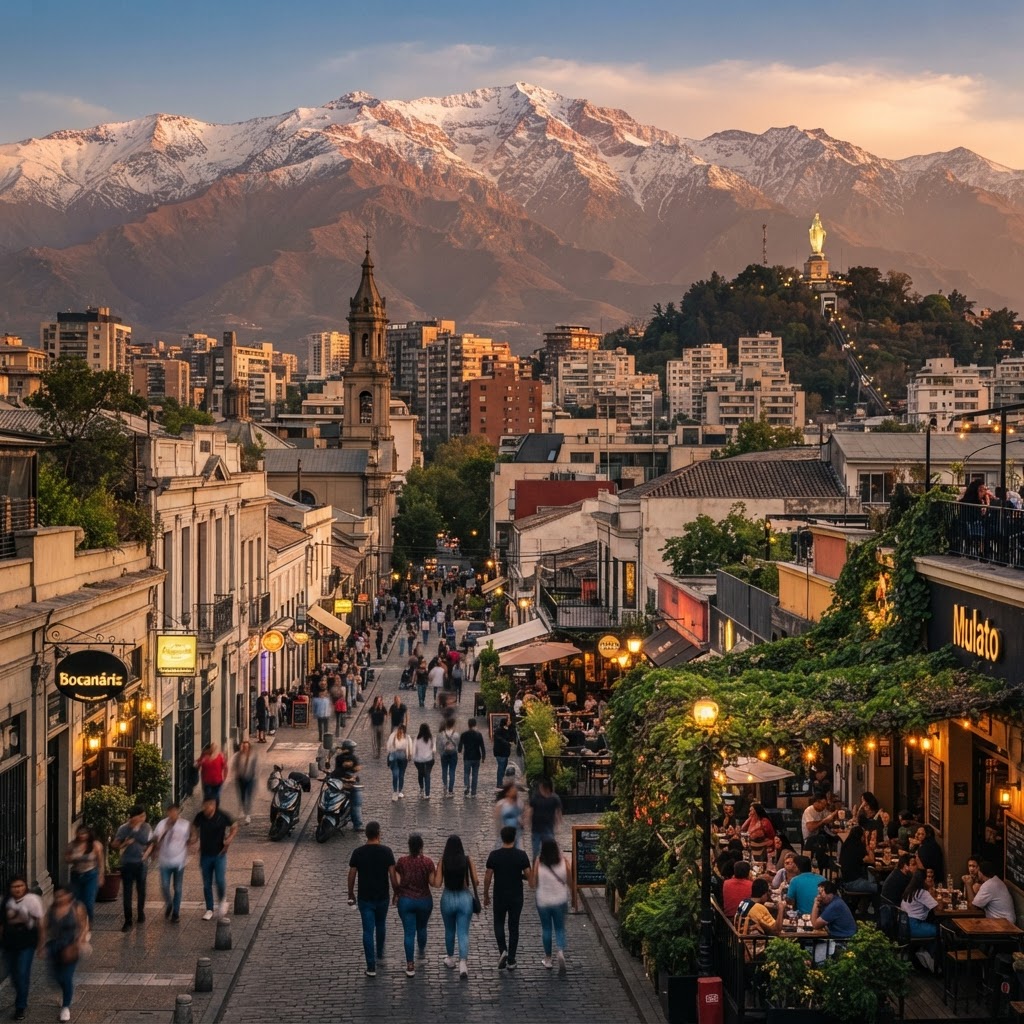
Santiago is frequently treated as an unavoidable airport layover before travelers fly south to Patagonia or north to the Atacama Desert. That approach misses the city's true character. While it lacks the uniform historical grandeur of Buenos Aires or the raw topography of Rio de Janeiro, Chile's capital rewards structured exploration. Framed directly against the snow-capped Andes, Santiago is an efficient metropolis of walkable leafy barrios, world-class modern dining rooted in native Chilean biomes, poignant human rights history, and doorstep access to premier wine valleys and coastal hills.
3 days
Best time
October to November (spring) or March to April (grape harvest autumn).
Build your own trip with these prebuilt itineraries
Each one is a tested, day-by-day plan for Santiago — start here, then make it yours.
2 Days in Santiago: Natural Wine & Modern Gastronomy in Santiago
A focused food and wine escape through Barrio Italia and Providencia's cutting-edge bistros, tasting natural Chilean vintages and neighborhood coffee cultures.
3 Days in Santiago: Classic Culture, Cerros & Wine in Santiago
First-time city highlights balancing vibrant barrios like Lastarria and Providencia with panoramic cerro hikes, human rights history, and local culinary staples.
5 Days in Santiago: Urban Neighborhoods & Andean Escapes in Santiago
An extended cultural exploration using the Metro for deep dives into political history, supplemented with easy day excursions into the Andes foothills and Maipo Valley wineries.
Santiago offers one of South America's most dynamic culinary scenes—from avant-garde foraging to neighborhood wine bars pouring crisp Maipo and Casablanca vintages—paired with a pristine mountain backdrop and an exceptionally clean, safe rapid transit system. It provides an immediate, grounded education in modern Chilean democracy, artistic resilience, and urban life before heading into the wild extremes of the country.
Where to stay
Getting there
Getting around
Food & drink
What it costs
Things to do
Book tours & tickets in SantiagoSkip it if
Travelers expecting preserved colonial streetscapes on par with Cusco or Cartagena, or those who want pure wilderness without urban grit. If you only have seven total days in Chile and your primary goals are the glaciers of Torres del Paine or the salt flats of the Atacama, spending more than a logistical overnight here will compress your outdoor trail time.
When to go
Summer gets uncomfortably hot (above 86°F/30°C) and winter traps valley smog beneath cold Andean inversions. The shoulder months give you crisp mountain visibility, moderate temperatures in the low 70s, active outdoor terraces, and the harvest atmosphere in the nearby Maipo and Casablanca valleys.
Peak (December to February)
Hot, bone-dry sunny days with warm evenings. Santiago's own streets quiet down in February as locals depart for the coast, though prices climb for Patagonia and desert air connectors.
Shoulder (October–November & March–May)
The prime window. Spring brings blooming jacarandas and crystal-clear Andean views after early spring rains; autumn brings vineyard harvests and vibrant foliage.
Low (June to August)
Cold, grey, and damp with valley basin smog that obscures mountain views. Only choose this window if your main objective is skiing at nearby resorts like Valle Nevado or Portillo.
Neighborhoods
Where you stay shapes the trip. Here's how to think about it.
Barrio Lastarria
Bohemian, pedestrian-friendly cultural pocket packed with indie cinema, wine bars, and street bookstalls.
Best for:Walkable culture, solo travelers, and dining close to museums
Don't miss:Catching an independent film or art exhibition at Centro GAM before grabbing an outdoor table for natural wine on Calle José Victorino Lastarria.
Providencia (Los Leones / Pedro de Valdivia)
Tree-lined, hyper-functional residential and commercial hub that feels safe, accessible, and distinctly cosmopolitan.
Best for:First-timers, families, and convenient transit access across the city
Don't miss:Running or walking through Parque de Las Esculturas along the Mapocho river, followed by coffee along leafy Avenida Providencia.
Barrio Italia
Low-slung, design-centric former artisan quarter transformed into courtyard boutiques, furniture workshops, and intimate bistros.
Best for:Leisurely afternoon strolling, design shoppers, and relaxed weekend dining
Don't miss:Exploring the hidden interior courtyards (cités) off Avenida Italia between Santa Isabel and Sucre for Chilean-made textiles and leather goods.
Bellavista
Vibrant, graffiti-heavy bohemian district by day turning into high-energy, rowdy nightlife after dark.
Best for:Nightlife, street art enthusiasts, and Neruda pilgrims
Don't miss:Pablo Neruda's whimsical hillside home La Chascona, set right at the foot of the Cerro San Cristóbal funicular.
El Golf & Vitacura (Sanhattan)
Sleek, upscale financial district with broad sidewalks, towering modern architecture, and the city's highest concentration of fine dining.
Best for:Business travelers, luxury hotel seekers, and serious fine-dining foodies
Don't miss:Dinner along Avenida Alonso de Córdova or Avenida Nueva Costanera, Santiago's epicenter for ambitious tasting menus and high-end retail.
Destination intelligence
Updated 10/6/2026The structured record we plan every Santiago itinerary from.
Walkability
High within individual districts like Lastarria, Providencia, and Barrio Italia, though crossing between distant zones requires the Metro or a rideshare.
Transit quality
High. The Santiago Metro is modern, spotlessly maintained, frequent, and one of the finest subway systems in the Americas.
Car needed
Not required. A personal car is an active hindrance within Santiago due to rush-hour congestion and parking scarcity; only rent one if driving independently into the wine valleys or Andes.
Ideal duration
3 days
Minimum useful
2 days
Peak season
October to March (Southern Hemisphere spring and summer brings warm, dry weather, clear skies, and outdoor cafe terraces, peaking in December through February).
Shoulder season
April to May (Southern fall delivers crisp temperatures, vibrant park foliage, and harvest season in the neighboring wine valleys).
Low season
June to August (Winter brings cooler rain, shorter days, and occasional thermal smog in the Santiago valley basin, though ski resorts in the nearby Andes are running at full capacity).
Best for
Common mistakes
- Treating Santiago merely as an airport terminal without leaving your airport hotel
- Staying in the Centro Histórico (downtown core), which empties out and feels uneasy and deserted late at night compared to vibrant Providencia or Lastarria
- Renting a rental car for inner-city sightseeing—traffic on the Costanera Norte is dense and the Metro is far faster
- Visiting Barrio Bellavista late on weeknights when street-smart vigilance is required around Pío Nono due to rowdy nightlife and opportunistic theft
- Visiting in July or August without anticipating the city's winter thermal inversion, which traps vehicle smog in the valley basin
Best nearby
How to plan it
- Base yourself in Providencia or Lastarria if you want to walk to dinner; stay in El Golf or Vitacura if you prefer international luxury hotels and quiet nights.
- Pair Santiago with the Casablanca Valley or Valparaíso as a day trip instead of packing your bags and switching hotels for just one night.
- Do not try to combine the Museo de la Memoria with Cerro San Cristóbal on the same afternoon; they sit on opposite sides of the city and both require serious walking energy.
- Reserve top tasting-menu dinners like Boragó 2 to 3 months ahead; for standard casual wine bars in Lastarria and Barrio Italia, walk-ins or same-day reservations are fine.
- Climb Cerro Santa Lucía on a weekday morning when paths are quiet and the morning sun illuminates the snowcapped Andes to the east.
Questions
More in Chile
More in South America
Readymade itineraries
Start from a tested template — then make it yours.
Ready to book
Lock in your Santiago trip
Everything in one place. We may earn a small commission — it never costs you more.
Plan a trip to Santiago
Pick a length and we'll build a day-by-day plan around how you travel — neighborhoods clustered, budget-aware, and editable.
Get better at planning trips like this
Occasional notes on planning smarter — no spam, unsubscribe anytime.
Plan a trip to Santiago
Turn this guide into a day-by-day plan built around your pace, your group, and your budget.
Build my Santiago trip