Chile
Pucón, Chile
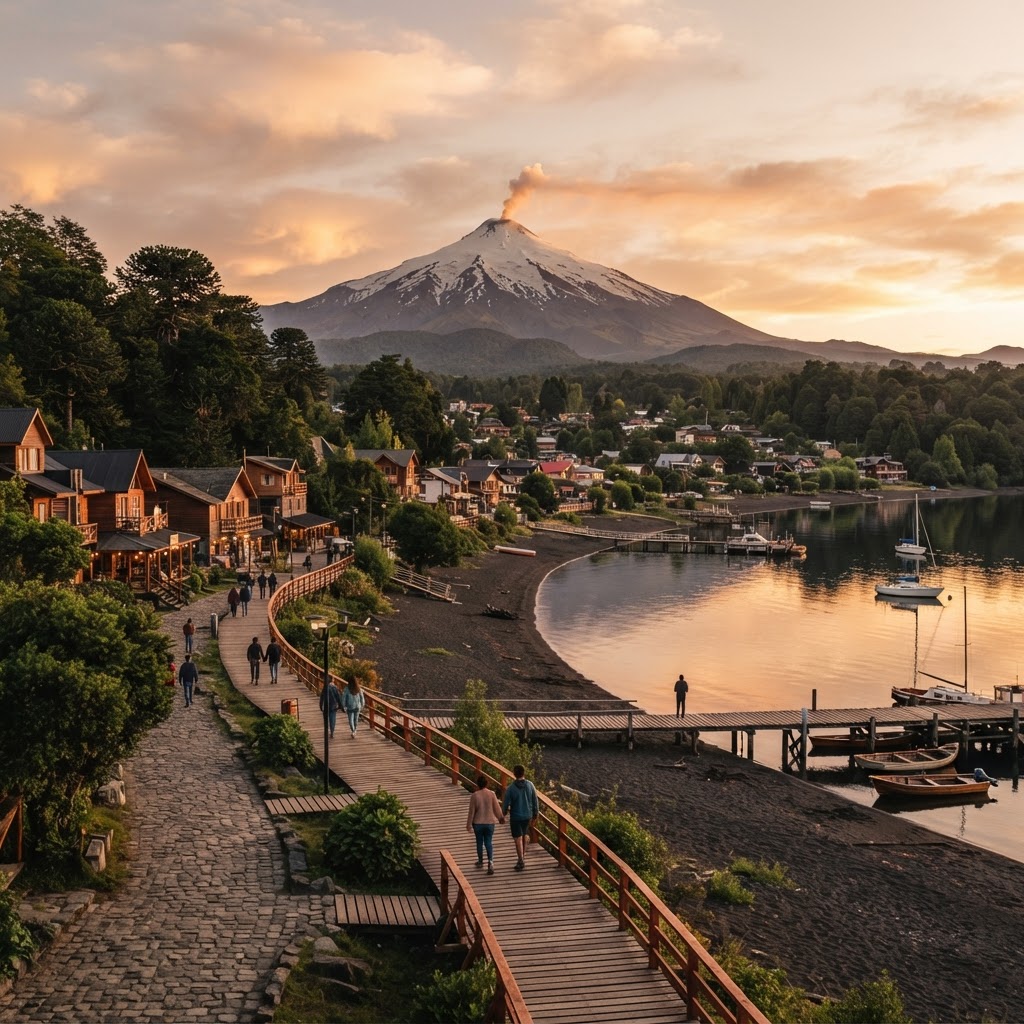
Active volcanoes, pristine glacial lakes, and ancient temperate rainforests under the shadow of Villarrica.
Plan & book
Sort your Pucón, Chile trip in one place.
We point you to the booking tools we'd actually use — live prices, no markup. Or let us build the day-by-day plan around you first, then book.
Pucón sits on the eastern shore of Lake Villarrica directly beneath one of South America's most historically active volcanoes. Functioning as Chile's undisputed adventure capital, it pairs technical mountaineering and white-water rapids with geothermal soaking pools and dense monkey puzzle tree forests.
4 to 5 days
Best time
Mid-November to mid-December or March to mid-April for crisp hiking weather without the stifling summer crowd crush.
Build your own trip with these prebuilt itineraries
Each one is a tested, day-by-day plan for Pucón, Chile — start here, then make it yours.
5 Days in Pucón: Lakes, Volcanoes & Araucaria Forests in Pucón
Active outdoors focus with flex weather days, Huerquehue trekking, and remote hot springs
4 Days in Pucón: Geothermal Wellness & Forest Retreat in Pucón
Relaxed nature and thermal spa escape for couples and slow travelers
3 Days in Pucón: The Volcano & Hot Springs Highlights in Pucón
First-time adventure highlights with Villarrica ascent and classic thermal baths
Few places in the world allow you to hike with crampons to an active smoking crater rim in the morning, navigate Class IV glacial river rapids in the afternoon, and soak in geothermal slate pools deep in a misty temperate canyon by dusk. Pucón delivers high-octane physical challenges supported by thoughtful hospitality and distinct indigenous Mapuche heritage.
Where to stay
Getting there
Getting around
Food & drink
What it costs
Things to do
Book tours & tickets in Pucón, ChileSkip it if
Skip Pucón if you dislike active outdoor sports, cannot handle variable rain and sudden mountain weather shifts, or want an urban cultural vacation; it is built entirely around physical wilderness recreation.
When to go
January and February deliver guaranteed sun and warm lake swimming, but Santiago vacationers flood the two-lane lake roads with bumper-to-bumper traffic and drive hotel prices through the roof. The shoulder months retain dry trail access, showcase blazing autumn beech colors, and leave thermal pools uncrowded.
Peak (January–February)
Dry and hot (75°F–80°F), ideal for lake watersports and Villarrica summit ascents, but downtown is noisy, beaches are packed, and booking months ahead is essential.
Shoulder (November–December & March–April)
Cool mornings, clear skies, vibrant foliage, and manageable trails; adventure agencies run reliably and hot springs are serene.
Low (May–October)
Heavy temperate rainforest rainfall, cold damp days, and reduced agency tours, offset by quiet ski slopes on Villarrica volcano and steaming geothermal baths.
Neighborhoods
Where you stay shapes the trip. Here's how to think about it.
Pucón Centro (Downtown)
Chalet-style, walkable alpine hub packed with gear shops, bakeries, and expedition outfitters.
Best for:First-timers, car-free travelers, and nightlife
Don't miss:Dinner and craft beer on bustling Avenida Bernardo O'Higgins and Calle Fresia after a day on the volcano.
Playa Grande & Waterfront
Breezy lakeside strip with black volcanic sand and dramatic, direct views of Volcán Villarrica.
Best for:Sunset watchers, paddleboarders, and summer beachgoers
Don't miss:Catching sunset from the black sand at Playa Grande when the volcano turns vivid pink in the alpine glow.
La Península
Quiet, leafy residential headland jutting directly into Lake Villarrica.
Best for:Couples and quiet retreats wanting downtown proximity without the street noise
Don't miss:A morning loop run or stroll along the shoreline trail overlooking the bay toward the municipal golf course.
Camino Villarrica–Pucón (Lakeside Corridor)
Upscale, forested residential ribbon hugging the scenic lake shore 5 to 10 kilometers west of town.
Best for:Luxury seekers, boutique lodge lovers, and travelers with rental cars
Don't miss:A Bauhaus-era sunset cocktail on the lakeside cliff terrace at the historic Hotel Antumalal.
Valle Palguín & Termas Corridor
Wild, rural river valley cutting toward national parks and natural geothermal springs.
Best for:Off-grid travelers, hikers, and dedicated thermal spa enthusiasts
Don't miss:Soaking at dusk in the architectural red geometric pools of Termas Geométricas nestled in the mist of a temperate canyon.
Destination intelligence
Updated 9/14/2026The structured record we plan every Pucón, Chile itinerary from.
Walkability
High in downtown center; Low to zero for national parks and hot springs without regional transit or a vehicle.
Transit quality
Moderate. Rural minibuses serve popular trailheads and nearby towns, but schedules are infrequent in shoulder months.
Car needed
Optional if booking all-inclusive guided agency tours; Highly recommended if exploring hot springs, rural lodges, and national parks independently.
Ideal duration
4 to 5 days
Minimum useful
3 days
Peak season
January to February (hot, dry, bustling lake scene, packed beaches, high hotel rates).
Shoulder season
November to December & March to April (crisp weather, brilliant autumn foliage, open trails, few crowds).
Low season
May to October (heavy winter rainfall, snow sports on the volcano, tranquil hot springs, fewer open agencies).
Best for
Common mistakes
- Visiting in January or February without booking lodging and tours months in advance, when Santiago holidaymakers crowd the town and traffic grinds to a halt.
- Failing to leave flex days for the Villarrica volcano hike, which gets scrubbed regularly due to sudden Andean cloud cover, wind, or seismic warnings.
- Relying solely on public buses for distant remote thermal baths, which leaves you stranded when rural return schedules cut off early in the evening.
- Underestimating sun exposure and cold winds on the high snowfields of the volcano.
Best nearby
How to plan it
- Build a 2-day weather buffer for the Volcán Villarrica summit hike; wind and sudden cloud cover routinely ground ascents with zero morning notice.
- Book Termas Geométricas entrance slots online well before driving down Route CH-199; gate walk-ins are routinely turned away once daily quota caps hit.
- Do not attempt Huerquehue National Park's Los Lagos trail and a distant hot spring on the same afternoon; the 12-kilometer mountain trek takes 5 to 6 hours alone.
- Stay in Pucón Centro if you intend to rely on guided agency minibuses, but choose the Camino Villarrica corridor if you have your own wheels and want quiet lakefront serenity.
- Pair Pucón with Puerto Varas or Chiloé Island rather than rushing down to Torres del Paine on the same short holiday; transit connections across the Chilean Lake District flow logically by road.
Questions
Readymade itineraries
Start from a tested template — then make it yours.
Ready to book
Lock in your Pucón, Chile trip
Everything in one place. We may earn a small commission — it never costs you more.
Plan a trip to Pucón, Chile
Pick a length and we'll build a day-by-day plan around how you travel — neighborhoods clustered, budget-aware, and editable.
Get better at planning trips like this
Occasional notes on planning smarter — no spam, unsubscribe anytime.
Plan a trip to Pucón, Chile
Turn this guide into a day-by-day plan built around your pace, your group, and your budget.
Build my Pucón, Chile trip