Uruguay
Montevideo, Uruguay
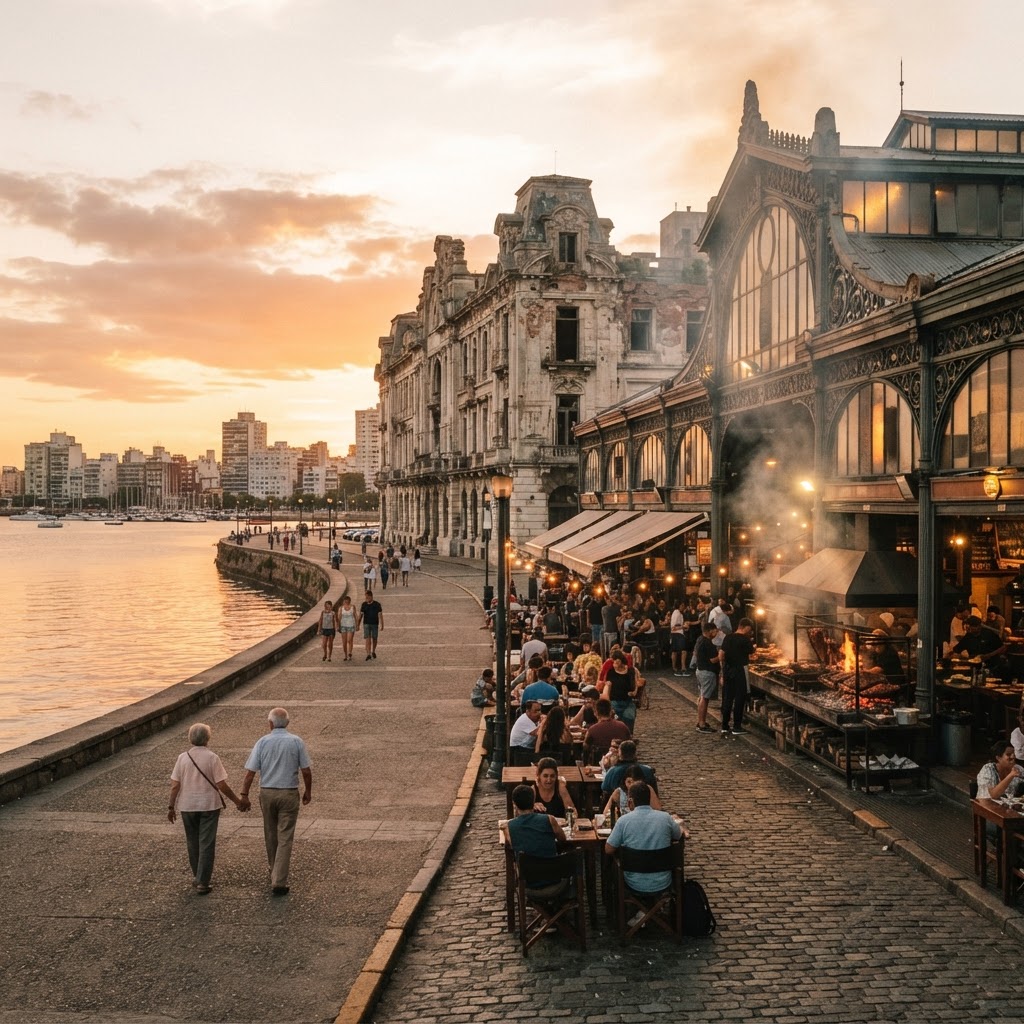
Unrushed waterfront living, decaying Belle Époque grandeur, and serious wood-fired parrillada.
Plan & book
Sort your Montevideo, Uruguay trip in one place.
We point you to the booking tools we'd actually use — live prices, no markup. Or let us build the day-by-day plan around you first, then book.
Montevideo is the antithesis of hectic South American megacities. Sprawled comfortably along the banks of the Río de la Plata, Uruguay's capital operates on a slower, deeply humane frequency defined by thermoses of yerba mate tucked under arms, 22 uninterrupted kilometers of rambla boardwalk, and architectural eras fading gracefully together. It lacks blockbuster, check-the-box landmarks, and that is precisely its charm: travelers come here to read in shaded plazas, wander crumbling Art Deco corridors, and take four-hour lunches over Tannat wine.
3 days
Best time
March to May (Autumn) or October to November (Spring)
Build your own trip with these prebuilt itineraries
Each one is a tested, day-by-day plan for Montevideo, Uruguay — start here, then make it yours.
5 Days: Slow Travel, Vintage Charm & Football Roots in Montevideo
A relaxed pace for architecture buffs and sports historians, diving into Estadio Centenario, Art Deco preservation, flea markets, and neighborhood living.
3 Days: Food, Tannat & Neighborhood Culture in Montevideo
An immersive gastronomic and cultural itinerary highlighting unhurried parrillada feasts, urban wine bars, Cordón craft spots, and local cafe culture.
2 Days: Classic Highlights & The Rambla in Montevideo
First-time overview exploring Ciudad Vieja architecture, Mercado del Puerto parrillada, and sunset strolls along the Río de la Plata rambla.
Go for one of the most civilized, low-stress urban environments in the Americas. Montevideo combines rich immigrant culinary traditions, world-class wood-fire grilling, deeply rooted Afro-Uruguayan candombe drum cultures, and an ocean-facing public life that belongs entirely to locals rather than tourist crowds.
Where to stay
Getting there
Getting around
Food & drink
What it costs
Things to do
Book tours & tickets in Montevideo, UruguaySkip it if
Skip Montevideo if your trip requires hyperactive nightlife, iconic top-ten world wonders, or manicured tourist corridors; travelers expecting the electric, non-stop theater of Buenos Aires will find Montevideo sleepy and underwhelming.
When to go
Shoulder months deliver comfortable 18–22°C temperatures ideal for neighborhood walks without coastal summer humidity, price spikes, or the widespread January business shutdowns when locals depart for Punta del Este.
Peak (December to February)
Warm and beach-focused with lively Rambla energy, but high hotel rates; expect many independent boutiques and top restaurants in central Montevideo to close for annual holidays throughout January.
Shoulder (March to May & October to November)
The sweet spot for urban exploration. Mild temperatures, crisp light, functional city business hours, and open patio dining without peak crowds.
Low (June to August)
Chilly, gray, and often gusty off the Río de la Plata with temperatures around 10–15°C; outdoor Rambla walks thin out, though indoor parrilladas, tango halls, and wine bodegas remain cozy.
Neighborhoods
Where you stay shapes the trip. Here's how to think about it.
Ciudad Vieja
Crumbling colonial and Belle Époque grandeur, antique dealers, lunchtime parrilladas, and quiet, melancholic streets after dark.
Best for:History and architecture buffs, museum hoppers, and short stays centered on walking the historic core
Don't miss:Mercado del Puerto for midday charcoal-grilled short ribs and medio y medio sparkling wine, plus the constructivist art at Museo Torres García.
Cordón (Cordón Soho)
Bohemian, student-heavy, and unpretentious, packed with craft beer bars, garage cafes, independent bookshops, and weekend street markets.
Best for:Younger travelers, remote workers, casual diners, and lovers of walkable nightlife
Don't miss:The Sunday morning flea market along Feria de Tristán Narvaja, where locals hawk everything from rare vinyl to antique mate gourds.
Pocitos & Punta Carretas
Polished, breezy middle-class coastal living defined by high-rise waterfront apartments, wide avenues, leafy parks, and sandy beaches.
Best for:First-timers seeking upscale comfort, safe evening dining, families, and beachside runners
Don't miss:An afternoon mate stroll down Playa Pocitos's curving crescent, ending with sunset drinks near Punta Carretas lighthouse.
Barrio Sur & Palermo
Afro-Uruguayan cultural heartland where the rhythmic boom of candombe drumming echoes through low-rise, mural-covered residential alleys.
Best for:Culture seekers, music lovers, and travelers wanting a genuine neighborhood feel minutes from the Rambla
Don't miss:Catching spontaneous Sunday evening candombe rehearsals along Calle Isla de Flores as neighborhood comparsas march with drums.
Carrasco
Secluded, leafy garden suburb of sprawling mansions, quiet wide sands, and heritage luxury anchored by a landmark 1920s casino hotel.
Best for:Luxury travelers, quiet stopovers near the airport, and travelers avoiding urban density
Don't miss:Tea or a cocktail under the restored vaulted ceilings of the Sofitel Montevideo Casino Carrasco.
Destination intelligence
Updated 9/14/2026The structured record we plan every Montevideo, Uruguay itinerary from.
Walkability
High within individual districts like Ciudad Vieja, Cordón, and Pocitos, but connecting across neighborhoods requires a bike, taxi, or bus along the 22km riverfront.
Transit quality
Moderate. A comprehensive bus network (STM) connects all sectors reliably, though there is no subway or rail transit; rideshare apps like Uber and Cabify fill the gaps seamlessly.
Car needed
Not required. A car is an active liability for street parking in the core, though useful if continuing east to the beaches of Rocha or Maldonado.
Ideal duration
3 days
Minimum useful
2 days
Peak season
December to February (Southern Hemisphere summer). Warm beach weather brings vibrant rambla crowds, though many boutique city shops close in January when locals migrate east to Punta del Este.
Shoulder season
March to May and October to November. Ideal mild temperatures for walking, patio dining, and vintage shopping without coastal humidity or wind.
Low season
June to August (winter). Gray, gusty Atlantic winds off the Río de la Plata make the rambla cold, but indoor parrilladas, tango halls, and wine cellars remain cozy.
Best for
Common mistakes
- Treating it as a rapid checklist day trip from Buenos Aires rather than staying overnight to experience the evening rambla culture
- Wandering the back alleys of Ciudad Vieja and port docks late at night when office workers clear out and streets empty
- Expecting fast, rushed restaurant service; meals in Montevideo are unhurried, multi-hour social rituals
- Visiting on a Sunday afternoon or Monday when vast swathes of independent shops, museums, and neighborhood restaurants close completely
- Renting a rental car for the city center instead of relying on cheap rideshares and walking
Best nearby
See what a trip to Uruguay actually costs. Travel Budget Co.
How to plan it
- Base yourself in Pocitos or Punta Carretas if you want safe evening strolls and lively local cafes; stay in Ciudad Vieja only if your focus is strict heritage architecture and midday museums.
- Do Mercado del Puerto for lunch, not dinner—the wood fires, sizzling sweetbreads, and counter crowds peak between 12:30 and 15:00, and the hall shuts down entirely by dusk.
- Don't rent a car for city transit; take Uber between neighborhoods and reserve rental vehicles strictly for trips out east to Rocha or Maldonado.
- Time your visit to include a Sunday morning for the sprawling Feria de Tristán Narvaja in Cordón, followed by an afternoon candombe drum procession in Barrio Sur along Calle Isla de Flores.
- Pair Montevideo with at least two nights in the wine country of Canelones or the cobblestone river town of Colonia del Sacramento rather than treating it as a rushed, single-day stop.
Questions
Readymade itineraries
Start from a tested template — then make it yours.
Ready to book
Lock in your Montevideo, Uruguay trip
Everything in one place. We may earn a small commission — it never costs you more.
Plan a trip to Montevideo, Uruguay
Pick a length and we'll build a day-by-day plan around how you travel — neighborhoods clustered, budget-aware, and editable.
Get better at planning trips like this
Occasional notes on planning smarter — no spam, unsubscribe anytime.
Plan a trip to Montevideo, Uruguay
Turn this guide into a day-by-day plan built around your pace, your group, and your budget.
Build my Montevideo, Uruguay trip