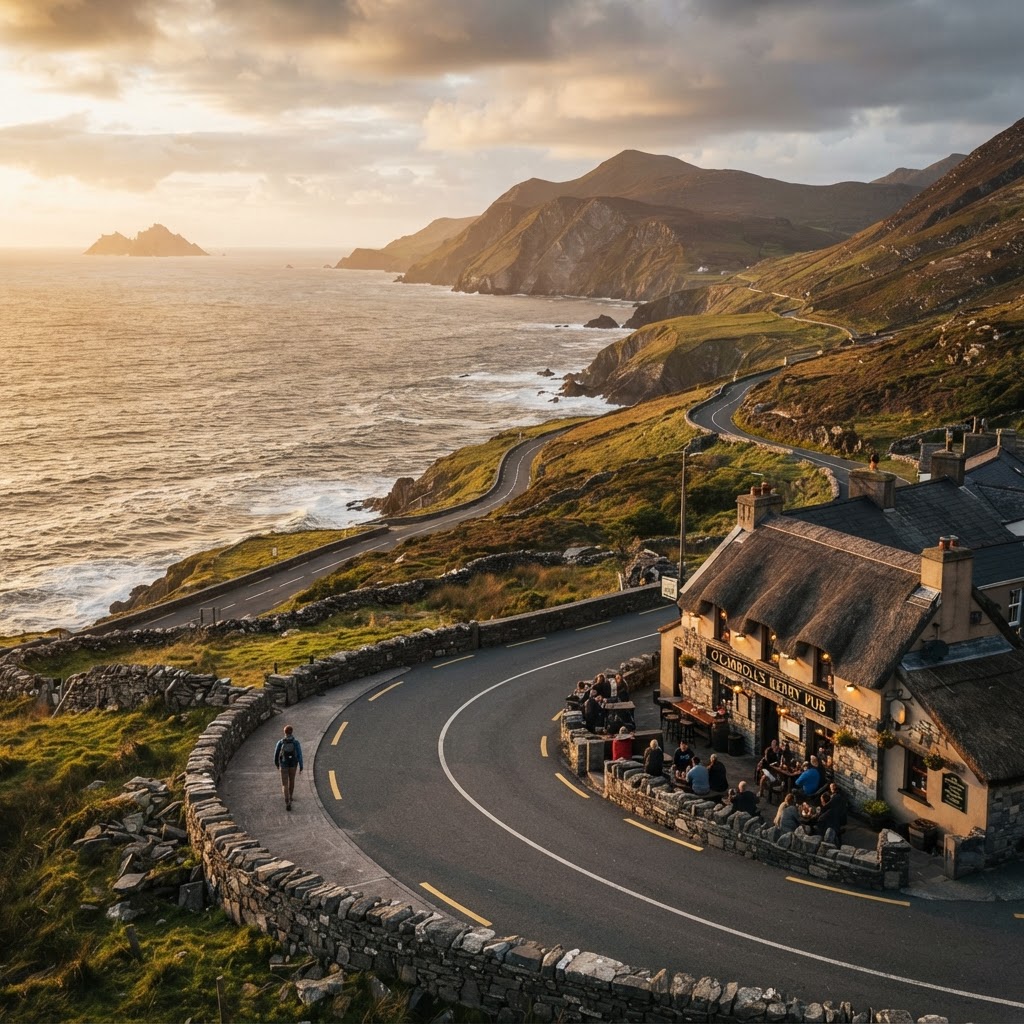
Ireland
Ring of Kerry, Ireland
Wild Atlantic coastal panoramas, historic mountain passes, and lively Kerry pub culture.
Plan & book
Sort your Ring of Kerry, Ireland trip in one place.
We point you to the booking tools we'd actually use — live prices, no markup. Or let us build the day-by-day plan around you first, then book.
The Ring of Kerry traces a 179-kilometer circuit around the Iveragh Peninsula, where windswept Atlantic headlands collide with the rugged MacGillycuddy's Reeks. While coach tours often reduce it to a rushed dashboard blur, approaching it thoughtfully—by pairing slow coastal detours like the Skellig Ring with heritage market towns like Kenmare—reveals dramatic cliff faces, ancient ring forts, and genuine Kerry hospitality.
3 days
Best time
May to June or September for long daylight, manageable N70 traffic, and dry walking weather.
Build your own trip with these prebuilt itineraries
Each one is a tested, day-by-day plan for Ring of Kerry, Ireland — start here, then make it yours.
5 Days in the Ring of Kerry in Ring of Kerry
Wild Atlantic Hikes & Historic Villages
3 Days in the Ring of Kerry in Ring of Kerry
Skellig Ring & Atlantic Detours Road Trip
2 Days in the Ring of Kerry in Ring of Kerry
Essential Highlights & Coastal Loop
To experience southwest Ireland's dramatic coastal geography, ancient stone heritage, and Atlantic sea cliffs at your own pace without getting trapped behind tour bus convoys.
Where to stay
Getting there
Getting around
Food & drink
What it costs
Things to do
Book tours & tickets in Ring of Kerry, IrelandSkip it if
Travelers who feel nervous driving manual transmission cars on narrow rural roads with tight passing places, or visitors relying purely on public transportation without booking organized guided transit.
When to go
Summer brings maximum daylight (up to 17 hours in June) but clogs narrow roads with sluggish tour coach convoys and pushes hotel rates to their peak. Shoulder months deliver temperate driving conditions, clear views over coastal passes like Moll's Gap, and far easier parking at trailheads.
Peak (July–August)
Warmest weather and longest daylight, but heavy coach congestion on the N70, packed parking bays at Ladies View, and accommodation booked out months in advance.
Shoulder (May–June & September–October)
The ideal window. Blooming coastal wildflowers or golden autumn moorland, moderate road traffic, easier restaurant walk-ins, and active Skellig boat charters.
Low (November–March)
Short daylight (sunset near 4:30 PM in December), intense Atlantic rainstorms, and widespread seasonal closures among rural B&Bs, boat tours, and coastal heritage sites.
Neighborhoods
Where you stay shapes the trip. Here's how to think about it.
Kenmare
Refined heritage market town anchored by pastel-painted shopfronts, exceptional dining, and independent craft shops at the junction of two peninsulas.
Best for:food-focused travelers, couples, and road-trippers wanting a relaxed base with easy evening walkability
Don't miss:The Kenmare Stone Circle, a bronze-age ring of 15 boulders just a five-minute stroll southwest of the central triangular market square.
Killarney Town Centre
Energetic, bustling hub packed with traditional music sessions, lively taverns, and heavy summer foot traffic right beside parkland.
Best for:first-timers, pub-crawlers, and travelers relying on train or regional bus connections
Don't miss:Evening pints alongside nightly trad music sessions at O'Donoghue's Public House or Murphy's Bar on College Street.
Portmagee & Valentia Island
Salty, wind-scoured fishing outpost culture perched on the edge of the Atlantic, separated only by a narrow road bridge.
Best for:adventure travelers, photographers, and anyone booked on a morning Skellig Michael boat departure
Don't miss:The Kerry Cliffs overlooking Puffin Island, offering sheer 300-meter drops straight into the crashing Atlantic waves.
Sneem
Quiet, twin-green village dissected by a stone bridge over boulder-strewn rapids, painted in vibrant contrasting pastels.
Best for:slow travelers seeking village tranquility, coastal walking paths, and peaceful overnight B&Bs
Don't miss:Walking across the Sneem River footbridge into the Way of the Greeks sculpture garden for a quiet river view.
Cahersiveen & Caherdaniel
Historic coastal settlements defined by Daniel O'Connell heritage, white-sand cove beaches, and dramatic dry-stone ring forts.
Best for:history lovers, coastal hikers, and beach walkers avoiding larger coach hubs
Don't miss:Cahergall Stone Fort, an imposing 7th-century dry-stone fortress with terraced inner walls you can climb for sweeping pasture views.
Destination intelligence
Updated 9/14/2026The structured record we plan every Ring of Kerry, Ireland itinerary from.
Walkability
Low overall across the peninsula; town centers like Kenmare and central Killarney are compact and walkable on foot, but transit between sights requires a car.
Transit quality
Limited. Regional Bus Éireann coaches serve main towns along the N70, but coastal detours and remote trailheads lack frequent public schedules.
Car needed
Yes, highly recommended. Exploring the scenic highlights and remote cliff loops independently is nearly impossible without your own vehicle.
Ideal duration
3 days
Minimum useful
1 full long day (circuit only)
Peak season
July to August, bringing maximum daylight hours, peak hotel pricing, and heavy coach congestion on the N70.
Shoulder season
May to June and September to October, offering pleasant driving conditions, active wildlife, and manageable road traffic.
Low season
November to March, characterized by short daylight hours, frequent Atlantic gales, and seasonal closures of rural B&Bs and boat tours.
Best for
Common mistakes
- Driving counter-clockwise behind lines of 50-passenger tour buses on narrow two-lane coastal stretches.
- Skipping the Skellig Ring and Kerry Cliffs detour off the main N70 highway because large tour coaches are barred from it.
- Treating the entire 179-kilometer loop as a rushed six-hour drive instead of spreading it across two or three days.
- Failing to reserve Skellig Michael eco-tours or landing trips months in advance of arrival.
Best nearby
How to plan it
- Base in Kenmare instead of Killarney if you prioritize exceptional independent restaurants and quieter evenings over commercial souvenir shops.
- Do not skip the Skellig Ring detour (R565/R567) between Waterville and Cahersiveen; large tour buses cannot fit down these roads, making it the most rugged, unspoiled section of coastline.
- Spend night one in Kenmare and night two in Portmagee or Valentia Island if you secure a morning boat landing permit for Skellig Michael.
- Dedicate a separate half-day entirely to Killarney National Park (Muckross House, Torc Waterfall, Ross Castle) rather than rushing it at the tail end of your 179-kilometer peninsula drive.
- Pull over immediately when approaching oncoming tour coaches on narrow coastal stretches and let them negotiate the turn while you wait in a designated passing refuge.
Questions
More in Ireland

Kilkenny, Ireland
Ireland
Ireland’s medieval hub of stone slipways, castle grounds, and authentic trad sessions.

Cork, Ireland
Ireland
Ireland’s culinary capital with a fierce independent streak and zero pretense.
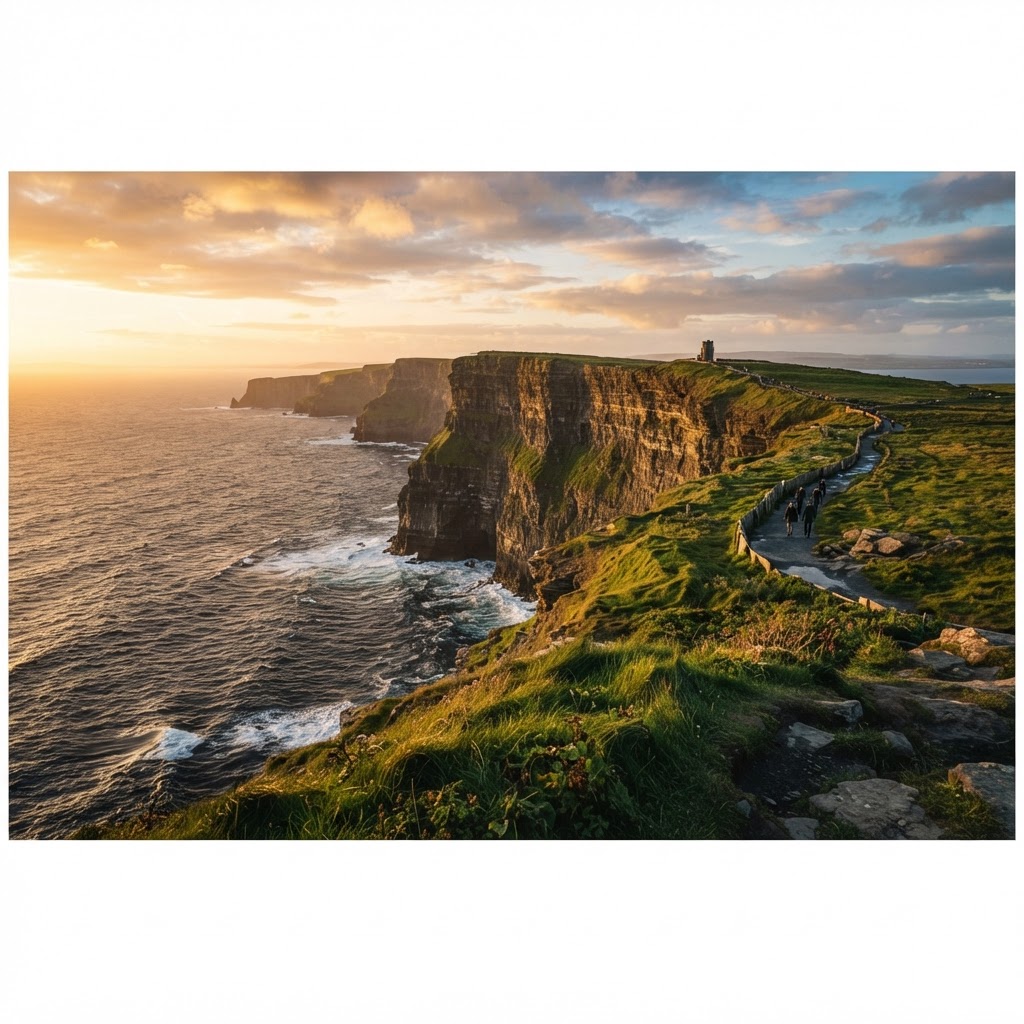
Cliffs of Moher
Ireland
Sheer Atlantic precipices, world-class coastal walking, and County Clare's traditional music heartland.
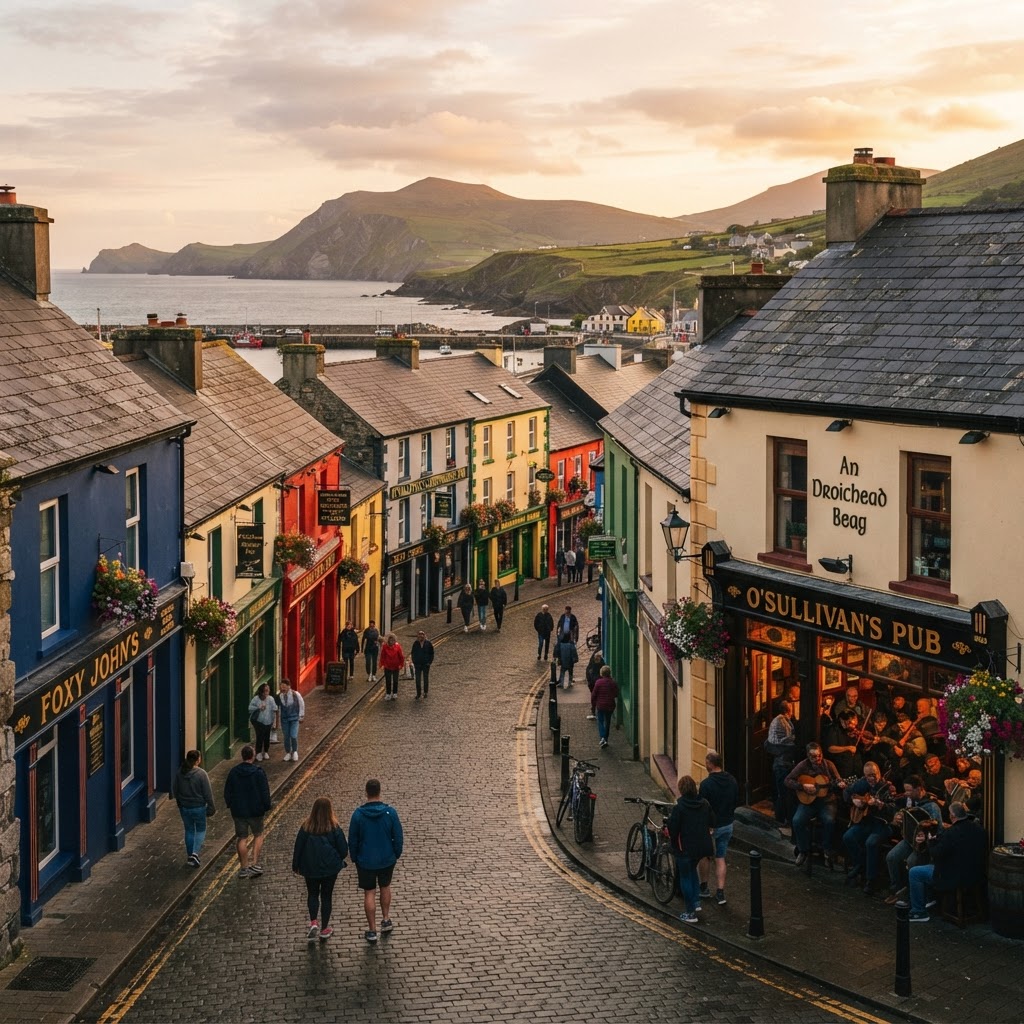
Dingle Peninsula (Corca Dhuibhne)
Ireland
Wild Atlantic coastal fringes, Gaeltacht heritage, and legendary trad sessions.
Readymade itineraries
Start from a tested template — then make it yours.
Ready to book
Lock in your Ring of Kerry, Ireland trip
Everything in one place. We may earn a small commission — it never costs you more.
Plan a trip to Ring of Kerry, Ireland
Pick a length and we'll build a day-by-day plan around how you travel — neighborhoods clustered, budget-aware, and editable.
Get better at planning trips like this
Occasional notes on planning smarter — no spam, unsubscribe anytime.
Plan a trip to Ring of Kerry, Ireland
Turn this guide into a day-by-day plan built around your pace, your group, and your budget.
Build my Ring of Kerry, Ireland trip