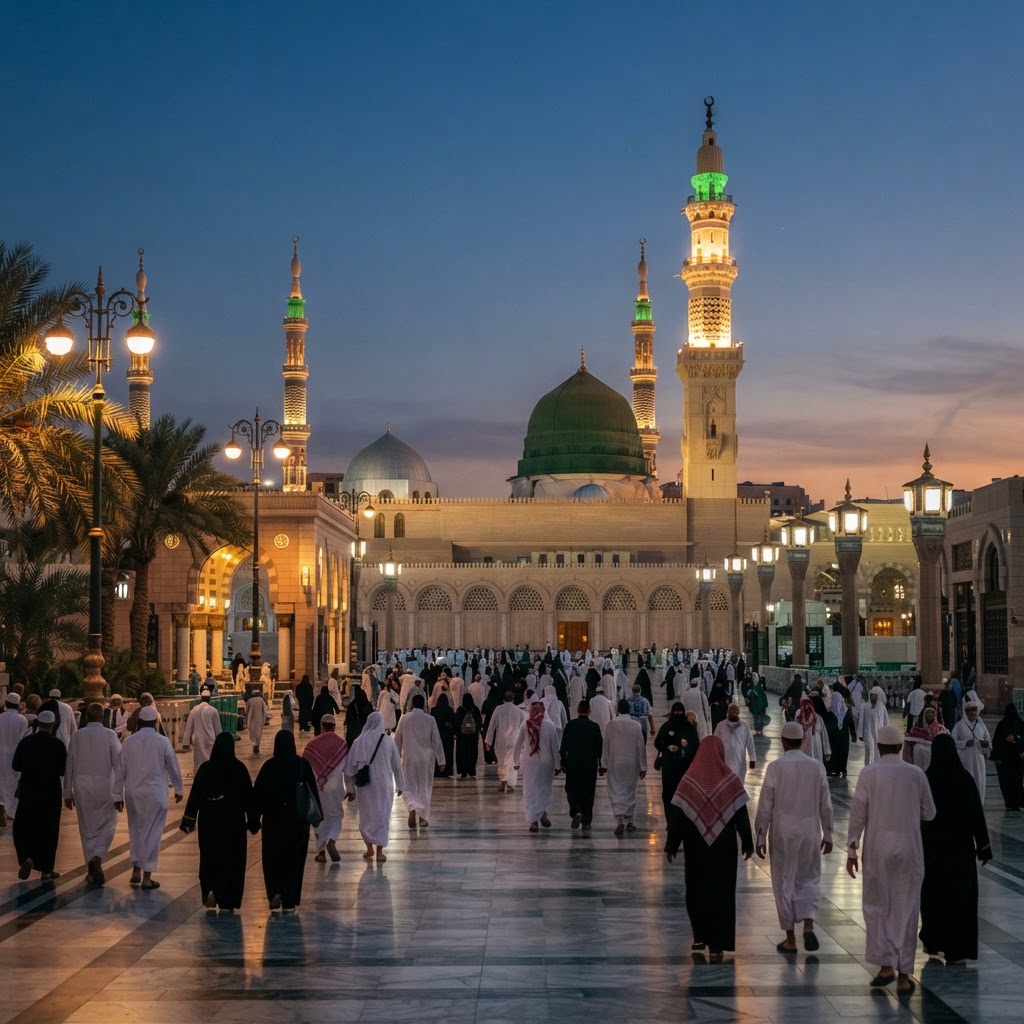
Saudi Arabia
Medina (Al-Madinah Al-Munawwarah)
The City of the Prophet: where deep spiritual sanctuary meets the living history of the Hejaz.
Plan & book
Sort your Medina (Al-Madinah Al-Munawwarah) trip in one place.
We point you to the booking tools we'd actually use — live prices, no markup. Or let us build the day-by-day plan around you first, then book.
Medina holds an incomparable place in world heritage as Islam's second-holiest city and the cradle of its early community. Centered around Al-Masjid an-Nabawi (the Prophet's Mosque), the city operates on a rhythmic cadence governed by daily prayers, profound hospitality, and sacred heritage. While the interior prayer halls and inner courtyard of the Prophet's Mosque remain reserved exclusively for Muslim pilgrims, recent easing of regional travel regulations allows international visitors to explore much of Medina's broader cultural geography, including the historic Hejaz Railway Station, archaeological landmarks, and palm-shaded date markets.
3 days
Best time
November to February for crisp, desert-winter weather and manageable daytime walking temperatures.
Build your own trip with these prebuilt itineraries
Each one is a tested, day-by-day plan for Medina (Al-Madinah Al-Munawwarah) — start here, then make it yours.
5 Days in Medina: Immersive Heritage & Deep Contemplation in Medina
A slower-paced, scholarly journey exploring the Prophet's Biography Museum, date palm oases, Hijaz Railway heritage, and serene night prayers
3 Days in Medina: Complete Pilgrimage & Early Islamic History in Medina
The definitive classic itinerary pairing core devotions with timed excursions to Mount Uhud, Quba Mosque, and the historic battlegrounds
2 Days in Medina: Spiritual Highlights & Rawdah in Medina
Focused ziyarah centering on prayers at the Prophet's Mosque, pre-booked Rawdah visits, and essential Markaziyah pedestrian exploration
Go for an unparalleled immersion in Islamic living history and communal spirituality. Unlike fast-paced commercial capitals, Medina moves with deliberate serenity. Walking through the monumental courtyard of the Prophet's Mosque beneath gigantic automated umbrellas, visiting Mount Uhud, or walking the pedestrian avenue connecting Masjid Quba—the oldest mosque in the world—offers an indelible encounter with deep religious culture and Hejazi generosity.
Where to stay
Getting there
Getting around
Food & drink
What it costs
Skip it if
Skip Medina if you are a non-Muslim seeking entertainment-heavy nightlife, beach relaxation, or high-octane tourist attractions; the interior sanctuary of the Prophet's Mosque is off-limits to non-Muslims, and the entire city prioritizes reverent worship, Islamic scholarship, and quiet contemplation.
When to go
Medina's scorching desert summers make daylight sightseeing unbearable, with midday highs regularly clearing 43°C (110°F). Winter keeps daytime temps between 18°C and 25°C (64–77°F), though you must balance this against surges in hotel rates during the mid-winter Umrah peak and the shifting lunar calendar of Ramadan.
Peak (November through March, plus Ramadan)
Comfortable 18–25°C daytime weather ideal for foot travel; expect hotel rates to triple in the Markaziyah, intense human volume, and the need to reserve prayer slots and transit weeks in advance.
Shoulder (April to May & September to October)
Warm to hot with highs hovering between 32°C and 38°C; significantly lower hotel rates and fewer organized tour buses make courtyard movement swift outside the Hajj window.
Low (June through August)
Intense, dangerous heat routinely exceeding 43°C (110°F); daytime streets clear completely, forcing all visits, walking, and market browsing into the hours between Isha prayer and midnight.
Neighborhoods
Where you stay shapes the trip. Here's how to think about it.
Al Markaziyah (Central Haram Zone)
Sacred, intensely bustling pedestrian ring dominated by monumental high-rises and round-the-clock foot traffic moving to the five daily prayers.
Best for:Pilgrims and first-time visitors prioritizing immediate, direct access to the Prophet's Mosque on foot
Don't miss:The shifting perimeter umbrella roofs unfurling at dawn and the courtyard gates facing the Green Dome
Quba
Historic, palm-fringed sanctuary connected to the center via a lively pedestrian walking spine lined with outdoor cafes and street stalls.
Best for:Culture seekers, families, and travelers wanting a quieter base with easy walking promenades and green space
Don't miss:Walking the pedestrianized Quba Avenue at sunset between the Prophet's Mosque and Masjid Quba
Al Anbariyah
Civic, heritage-rich district defined by early-20th-century Ottoman masonry, civic offices, and wide boulevards west of the sanctuary.
Best for:Railway historians, architecture enthusiasts, and non-Muslim travelers exploring outside the religious cordon
Don't miss:The restored basalt stone passenger terminal of the historic Hejaz Railway Station and the adjacent Anbariya Mosque
Sayyid Ash-Shuhada (Mount Uhud Foothills)
Somber, dramatic desert perimeter flanked by raw volcanic red rock ridges and early Islamic battle memorials.
Best for:Islamic history buffs, reflective walkers, and morning panoramic landscape viewing
Don't miss:Climbing the Archers' Hill (Jabal Al-Rumaat) early morning to look across the Uhud battlefield and cemetery
Sultana (Al Qiblatayn District)
Modern residential and commercial strip mixing sacred landmarks with late-night contemporary Hejazi dining and shopping.
Best for:Food-focused travelers and visitors seeking a contemporary local urban atmosphere outside the hotel plazas
Don't miss:Visiting Masjid al-Qiblatain followed by an evening tea and fresh Hejazi flatbread run along Abu Bakr Al Siddiq Road
Destination intelligence
Updated 9/14/2026The structured record we plan every Medina (Al-Madinah Al-Munawwarah) itinerary from.
Walkability
High within the Markaziyah pedestrian perimeter surrounding the Prophet's Mosque; moderate to low across outer urban districts where vehicle transit is required.
Transit quality
High intercity connectivity via the Haramain High-Speed Train; intracity transit relies primarily on taxis, Careem/Uber, and municipal tour shuttles.
Car needed
No. A rental car is an active disadvantage in the central city due to perimeter roadblocks and heavy pedestrian cordons.
Ideal duration
3 days
Minimum useful
2 days
Peak season
November through March, plus the holy month of Ramadan and the annual Hajj pilgrimage season, when temperatures are cooler and religious foot traffic peaks.
Shoulder season
April to May and September to October, offering moderate crowds outside the Ramadan calendar with warm daytime temperatures.
Low season
June through August, characterized by intense desert heat routinely exceeding 43°C (110°F), limiting outdoor sightseeing to after-dark hours.
Best for
Common mistakes
- Failing to pre-book Rawdah permits on the official Nusuk application weeks or months ahead of arrival.
- Trying to drive a personal rental car into the Markaziyah instead of walking or using official shuttles.
- Visiting outer historic battlefields and open courtyards in the sweltering heat of midday rather than early morning or evening.
- Underestimating dress code expectations: modest attire (abayas/headscarves for women, covered knees and shoulders for men) is strictly required throughout sacred precincts.
- Booking hotels located far outside the First Ring Road when participating in daily congregational prayers.
Best nearby
How to plan it
- Base yourself in the Markaziyah North if you are a Muslim pilgrim seeking immediate mosque gate access; choose Quba if you want a calmer pedestrian neighborhood with open green spaces.
- Pair Medina with Jeddah or AlUla via the Haramain High-Speed Train (Jeddah is under 2 hours away; Mecca is under 2.5 hours; buses/transfers connect onward to AlUla).
- Never schedule open-air visits to Mount Uhud or the Seven Mosques between 11:30 AM and 3:30 PM; tackle outdoor archaeological walks right after Fajr (dawn) to avoid the desert sun.
- Book your Haramain High-Speed Train seats at least 3 weeks in advance if traveling on a Thursday or Saturday, as regional pilgrim traffic sells out business and economy cabins fast.
- Avoid driving a rental car from Prince Mohammad bin Abdulaziz Airport; pre-book an authorized airport taxi or open Uber/Careem at the arrival terminal curb to skip inner-ring gridlock.
Questions
More in Saudi Arabia
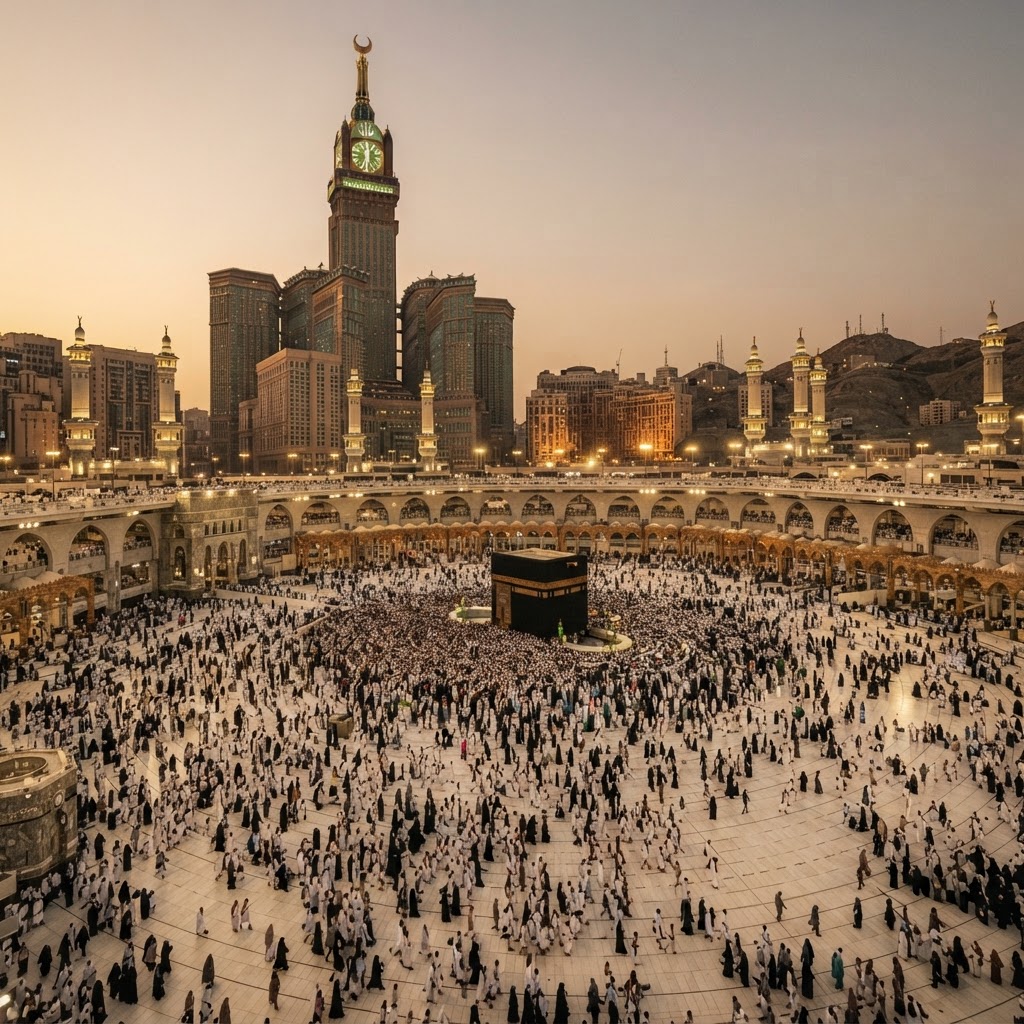
Mecca (Makkah), Saudi Arabia
Saudi Arabia
The spiritual epicenter of Islam, navigated through ritual, endurance, and precise logistics.
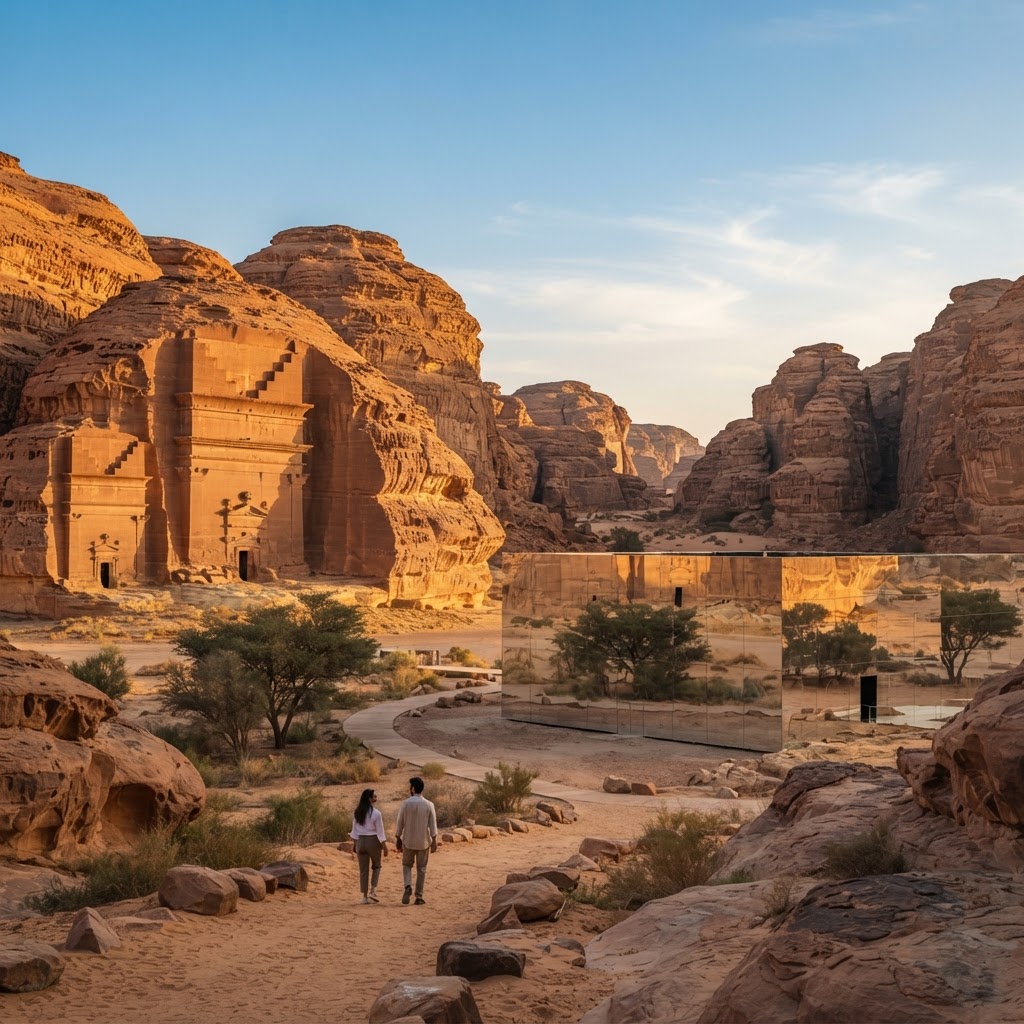
AlUla
Saudi Arabia
Monolithic Nabataean tombs and mirrored art carved into dramatic red sandstone canyons
Readymade itineraries
Start from a tested template — then make it yours.
Ready to book
Lock in your Medina (Al-Madinah Al-Munawwarah) trip
Everything in one place. We may earn a small commission — it never costs you more.
Plan a trip to Medina (Al-Madinah Al-Munawwarah)
Pick a length and we'll build a day-by-day plan around how you travel — neighborhoods clustered, budget-aware, and editable.
Get better at planning trips like this
Occasional notes on planning smarter — no spam, unsubscribe anytime.
Plan a trip to Medina (Al-Madinah Al-Munawwarah)
Turn this guide into a day-by-day plan built around your pace, your group, and your budget.
Build my Medina (Al-Madinah Al-Munawwarah) trip