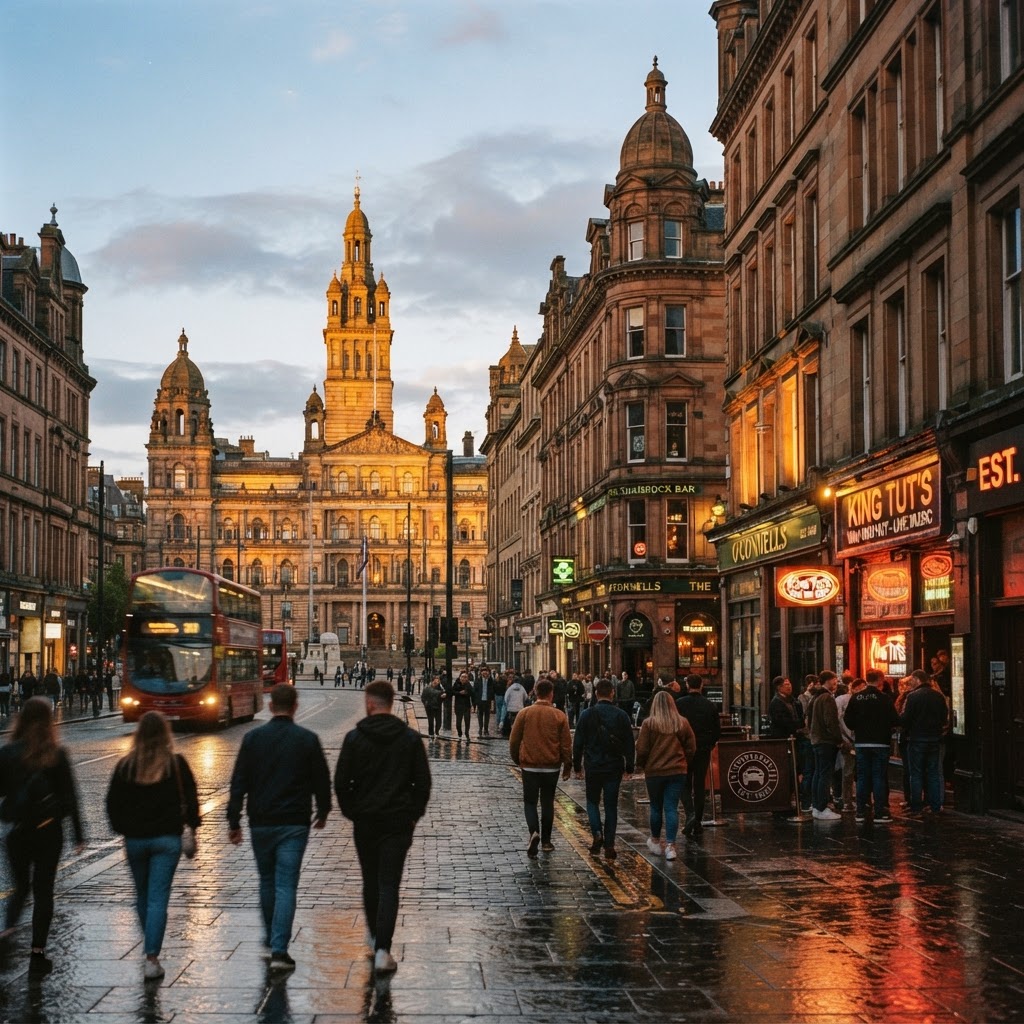
United Kingdom
Glasgow
Victorian architecture, unmatched live music, and Scotland's sharpest cultural edge.
Plan & book
Sort your Glasgow trip in one place.
We point you to the booking tools we'd actually use — live prices, no markup. Or let us build the day-by-day plan around you first, then book.
Glasgow is Scotland's energetic counterweight to Edinburgh's polished tourism. While the capital trades on royal castles and cobbled panoramas, Glasgow runs on raw creative energy, Victorian sandstone architecture, legendary live music, and a civic museum collection that rivals London. It is an unvarnished, genuinely friendly metropolis where Charles Rennie Mackintosh masterworks sit alongside contemporary street murals, and historic shipyards give way to neighborhood dining enclaves.
3 days
Best time
May to June or September for comfortable temperatures, maximum daylight, and thriving cultural events before tourist peaks.
Build your own trip with these prebuilt itineraries
Each one is a tested, day-by-day plan for Glasgow — start here, then make it yours.
5 Days in Glasgow: Arts, Estates & Highland Gateways in Glasgow
An immersive deep dive combining city-wide architectural exploration and contemporary galleries with easy day trips by ScotRail to Loch Lomond and coastal Clyde landmarks.
3 Days in Glasgow: The Complete Cultural Classic in Glasgow
The quintessential introduction taking in Mackintosh design, world-class free museums in the West End, Victorian heritage, and the Burrell Collection via the Clockwork Orange subway and suburban rail.
2 Days in Glasgow: Music, Pubs & Urban Culture in Glasgow
A high-energy weekend focused on legendary live music venues, traditional pubs, indie record shops, and thriving food scenes across Merchant City and Finnieston.
Go to Glasgow for the cultural scene and genuine Scottish urban life. The city boasts world-class civic museums that are completely free to enter, including the Kelvingrove Art Gallery and the Burrell Collection. It is a UNESCO City of Music with venues ranging from King Tut's Wah Wah Hut to Barrowland Ballroom, surrounded by a burgeoning independent dining culture across Finnieston and the West End that outpaces traditional tourist fare.
Where to stay
Getting there
Getting around
Food & drink
What it costs
Things to do
Book tours & tickets in GlasgowSkip it if
Skip Glasgow if your Scotland itinerary only permits three days total and you demand medieval castle crags, tartan gift shops, and fairy-tale romance; Edinburgh serves that specific visual brief better. Glasgow also may disappoint travelers who dislike gritty urban post-industrial landscapes.
When to go
Glasgow gets significant rain year-round, but late spring offers the lowest rainfall counts, blossoming parks, and active university life. Summer brings late daylight but higher hotel rates and crowded venues, while winter brings cold, short daylight hours saved only by cozy pubs.
Peak (July to August)
Daylight lasts until nearly 10:30 PM and festival crowds peak, but hotel rates spike and city dining requires reservations days in advance.
Shoulder (May to June & September to October)
Sweet spot of decent weather (highs around 15–18°C), lower lodging rates, and the full energy of local university terms and indie music seasons.
Low (November to March)
Wet, chilly, and daylight ends by 4:00 PM; museum galleries are quiet and pub fireplaces are lit, but park walks are damp.
Neighborhoods
Where you stay shapes the trip. Here's how to think about it.
West End (Hillhead & Dowanhill)
Leafy sandstone terraces, Victorian parks, and indie cinema culture revolving around the neo-Gothic University of Glasgow.
Best for:Art buffs, university atmosphere, café hoppers, and stroll-first travelers
Don't miss:The Mackintosh House at The Hunterian Museum and an evening pint along fairy-lit Ashton Lane.
Finnieston
Former Clydeside docklands converted into the city's sharpest dining corridor and concert territory.
Best for:Food-driven travelers, craft beer drinkers, and gig-goers at the Hydro or SWG3
Don't miss:Argyle Street's restaurant gauntlet for modern Scottish seafood and small plates.
Merchant City
Repurposed 18th-century mercantile warehouses, paved plazas, chic cocktail bars, and designer galleries.
Best for:First-timers, architecture fans, weekend dining, and transit hub proximity
Don't miss:The Gallery of Modern Art (GoMA) in Royal Exchange Square and late-night drinks around Merchant Square.
East End (Dennistoun & Calton)
Unpretentious working-class grit meeting artist studios, legendary music history, and microbreweries.
Best for:Indie gig-goers, craft brewery lovers, and off-path urban explorers
Don't miss:Catching a concert under the starry ceiling of Barrowland Ballroom and scavenging vintage wares at the Barras Market.
Southside (Shawlands & Strathbungo)
Relaxed residential creative hub packed with sourdough bakeries, neighborhood bistros, and broad public greens.
Best for:Families, repeat visitors, and museum purists making a pilgrimage to Pollok House
Don't miss:The Burrell Collection inside Pollok Country Park, easily reached via a 10-minute train ride to Pollokshaws West.
Destination intelligence
Updated 9/14/2026The structured record we plan every Glasgow itinerary from.
Walkability
Moderate: central districts like the West End, City Centre, and Merchant City are deeply walkable individually, but crossing between them requires the Subway or suburban trains due to distance and the M8 motorway divide.
Transit quality
High: anchored by the simple circular Subway ('Clockwork Orange'), extensive suburban ScotRail lines, and comprehensive city bus networks.
Car needed
No: a vehicle is a liability inside the city; rent a car only upon departing Glasgow to explore Loch Lomond or the West Highlands.
Ideal duration
3 days
Minimum useful
2 days
Peak season
June to August: long daylight hours and major summer music festivals draw large crowds, driving up central hotel prices.
Shoulder season
April to May and September to October: mild walking weather, blooming parks or autumn foliage, and full university term vibrancy without peak summer hotel rates.
Low season
November to March: cold, wet, and short daylight hours, though offset by thriving pub culture, holiday markets, and uncrowded world-class museums.
Best for
Common mistakes
- Treating Glasgow merely as a transit hub to the Highlands instead of spending at least 48 hours exploring its distinct cultural institutions.
- Renting a car while staying in the city; parking is expensive, traffic cameras are pervasive, and the subway and suburban trains cover key sights effortlessly.
- Assuming the Subway goes everywhere; the circular route serves the West End and City Centre well, but you will need buses or suburban ScotRail for Pollok Country Park, the East End, or the Necropolis.
- Expecting tourist-brochure castle vistas on every street; Glasgow is an industrial and architectural powerhouse, not a medieval open-air museum.
Best nearby
How to plan it
- Base yourself in Finnieston or the West End if you prefer neighborhood bars and independent dining on your doorstep over commercial shopping chains.
- Do not attempt to walk from City Centre to the West End under time pressure; use the circular Glasgow Subway ('Clockwork Orange') between Buchanan Street and Kelvinhall or Hillhead in 8 minutes flat.
- Pair Glasgow with a rail day trip to Loch Lomond (Balloch station is only 50 minutes from Glasgow Queen Street), rather than renting a vehicle for a single afternoon.
- Reserve Charles Rennie Mackintosh's House for an Art Lover or Hill House (in Helensburgh) well in advance, as architectural tours operate on tight time slots.
- Cluster Glasgow Cathedral, St Mungo Museum, and the hillside Necropolis into one morning block in the East/Merchant edge before heading west.
Questions
More in United Kingdom
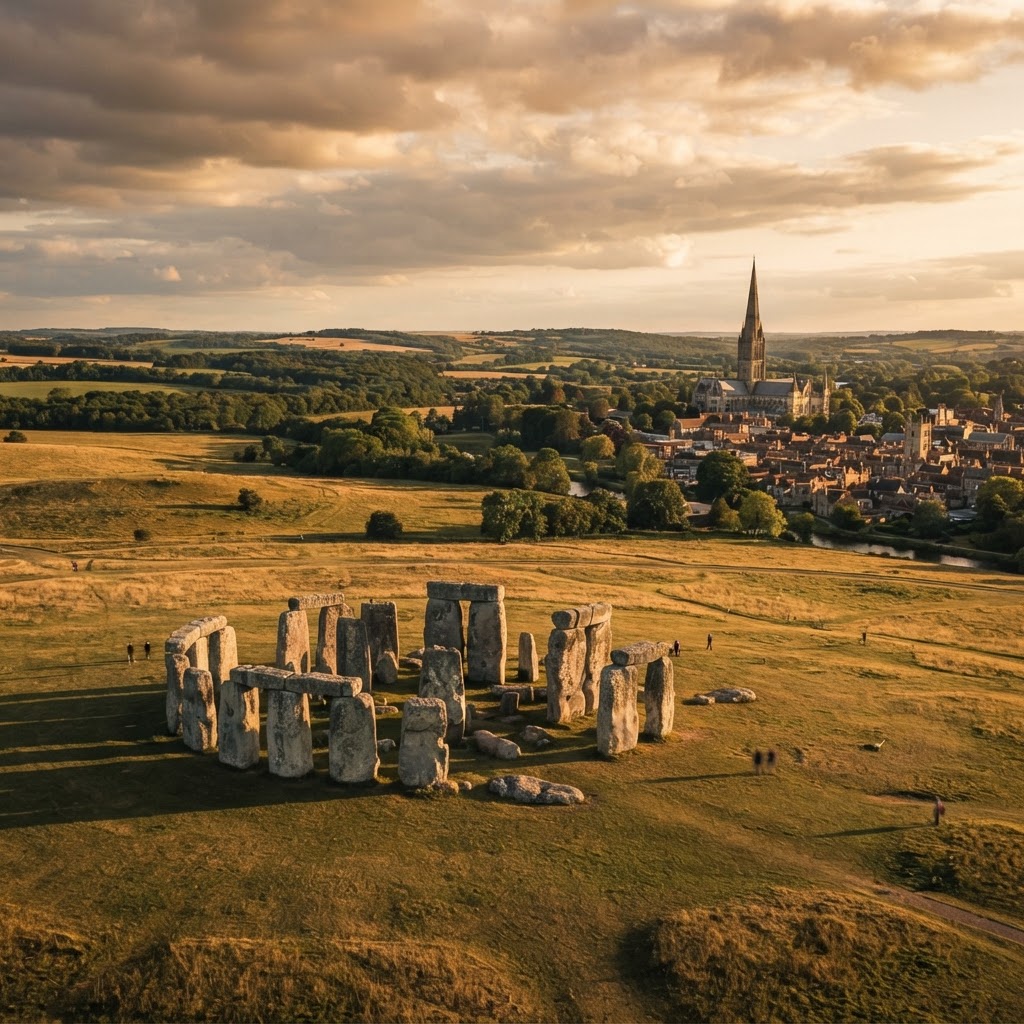
Stonehenge & Salisbury, Wiltshire
United Kingdom
Beyond the standing stones: medieval spires, original charters, and ancient landscapes
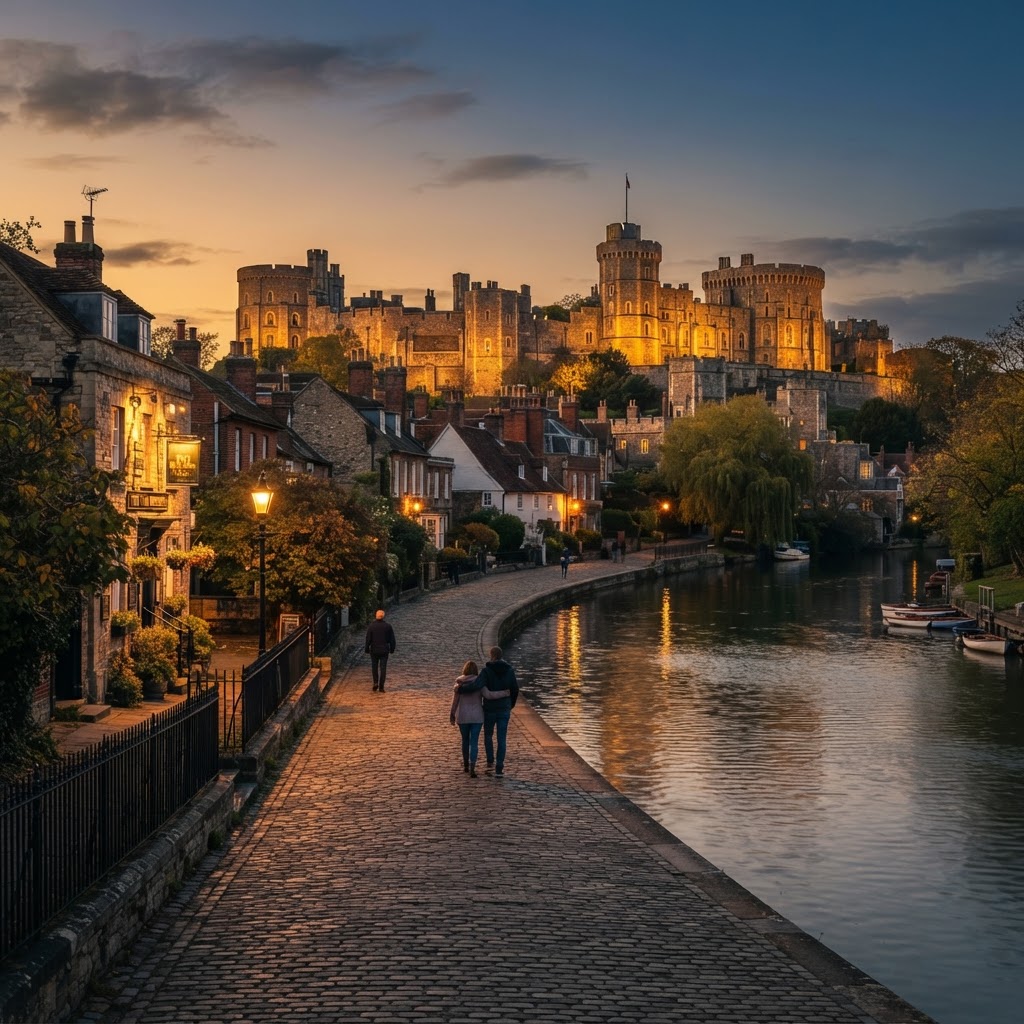
Windsor, England
United Kingdom
Beyond the royal gates, an intimate Thames-side enclave best savored after the day-trippers depart.
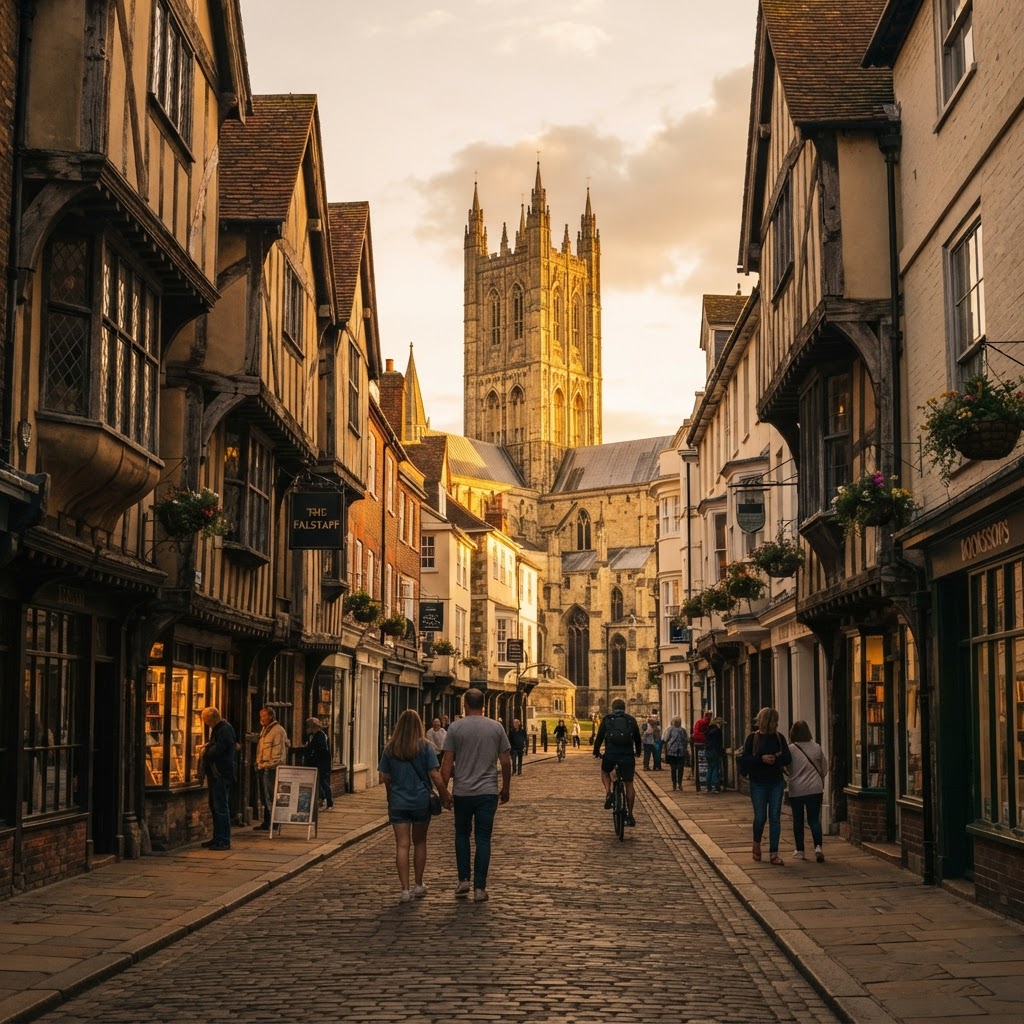
Canterbury, Kent
United Kingdom
Living medieval history without the London transit exhaustion
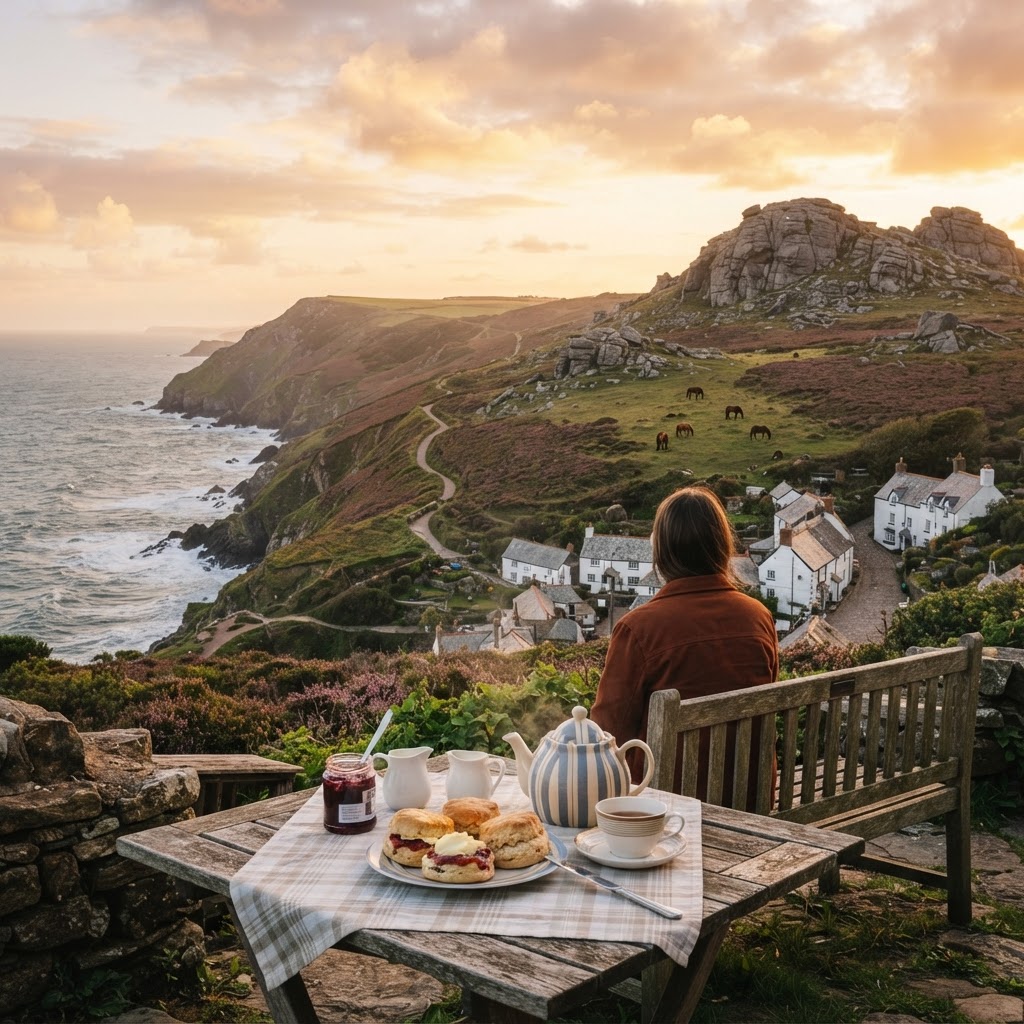
Devon
United Kingdom
Two wild coastlines, high granite moorland, and unmatched cream teas
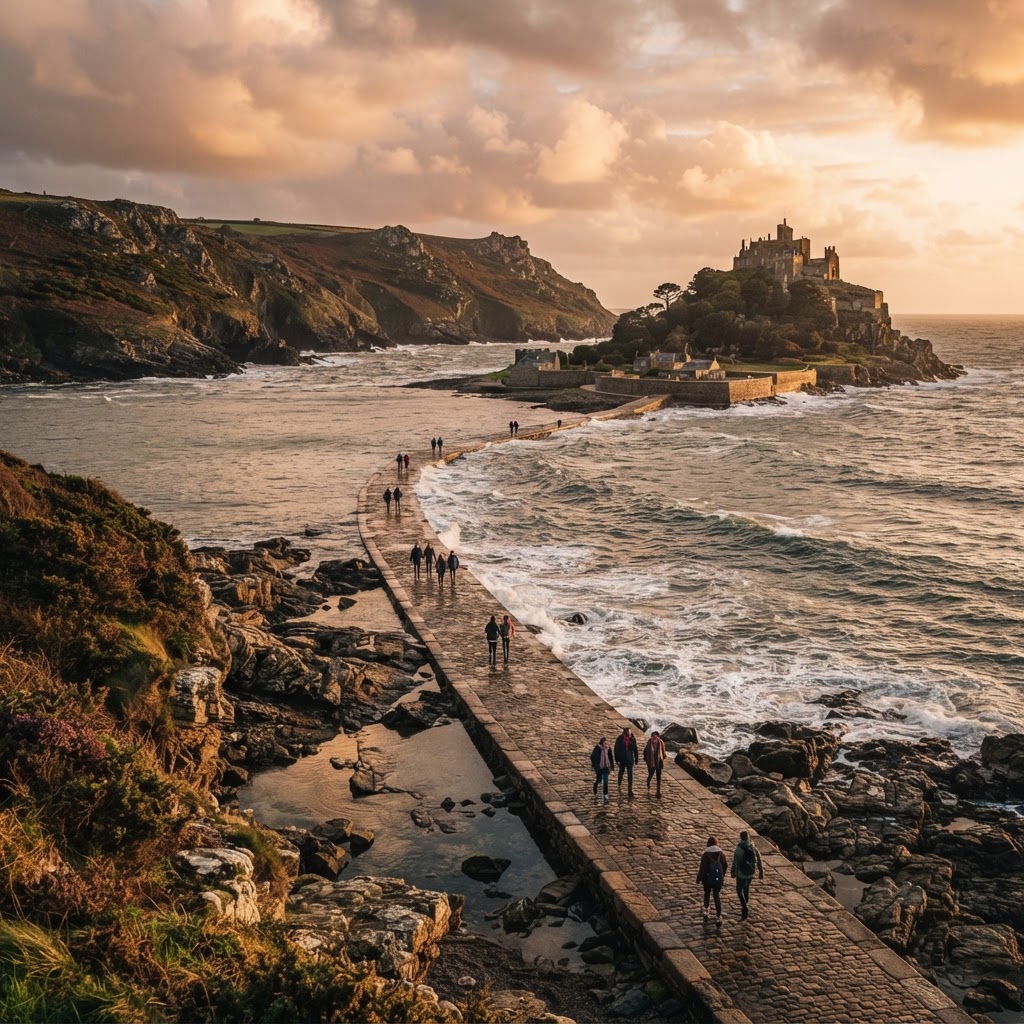
Cornwall, England
United Kingdom
Tidal causeways, windswept coastal cliffs, and wild Celtic sea culture.
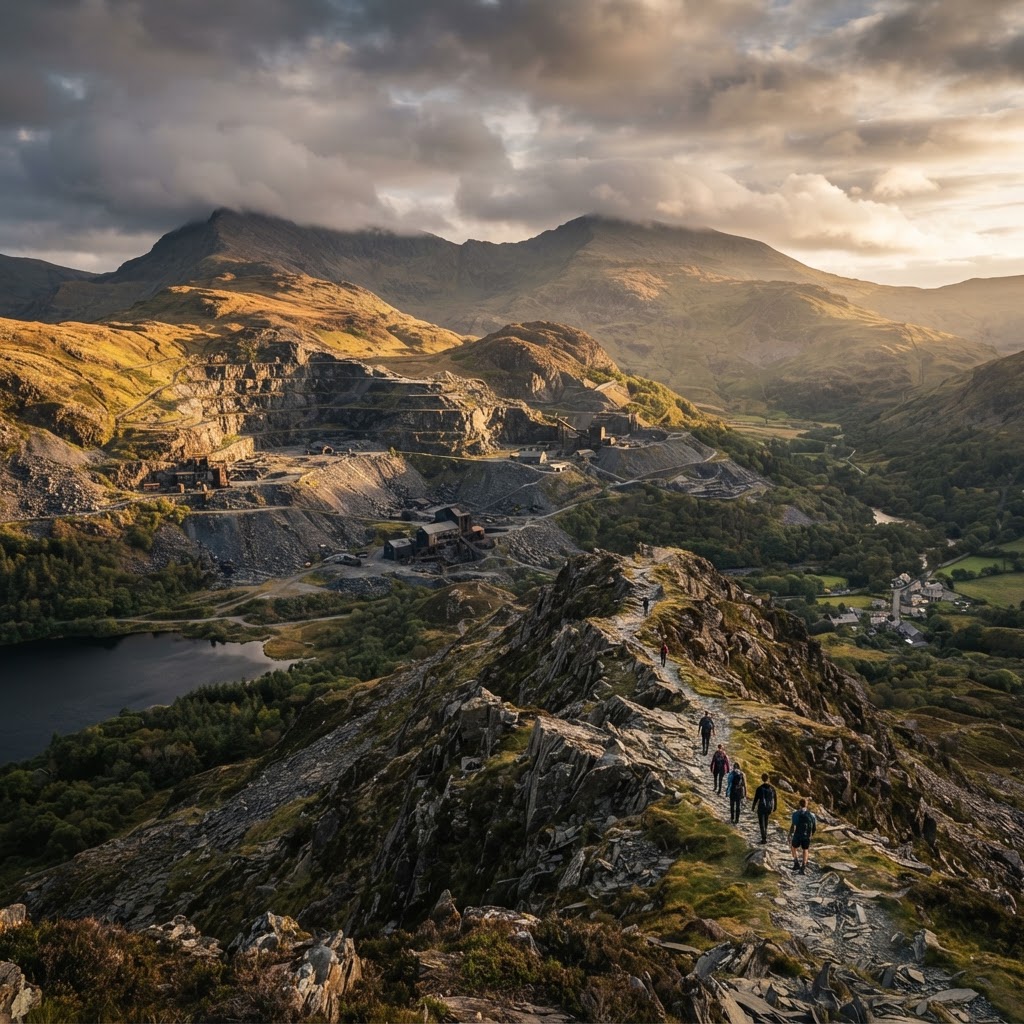
Eryri (Snowdonia), Wales
United Kingdom
Glacial valleys, Celtic slate quarries, and cloud-swept ridge walks in Wales' rugged heartland.
Readymade itineraries
Start from a tested template — then make it yours.
Ready to book
Lock in your Glasgow trip
Everything in one place. We may earn a small commission — it never costs you more.
Plan a trip to Glasgow
Pick a length and we'll build a day-by-day plan around how you travel — neighborhoods clustered, budget-aware, and editable.
Get better at planning trips like this
Occasional notes on planning smarter — no spam, unsubscribe anytime.
Plan a trip to Glasgow
Turn this guide into a day-by-day plan built around your pace, your group, and your budget.
Build my Glasgow trip