
Hungary
Budapest, Hungary Itinerary: How Many Days + Sample Plans
Thermal baths, imperial boulevards, and gritty courtyard nightlife split by the Danube.
Traveler rating
Loved by architecture buffs obsessed with Art Nouveau, Secessionism, and Habsburg grandeur.
Plan & book
Sort your Budapest, Hungary trip in one place.
We point you to the booking tools we'd actually use — live prices, no markup. Or let us build the day-by-day plan around you first, then book.
Pick your trip length
How many days do you need in Budapest, Hungary?
Each of these opens a full day-by-day plan you can make your own.
- 2 days — Two days — the essentials, no rushing.
- 3 days — Three days — the icons plus one neighborhood.
- 4 days — Four days — a full city without sprinting.
- 5 days — Five days — room for a day trip.
- 7 days — A week — the city at a human pace.
- With Kids trip — Shorter days, earlier dinners, what to skip.
- For Couples trip — Two-person pacing with evenings built in.
- Solo trip — A plan that works well on your own.
- Food trip — Meals and markets as the anchors.
- Outdoors trip — Nature, walks and open air.
- Culture trip — History, museums and the streets around them.
Budapest is two distinct cities stitched together by nineteenth-century bridges: steep, residential Buda with its baroque castle district, and flat, expansive Pest where grand boulevards enclose dense Jewish Quarter tenements and cavernous ruin bars. It balances Habsburg-era grandeur with raw post-communist reinvention, fueled by natural mineral springs and late-night wine cellars.
4 days
Best time
Mid-September to late October, or May for pristine outdoor patio weather.
Build your own trip with these prebuilt itineraries
Each one is a tested, day-by-day plan for Budapest, Hungary — start here, then make it yours.
3 Days in Budapest for First-Time Visitors
3 days in budapest first time
3 Days in Budapest for Thermal Baths & Spas
budapest thermal baths spa itinerary
2 Days in Budapest for Ruin Bars & Nightlife
budapest ruin bars nightlife itinerary
4 Days in Budapest for Couples (Danube)
budapest couples danube itinerary
Go for the contrast of high imperial scale and bohemian courtyard grit. You can spend the morning soaking in mineral-rich thermal waters beneath neo-Baroque domes, the afternoon wandering Secessionist apartment blocks, and the evening drinking unpasteurized Hungarian pilsner or Tokaji wine inside the raw masonry of a converted apartment building.
Where to stay
Getting there
Getting around
Food & drink
What it costs
Things to do
Book tours & tickets in Budapest, HungarySkip it if
Skip Budapest if you cannot handle uneven cobblestones, stairs, and walking-heavy urban itineraries, or if you prefer hyper-sterile, ultra-modern cities with manicured corporate centers over gritty, patina-heavy historic quarters.
When to go
Summer brings stifling basin heat above 30°C and overcrowded bathhouse pools, while mid-autumn pairs crisp 18°C walking weather with harvest wine pours and manageable lines across the Danube bridges.
Peak (June–August)
Expect baking concrete along Pest, sold-out bath reservations, and heavy stag-party crowds in District VII; plan outdoor sightseeing exclusively before 11:00 AM.
Shoulder (April–May & September–October)
Comfortable 15°C–22°C temperatures, functional thermal outdoor pools without crowds, and active outdoor terraces along the riverfront.
Low (November–March)
Chilly, damp winds off the Danube offset by atmospheric holiday markets in December, cheap boutique rooms, and thermal steam pools at their coziest.
Neighborhoods
Where you stay shapes the trip. Here's how to think about it.
Belváros & Lipótváros (District V)
Stately neoclassical avenues, government seats, and riverside promenade elegance.
Best for:First-timers, architecture buffs, and walkability purists
Don't miss:The architectural tilework of the Hungarian State Treasury building on Hold utca.
Jewish Quarter / Erzsébetváros (District VII)
Graffiti-splashed tenement courtyards, late-night food stands, and dense creative friction.
Best for:Nightlife seekers, solo travelers, and dining enthusiasts
Don't miss:A daytime look inside Dohány Street Synagogue paired with pastrami down Kazinczy utca.
Terézváros (District VI)
Habsburg-era boulevard grandeur, theatre districts, and leafy diplomatic enclaves.
Best for:Culture lovers, boutique hotel hunters, and cafe regulars
Don't miss:Catching a performance or touring the Hungarian State Opera House right along Andrássy út.
Castle District / Várkerület (District I)
Cobbled medieval alleys, sweeping terrace panoramas, and quiet evenings high above the river.
Best for:History buffs, romantic escapes, and travelers prioritizing quiet over nightlife
Don't miss:A pre-breakfast walk past Fisherman's Bastion and Matthias Church before the tourist shuttles roll in.
Újbuda & Bartók Béla Boulevard (District XI)
A leafy, student-tinged artistic enclave running from thermal footbaths to indie galleries.
Best for:Return visitors, coffee geeks, and travelers seeking neighborhood life away from tourist paths
Don't miss:Espresso and contemporary art hopping on Bartók Béla út, followed by soaking at Gellért Baths.
Destination intelligence
Updated 9/14/2026The structured record we plan every Budapest, Hungary itinerary from.
Walkability
High. The inner districts of Pest (V, VI, VII, and outer VIII) and the lower banks of Buda are flat and dense. Castle Hill and Gellért Hill involve steep inclines and stone steps.
Transit quality
Exceptional. The BKK network includes 4 metro lines, dense tram corridors, trolleybuses, and suburban rails. Trams 4 and 6 operate around the clock.
Car needed
No. A car is an active hindrance inside central Budapest due to tight paid-parking zones, narrow one-way streets, and camera-enforced bollards.
Ideal duration
4 days
Minimum useful
3 days
Peak season
June through August. Expect hot temperatures (often above 30°C/86°F), packed thermal bath pools, and heavy crowds along Castle Hill.
Shoulder season
April to May and September to October. Mild temperatures (15°C–22°C), comfortable walking weather, operational outdoor terraces, and manageable tourist volume.
Low season
November through March (excluding late-December holiday markets). Crisp, cold weather, fewer crowds at indoor bathhouses, and lower hotel prices.
Best for
Common mistakes
- Staying on Castle Hill (District I), which empties into an expensive tourist ghost town after dark with few everyday dining options.
- Forgetting to validate paper transit tickets before entering metro escalators or upon boarding trams, which leads to immediate fines from plainclothes inspectors.
- Visiting Széchenyi Baths on a weekend afternoon when pool capacities peak and water clarity drops.
- Hailing unmarked street cabs instead of booking through the Bolt app or designated taxi desks, opening yourself up to inflated meter rates.
- Assuming euro cash is preferred; Hungary uses the Hungarian Forint (HUF), and paying in euros at shops yields poor exchange rates.
Best nearby
How to plan it
- Base yourself in District V or VI if you want doorstep walkability to both the Danube promenade and central dining hubs.
- Tackle Castle Hill and the Fisherman's Bastion before 9:00 AM, then cross down to Gellért or Rudas for an afternoon thermal soak.
- Never hail random yellow street cabs outside nightlife corridors; book exclusively via the Bolt app or Főtaxi.
- Pair your bath day with a clear cultural divide: head to Széchenyi in City Park for grand outdoors, or Rudas for 16th-century Ottoman stone architecture.
- Book your Hungarian Parliament interior visit at least a month ahead online, as same-day gate tickets routinely sell out.
Questions
More in Hungary
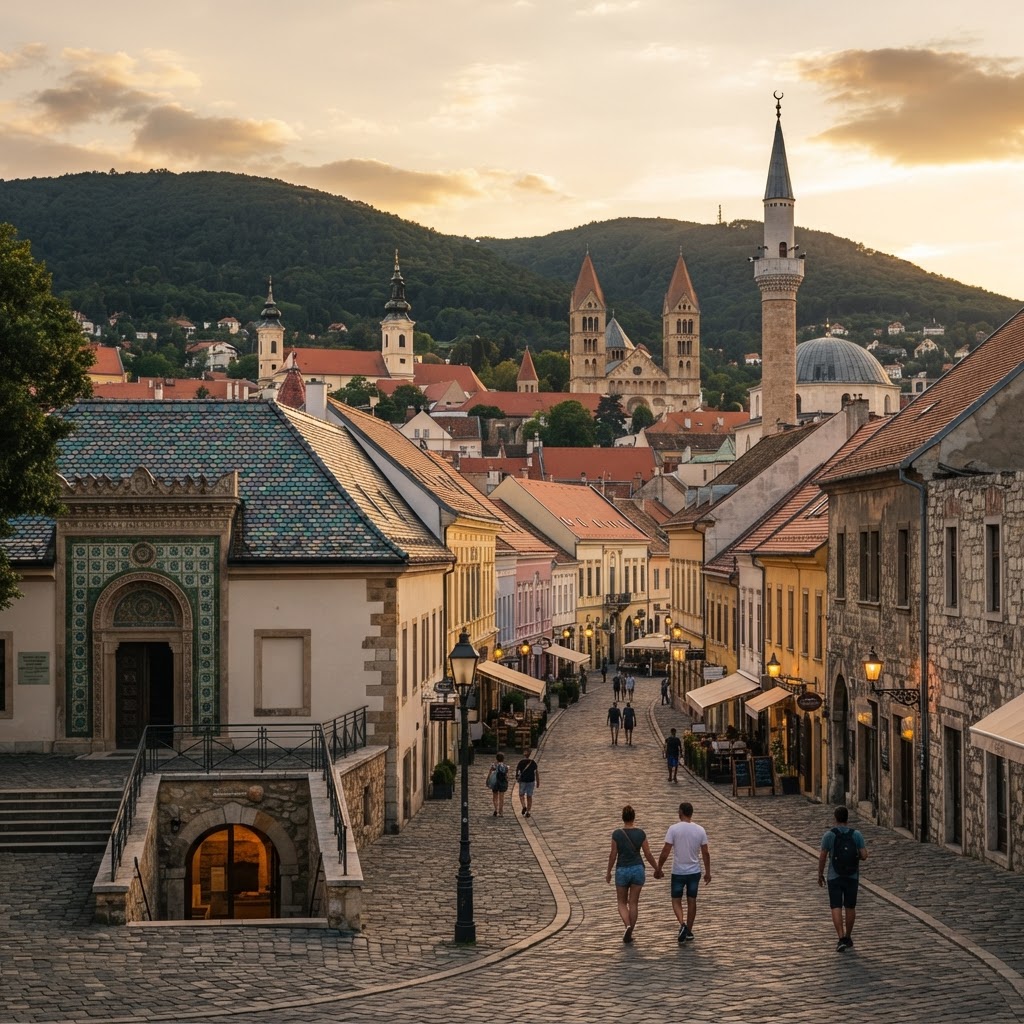
Pécs, Hungary
Hungary
Roman crypts, Ottoman minarets, and iridescent ceramics tucked beneath the Mecsek slopes.
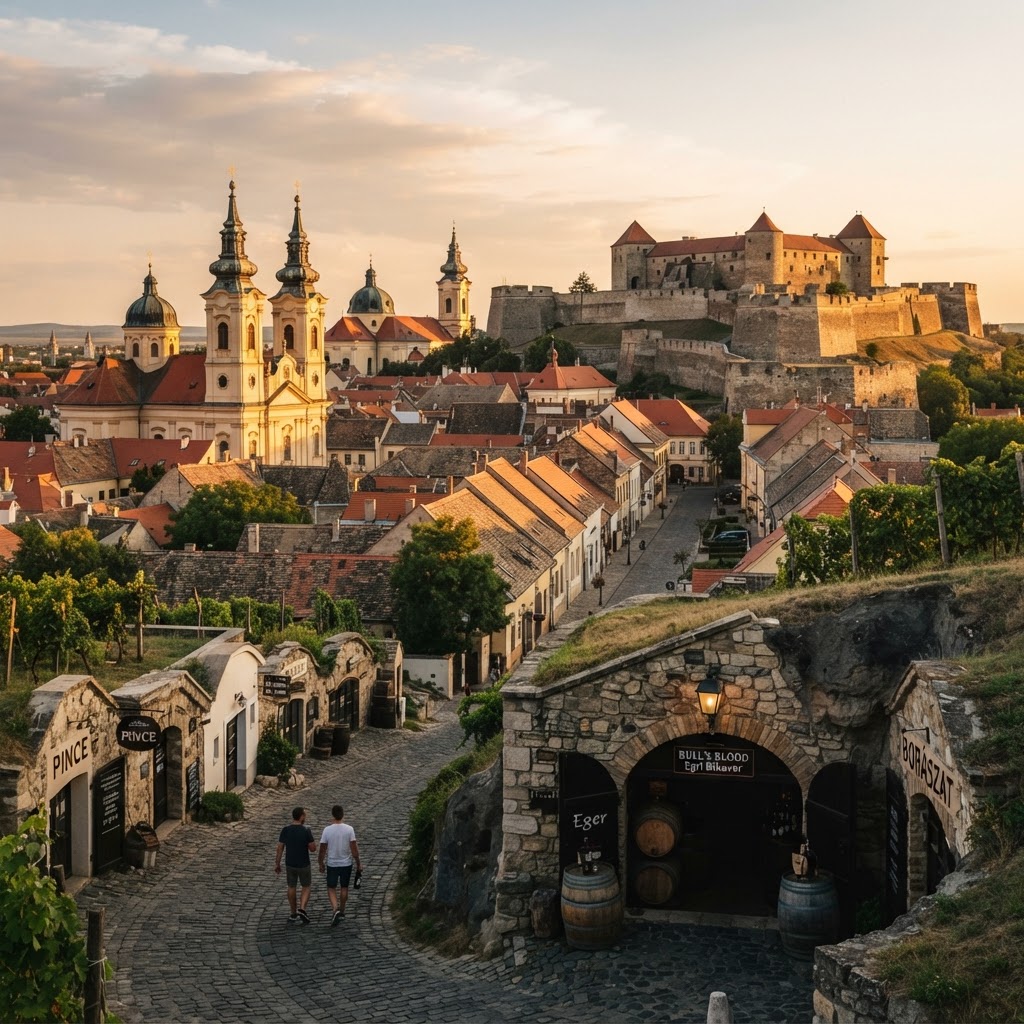
Eger
Hungary
Baroque spires, fortress ramparts, and volcanic cellars carved for Bull's Blood.
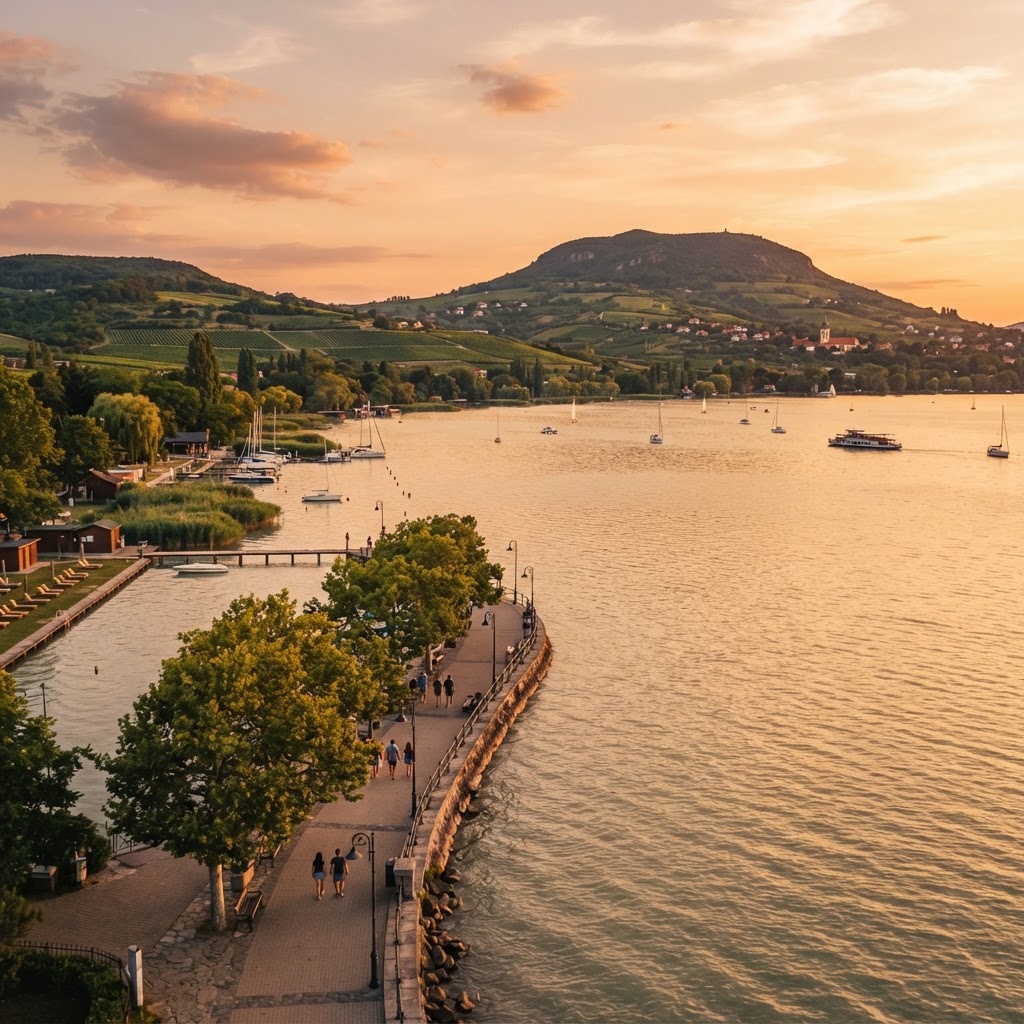
Lake Balaton
Hungary
Volcanic vineyards, quiet lidos, and grand lakeside promenades across Hungary's inland sea.
Readymade itineraries
Start from a tested template — then make it yours.
Ready to book
Lock in your Budapest, Hungary trip
Everything in one place. We may earn a small commission — it never costs you more.
Plan a trip to Budapest, Hungary
Pick a length and we'll build a day-by-day plan around how you travel — neighborhoods clustered, budget-aware, and editable.
Get better at planning trips like this
Occasional notes on planning smarter — no spam, unsubscribe anytime.
Plan a trip to Budapest, Hungary
Turn this guide into a day-by-day plan built around your pace, your group, and your budget.
Build my Budapest, Hungary trip