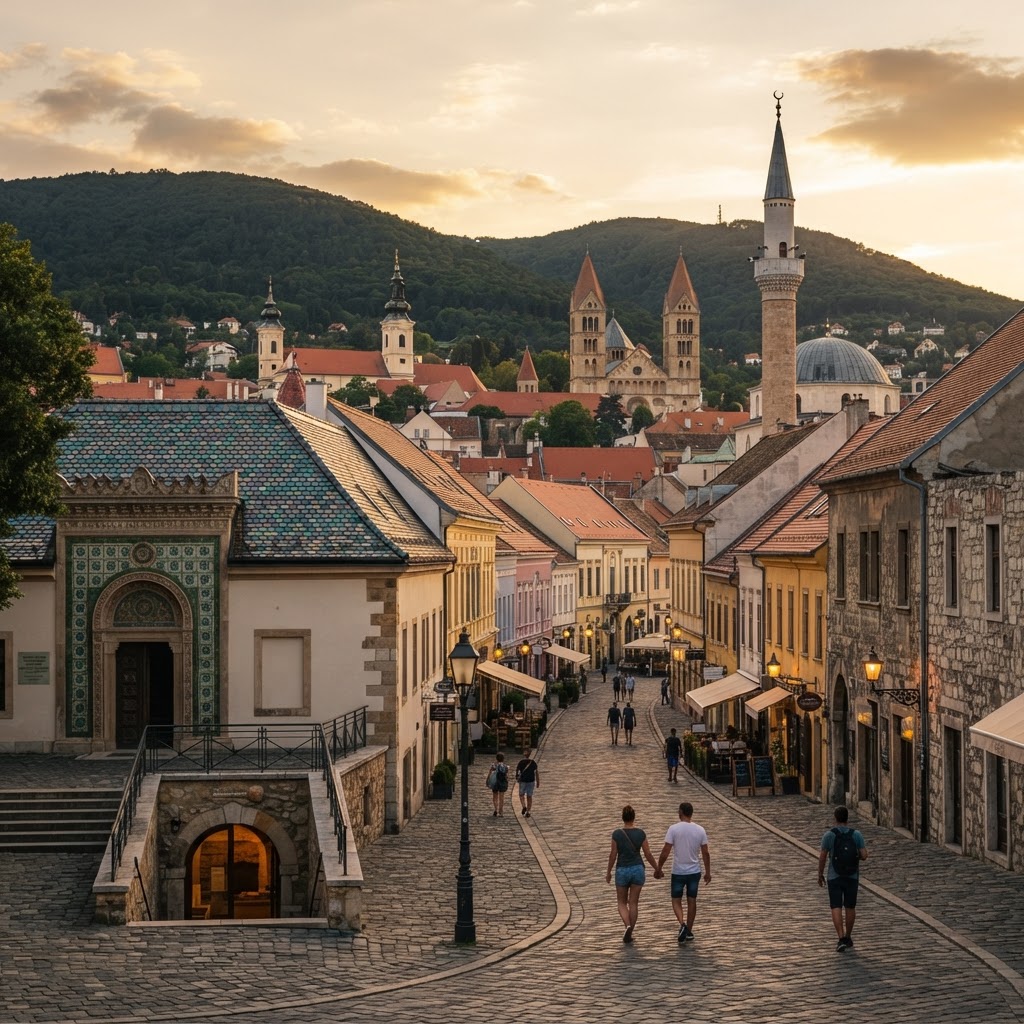
Hungary
Pécs, Hungary
Roman crypts, Ottoman minarets, and iridescent ceramics tucked beneath the Mecsek slopes.
Plan & book
Sort your Pécs, Hungary trip in one place.
We point you to the booking tools we'd actually use — live prices, no markup. Or let us build the day-by-day plan around you first, then book.
Set against the southern slopes of the Mecsek Hills roughly 30 kilometers north of Croatia, Pécs has a distinctly Mediterranean microclimate and a multilayered architectural heritage unlike anywhere else in Central Europe. Originally the Roman city of Sopianae, it later endured 143 years of Ottoman rule before blooming into a ceramic industrial powerhouse under the Zsolnay family. Today, Pécs operates as a relaxed, lively university city where Early Christian tombs, a domed 16th-century mosque, and shaded squares sit comfortably side by side without Budapest's tourist sprawl.
2 to 3 days
Best time
May to June or September to October.
Build your own trip with these prebuilt itineraries
Each one is a tested, day-by-day plan for Pécs, Hungary — start here, then make it yours.
4 Days in Pécs: Heritage & Villány Wine Country in Pécs
An immersive regional exploration pairing city decorative arts with side trips to the renowned Villány vineyards
3 Days in Pécs: Culture & Mecsek Hills in Pécs
A relaxed pace mixing core urban architectural treasures with scenic hiking trails in the Mecsek foothills
2 Days in Pécs: Historic Highlights & Art in Pécs
First-time overview covering early Christian UNESCO crypts, Ottoman heritage, and the historic Zsolnay Quarter
Go to see 2,000 years of clashing empires compressed into a compact, easily walked historical core. The centerpiece of Széchenyi tér—the Mosque of Pasha Qasim—still wears its Ottoman copper dome, now crowned with an iron crucifix. Just uphill sits an intact 4th-century Early Christian Necropolis, a UNESCO World Heritage site featuring underground burial chambers with intact biblical frescoes. Add the Zsolnay Cultural Quarter's sprawling park of 19th-century tile-roofed factories turned art museums, and Pécs provides an architectural immersion that completely upends standard assumptions about Hungarian travel.
Where to stay
Getting there
Getting around
Food & drink
What it costs
Things to do
Book tours & tickets in Pécs, HungarySkip it if
Skip Pécs if your itinerary allows only 3 or 4 total days in Hungary; Budapest requires that entire window. Also skip if you are looking for late-night clubbing or require flat, stair-free topography, as the city's historic quarters are built into steep hillside terrain.
When to go
Spring and early autumn offer mild temperatures between 18°C and 24°C, avoiding the intense dry heat of Mecsek midsummer basin afternoons while keeping cafe terraces lively and historic sites fully staffed.
Peak (June–August)
High heat frequently surpassing 30°C and busier student/festival crowds, though evenings remain vibrant across open-air patios.
Shoulder (April–May & September–October)
Crisp sunny weather, grape harvest season in adjacent Villány, uncrowded museums, and ideal walking conditions on steep city inclines.
Low (November–March)
Cool, overcast, and quiet; outdoor dining folds away, and seasonal hours at smaller archaeological galleries are curtailed.
Neighborhoods
Where you stay shapes the trip. Here's how to think about it.
Belváros (Inner City)
Paved pedestrian avenues, student-filled terrace cafes, and shaded historic squares.
Best for:First-timers, dining, and central walking access
Don't miss:The green copper dome of the Mosque of Pasha Qasim standing over Széchenyi tér
Cathedral Quarter (Szent István tér)
Quiet, elevated stone precincts dominated by Roman foundations and medieval bishopric power.
Best for:Architecture buffs and quiet evening strolls
Don't miss:The underground 4th-century Cella Septichora Early Christian burial chambers
Zsolnay Quarter
Industrial-chic cultural enclave covered in iridescent ceramic tiles, galleries, and tree-lined walkways.
Best for:Design lovers, families, and decorative arts enthusiasts
Don't miss:The Gyugyi Collection inside the restored Zsolnay porcelain factory buildings
Tettye
Hilly Mecsek foothill residential pocket with limestone outcroppings, forest trailheads, and sweeping valley lookouts.
Best for:Nature lovers, hikers, and travelers seeking scenic quiet
Don't miss:Sunset drinks overlooking the valley beside the stone arches of the Tettye Bishop's Palace ruins
Destination intelligence
Updated 9/14/2026The structured record we plan every Pécs, Hungary itinerary from.
Walkability
High in the core historic center, though notably steep when heading north toward Dóm tér and the Mecsek foothills.
Transit quality
Moderate. Reliable local bus network connects the rail station and outer cultural sites, though regional trains are preferred for day excursions.
Car needed
Not required for city exploration; a car is only beneficial if touring the vineyards of Villány or secluded trailheads in the Mecsek.
Ideal duration
2 to 3 days
Minimum useful
1 full day (overnight stay)
Peak season
June through August: sunny, warm Mediterranean weather with busy terrace dining and outdoor cultural festivals, though summer afternoons can be hot.
Shoulder season
April to May and September to October: the ideal time to visit, characterized by mild daytime temperatures, fall vineyard harvests in nearby Villány, and active student life.
Low season
November through March: cooler, quiet, and foggy, with curtailed museum hours and dormant outdoor cafe culture.
Best for
Common mistakes
- Treating Pécs as a rushed day trip from Budapest: at nearly 3 hours each way by train, you spend 6 hours transit-bound and miss the evening atmosphere on Széchenyi tér.
- Skipping the Zsolnay Quarter because it sits 1.5 km east of the center; it requires at least a half-day on its own.
- Underestimating Monday closures: almost every museum, including the Cella Septichora and Zsolnay exhibition halls, is shuttered on Mondays.
- Wearing slick or unsupportive shoes: streets climbing north from Széchenyi tér toward the cathedral and Mecsek base feature steep, slick cobblestones.
Best nearby
How to plan it
- Dedicate at least half a day exclusively to the Zsolnay Cultural Quarter; rushing the ceramics collections and factory grounds in under two hours wastes the trip east.
- Pair Pécs with an overnight or afternoon in Villány—direct regional trains run between Pécs and Villány in roughly 40 minutes.
- Stay within Belváros or just below Szent István tér so you can walk to all primary historical sites without tackling Mecsek hills with luggage.
- Do not visit on Mondays when several municipal museums, including the Csontváry Museum, close their galleries.
Questions
More in Hungary
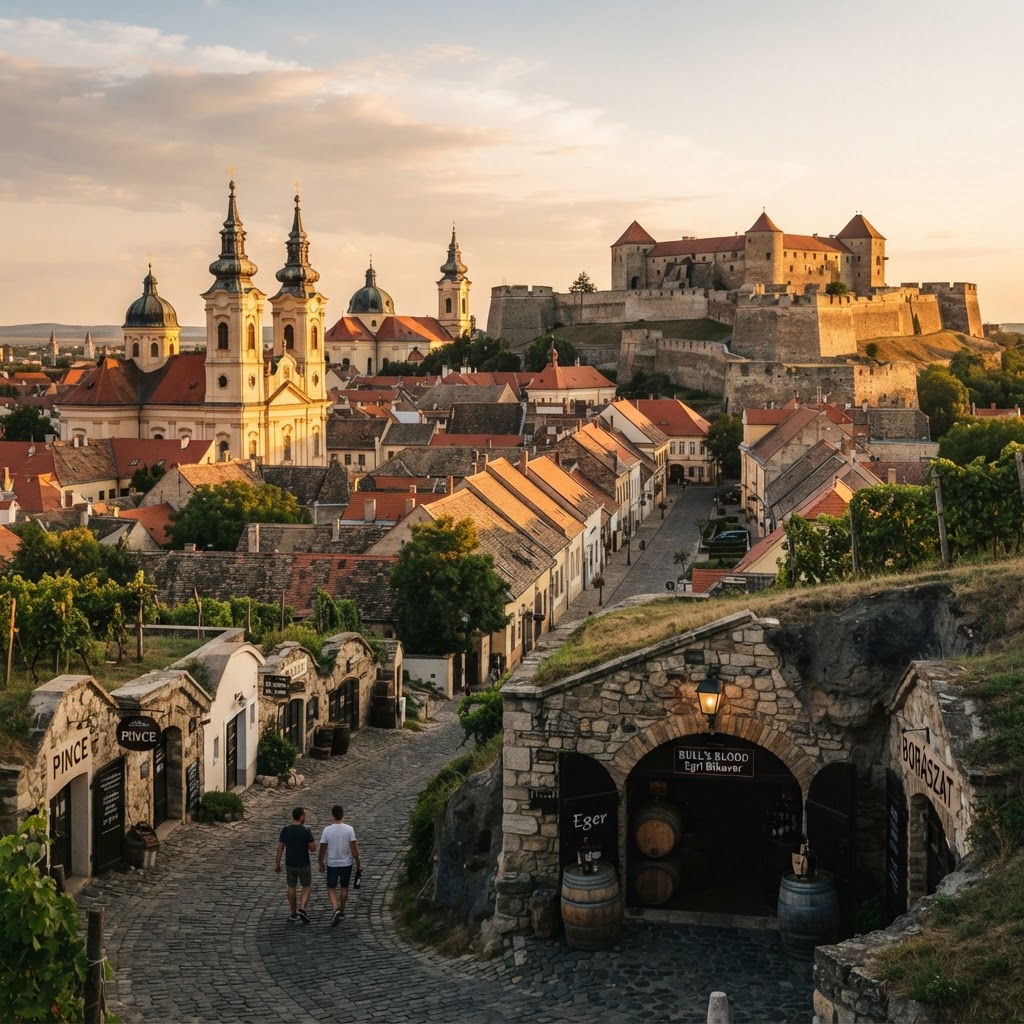
Eger
Hungary
Baroque spires, fortress ramparts, and volcanic cellars carved for Bull's Blood.
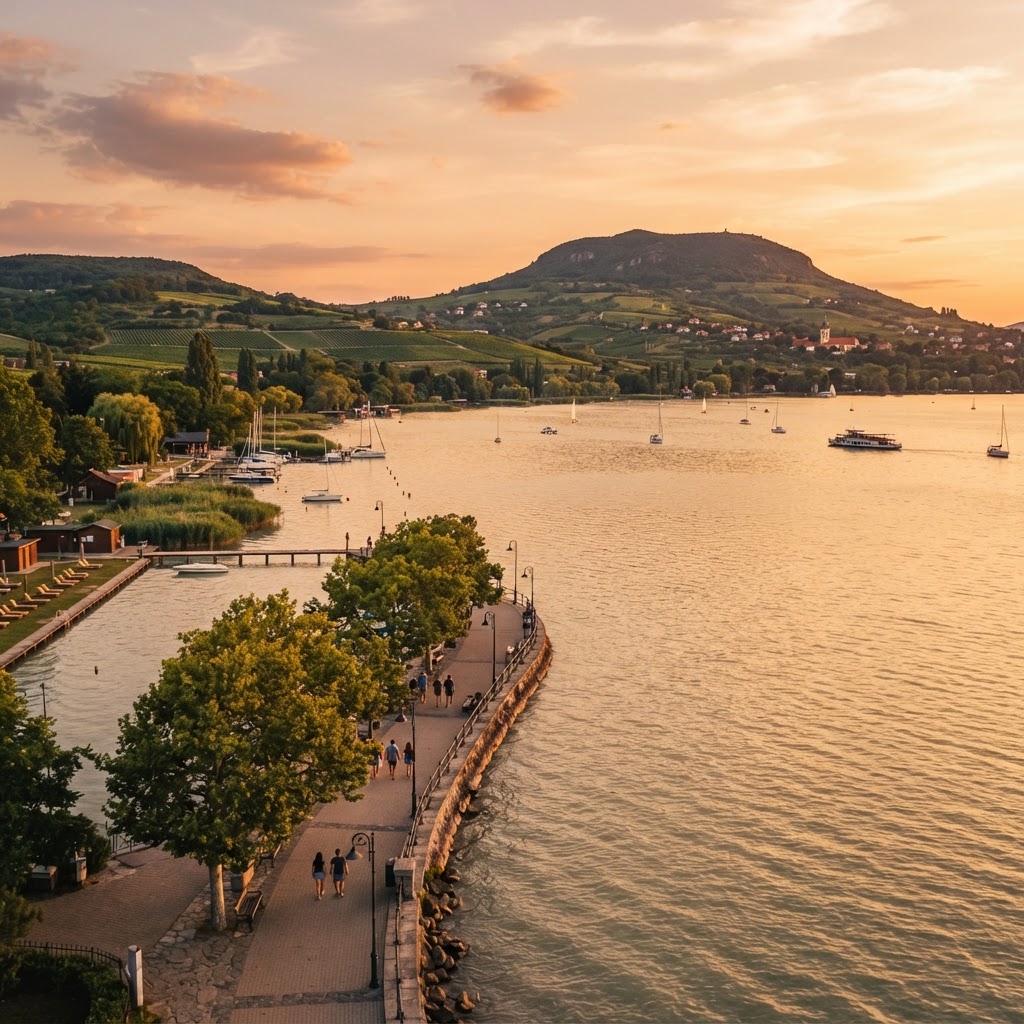
Lake Balaton
Hungary
Volcanic vineyards, quiet lidos, and grand lakeside promenades across Hungary's inland sea.
Readymade itineraries
Start from a tested template — then make it yours.
Ready to book
Lock in your Pécs, Hungary trip
Everything in one place. We may earn a small commission — it never costs you more.
Plan a trip to Pécs, Hungary
Pick a length and we'll build a day-by-day plan around how you travel — neighborhoods clustered, budget-aware, and editable.
Get better at planning trips like this
Occasional notes on planning smarter — no spam, unsubscribe anytime.
Plan a trip to Pécs, Hungary
Turn this guide into a day-by-day plan built around your pace, your group, and your budget.
Build my Pécs, Hungary trip