Kenya
Amboseli National Park
Tuskers under Kilimanjaro’s snowline and lush subterranean swamps
Plan & book
Sort your Amboseli National Park trip in one place.
We point you to the booking tools we'd actually use — live prices, no markup. Or let us build the day-by-day plan around you first, then book.
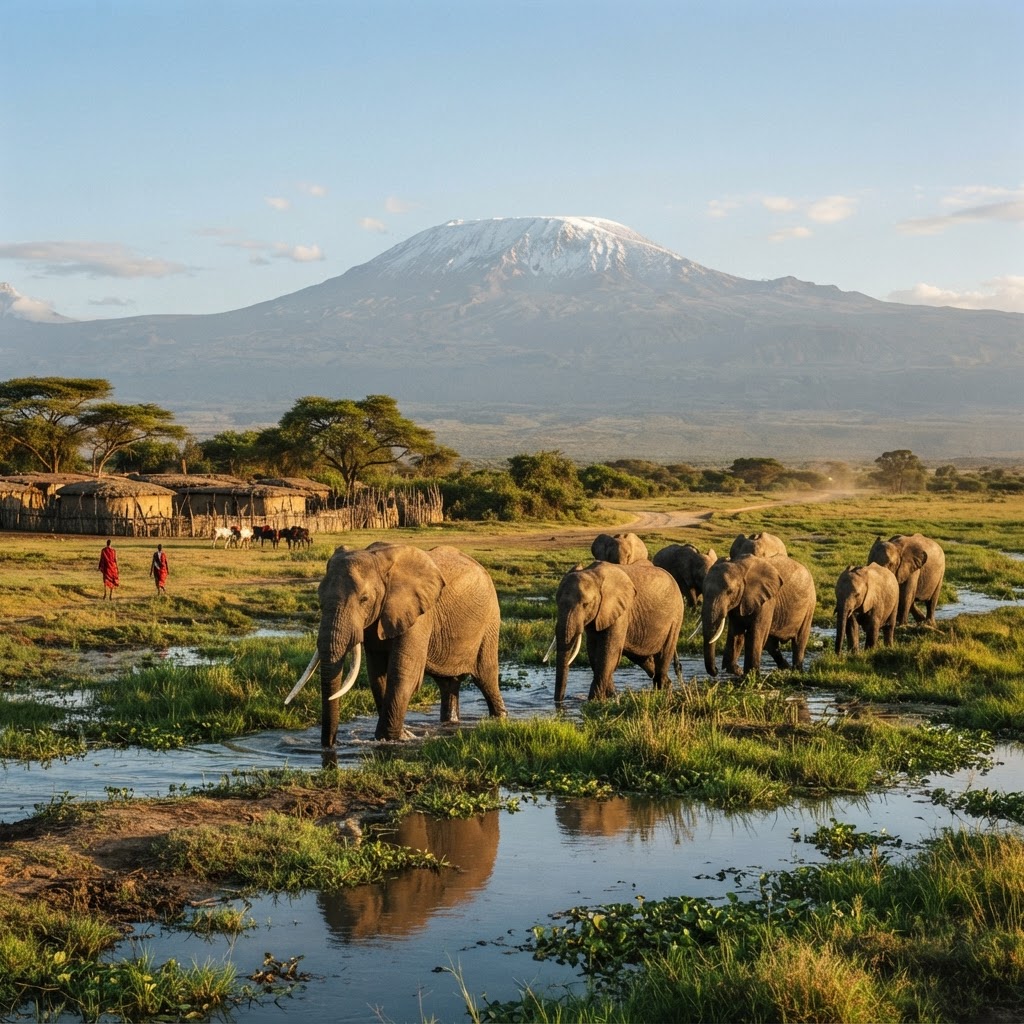
Covering just under 400 square kilometers along Kenya's southern border with Tanzania, Amboseli National Park is world-renowned for its dense, free-ranging elephant herds and views of Mount Kilimanjaro. Fed by subterranean springs from Kili’s melting snow, Amboseli’s central swamps—Enkongo Narok and Olokenya—form an oasis of green amid an otherwise bone-dry lakebed. It offers reliable, high-yield wildlife viewing on a compact circuit, making it accessible from Nairobi.
2 to 3 days
Best time
July to October for peak elephant concentrations; January to February for clear mountain sunrises and low dust.
Build your own trip with these prebuilt itineraries
Each one is a tested, day-by-day plan for Amboseli National Park — start here, then make it yours.
4 Days: Park Core & Community Conservancy Exploration in Amboseli National Park
Comprehensive bush immersion pairing national park game drives with private conservancy night safaris and Maasai-led walking tracks
3 Days of Wildlife Photography & Golden Hour Tracking in Amboseli National Park
Patience-driven photography capturing high-contrast dawn silhouettes against Kilimanjaro, dust-bathing pachyderms, and avian wetland dynamics
2 Days of Classic Highlights & Big Tusker Encounters in Amboseli National Park
First-time safari focus centered on concentrated swamp drives, iconic elephant herds, and dawn Kilimanjaro vistas
Go for elephant encounters with Mount Kilimanjaro on the horizon. While big cats require luck and patience here, Amboseli offers dense gatherings of elephant family pods and mature 'big tuskers' wading through deep emerald wetlands. Because the park is compact and flat, wildlife is easily spotted around perennial waterholes without full days of grueling transit.
Where to stay
Getting there
Getting around
Food & drink
What it costs
Things to do
Book tours & tickets in Amboseli National ParkSkip it if
Skip Amboseli if your absolute priority is tracking large numbers of big cats, specifically leopards and cheetahs, which are seen far more reliably in the Maasai Mara or Samburu. Skip it also if you dislike fine dust and open, flat terrain.
When to go
Dry months pull thousands of animals into Amboseli's central swamps, making wildlife dense and predictable, though alkali dust coats everything and midday cloud banks regularly hide Kilimanjaro. Wet months clear the air of dust for postcard mountain vistas but risk muddy tracks and turn the dry lakebeds into slick mud.
Peak (July to October)
Virtually no rain; wildlife crowds the remaining springs and marshes. Expect dusty vehicle cavalcades around Enkongo Narok swamp and high lodge rates.
Shoulder (January to February)
Short, dry, warm window with fewer tourists than the northern summer. Crisp early morning skies deliver the highest odds of unobstructed views of Kilimanjaro.
Low / Green Season (April to May & November)
April and May bring torrential long rains that can drown tracks and strand 2WD vehicles. November brings short afternoon storms, brilliant migratory birdlife, and dramatically lower lodge rates.
Neighborhoods
Where you stay shapes the trip. Here's how to think about it.
Central Park & Enkongo Narok Basin
The heart of the park where subterranean springs feed vast emerald swamps against open yellow-fever tree woodlands.
Best for:First-timers, photographers chasing classic waterhole drama, and travelers wanting zero transit time to major elephant herds
Don't miss:The mid-morning elephant crossing at Enkongo Narok swamp, where hundreds of pachyderms submerge themselves up to their bellies.
Kitirua & Western Amboseli
Arid, quiet, and dramatically close to the Tanzanian border, dominated by ancient volcanic tortoiseshell plains and acacia scrub.
Best for:Travelers wanting uncrowded tracks, dramatic low-angle views of Kili, and high-end private conservancy hospitality
Don't miss:Tortilis Camp's sundowner perch overlooking the Kitirua plains with unobstructed, wide-angle lines toward Kibo peak.
Selenkay Conservancy
Wild, exclusive Maasai-owned wilderness well north of the park border, where vehicles are strictly capped and commercial traffic is barred.
Best for:Safari purists wanting night game drives, guided bush walks with Maasai warriors, and zero minibus congestion
Don't miss:A twilight tracking drive searching for nocturnal predators like caracals, bat-eared foxes, and servals along the dry riverbeds.
Kimana & Eastern Conservancies
A vital wildlife migration corridor between Amboseli, the Chyulu Hills, and Tsavo, dotted with community wetlands and ancient tortilis forests.
Best for:Eco-conscious travelers, luxury travelers staying at Tawi Lodge or Kibo Villa, and those interested in community wildlife partnerships
Don't miss:Walking safaris accompanied by Maasai trackers around the foot-slopes of Mount Kilimanjaro on private community conservancy land.
Destination intelligence
Updated 9/14/2026The structured record we plan every Amboseli National Park itinerary from.
Walkability
Zero walkability inside the park boundary; disembarking from vehicles is strictly prohibited except at Observation Hill and fenced picnic spots.
Transit quality
No public urban transport; accessibility is limited to scheduled air charters, private 4x4 safaris, or Madaraka Express train transfers via Emali station.
Car needed
4x4 required. A closed safari vehicle or land cruiser with high clearance is mandatory for navigating washboard tracks and soft alkali dust.
Ideal duration
2 to 3 days
Minimum useful
2 days / 1 night
Peak season
July to October. Dry terrain forces wildlife around shrinking permanent swamps, maximizing sightings under clear blue skies.
Shoulder season
January to February. Short dry window with warm temperatures, excellent mountain visibility, and fewer crowds than the summer peak.
Low season
April to May (Long Rains) and November (Short Rains). Torrential downpours can turn lakebeds slick and make tracking difficult, though bird migration is at its peak.
Best for
Common mistakes
- Attempting a 1-day turnaround tour from Nairobi; spending 8 to 9 hours in highway transit leaves barely 3 hours for wildlife viewing.
- Expecting Kilimanjaro to be visible all day long; peak cloud cover typically blankets the mountain between 10:00 AM and 4:30 PM.
- Neglecting dust protection; Amboseli's fine volcanic lakebed dust infiltrates camera lenses, luggage zippers, and electronics without dry bags.
- Assuming you can do night drives or bush walks inside the national park borders; these activities are restricted strictly to private conservancies.
Best nearby
How to plan it
- Plan your game drives for 06:00 to 09:00 and 16:00 to 18:30; midday light is harsh, Kilimanjaro will be obscured by cloud banks, and animals retreat deep into swamp reeds.
- Pair Amboseli with Tsavo West or the Chyulu Hills via the Shetani lava flow route to combine open swamp game drives with rugged volcanic wilderness and black rhino tracking.
- Book your safari lodge 6 to 9 months ahead if traveling between July and October, as in-park room inventory (especially Ol Tukai and Amboseli Serena) fills quickly for peak migration overlaps.
- Take the Madaraka Express SGR train from Nairobi to Emali station (approx. 90 minutes) and arrange for your camp's 4x4 to meet you there, bypassing the heavy truck traffic of the Mombasa Road.
- Dedicate one midday rest window specifically to climbing the stairs of Observation Hill (Noomotio) for a panoramic picnic lunch overlooking submerged hippos and grazing herds.
Questions
More in East Africa
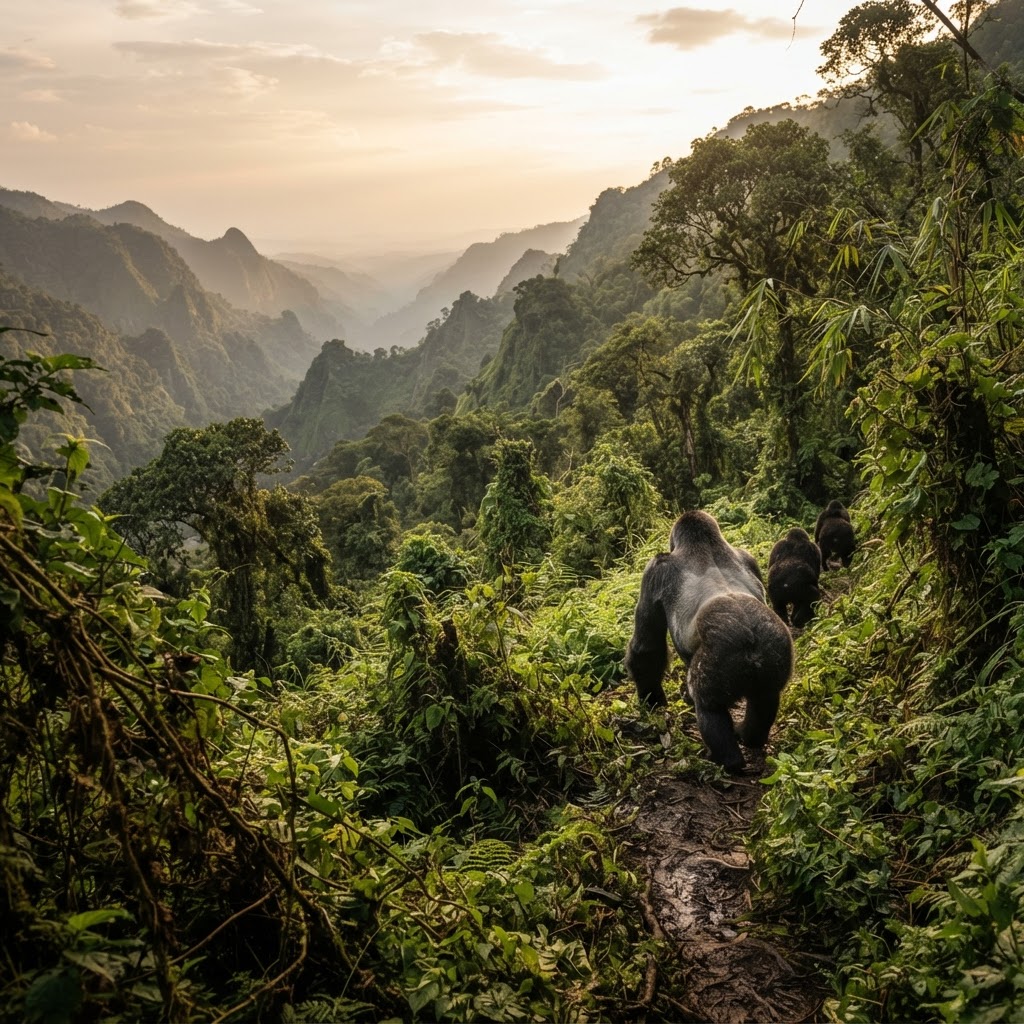
Bwindi Impenetrable Forest, Uganda
Uganda
Steep primal jungle, razor ridges, and heart-stopping wild gorilla encounters.
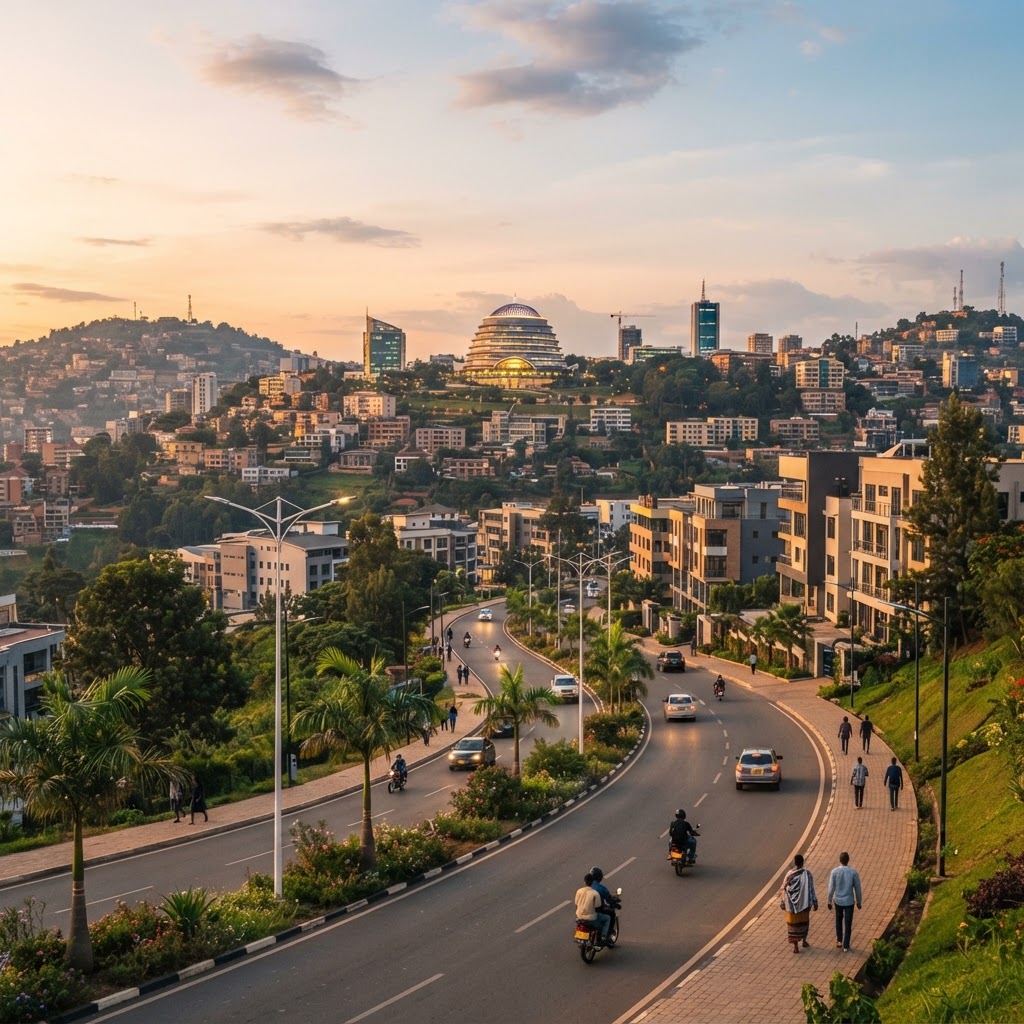
Kigali, Rwanda
Rwanda
A spotless, hill-crested capital trading chaos for creative energy and modern African urbanism.
Readymade itineraries
Start from a tested template — then make it yours.
Ready to book
Lock in your Amboseli National Park trip
Everything in one place. We may earn a small commission — it never costs you more.
Plan a trip to Amboseli National Park
Pick a length and we'll build a day-by-day plan around how you travel — neighborhoods clustered, budget-aware, and editable.
Get better at planning trips like this
Occasional notes on planning smarter — no spam, unsubscribe anytime.
Plan a trip to Amboseli National Park
Turn this guide into a day-by-day plan built around your pace, your group, and your budget.
Build my Amboseli National Park trip