Denmark
Aarhus, Denmark
Denmark's intellectual second city of Viking origins, bold harbor architecture, and accessible Nordic gastronomy.
Plan & book
Sort your Aarhus, Denmark trip in one place.
We point you to the booking tools we'd actually use — live prices, no markup. Or let us build the day-by-day plan around you first, then book.
Aarhus sits on the east coast of Jutland, delivering Copenhagen-grade architecture, world-class museums, and an energetic culinary culture within a compact footprint. Anchored by the youthful demographic of Scandinavia’s largest university and centuries of maritime history, it offers an approachable entry point to Danish urban life without capital-city congestion or tourist swarms.
3 days
Best time
Late May through August for the liveliest harbor life, outdoor dining, and up to 18 hours of daylight.
Build your own trip with these prebuilt itineraries
Each one is a tested, day-by-day plan for Aarhus, Denmark — start here, then make it yours.
5 Days in Aarhus: Extended Jutland Coast and Living History
A slower-paced deep dive pairing deep heritage museums, coastal forests, and relaxed neighborhood exploration
3 Days in Aarhus: The Classic Cultural Immersion in Aarhus
A comprehensive first-timer blend of world-class Viking history, atmospheric old quarters, and New Nordic dining
2 Days in Aarhus: Modern Design and Urban Culture in Aarhus
Architecture, contemporary art, and vibrant harbor life for urban design enthusiasts
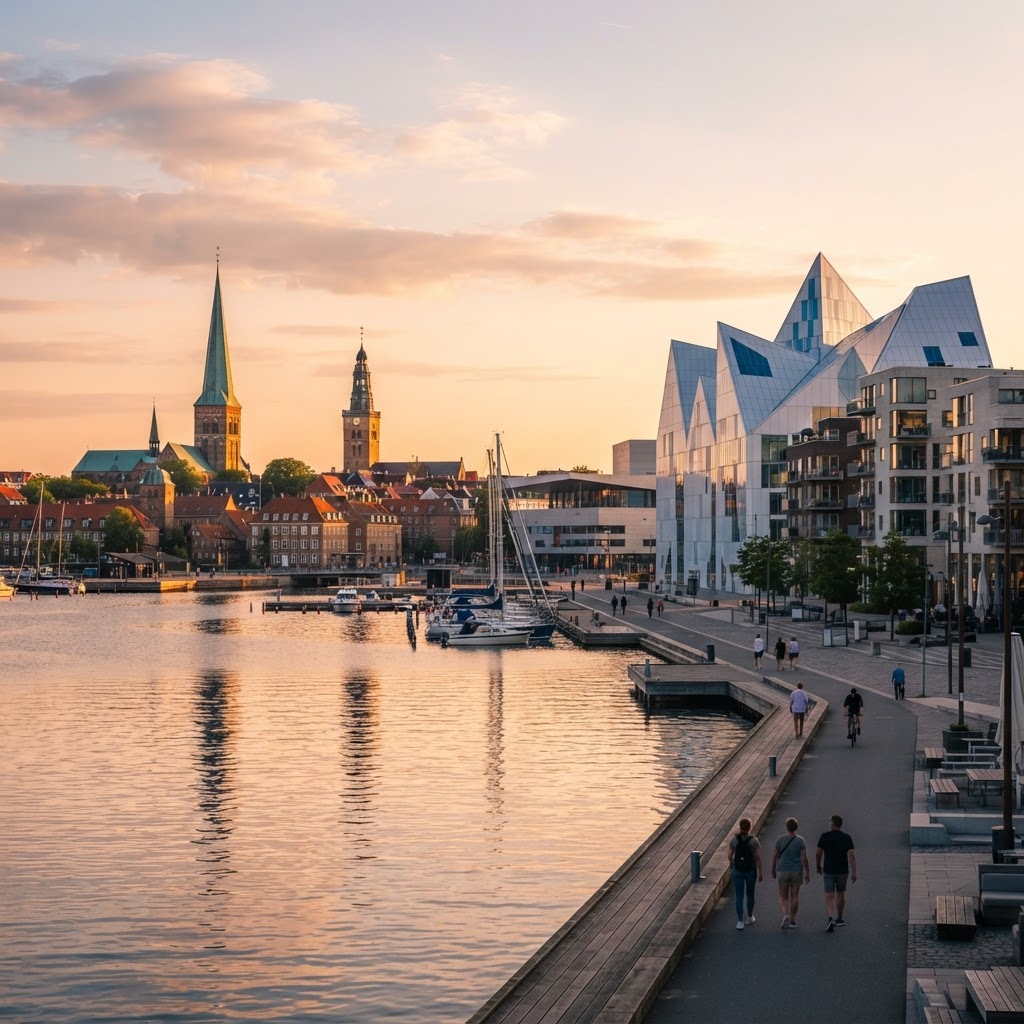
Aarhus delivers an exceptionally high density of culture per square kilometer. Within a twenty-minute walk or brief bus ride, you can traverse from the centuries-old cobblestones of the Latin Quarter to Olafur Eliasson's 'Your rainbow panorama' atop ARoS, through living urban history at Den Gamle By, and down to the cutting-edge residential architecture of Aarhus Ø and the Bjarke Ingels-designed harbor baths. It has the culinary ambition of Copenhagen with notably more relaxed hospitality.
Where to stay
Getting there
Getting around
Food & drink
What it costs
Things to do
Book tours & tickets in Aarhus, DenmarkSkip it if
Skip Aarhus if your trip requires non-stop cosmopolitan scale, massive nightlife till dawn, or world-famous headline landmarks like the Eiffel Tower or Colosseum; choose Copenhagen, Berlin, or Stockholm instead.
When to go
Summer grants open-air harbor swimming and terrace culture along Åboulevarden, but lodging rates peak. May and September offer crisp weather and light museum queues without the summer hotel surge.
Peak (Mid-June–August)
Pleasant maritime highs (20–23°C), full opening hours, buzzing rooftop terraces, and harbor swimming, offset by competitive hotel prices.
Shoulder (May–early June & September–October)
Cool, crisp walking weather and colorful coastal foliage around Marselisborg forests, with far easier restaurant walk-ins and moderate room rates.
Low (November–March)
Short daylight windows, cold sea winds, and occasional coastal slush, but perfect for quiet museum browsing and fireside hygge in Latin Quarter cafés.
Neighborhoods
Where you stay shapes the trip. Here's how to think about it.
Latvikvarteret (Latin Quarter)
Cobblestones, 14th-century street layouts, indie boutiques, and courtyard specialty cafés.
Best for:first-timers, boutique shoppers, and design lovers
Don't miss:Browsing design shops along Badstuegade and catching the hollyhocks along historic Møllestien just west of the quarter.
Aarhus Ø
Striking, hyper-modern harbor redevelopment defined by geometric seaside residential blocks and open sea baths.
Best for:contemporary architecture buffs and summer harbor swimmers
Don't miss:The jagged waterfront facades of Isbjerget (The Iceberg) and swimming at the Bjarke Ingels-designed Aarhus Havnebad.
Frederiksbjerg
Leafy, residential culinary hub packed with neighborhood wine bars, bakeries, and street markets.
Best for:foodies and travelers seeking a quiet, local neighborhood base
Don't miss:Sampling local cheeses and produce at the bi-weekly outdoor food market on Ingerslevs Boulevard.
Vesterbro
Cultural, green district balancing working-class roots with major botanical spaces and living history.
Best for:families and history enthusiasts
Don't miss:Spending an afternoon walking the reconstructed historic epochs inside Den Gamle By before heading to the tropical greenhouses at the Botanical Garden.
Midtbyen & Åboulevarden
The energetic commercial core hugging the canal, with canalside dining patios, transit links, and rooftop terraces.
Best for:short-stay visitors wanting maximum transit convenience
Don't miss:Taking the glass skywalk on the Salling Rooftop for 360-degree views across the red roofs to the harbor.
Destination intelligence
Updated 9/14/2026The structured record we plan every Aarhus, Denmark itinerary from.
Walkability
exceptional
Transit quality
high
Car needed
no
Ideal duration
3 days
Minimum useful
2 days
Peak season
Mid-June through August (long daylight hours, outdoor cafe life along Åboulevarden, harbor swimming, but higher lodging rates)
Shoulder season
May to early June and September to October (crisp weather, vibrant autumn foliage around Marselisborg, light museum queues)
Low season
November through March (short daylight windows, chilly maritime winds, though ideal for cozy café culture and museum visits)
Best for
Common mistakes
- Renting a car for a city-only visit, which incurs expensive garage fees and navigating restricted inner-city pedestrian corridors.
- Skipping Moesgaard Museum because it is located 10 kilometers south of the center; bus 18 connects directly in roughly 25 minutes and the site is arguably the best archaeological museum in northern Europe.
- Treating Aarhus merely as a quick four-hour pause between Copenhagen and Aalborg instead of giving its diverse districts consecutive evenings.
- Visiting in deep winter without expecting shorter opening hours and reduced regional ferry or boat services.
Best nearby
How to plan it
- Dedicate a continuous 4-hour morning block to Moesgaard Museum; its sloping rooftop architecture and prehistoric exhibitions require meaningful cognitive energy and transit time via Bus 18.
- Do not cram ARoS and Den Gamle By into the same afternoon; both are massive, multi-level attractions that cause sensory fatigue if back-to-back.
- Base yourself in Frederiksbjerg if dining well without crowds is your focus, or in the Latin Quarter if you want historic cobblestones on your doorstep.
- Skip car rental entirely if your itinerary stays within the municipal belt; the Letbanen light rail and municipal city bikes cover every core district.
- Pair Aarhus with a 3-day Copenhagen trip by taking the 3-hour direct DSB train across the Great Belt Fixed Link rather than flying domestically.
Questions
More in Denmark
Bornholm, Denmark
Denmark
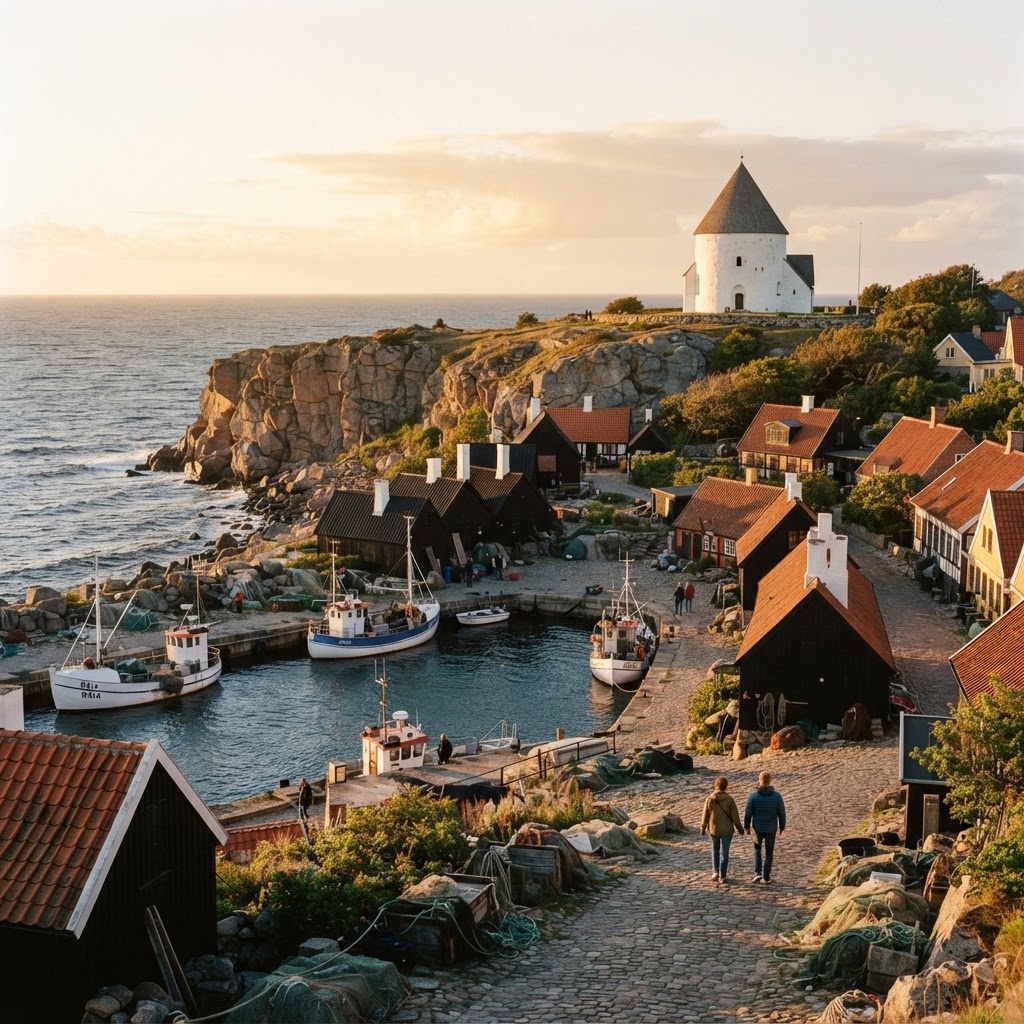
Baltic granite cliffs, medieval round churches, and timbered smokehouses.
Skagen, Denmark
Denmark
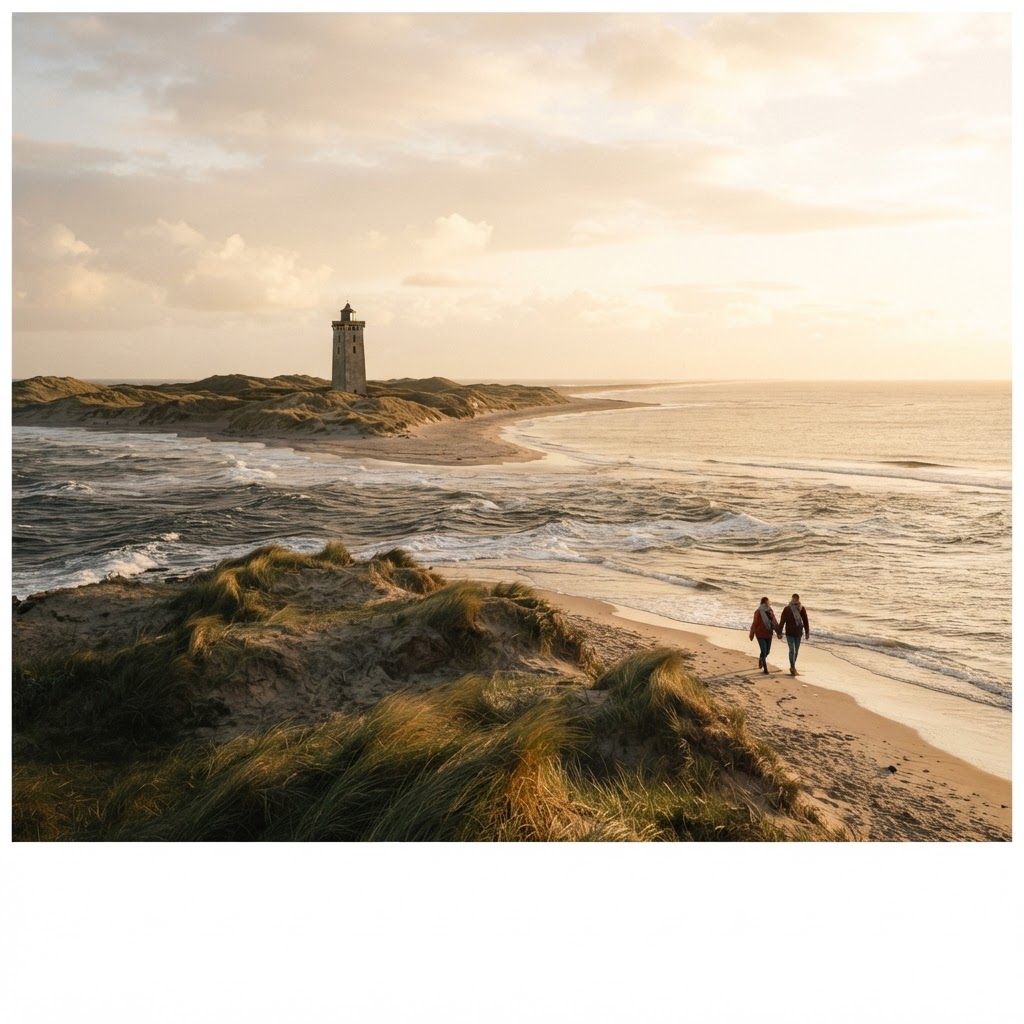
Windswept dunes, luminous Nordic light, and the collision of two wild seas.
Odense, Denmark
Denmark
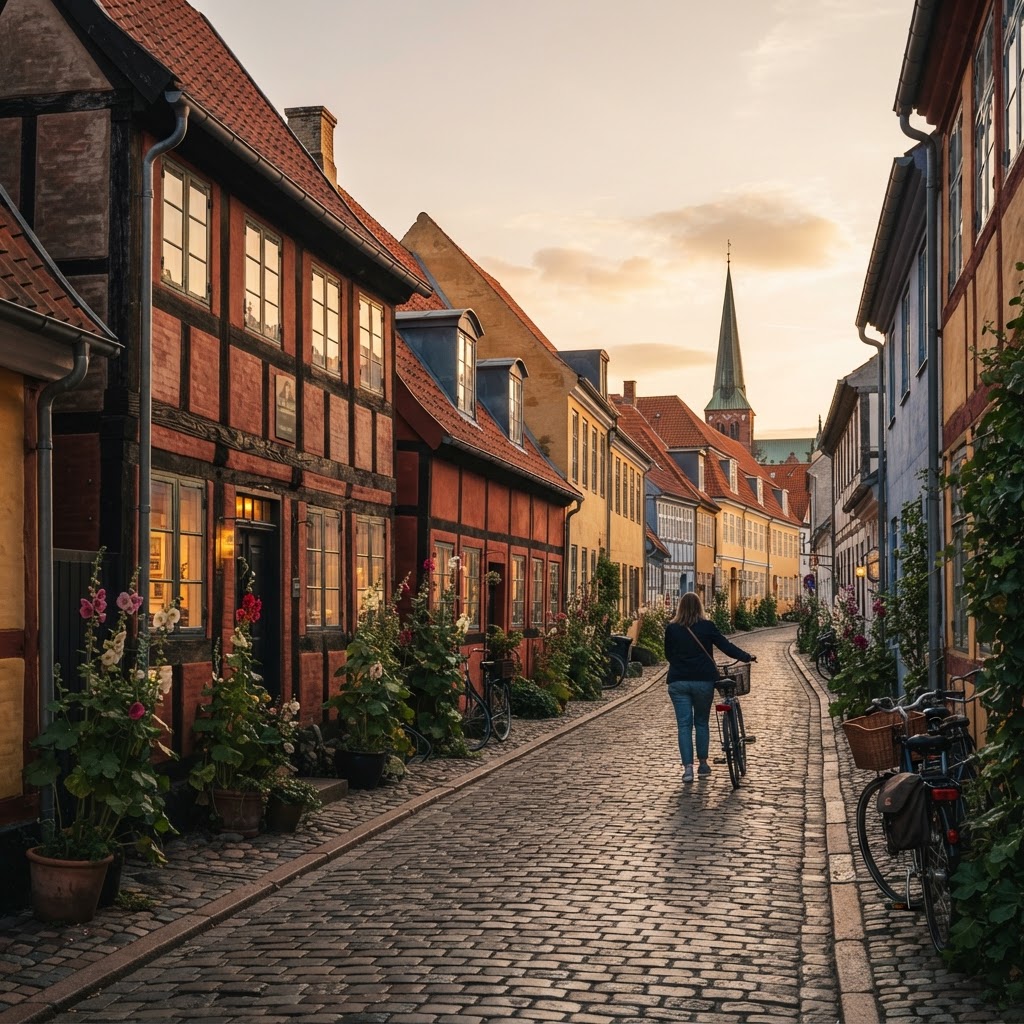
Architectural fairy tales, timbered lanes, and calm Danish provincial living
Readymade itineraries
Start from a tested template — then make it yours.
Ready to book
Lock in your Aarhus, Denmark trip
Everything in one place. We may earn a small commission — it never costs you more.
Plan a trip to Aarhus, Denmark
Pick a length and we'll build a day-by-day plan around how you travel — neighborhoods clustered, budget-aware, and editable.
Get better at planning trips like this
Occasional notes on planning smarter — no spam, unsubscribe anytime.
Plan a trip to Aarhus, Denmark
Turn this guide into a day-by-day plan built around your pace, your group, and your budget.
Build my Aarhus, Denmark trip