Chile
Valparaíso, Chile
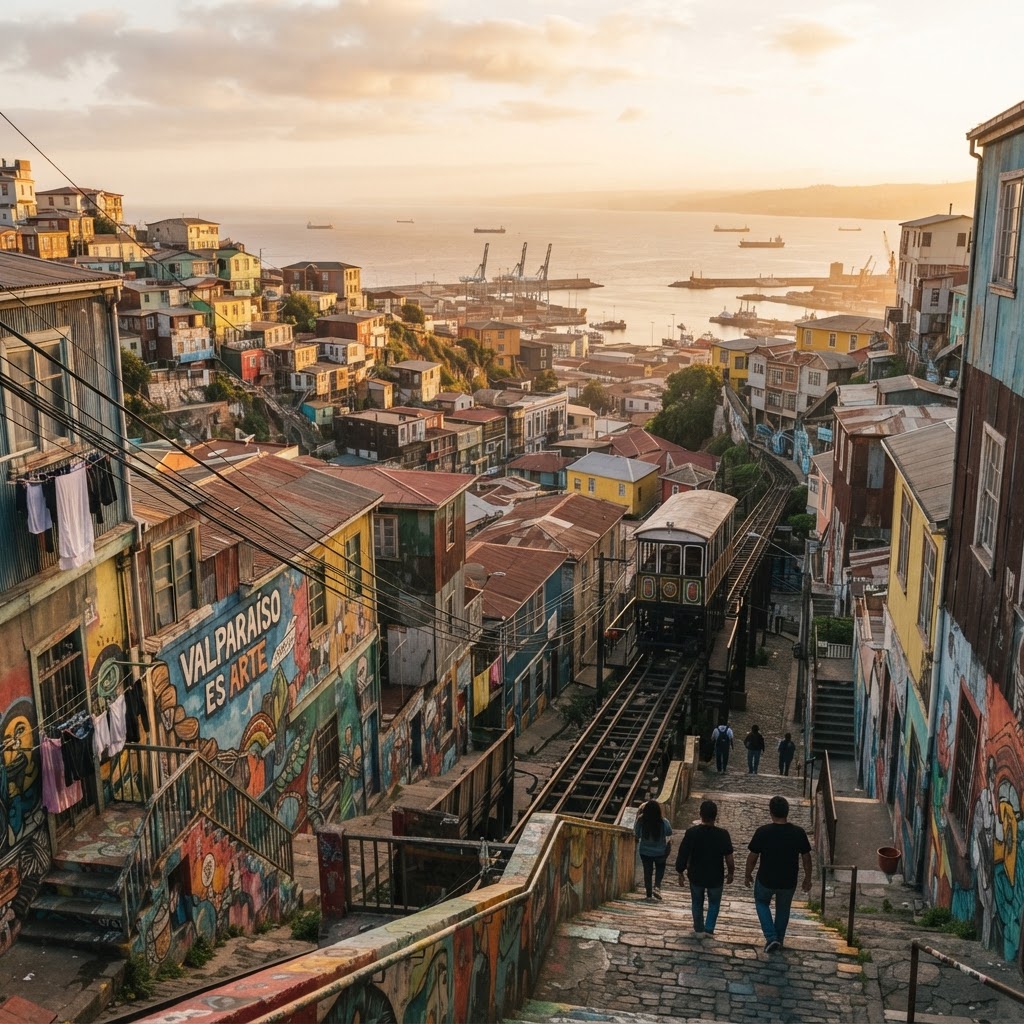
A gritty, bohemian Pacific port draped in hillside murals and historic funiculars.
Plan & book
Sort your Valparaíso, Chile trip in one place.
We point you to the booking tools we'd actually use — live prices, no markup. Or let us build the day-by-day plan around you first, then book.
Perched along a dramatic natural amphitheater facing the Pacific Ocean, Valparaíso is Chile's raw, artistic counterweight to buttoned-up Santiago. Defined by crumbling 19th-century mansions, labyrinthine staircases, operating ascensors (funiculars), and internationally acclaimed street art, this UNESCO World Heritage port rewards curious walkers who appreciate weathered character and panoramic ocean vistas.
2 to 3 days
Best time
October to April brings clear afternoons, reliable funicular service, and pleasant coastal temperatures.
Build your own trip with these prebuilt itineraries
Each one is a tested, day-by-day plan for Valparaíso, Chile — start here, then make it yours.
4 Days of Greater Valparaíso & Pacific Coastlines in Valparaíso
A broader exploration combining hillside art with Viña del Mar beaches and coastal rail excursions
3 Days of Coastal Cuisine, Natural Wine & Neruda in Valparaíso
Food and cultural immersion centered on Pacific seafood, Casablanca valley wines, and literary heritage
2 Days of Street Art, Ascensores & Coastal Panoramas in Valparaíso
First-timer highlights focusing on mural walks, historic funiculars, and bohemian cerro culture
Valparaíso offers an evocative urban landscape unlike anywhere else in South America. The collision of functional shipping infrastructure, multi-tiered hillside neighborhoods (cerros), steep wooden funicular railways, and expressive bohemian street art makes simply navigating the city an immersive cultural experience.
Where to stay
Getting there
Getting around
Food & drink
What it costs
Things to do
Book tours & tickets in Valparaíso, ChileSkip it if
Travelers with limited physical mobility or knee issues should reconsider, as the city demands traversing steep stairs, broken sidewalks, and cobblestones without ramps. Those expecting polished resort amenities, pristine manicured streets, or manicured beach boardwalks will prefer neighboring Viña del Mar.
When to go
Summer offers festival energy but packed boutique rooms and coastal traffic, while the shoulder months deliver crisp sunshine, thinner crowds, and prime vineyard visits in nearby Casablanca.
Peak (December to February)
Bright maritime sunshine and vibrant outdoor bar terraces, but accommodation on Alegre and Concepción books out weeks ahead, and cruise passengers fill the funiculars.
Shoulder (October to November & March to April)
The most balanced travel window; mornings often start with coastal marine haze (camanchaca) that burns off by midday, accompanied by harvest activity in Casablanca wineries.
Low (May to August)
Cool, damp winter conditions with frequent marine mist, maritime winds, and reduced operating hours for open-air restaurants and specific historic ascensores.
Neighborhoods
Where you stay shapes the trip. Here's how to think about it.
Cerro Alegre
Cobbled pedestrian lanes lined with 19th-century immigrant mansions, street murals, specialty coffee bars, and open views over the harbor.
Best for:First-time visitors, boutique hotel stays, and evening dining within walking distance.
Don't miss:Strolling Calle Montealegre and Pasaje Dimalow, followed by sunset views from the terrace outside Palacio Baburizza.
Cerro Concepción
Historic, tightly packed residential alleyways featuring preserved corrugated-iron townhouses, artisan studios, and historic churches.
Best for:Walkers, architecture lovers, and travelers seeking quiet boutique guesthouses.
Don't miss:The vista from Paseo Gervasoni and taking Ascensor Concepción down toward the lower town.
Cerro Bellavista
Steep, bohemian residential ridge famous for open-air modern murals and Pablo Neruda's former residence.
Best for:Poetry readers, mural hunters, and travelers willing to tackle steep staircases.
Don't miss:La Sebastiana museum house and the winding outdoor wall murals along Museo a Cielo Abierto.
El Puerto & Barrio Cívico (El Plan)
Working maritime basin anchored by monumental neoclassical administrative buildings, bustling fish stalls, and harbor traffic.
Best for:Heritage enthusiasts and daytime explorers riding heritage transport.
Don't miss:Plaza Sotomayor and hopping the green electric trolleybus along Calle Prat and Calle Esmeralda.
Cerro Artillería
Windswept maritime hillside commanding wide panoramas over shipping cranes and container terminals.
Best for:Daytime naval history buffs and photographers.
Don't miss:Riding Ascensor Artillería (when operational) up to the Paseo 21 de Mayo overlook and the Museo Marítimo Nacional.
Destination intelligence
Updated 9/14/2026The structured record we plan every Valparaíso, Chile itinerary from.
Walkability
Demanding: walking within individual hilltop ridges like Cerro Alegre is compact and pedestrian-friendly, but moving between cerros or heading down to El Plan involves steep staircases, cobbles, and working funiculars.
Transit quality
Good: historic ascensores, an electric trolleybus line along the coastal flat, and frequent regional commuter rail (Metro Valparaíso) running to Viña del Mar.
Car needed
No: an automobile is a major liability in Valparaíso due to vertical winding topography, tight dead ends, and severe lack of safe parking.
Ideal duration
2 to 3 days
Minimum useful
1 full day (or long overnight trip from Santiago)
Peak season
December to February: dry, sunny, and active with domestic coastal holidaymakers and cruise ship calls; booking Cerro Alegre hotels well ahead is mandatory.
Shoulder season
October to November (spring) and March to April (autumn): sunny skies, minimal coastal fog, fewer crowds, and harvest activity in neighboring Casablanca vineyards.
Low season
May to August (winter): higher likelihood of coastal drizzle, fog (camanchaca), chilly maritime winds, and reduced operational hours for some hillside terraces.
Best for
Common mistakes
- Treating it as a rushed 4-hour day trip from Santiago that only scratches the surface of the gift shops on Paseo Gervasoni.
- Renting a rental car to drive within the cerros, leading to damaged clutches, zero parking, and navigations trapped in blind alleyways.
- Walking between hills or lingering in deserted sections of the lower port (El Plan) late at night rather than taking a cheap, direct taxi/Uber.
- Failing to carry small Chilean peso cash coins; card terminals are rare at funicular ticket booths, local fruit kiosks, and neighborhood micro buses.
Best nearby
How to plan it
- Stay overnight on Cerro Alegre or Cerro Concepción; staying downtown in El Plan leaves you surrounded by shuttered commercial blocks and rough transit zones after dusk.
- Do not attempt to walk down the hills back to the port late at night; call an Uber directly to your hotel door.
- Pair your trip with an afternoon in Casablanca Valley for cool-climate Chardonnay and Syrah, situated just 40 minutes inland along Route 68.
- Reserve La Sebastiana entry online in advance during peak summer months to avoid morning queues outside Neruda's former house.
- Combine the Valparaíso hills with the Metro de Valparaíso rail line if you want to contrast the port's weathered patina with modern beachfront strolls in Viña del Mar.
Questions
More in Chile
Readymade itineraries
Start from a tested template — then make it yours.
Ready to book
Lock in your Valparaíso, Chile trip
Everything in one place. We may earn a small commission — it never costs you more.
Plan a trip to Valparaíso, Chile
Pick a length and we'll build a day-by-day plan around how you travel — neighborhoods clustered, budget-aware, and editable.
Get better at planning trips like this
Occasional notes on planning smarter — no spam, unsubscribe anytime.
Plan a trip to Valparaíso, Chile
Turn this guide into a day-by-day plan built around your pace, your group, and your budget.
Build my Valparaíso, Chile trip