Netherlands
Utrecht
Two-tier wharf canals, medieval alleys, and an energetic university pulse without Amsterdam's tourist circus.
Plan & book
Sort your Utrecht trip in one place.
We point you to the booking tools we'd actually use — live prices, no markup. Or let us build the day-by-day plan around you first, then book.
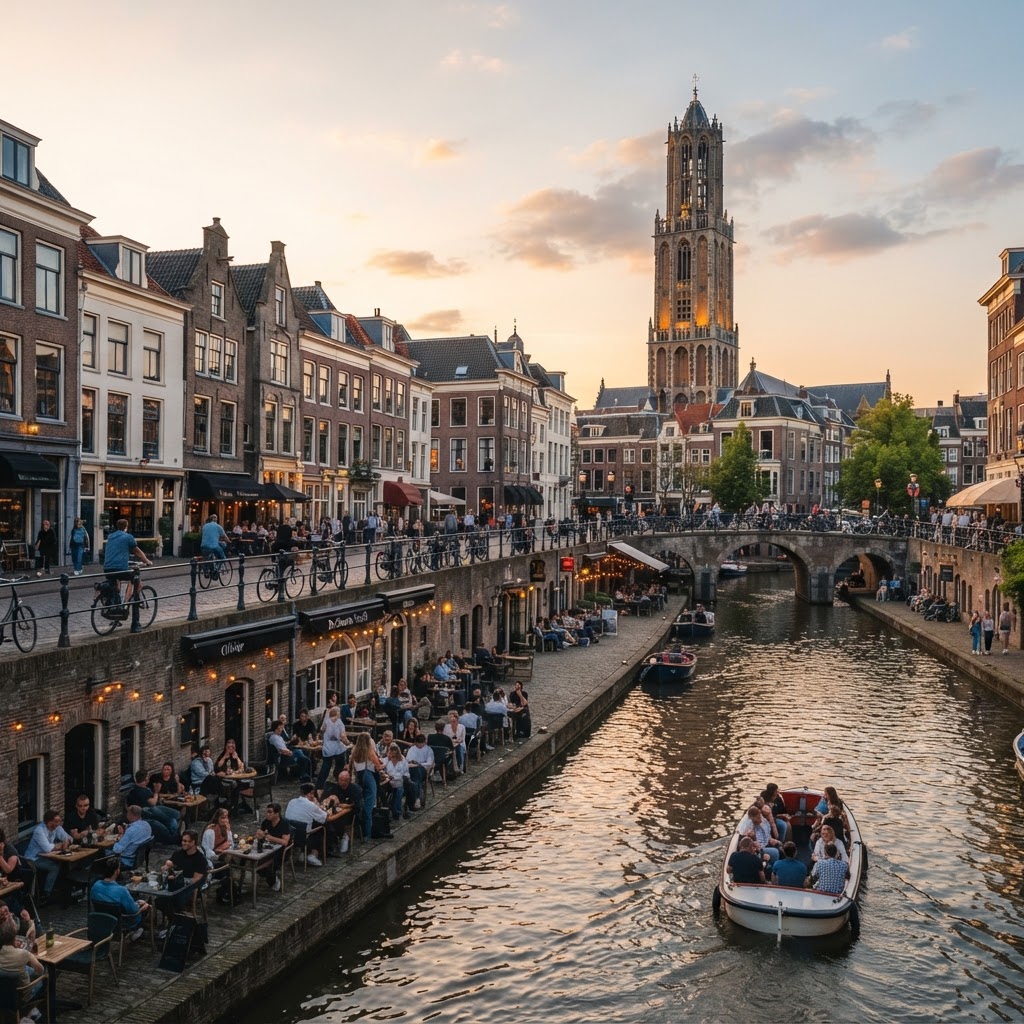
Located just 25 minutes south of Amsterdam by intercity rail, Utrecht is the historic heart and major rail hub of the Netherlands. Built over Roman Trajectum and dominated by the 112-meter Domtoren, the city center is famously structured around sunken canals where medieval cellars open directly onto water-level wharf walkways lined with cafes and brewpubs. It delivers quintessential Dutch canal architecture, deep world-class culture, and an authentic residential life free from stag parties and velvet ropes.
2 to 3 days
Best time
May to June and September to mid-October provide the best balance of outdoor canal life and manageable crowds.
Build your own trip with these prebuilt itineraries
Each one is a tested, day-by-day plan for Utrecht — start here, then make it yours.
4 Days in Utrecht: Rail-Hub Explorer & Castles in Utrecht
Slow-paced exploration using Utrecht's frictionless central rail connections to combine city canals with Kasteel de Haar, woodland cycling, and nearby historic towns
2 Days in Utrecht: Historic Canals & Highlights in Utrecht
First-time essential highlights covering the medieval core, Dom Tower views, and lively evening wharf cellar dining along the Oudegracht
3 Days in Utrecht: Design, Modernism & De Stijl in Utrecht
Architecture and design deep dive focusing on Gerrit Rietveld's iconic creations, Centraal Museum collections, and boundary-pushing contemporary urban design
Utrecht gives you the classic Dutch canal experience stripped of mass tourism. Unlike Amsterdam's street-level embankments, Utrecht's Oudegracht features unique split-level wharves (werfkelders) that allow you to drink and dine directly at the waterline. As home to the country's largest university, it combines 2,000 years of Roman and medieval ecclesiastical history with a vibrant contemporary dining and music culture centered around places like TivoliVredenburg.
Where to stay
Getting there
Getting around
Food & drink
What it costs
Things to do
Book tours & tickets in UtrechtSkip it if
Skip staying in Utrecht if your primary goal is checking off marquee names like the Rijksmuseum, Van Gogh Museum, and Anne Frank House on a fast 48-hour trip, where commuting from outside Amsterdam wastes valuable morning hours.
When to go
Summer brings open-air wharf terraces and long daylight hours, but hotel prices peak. Late spring offers blooming canal verges with moderate temperatures, while early autumn brings golden foliage along Nieuwegracht and fewer domestic tour groups.
Peak (May to August)
Expect buzzing canal terraces, lively cultural festivals, and warm weather, but book wharf dinners and boutique hotels weeks ahead.
Shoulder (April & September to October)
Pleasant walking weather, beautiful autumn leaves reflecting in the canals, and easy museum access without long lines.
Low (November to March)
Chilly, damp, and short daylight hours, but minimal crowds, lower hotel rates, and atmospheric illuminated canal bridges.
Neighborhoods
Where you stay shapes the trip. Here's how to think about it.
Binnenstad & Domkwartier
Towering medieval spires, cobbled alleyways, and sunken wharf cellars wrapped in living history.
Best for:First-timers, architecture lovers, and travelers who want everything outside their hotel door.
Don't miss:The 465-step climb up the Domtoren bell tower followed by a peaceful wander into the Gothic Pandhof cloister garden.
Museumkwartier
Tranquil residential streets, quiet canal stretches, and leafy secret courtyards south of the center.
Best for:Couples, slower-paced explorers, and museum enthusiasts seeking retreat from crowds.
Don't miss:Strolling the serene, tree-lined Nieuwegracht canal without the commercial bustle of Oudegracht.
Wittevrouwen
Charming 19th-century brick terraces, artisanal bakeries, and quiet neighborhood bistros.
Best for:Families, food lovers, and travelers wanting a genuine local neighborhood feel.
Don't miss:Grabbing a scoop from Roberto Gelato on Poortstraat and walking through Griftpark.
Lombok
Multicultural bustle, aromatic spice shops, Middle Eastern bakeries, and young creatives.
Best for:Budget travelers, curious foodies, and indie shoppers.
Don't miss:Sampling fresh Turkish flatbreads and treats along Kanaalstraat, just west of Utrecht Centraal.
Oost & Wilhelminapark
Leafy, grand residential boulevards, stately townhouses, and avant-garde 20th-century design icons.
Best for:Design history buffs, joggers, and travelers seeking an upscale, quiet base.
Don't miss:Touring the UNESCO-listed Gerrit Rietveld Schröder House on Prins Hendriklaan.
Destination intelligence
Updated 9/14/2026The structured record we plan every Utrecht itinerary from.
Walkability
Exceptional. The entire historic core within the canal ring is pedestrian-friendly and easily traversed on foot within 15 to 20 minutes.
Transit quality
Superb. Utrecht Centraal is the premier rail crossroads of the Netherlands, offering ubiquitous domestic train frequencies and sleek local light rail.
Car needed
Not required and strongly discouraged. Driving in the medieval core is restricted, parking garages are expensive, and trains/bikes are vastly faster.
Ideal duration
2 to 3 days
Minimum useful
1 full day
Peak season
May to August (long daylight hours, bustling outdoor canal terraces, warm weather, and festival season).
Shoulder season
April and September to October (tulip blooms nearby, vivid autumn foliage along the canals, and pleasant walking temperatures).
Low season
November to March (shorter days, cool damp weather, but atmospheric illuminated canals and minimal crowds).
Best for
Common mistakes
- Treating Utrecht as merely an afternoon day trip and missing the lively evening atmosphere along the Oudegracht wharves.
- Stepping blindly into red-paved cycle lanes; Utrecht's bike traffic is relentless, fast, and strictly right-of-way.
- Failing to pre-book timed entry tickets for the Rietveld Schröder House weeks ahead, as visitor capacity is severely restricted.
Best nearby
How to plan it
- Stay in Museumkwartier or Binnenstad if you want historic canal walks right from your front door; stay near Utrecht Centraal if your priority is daily train day-tripping.
- Pair your trip with an afternoon visit to Kasteel de Haar (bus 127 from Vleuten station) or a 15-minute train ride to medieval Amersfoort.
- Don't try to cram the Domtoren climb, DOMunder, and the Rietveld Schröder House into a single morning; their strict timed slots will leave you rushing through the best walking streets.
- Reserve the Rietveld Schröder House at least 2 weeks ahead; interior access is strictly regulated to small guided groups and cannot be booked on arrival.
Questions
More in Netherlands
Readymade itineraries
Start from a tested template — then make it yours.
Ready to book
Lock in your Utrecht trip
Everything in one place. We may earn a small commission — it never costs you more.
Plan a trip to Utrecht
Pick a length and we'll build a day-by-day plan around how you travel — neighborhoods clustered, budget-aware, and editable.
Get better at planning trips like this
Occasional notes on planning smarter — no spam, unsubscribe anytime.
Plan a trip to Utrecht
Turn this guide into a day-by-day plan built around your pace, your group, and your budget.
Build my Utrecht trip