Netherlands
Maastricht, Netherlands
Burgundian flair, marlstone caves, and centuries of borderland culture in the Dutch deep south
Plan & book
Sort your Maastricht, Netherlands trip in one place.
We point you to the booking tools we'd actually use — live prices, no markup. Or let us build the day-by-day plan around you first, then book.
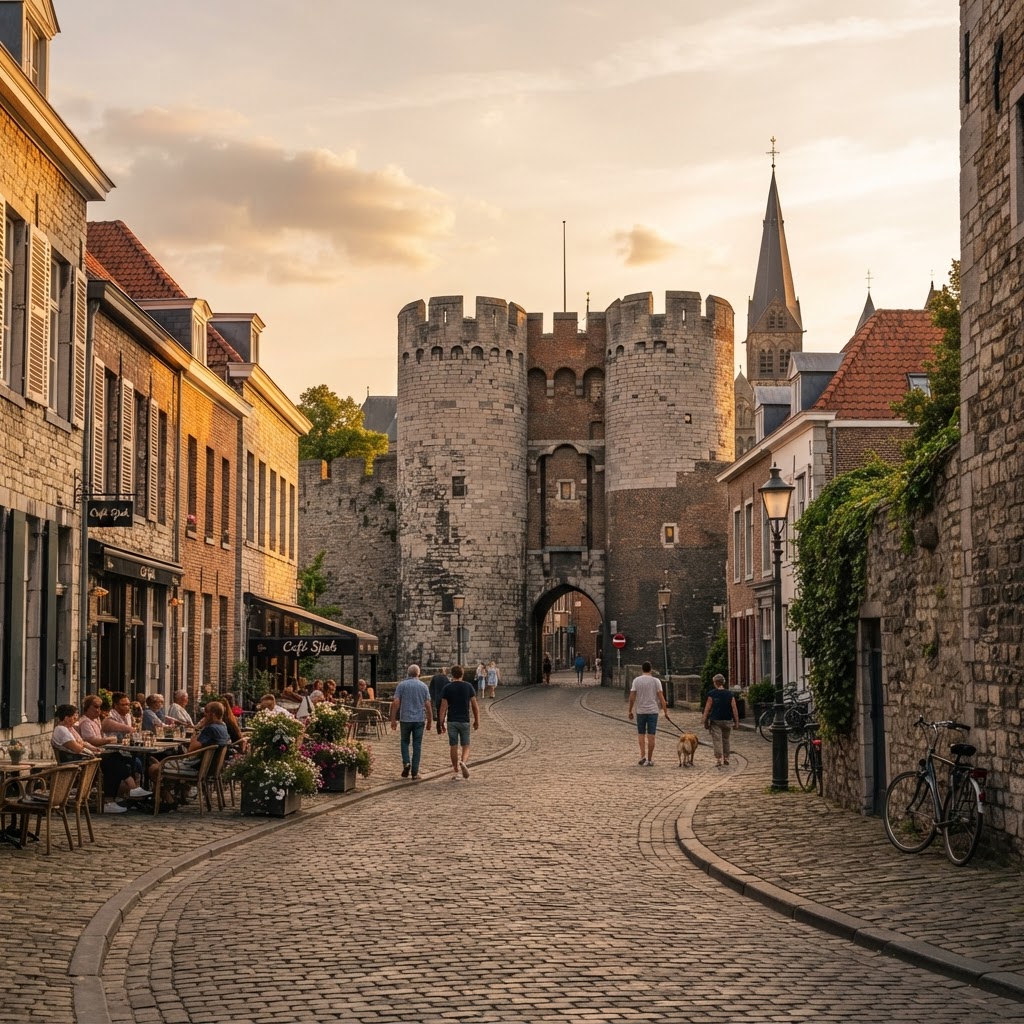
Cradled between Belgium and Germany, Maastricht feels distinct from the rest of the Netherlands. Here, Calvinist austerity gives way to a bon-vivant Burgundian lifestyle, dramatic Romanesque stone bastions, and rolling limestone hills. It is an atmospheric walking city defined by the rushing Meuse (Maas) river, vibrant cafe terraces on the Vrijthof, subterranean marlstone labyrinths, and a culinary tradition enriched by border-hopping cross-pollination.
3 days
Best time
May to June or September to October for optimal terrace weather, harvest culture, and manageable crowds.
Build your own trip with these prebuilt itineraries
Each one is a tested, day-by-day plan for Maastricht, Netherlands — start here, then make it yours.
5 Days Across the Borderland in Maastricht
Slow travel base featuring South Limburg hill hikes and cross-border rail day trips
3 Days in Maastricht: A Burgundian Gastronomy Escape in Maastricht
Limburg food traditions, terrace culture, and cool-climate vineyard tastings
2 Days of History and Culture in Maastricht
Historic core highlights, Romanesque architecture, and premier art museums
Maastricht breaks every flat-and-waterlogged Dutch stereotype. Founded by the Romans and contested across centuries, it offers medieval ramparts like Helpoort, centuries-old limestone caves at Fort Sint Pieter, and a flourishing culinary landscape anchored by Limburgian regional cooking and multiple Michelin-starred tables. It is also an intellectual powerhouse thanks to Maastricht University and TEFAF, giving its cobblestone streets a cosmopolitan edge that feels closer to Brussels or Aachen than Amsterdam.
Where to stay
Getting there
Getting around
Food & drink
What it costs
Things to do
Book tours & tickets in Maastricht, NetherlandsSkip it if
Skip Maastricht if your Netherlands journey is under five days and focused strictly on the classic canal-and-windmill sights around North and South Holland (Amsterdam, Haarlem, Rotterdam), as transit into South Limburg consumes valuable time. Also skip if you are hunting for wild, late-night clubbing; Maastricht's nightlife centers on conversational wine bars, student pubs, and leisurely dining terraces.
When to go
Maastricht's lifestyle happens entirely outdoors on cobblestone squares, making warm shoulder months ideal. Summer brings heavy domestic crowds and packed patios, while the March TEFAF art fair causes hotel prices to surge citywide.
Peak (May to August & mid-March)
Expect vibrant Vrijthof terraces and long evenings along the Meuse, but book accommodation months ahead, particularly during TEFAF in March and Andre Rieu concert weekends in July.
Shoulder (April & September to October)
Crisp walking weather, glorious autumn colors across the Jekerkwartier, and South Limburg grape harvest tastings with significantly easier dinner reservations.
Low (November to February)
Quiet and chilly, though December spikes with the festive Magical Maastricht winter market on the Vrijthof and mid-winter erupts into the chaotic, citywide street party of Carnival (Vastelaovend).
Neighborhoods
Where you stay shapes the trip. Here's how to think about it.
Binnenstad & Vrijthof
Monumental, bustling, and steeped in Romanesque stone with sprawling cafe terraces.
Best for:First-timers, church architecture buffs, and patio diners
Don't miss:The towering red bell tower of Sint-Janskerk standing directly beside the Romanesque Basilica of Saint Servatius on the Vrijthof.
Wyck
Chic, residential, and boutique-heavy with exceptional specialty bakeries and independent design shops.
Best for:Design lovers, foodies, and travelers who want quick station access
Don't miss:Browsing the independent boutiques along Rechtstraat before ordering coffee and sourdough pastries at Coffeelovers Annex.
Jekerkwartier
Quiet, leafy, and bohemian with medieval stone walls, rushing millstreams, and university enclaves.
Best for:Couples, photographers, and slow walkers seeking historic atmosphere
Don't miss:The working 7th-century watermill at De Bisschopsmolen and a pint of local craft beer at Café Sjiek.
Céramique
Airy, modern, and culturally focused with striking contemporary riverside architecture.
Best for:Modern art enthusiasts and architecture admirers
Don't miss:Aldo Rossi's iconic rocket-shaped zinc dome housing the Bonnefanten Museum along the Meuse river promenade.
Sphinxkwartier
Post-industrial, creative, and repurposed with sprawling factory spaces turned cultural hubs.
Best for:Fans of adaptive reuse, indie cinema, and rooftop drinks
Don't miss:The Sphinx Passage, an 80-meter covered corridor lined with nearly 30,000 historic ceramic tiles documenting Maastricht's industrial pottery legacy.
Destination intelligence
Updated 9/14/2026The structured record we plan every Maastricht, Netherlands itinerary from.
Walkability
Exceptional. The historic core is nearly fully pedestrianized, compact, and best explored entirely on foot.
Transit quality
High. Outstanding domestic and cross-border train connections via Maastricht Centraal, supplemented by reliable local Arriva buses.
Car needed
No. A car is an active hindrance inside the center and only useful if navigating remote rural estates across the South Limburg hills.
Ideal duration
3 days
Minimum useful
2 days
Peak season
May to August (warm patio weather, bustling Vrijthof terraces, and summer riverfront festivals) and March (during the international TEFAF art fair).
Shoulder season
September to October (golden autumn foliage, local wine grape harvest, crisp walking weather) and April (spring blossoms without summer crowds).
Low season
November through February (excluding the bustling December 'Magical Maastricht' Christmas market and the wild mid-winter Carnival / Vastelaovend).
Best for
Common mistakes
- Attempting Maastricht as a rushed day-trip from Amsterdam; the 5-hour round-trip rail journey leaves you exhausted, missing the city's atmospheric evening terrace culture.
- Bringing a car into the historic center, which features strict pedestrian zones, labyrinthine medieval streets, and expensive parking garages on the perimeter.
- Visiting on a Monday without checking schedules, when many independent shops, small bistros, and key museums like the Bonnefanten are shuttered.
- Assuming it is just like Amsterdam; expecting canal ring architecture rather than Flemish-Burgundian limestone buildings, rolling hills, and distinct regional dialect.
Best nearby
How to plan it
- Stay in Wyck if you arrive by train and want design-led boutique hotels, or choose the Jekerkwartier for romantic cobblestone intimacy.
- Reserve dinner at Café Sjiek at least 2 weeks ahead if visiting on a weekend, or arrive right at 5:00 PM to claim an unreserved table for traditional Zoervleis.
- Pair Maastricht with a 30-minute train ride to Liège (Belgium) or Aachen (Germany) for a seamless three-country cultural contrast.
- Do not cram the Grotten Noord marlstone caves and Sint-Pietersberg into a rushed afternoon; allow three hours to navigate transit, take the mandatory guided underground walk, and explore Fort Sint Pieter.
- Skip standard hotel breakfast at least once to queue at De Bisschopsmolen for freshly baked spelt Limburgse vlaai warm from the mill.
Questions
Readymade itineraries
Start from a tested template — then make it yours.
Ready to book
Lock in your Maastricht, Netherlands trip
Everything in one place. We may earn a small commission — it never costs you more.
Plan a trip to Maastricht, Netherlands
Pick a length and we'll build a day-by-day plan around how you travel — neighborhoods clustered, budget-aware, and editable.
Get better at planning trips like this
Occasional notes on planning smarter — no spam, unsubscribe anytime.
Plan a trip to Maastricht, Netherlands
Turn this guide into a day-by-day plan built around your pace, your group, and your budget.
Build my Maastricht, Netherlands trip