Argentina
Ushuaia Itinerary: How Many Days + Sample Plans
Subpolar maritime wilderness at the rugged tip of South America
Traveler rating
Loved by trekkers and alpine day-hikers looking for glacial cirques and subpolar landscapes.
Plan & book
Sort your Ushuaia trip in one place.
We point you to the booking tools we'd actually use — live prices, no markup. Or let us build the day-by-day plan around you first, then book.
Pick your trip length
How many days do you need in Ushuaia?
Each of these opens a full day-by-day plan you can make your own.
- 2 days — Two days — the essentials, no rushing.
- 3 days — Three days — the icons plus one neighborhood.
- 4 days — Four days — a full city without sprinting.
- 5 days — Five days — room for a day trip.
- 7 days — A week — the city at a human pace.
- With Kids trip — Shorter days, earlier dinners, what to skip.
- For Couples trip — Two-person pacing with evenings built in.
- Solo trip — A plan that works well on your own.
- Food trip — Meals and markets as the anchors.
- Outdoors trip — Nature, walks and open air.
- Culture trip — History, museums and the streets around them.
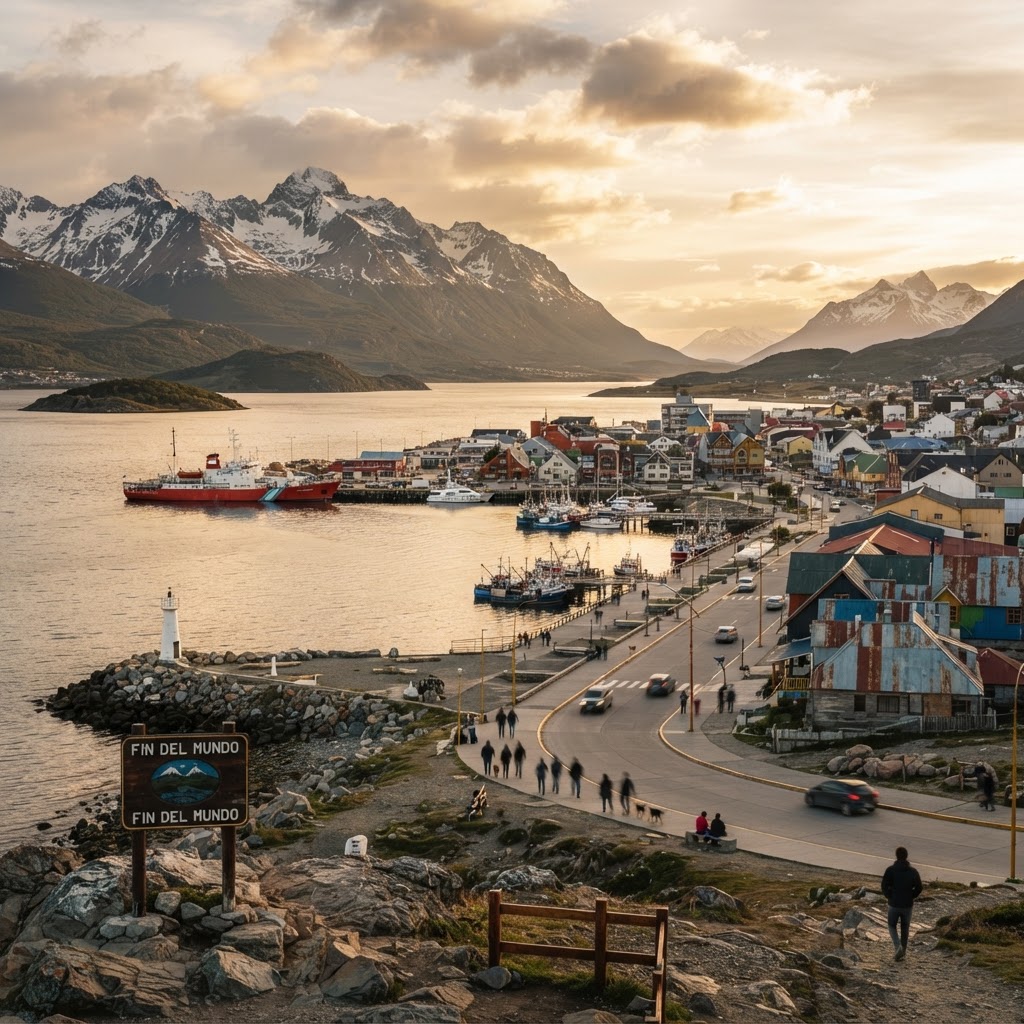
Perched between the razor-sharp Martial Mountains and the frigid expanse of the Beagle Channel, Ushuaia is both the bustling launchpad for Antarctica and a standalone wilderness hub at the edge of the inhabited world. It delivers raw subantarctic coastal forests, subpolar wildlife, and a distinctive frontier culinary scene built on King Crab and Patagonian lamb.
4 days
Best time
December through February for trekking and wildlife; April for flaming autumn foliage.
Build your own trip with these prebuilt itineraries
Each one is a tested, day-by-day plan for Ushuaia — start here, then make it yours.
5 Days in Ushuaia: Wild Fuegian Trekker in Ushuaia
Active subpolar trekking, glacial cirques, Laguna Esmeralda, and off-the-beaten-path Route 3 exploration
4 Days in Ushuaia: The Complete End of the World in Ushuaia
Classic balance of Tierra del Fuego National Park, Martillo Island penguin walks, and coastal navigation
2 Days in Ushuaia: Pre-Antarctica Highlights in Ushuaia
Express highlights, centolla dining, and Beagle Channel wildlife tailored for pre-cruise travelers
Ushuaia delivers a rare collision of subpolar ecosystems that do not exist elsewhere in South America: subantarctic beech forests running straight into glacial waterways, colonies of Gentoo and Magellanic penguins, and mountain cirques holding turquoise peat lakes within minutes of a working harbor town. Beyond its symbolic 'Fin del Mundo' geographic romance, it gives travelers direct access to the Beagle Channel's marine wildlife and Tierra del Fuego's peat-bog alpine hiking without requiring expedition cruises.
Where to stay
Getting there
Getting around
Food & drink
What it costs
Things to do
Book tours & tickets in UshuaiaSkip it if
Skip Ushuaia if you are pressed for time and already exploring the dramatic granite spires of El Chaltén or Torres del Paine; Ushuaia's mountains are gentler and the transit detour of two domestic flights will disproportionately cut into your trekking days. It is also unsuitable for travelers seeking warm-weather leisure or urban nightlife.
When to go
Summer grants 17 hours of daylight and active penguin rookeries, though you face premium lodging rates and wind. Shoulder months bring crisp stillness and vibrant red lenga forests, but temperatures drop toward freezing and boat excursions face higher cancellation risks.
Peak (December–February)
Daylight reaches 17 hours and gentoo/Magellanic penguins nest on Isla Martillo. Prices are highest and booking tours 4–8 weeks ahead is essential.
Shoulder (October–November & March–April)
October and November bring blooming flora with biting spring winds; late March through April offers fiery autumn lenga forests, thinner crowds, and lower room rates.
Low (May–September)
Short daylight hours and heavy snow. City touring contracts, but downhill skiing opens at Cerro Castor alongside Nordic skiing and dog-sledding in the valleys.
Neighborhoods
Where you stay shapes the trip. Here's how to think about it.
Centro & Avenida San Martín
Buzzing commercial spine lined with outdoor outfitters, chocolate shops, and king crab taverns against a backdrop of steep alleys.
Best for:First-timers, dining walkability, non-drivers
Don't miss:Browsing expedition gear and grabbing Fuegian spider crab dishes along Avenida San Martín and Maipú.
Puerto & Waterfront Strip
Maritime launchpad smelling of salt water and diesel, packed with tour kiosks, catamarans, and polar expedition vessels.
Best for:Antarctica passengers, day-cruise departures, morning walkers
Don't miss:The tourist pier (Muelle Turístico) for morning Beagle Channel navigation check-ins and the iconic Fin del Mundo sign.
Glaciar Martial Foothills / Luis Fernando Martial
Quiet alpine enclave set in subantarctic lenga forest above town with dramatic channel panoramas and brisk mountain air.
Best for:Hikers, upscale lodge travelers, nature seekers
Don't miss:Afternoon hot chocolate and pastry at Cabaña del Bosque teahouse before hitting the Martial Glacier trail.
Barrio La Misión & Bahia Encerrada
Peaceful coastal residential pocket framing a protected tidal lagoon rich in upland geese and waterfowl.
Best for:Birdwatchers, quiet stays, long-stay travelers
Don't miss:Walking the perimeter gravel trail of Reserva Natural Urbana Bahía Encerrada at dusk for waterbird sightings.
Destination intelligence
Updated 10/6/2026The structured record we plan every Ushuaia itinerary from.
Walkability
Moderate within the flat harbor strip; poor when ascending the steep mountain-facing streets without taxis.
Transit quality
Limited public buses; heavily reliant on remises, taxis, and scheduled tourist combis.
Car needed
Not required, but recommended for independent exploration along Route 3 and Estancia Harberton.
Ideal duration
4 days
Minimum useful
2 days
Peak season
December to February: longest daylight hours (up to 17 hours), active penguin colonies, bustling Antarctica cruise traffic, and peak tour pricing.
Shoulder season
October to November and March to April: stunning autumn foliage in lenga forests during April, lower hotel rates, but colder temperatures and variable excursions.
Low season
May to September: cold, dark, and snowy; attractions shift toward downhill skiing at Cerro Castor, dog-sledding, and winter snowshoeing.
Best for
Common mistakes
- Assuming all Beagle Channel boat tours allow you to step foot on penguin islands; only one operator (PiraTour) holds the license to walk on Isla Martillo, while standard catamarans only view from offshore.
- Failing to pack waterproof layers and thermal windproof outerwear even during summer; Fuegian squalls and cold winds develop within minutes.
- Booking lodging high in the hills above the town center without budgeting for taxis or renting a vehicle.
- Rushing through in a single overnight stopover before an Antarctica cruise, missing the day hikes in the national park and Laguna Esmeralda.
Best nearby
See what a trip to Argentina actually costs. Travel Budget Co.
How to plan it
- Stay within 3 blocks of Avenida San Martín if you do not want to hire a taxi every time you go out for dinner.
- Book the Isla Martillo penguin rookery walk months in advance; standard catamaran tours only view penguins from the boat deck.
- Do not cram Tierra del Fuego National Park and Laguna Esmeralda into the same day—both require 4 to 6 hours of walking and transit.
- If boarding an Antarctica expedition, arrive in Ushuaia at least 2 full days early to absorb frequent flight cancellations and delayed luggage out of Buenos Aires.
- Rent a car only on days you head east along Route 3 toward Paso Garibaldi, Lago Escondido, or Puerto Almanza.
Questions
More in Argentina
Readymade itineraries
Start from a tested template — then make it yours.
Ready to book
Lock in your Ushuaia trip
Everything in one place. We may earn a small commission — it never costs you more.
Plan a trip to Ushuaia
Pick a length and we'll build a day-by-day plan around how you travel — neighborhoods clustered, budget-aware, and editable.
Get better at planning trips like this
Occasional notes on planning smarter — no spam, unsubscribe anytime.
Plan a trip to Ushuaia
Turn this guide into a day-by-day plan built around your pace, your group, and your budget.
Build my Ushuaia trip