Argentina
El Chaltén
Argentina’s no-nonsense trekking frontier beneath the granite teeth of Fitz Roy.
Plan & book
Sort your El Chaltén trip in one place.
We point you to the booking tools we'd actually use — live prices, no markup. Or let us build the day-by-day plan around you first, then book.
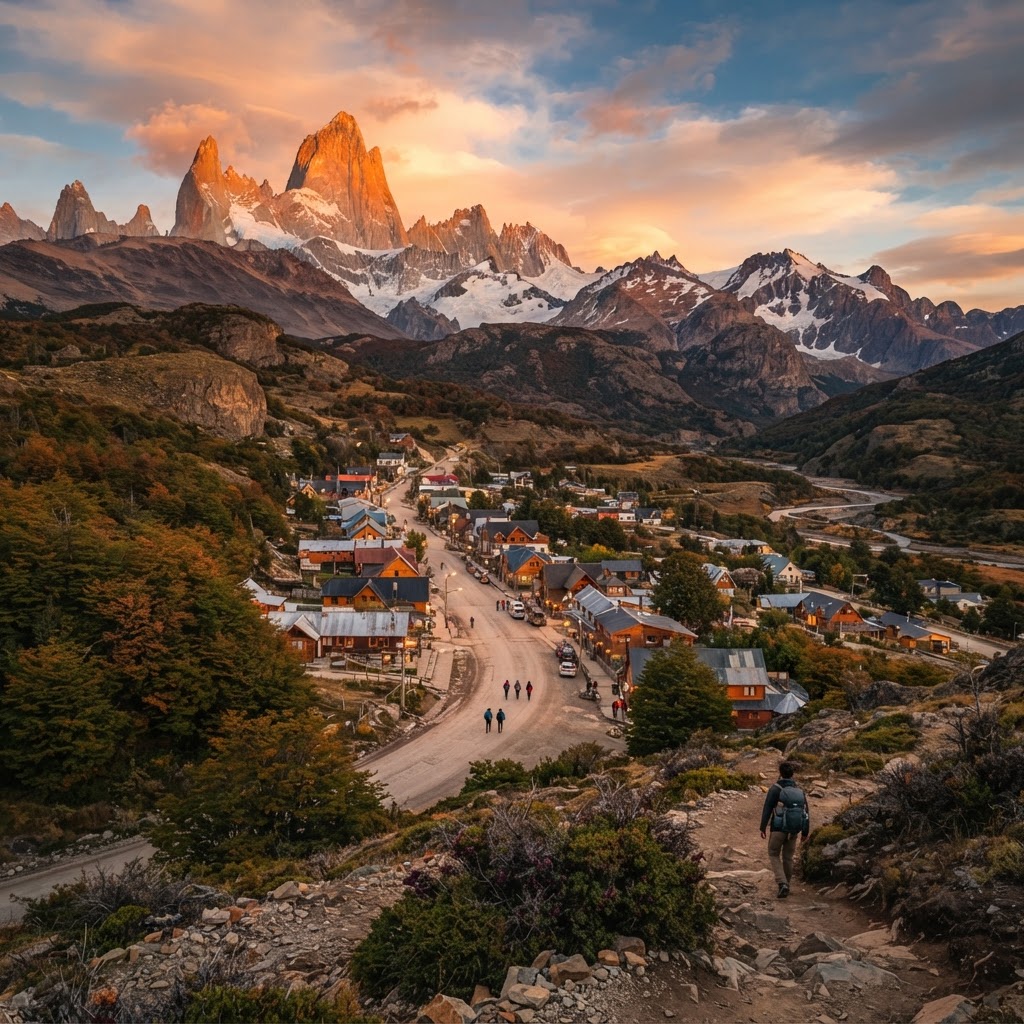
El Chaltén is a windswept mountain settlement tucked inside Parque Nacional Los Glaciares, engineered with a singular focus: trekking. Unlike sprawling gateway hubs, the town terminates directly at the trailheads, allowing you to walk out your front door straight onto world-class routes toward Mount Fitz Roy and Cerro Torre without taking a single tour bus. It trades urban polish for unpretentious microbreweries, clay-stained boots, unpredictable Andean squalls, and raw alpine drama.
4 to 5 days
Best time
Mid-February through late March delivers the sharpest balance of manageable winds, thinning crowds, and luminous autumn foliage.
Build your own trip with these prebuilt itineraries
Each one is a tested, day-by-day plan for El Chaltén — start here, then make it yours.
El Chaltén offers an almost unheard-of luxury in Patagonia: self-guided, zero-shuttle access to legendary mountain terrain. You step out of your lodge, cross a side street, and within twenty minutes you are climbing alpine valleys toward turquoise glacial tarns. The town’s tight-knit communal atmosphere revolves entirely around the mountains, creating a post-hike culture of artisan empanadas, craft beer, and shared trail intelligence that makes remote trekking exceptionally approachable.
Where to stay
Getting there
Getting around
Food & drink
What it costs
Things to do
Book tours & tickets in El ChalténSkip it if
Skip El Chaltén if you require urban infrastructure, resort amenities, reliable high-speed Wi-Fi, or cannot tolerate unpredictable gale-force weather. Travelers with significant mobility impairments will find activities limited, as the primary draw is strenuous backcountry day walking.
When to go
December and January offer the warmest temperatures and longest daylight, but they hit peak accommodation strain and severe gale-force winds exceeding 100 km/h. Visiting in late summer to early autumn softens the gusts, reduces foot traffic on the Laguna de los Tres trail, and avoids peak holiday room rates while keeping full trail access intact.
Peak (December to February)
Maximum daytime warmth (15–20°C) and 16 hours of light, counterbalanced by brutal winds, packed trails, and lodging that books out months ahead.
Shoulder (October to November & March to April)
March and April bring flaming red lenga forests and calmer skies, though early autumn snow is possible; spring (October/November) is quiet but trail muddy and services just waking up.
Low (May to September)
Most restaurants, hotels, and transport links shutter; heavy snow covers alpine routes, and the village retreats into sub-zero winter dormancy.
Destination intelligence
Updated 9/14/2026The structured record we plan every El Chaltén itinerary from.
Walkability
exceptional
Transit quality
low
Car needed
no
Ideal duration
4 to 5 days
Minimum useful
2 days
Peak season
December to February
Shoulder season
October to November and March to April
Low season
May to September
Best for
Common mistakes
- Treating it as a quick day trip from El Calafate, spending 6+ hours on a bus for a rushed, sub-optimal walk.
- Failing to budget spare weather buffer days; Patagonian squalls frequently hide the massifs behind dense cloud and 80 km/h gusts.
- Relying on digital connectivity; cellular service and Wi-Fi across the village are notoriously slow and intermittently drop out.
- Not bringing sufficient cash backup, as local ATMs frequently run out of bills during peak season weeks.
- Starting long day hikes after 10:00 AM in high summer, resulting in congested single-track climbs on the final moraine to Laguna de los Tres.
Best nearby
See what a trip to Argentina actually costs. Travel Budget Co.
How to plan it
- Never commit your hiking days to a rigid calendar order; consult the wind and cloud forecasts each evening and assign your clearest morning to Laguna de los Tres.
- Pair El Chaltén with El Calafate by treating Calafate strictly as a 24-to-48-hour transit hub for the Perito Moreno catwalks before heading straight north on Ruta 40.
- Take an early morning private transfer or taxi to Hostería El Pilar to hike Laguna de los Tres as a point-to-point through Piedras Blancas Glacier, returning to town via the main trailhead instead of an out-and-back slog.
- Start high-mileage hikes by 6:30 AM to beat the mid-day bus tour crowds and give yourself sufficient daylight before unpredictable Andean dusk winds kick up.
- Reserve your return bus transfer to El Calafate airport or town immediately upon arrival at the Chaltén terminal to avoid getting stranded behind outbound trekking groups.
Questions
Readymade itineraries
Start from a tested template — then make it yours.
Ready to book
Lock in your El Chaltén trip
Everything in one place. We may earn a small commission — it never costs you more.
Plan a trip to El Chaltén
Pick a length and we'll build a day-by-day plan around how you travel — neighborhoods clustered, budget-aware, and editable.
Get better at planning trips like this
Occasional notes on planning smarter — no spam, unsubscribe anytime.
Plan a trip to El Chaltén
Turn this guide into a day-by-day plan built around your pace, your group, and your budget.
Build my El Chaltén trip