Australia
Uluru & Alice Springs, Red Centre
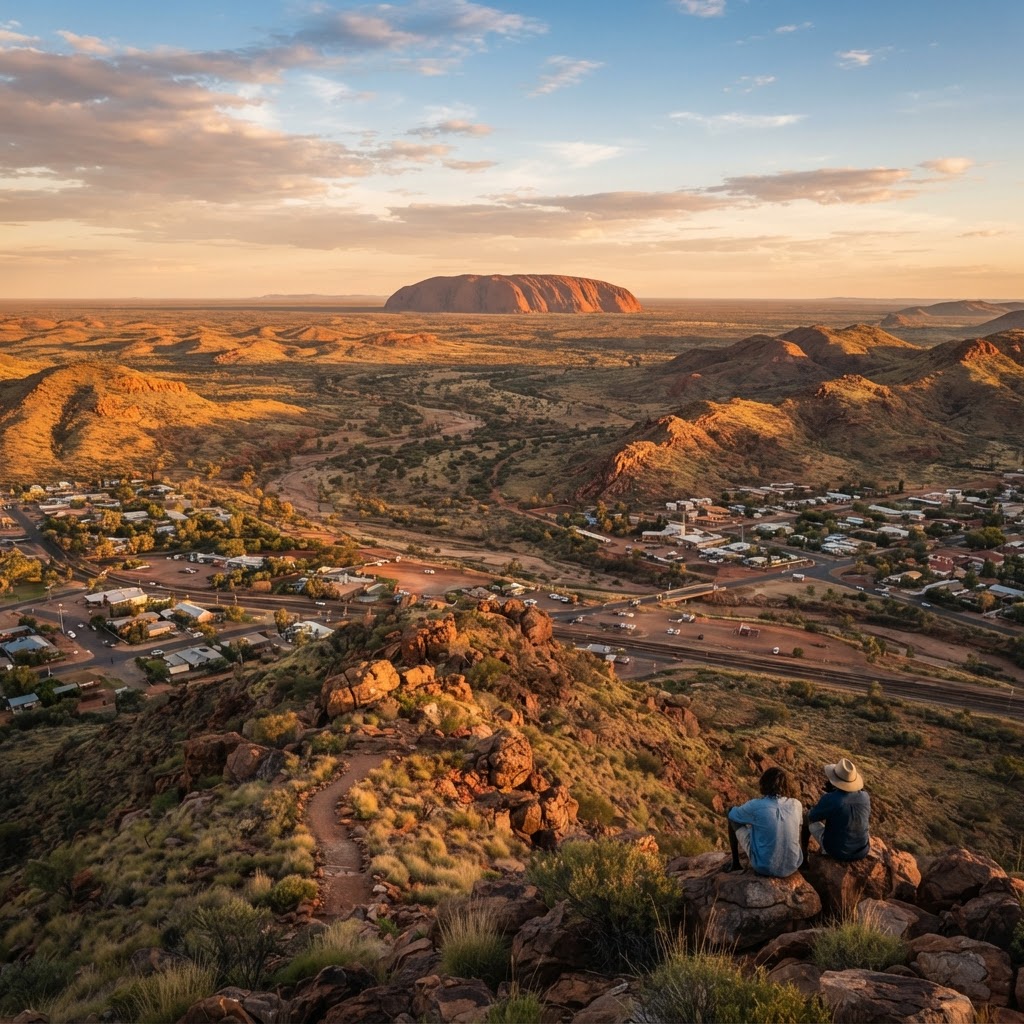
Ancient sandstone monoliths, living Aboriginal culture, and vast desert horizons across Australia’s Red Centre.
Plan & book
Sort your Uluru & Alice Springs, Red Centre trip in one place.
We point you to the booking tools we'd actually use — live prices, no markup. Or let us build the day-by-day plan around you first, then book.
The Red Centre is defined by vast red dunes, spinifex plains, and dramatic geological formations, anchored by Alice Springs and the sacred monoliths of Uluṟu-Kata Tjuṯa National Park. Connected by 450 kilometers of sealed desert highway across the Stuart and Lasseter routes, these two hubs serve distinct purposes: Alice Springs offers galleries, pioneer history, and dramatic desert gaps in the MacDonnell Ranges, while Yulara provides resort infrastructure right on the doorstep of Uluru and Kata Tjuta.
5 to 7 days
Best time
May to September provides crisp blue-sky days, minimal flies, and comfortable walking temperatures under 28°C (82°F).
Build your own trip with these prebuilt itineraries
Each one is a tested, day-by-day plan for Uluru & Alice Springs, Red Centre — start here, then make it yours.
8 Days: Outback Rugged Hikes and Astro Trails in Uluru/Alice Springs
Active adventure focused on rim walks, desert photography, night skies, and remote gorges
6 Days: Red Centre Way Classic Road Trip in Uluru/Alice Springs
Classic outback driving loop connecting Alice Springs, the West MacDonnell Ranges, Kings Canyon, and Uluru
4 Days: The Red Centre Sacred Sites in Uluru/Alice Springs
Fly-in fly-out highlight immersion focused on Uluru, Kata Tjuta, and Anangu cultural storytelling
Experiencing the spiritual gravitas and sheer scale of Uluru and Kata Tjuta in person cannot be matched by photographs. Visiting provides direct engagement with the living culture of the Anangu custodians, incredible desert walking circuits like the Valley of the Winds, and the West MacDonnell Ranges' ancient gorges and waterholes.
Where to stay
Getting there
Getting around
Food & drink
What it costs
Skip it if
Skip it if you have severe mobility limitations that prevent gentle walking, cannot handle extreme dry desert heat or freezing winter nights, or are looking for bustling beach culture and late-night nightlife.
When to go
Winter and late autumn eliminate dangerously high desert heat, allowing full access to extended walking tracks like the Uluru Base Walk and Valley of the Winds. The tradeoff is cold desert nights plunging near freezing and premium lodging rates driven by domestic school holidays in July.
Peak (June to August)
Pleasant daytime temperatures (18°C–23°C / 64°F–73°F) and crisp nights. Expect high resort prices, fully booked hire cars, and mandatory layers for dawn viewing.
Shoulder (April to May & September to October)
Warmer conditions (25°C–32°C / 77°F–90°F) with moderate rates. September brings desert wildflowers, while spring flies start to require head nets.
Low (November to March)
Extreme desert heat regularly topping 38°C (100°F). Walking tracks often close by 11:00 AM for thermal safety, though accommodation drops and summer thunderstorms can produce rare waterfalls off Uluru.
Neighborhoods
Where you stay shapes the trip. Here's how to think about it.
Yulara (Ayers Rock Resort)
Self-contained, purpose-built desert resort village with manicured red dust perimeters, eucalyptus trees, and shuttle-linked hotels.
Best for:First-time Uluru visitors, families, and travelers prioritizing sunrise proximity over wilderness isolation
Don't miss:The lookout platform at the town square for distant sunset views before grabbing supplies at the local IGA supermarket.
Alice Springs CBD & Todd Mall
Outback municipal grid featuring low-rise frontier architecture, leafy cafe terraces, and indigenous art emporiums.
Best for:Culture seekers, gallery hoppers, and independent road-trippers staging desert departures
Don't miss:Browsing ethically sourced Western Desert paintings along Todd Mall, followed by local coffee at Page 27 Cafe.
East Side (Alice Springs)
Relaxed residential fringe tucked against dramatic red sandstone ridges, walking paths, and historic installations.
Best for:Quiet stays, independent travelers wanting space, and heritage buffs
Don't miss:A stroll along the dry Todd River bed toward the Old Telegraph Station Reserve to explore the original overland relay site.
Watarrka / Kings Canyon Hub
Sparse, remote desert outpost anchored entirely by canyon-view lodges and campground fire pits.
Best for:Hikers, road-trippers breaking up the Alice-to-Uluru drive, and dawn walkers
Don't miss:A pre-dawn start on the steep initial staircase of the 6km Kings Canyon Rim Walk before the midday sun hits the plateau.
Destination intelligence
Updated 9/14/2026The structured record we plan every Uluru & Alice Springs, Red Centre itinerary from.
Walkability
Low. Sprawling desert geography demands vehicle transport or organized excursions outside of compact hotel compounds.
Transit quality
Limited. Public local transit is nonexistent outside of Yulara's internal hotel shuttles and scheduled regional long-distance coaches.
Car needed
Yes. A 2WD is sufficient for sealed highways; a 4WD is only necessary if driving unpaved tracks like the Mereenie Loop or Palm Valley.
Ideal duration
5 to 7 days
Minimum useful
3 days
Peak season
June to August (Winter)
Shoulder season
April to May and September to October
Low season
November to March (Summer)
Best for
Common mistakes
- Underestimating the 450 km distance between Alice Springs and Uluru and assuming it is a quick morning day trip.
- Driving rural highways at dusk or dawn when collisions with kangaroos, cattle, and wild camels are frequent.
- Failing to purchase a fly head net and insect repellent between spring and autumn.
- Attempting long unshaded hikes during midday heat when trails are shut down by park rangers above 36°C.
Best nearby
See what a trip to Australia actually costs. Travel Budget Co.
How to plan it
- Book an open-jaw flight into Alice Springs (ASP) and out of Ayers Rock Airport (AYQ)—or the reverse—to eliminate an empty 450km backtrack drive across the Stuart Highway.
- Do not attempt Kings Canyon as a day trip from Uluru; break the transit with an overnight stay at Kings Canyon Resort so you can complete the 6km Rim Walk at dawn before exposed sandstone heats up.
- Schedule your Uluru Base Walk for first light; starting at Mala Carpark right at dawn lets you finish the flat 10km circuit before midday sun and surface glare set in.
- Purchase your mandatory Uluru-Kata Tjuta National Park digital pass online prior to boarding your flight to avoid bottlenecks at the park entry gate on your first afternoon.
- Allocate an entire morning specifically to Kata Tjuta's Valley of the Winds track; its steep rocky terrain requires sturdier footwear and more hydration than the flat paths around Uluru.
Questions
More in Australia
Darwin & Kakadu
Australia
Ancient sandstone floodplains, saltie territory, and balmy tropical open-air nights.

Port Douglas, Queensland
Australia
The sophisticated launchpad where the ancient Daintree meets the outer Great Barrier Reef.
Readymade itineraries
Start from a tested template — then make it yours.
Ready to book
Lock in your Uluru & Alice Springs, Red Centre trip
Everything in one place. We may earn a small commission — it never costs you more.
Plan a trip to Uluru & Alice Springs, Red Centre
Pick a length and we'll build a day-by-day plan around how you travel — neighborhoods clustered, budget-aware, and editable.
Get better at planning trips like this
Occasional notes on planning smarter — no spam, unsubscribe anytime.
Plan a trip to Uluru & Alice Springs, Red Centre
Turn this guide into a day-by-day plan built around your pace, your group, and your budget.
Build my Uluru & Alice Springs, Red Centre trip