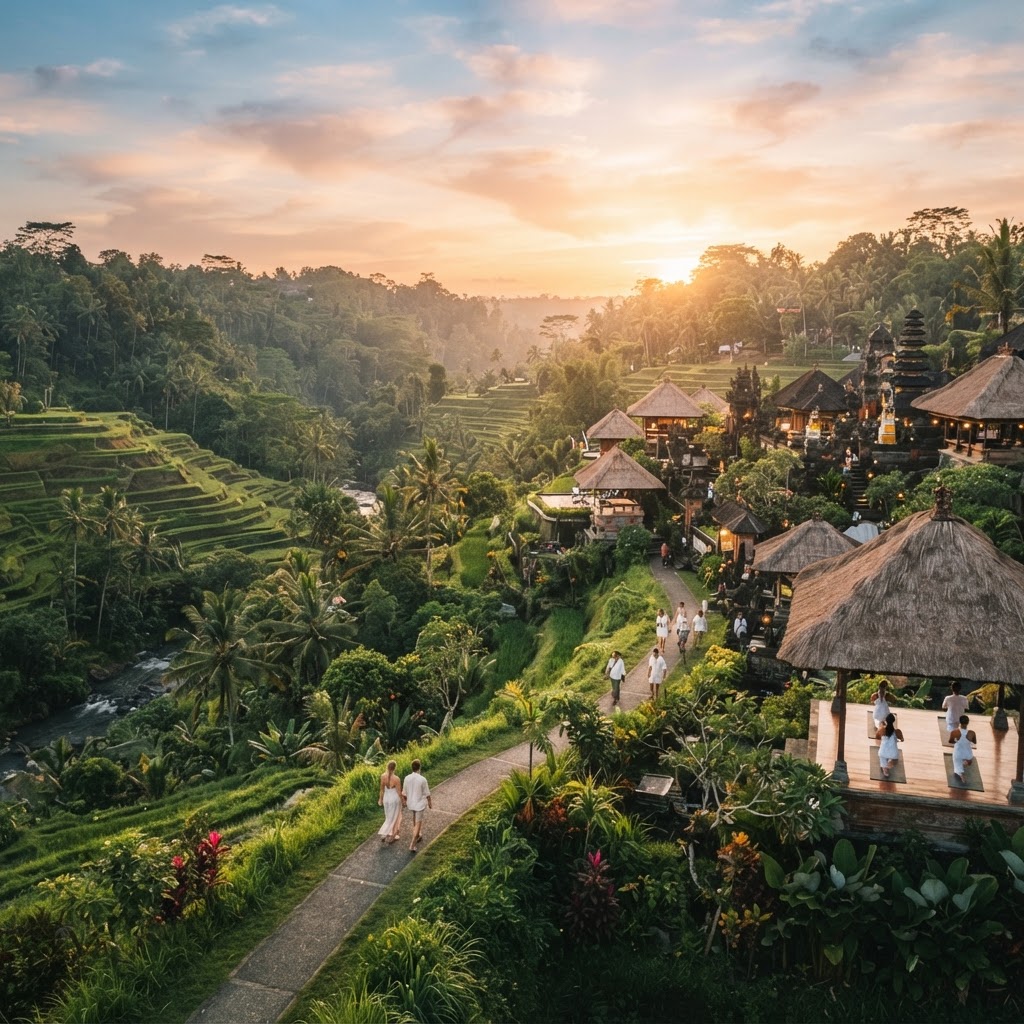
Indonesia
Ubud
Terraced ravines, living Balinese spirituality, and a thriving wellness sanctuary
Plan & book
Sort your Ubud trip in one place.
We point you to the booking tools we'd actually use — live prices, no markup. Or let us build the day-by-day plan around you first, then book.
Set in the central uplands of Bali, Ubud is the cultural and wellness fulcrum of the island. While its central crossroads now contend with heavy scooter congestion and commercial storefronts, the real soul of Ubud thrives in its river ravines, lush subak irrigation fields, traditional artisan family compounds, and world-class organic dining.
4 to 5 days
Best time
May to June and September to October deliver the best balance of clear skies, lower humidity, and bearable trail traffic.
Build your own trip with these prebuilt itineraries
Each one is a tested, day-by-day plan for Ubud — start here, then make it yours.
5 Days in Ubud: Holistic Wellness and Forest Retreat in Ubud
Slow-paced restorative journey centered around sunrise ridge walks, holistic spa rituals, secluded jungle villas, and mindful yoga practices
4 Days in Ubud: Culture and Jungle Classics in Ubud
First-time essential immersion covering heritage temples, artisan craft villages, river valleys, and private driver day trips without midday rush
3 Days in Ubud: Farm-to-Table and Culinary Heritage in Ubud
Gastronomic exploration focused on market-sourced Balinese cooking classes, organic agrarian cooperatives, and award-winning valley dining
Ubud offers an essential counterweight to Bali's southern beach towns, providing deep exposure to Balinese Hindu architecture, traditional craft villages, river-valley landscape architecture, and a culinary scene centered on plant-forward and heritage Indonesian dining.
Where to stay
Getting there
Getting around
Food & drink
What it costs
Things to do
Book tours & tickets in UbudSkip it if
Skip Ubud if your Bali trip revolves around immediate beachfront access, coastal sunset nightlife, or walkable modern metropolitan infrastructure free of traffic.
When to go
Peak dry months (July and August) bring clear skies and cool breezes but also gridlock traffic on Jalan Raya Ubud and peak villa pricing. The shoulder windows keep the mountain rain away while freeing up walking paths and prime dining tables.
Peak (July–August & late December)
Expect clear, dry mountain days, cooler nights, packed temple pathways, and top-tier lodging rates requiring months of forward planning.
Shoulder (April–June & September–October)
Optimal travel window: minimal rainfall, lush green rice fields, manageable vehicle flow, and good availability across boutique valley retreats.
Low (November–March)
Frequent afternoon tropical cloudbursts, elevated humidity, and muddy rice paths, offset by whisper-quiet temple courtyards and deep villa discounts.
Neighborhoods
Where you stay shapes the trip. Here's how to think about it.
Central Ubud (Ubud Town)
Congested heritage hub packed with stone temples, busy boutique lanes, and dense scooter traffic.
Best for:First-timers, short stays, and travelers who want walkable access to dining and sights without hiring wheels.
Don't miss:The quiet courtyard pavilions of Puri Saren Agung (Ubud Palace) and Pura Taman Saraswati before the midday tour buses arrive.
Penestanan
Narrow stepped alleyways, lush hillside footpaths, artist studios, and expat-driven vegan cafes just west of the gorge.
Best for:Longer stays, wellness travelers, and anyone wanting a village neighborhood unreachable by car.
Don't miss:Walking the paved rice trails through yellow-flower gardens and stopping for cold-pressed juice at Yellow Flower Cafe.
Sayan
Dramatic ridge-line luxury perched high above the roaring Ayung River, wrapped in deep primary jungle canopy.
Best for:Couples, honeymooners, and luxury retreat seekers who prioritize river ravine seclusion over street life.
Don't miss:A sunset drink along the Sayan ridge overlooking the river valley mist at Amandari or Four Seasons Sayan.
Nyuh Kuning
Serene traditional village layout shaded by ancient banyan trees directly south of the Sacred Monkey Forest.
Best for:Families and travelers who desire quiet, sidewalk-equipped residential streets within walking distance of the core.
Don't miss:Catching an afternoon gamelan rehearsal at the central banjar (community pavilion) along Jalan Nyuh Bojog.
Tegallalang & Keliki (North Ubud)
Rural terraced landscapes, master craft carving workshops, and secluded bamboo estates amidst working subak waterways.
Best for:Nature photographers, craft collectors, and anyone looking to unplug entirely from tourist commerce.
Don't miss:Early morning walks along the lesser-trodden upper tiers of the Tegallalang valley before the tour-bus zip lines open.
Destination intelligence
Updated 9/14/2026The structured record we plan every Ubud itinerary from.
Walkability
Low to Moderate. Central village streets possess usable sidewalks, but outer ridges, valley resorts, and scenic rice trails lack lighting and continuous pedestrian paths.
Transit quality
None. There is no reliable municipal public transit network in Ubud.
Car needed
No for self-driving (not recommended due to navigation and road hazards); yes for hiring a private car with a dedicated local driver for excursions.
Ideal duration
4 to 5 days
Minimum useful
3 days
Peak season
July through August and late December holidays; dry, cooler breezes but maximum crowds and high accommodation rates.
Shoulder season
April to June and September to October; optimal balance of sunny days, manageable crowds, and better villa availability.
Low season
November through March; rainy season characterized by tropical downpours, high humidity, and lush landscapes with lowest lodging pricing.
Best for
Common mistakes
- Visiting Ubud as a rushed 6-hour day trip from Seminyak or Canggu trapped in peak midday traffic
- Carrying exposed food, plastic bottles, or loose sunglasses inside the Sacred Monkey Forest Sanctuary
- Renting a scooter without proper licensing, motorcycle experience, or comfort negotiating unpaved alleyways and traffic gridlocks
- Visiting crowded roadside swing attractions and captive civet luwak coffee farms instead of authentic agrarian cooperative estates
- Underestimating travel times between Ubud and northern mountain or eastern water temple sites
Best nearby
See what a trip to Indonesia actually costs. Travel Budget Co.
How to plan it
- Stay in Central Ubud or Nyuh Kuning if you want to walk to dinner; choose Sayan or Penestanan only if you are content relying on resort shuttles or private drivers.
- Do not pair Tegallalang rice terraces, Tirta Empul, and the Sacred Monkey Forest on the same day—heat, humidity, and uphill walking will drain your energy by 1:00 PM.
- Reserve destination dinners like Locavore NXT or Room4Dessert at least 4 to 6 weeks ahead; walk-ins during peak dry season are virtually nonexistent.
- Tackle the Campuhan Ridge Walk or Tegallalang strictly between 6:30 AM and 8:00 AM to beat midday equatorial heat and tour bus arrivals.
- Pair 4 nights in Ubud with 3 nights on the coast (such as Uluwatu or Sanur) rather than doing Ubud as an exhausting day trip from south Bali.
Questions
More in Indonesia
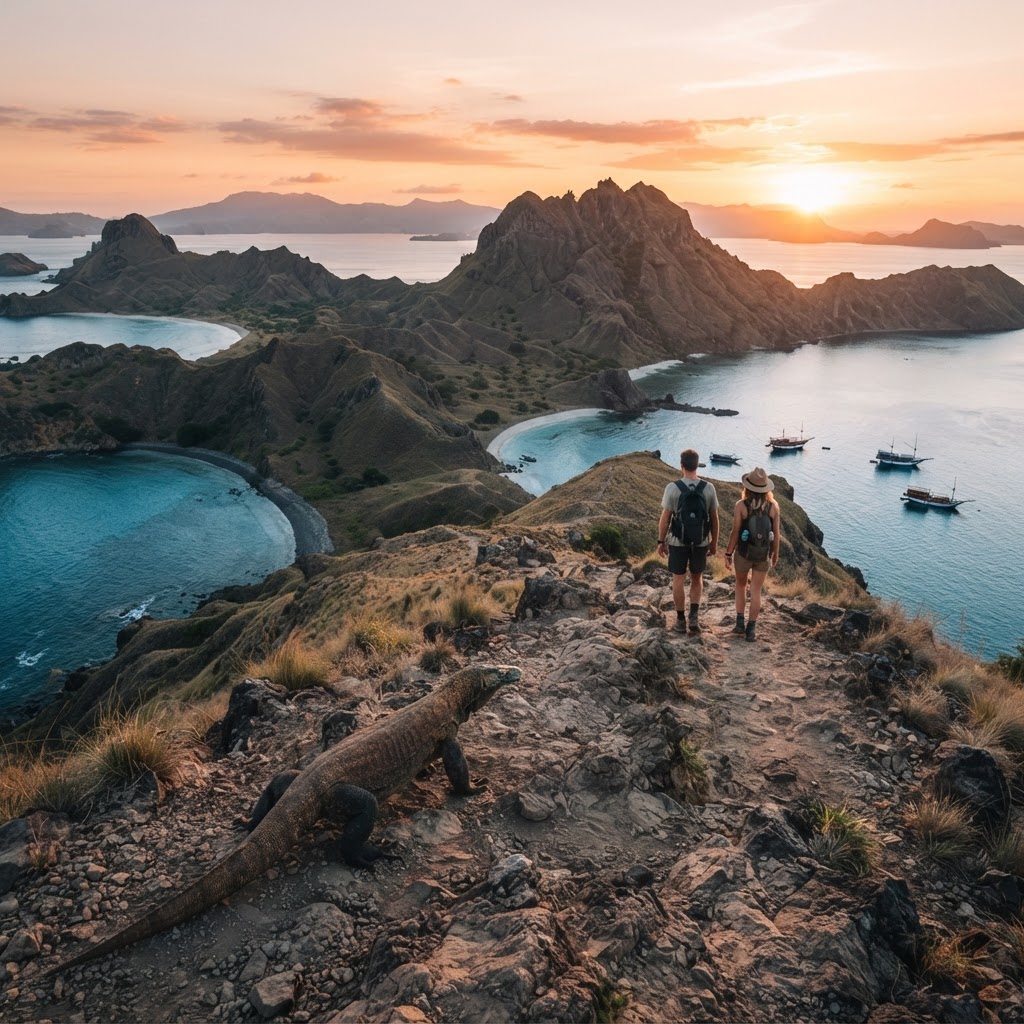
Flores
Indonesia
Volcanic ridges, prehistoric dragons, and the rugged gateway to Komodo
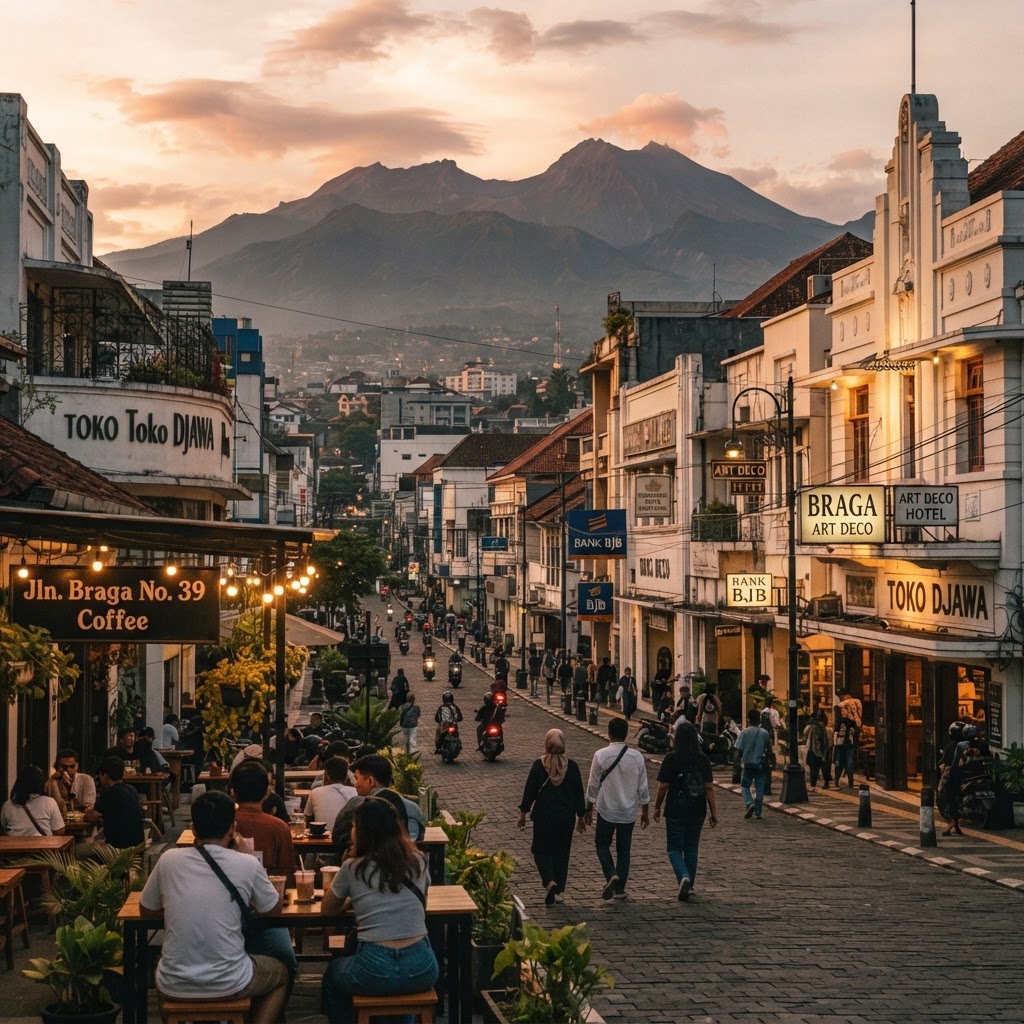
Bandung
Indonesia
Volcanic craters, Dutch Art Deco boulevards, and Java's coolest highland cafe culture
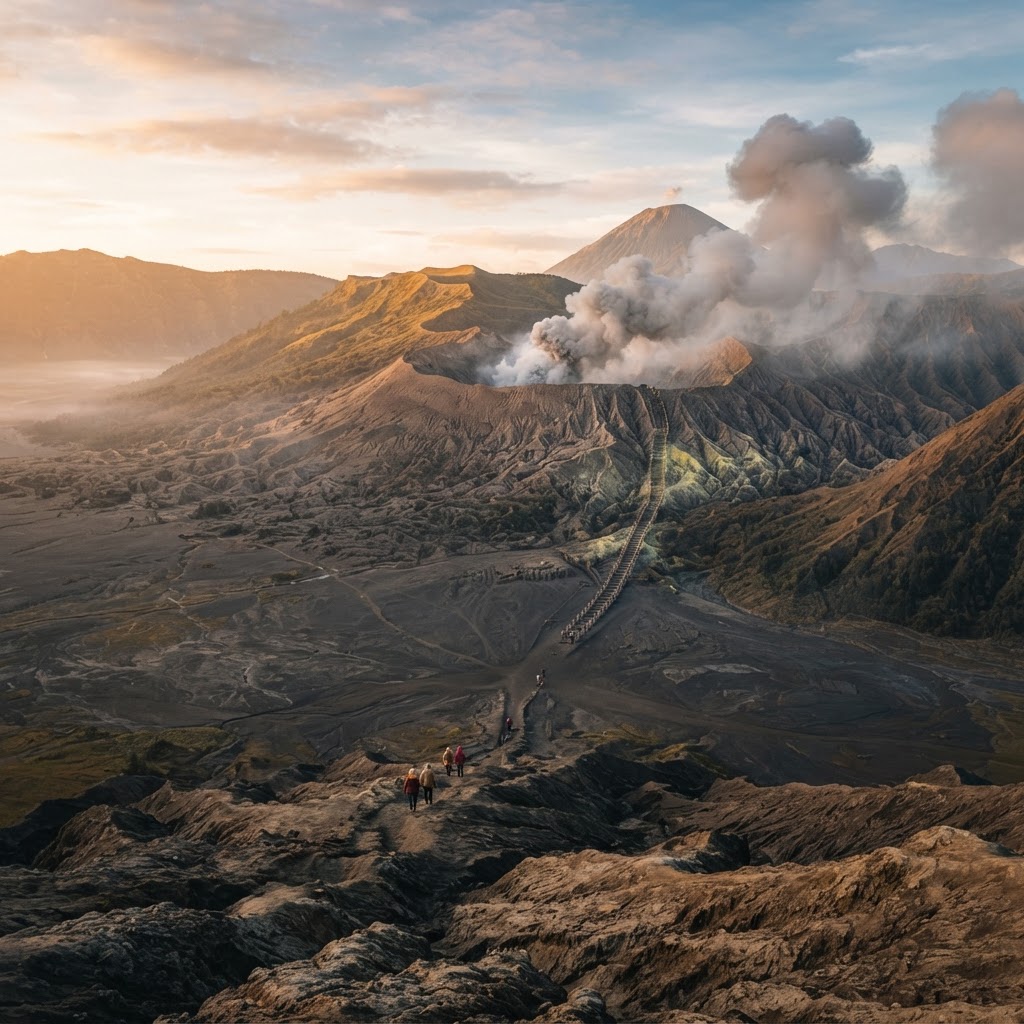
Mount Bromo, East Java, Indonesia
Indonesia
An otherworldly caldera crossing with direct access to a roaring volcanic crater.
Readymade itineraries
Start from a tested template — then make it yours.
Ready to book
Lock in your Ubud trip
Everything in one place. We may earn a small commission — it never costs you more.
Plan a trip to Ubud
Pick a length and we'll build a day-by-day plan around how you travel — neighborhoods clustered, budget-aware, and editable.
Get better at planning trips like this
Occasional notes on planning smarter — no spam, unsubscribe anytime.
Plan a trip to Ubud
Turn this guide into a day-by-day plan built around your pace, your group, and your budget.
Build my Ubud trip