Indonesia
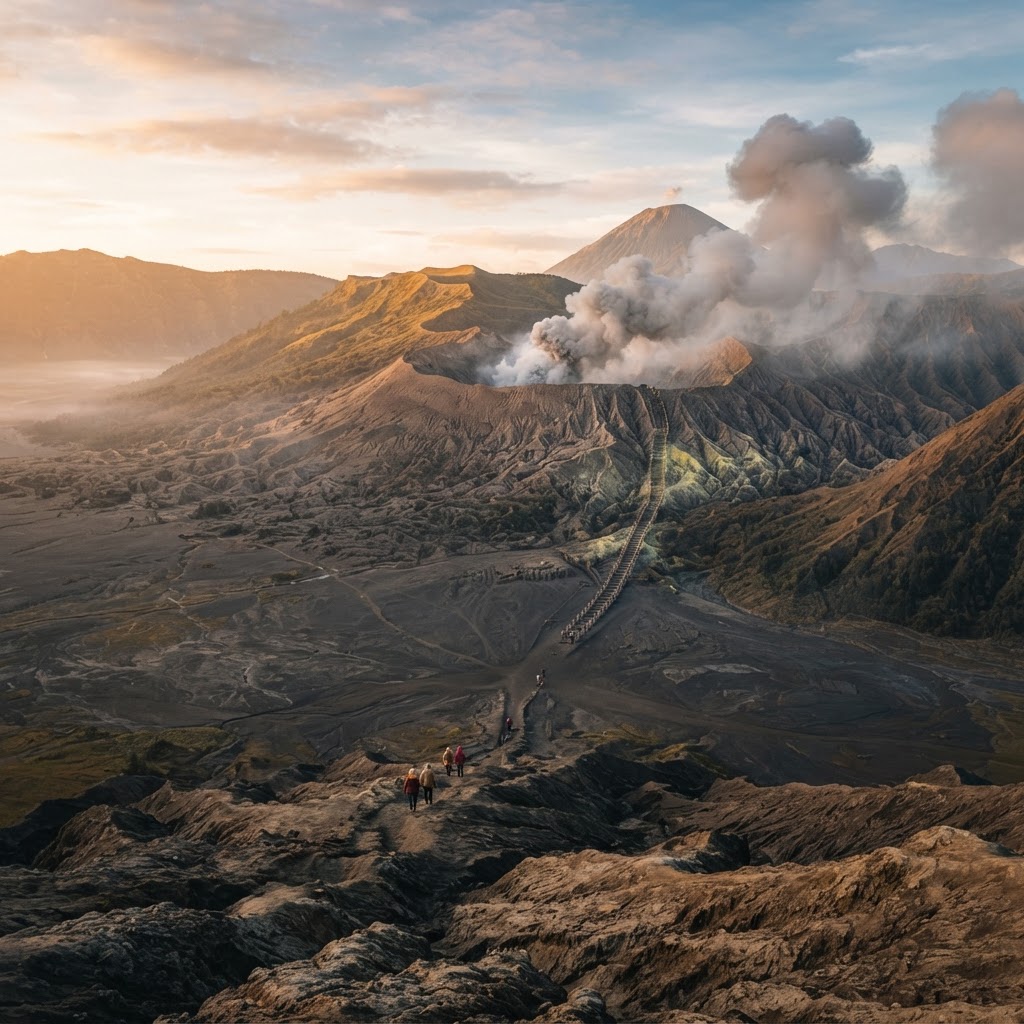
Mount Bromo, East Java, Indonesia
An otherworldly caldera crossing with direct access to a roaring volcanic crater.
Plan & book
Sort your Mount Bromo, East Java, Indonesia trip in one place.
We point you to the booking tools we'd actually use — live prices, no markup. Or let us build the day-by-day plan around you first, then book.
Perched inside the ancient Tengger caldera within Bromo Tengger Semeru National Park, Mount Bromo (Gunung Bromo) is one of Southeast Asia's most visually arresting geological sights. Unlike high-altitude stratovolcanoes that demand multi-day expeditions, Bromo delivers an active volcanic vent, an expansive sea of ash and sand, and early morning viewpoints reachable in a matter of hours. Whether approached as an intense midnight overland dash from Surabaya or Malang, or at a measured pace by staying directly on the caldera rim in Cemoro Lawang, the landscape feels starkly lunar, grounded in the living rituals and culture of the indigenous Hindu Tengger community.
2 nights / 3 days
Best time
May to September during the Southeast Asian dry monsoon.
Build your own trip with these prebuilt itineraries
Each one is a tested, day-by-day plan for Mount Bromo, East Java, Indonesia — start here, then make it yours.
5 Days Overland: Mount Bromo, Madakaripura & East Java Volcanoes in Mount Bromo
Extended regional road trip linking Bromo's caldera with Madakaripura Waterfall, Malang's highland culture, and the blue sulfur flames of Mount Ijen.
3 Days in Mount Bromo: Photography & Volcanic Caldera Trekking in Mount Bromo
Slower-paced active adventure focused on astrophotography, uncrowded alternative ridge walks, and hiking Seruni Point to King Kong Hill.
2 Days in Mount Bromo: Classic Sunrise & Crater Highlights in Mount Bromo
First-timer caldera discovery covering the essential sunrise viewpoints, Sea of Sand traverse, and the crater rim hike via 4WD jeep.
Bromo offers direct proximity to an active crater without requiring technical mountaineering. After an early morning vantage overlooking the sun rising across Mount Batok and Semeru, visitors cross the massive Lautan Pasir (Sea of Sand) and climb a concrete staircase directly onto the crater lip, peering into a rumbling, sulfurous maw.
Where to stay
Getting there
Getting around
Food & drink
What it costs
Skip it if
Skip Bromo if you suffer from severe respiratory conditions or asthma, as airborne volcanic ash and heavy sulfuric gases at the crater rim are pervasive. Travelers with significant knee or mobility impairments will struggle with the loose ash terrain, steep steps, and jarring 4WD rides. Those demanding guaranteed luxury hospitality right on the rim should also bypass staying in Cemoro Lawang, opting instead for day journeys or distant resorts.
When to go
Clear night skies and low rain probability provide crisp caldera sunrises and manageable hiking conditions on loose ash trails. The tradeoff is bone-chilling pre-dawn temperatures near freezing and substantial domestic weekend crowds across the main viewpoints.
Dry Season (May to September)
Crisp morning visibility, minimal rain, and spectacular sunrises over Mount Batok, but viewpoints like King Kong Hill are jammed with 4WD jeeps.
Shoulder (April & October)
Lighter trail footfall and moderate morning temperatures, though occasional afternoon mountain clouds or scattered showers can roll across the caldera.
Wet Season (November to March)
Frequent torrential downpours, slippery volcanic ash tracks, and heavy morning fog that frequently obscures the entire caldera panorama.
Neighborhoods
Where you stay shapes the trip. Here's how to think about it.
Cemoro Lawang
Rustic highland clifftop perched on the direct lip of the Tengger caldera.
Best for:Independent hikers, photographers wanting foot access to the crater rim, and early risers skipping long jeep transfers
Don't miss:The cliffside walking trail behind Cemara Indah Hotel dropping straight down into the Sea of Sand
Ngadisari & Sukapura
Agricultural mountain foothills dotted with cabbage patches, switchbacks, and slightly more modern lodges.
Best for:Travelers prioritizing reliable hot water and quieter sleep over clifftop walking proximity
Don't miss:Stopping for warm fried bananas (pisang goreng) at the hillside warungs lining Jalan Raya Bromo
Tosari & Wonokitri
Quiet, less commercialized northwestern Tengger villages accessed via Pasuruan.
Best for:Travelers seeking upscale lodgings, peaceful Hindu cultural immersion, and direct back-route access to King Kong Hill
Don't miss:The morning mist lifting over the traditional tiered farmland terraces outside Wonokitri village
Probolinggo
Sprawling, humid transit junction between the mainline railway and coastal highway.
Best for:Budget rail transfers needing a practical overnight before an early morning ascent
Don't miss:Catching the punctual executive train connection at Probolinggo Railway Station instead of haggling with terminal touts
Destination intelligence
Updated 9/14/2026The structured record we plan every Mount Bromo, East Java, Indonesia itinerary from.
Walkability
Low. The village of Cemoro Lawang is walkable on foot, but traversing the caldera, ascending to high sunrise platforms, and crossing the sand plain require 4WD transport or extended multi-hour hikes across loose volcanic ash.
Transit quality
Low. There is no municipal transit network. Public transit is limited to irregular local yellow bemos running from Probolinggo to Cemoro Lawang; all caldera transit relies on organized 4WD jeeps, motorbikes, or private tour vehicles.
Car needed
Yes. A licensed 4WD vehicle with an authorized local driver is required to enter the sea of sand and reach the main sunrise viewpoint access roads.
Ideal duration
2 nights / 3 days
Minimum useful
1 night / 2 days (or a rigorous midnight day-tour from Malang/Surabaya)
Peak season
June through August, bringing clear skies, dry trail conditions, the coldest morning temperatures, and peak domestic and international holiday crowds.
Shoulder season
April to May and September to October, offering crisp views, moderate weather, and substantially thinner crowds before or after the dry monsoon.
Low season
November through March, characterized by frequent monsoon rains, muddy tracks, heavy cloud clover that frequently obscures sunrise views, and active crater fog.
Best for
Common mistakes
- Underestimating highland temperatures; dawn temperatures regularly dip near 0°C to 5°C with freezing winds, catching travelers in tropical beachwear unprepared
- Doing a midnight day-trip from Surabaya with zero sleep, which results in extreme fatigue before the crater rim climb even begins
- Booking the mass-tourist platform at Penanjakan 1 instead of lower, less chaotic foot-accessible spots like King Kong Hill or Seruni Point
- Renting an uncertified scooter or standard two-wheel-drive vehicle to drive into the treacherous volcanic sand plains where vehicles routinely sink
- Skipping dust and sulfur protection; failing to bring an N95 mask or sunglasses leaves your respiratory tract and eyes vulnerable to swirling volcanic ash
Best nearby
See what a trip to Indonesia actually costs. Travel Budget Co.
How to plan it
- Base yourself in Cemoro Lawang if you want the freedom to step right out of your guesthouse door onto the crater trails without midnight jeep transfers.
- Pair Mount Bromo with the turquoise acid lake of Mount Ijen and the multi-tiered cascades of Madakaripura Waterfall for a classic East Java overland route.
- Don't rush to the crater rim at 6:00 AM immediately after sunrise with the Jeep convoy; wait until 8:30 AM when tour buses clear out and you can enjoy the crater rim with a fraction of the crowds.
- Book your national park quota ticket online via the official BBTNBTS booking portal before arriving, especially for weekend visits.
- Choose King Kong Hill or Seruni Point over Penanjakan 1 if you want slightly less vehicular chaos while retaining the classic alignment of Bromo, Batok, and Semeru.
Questions
More in Indonesia
Flores
Indonesia
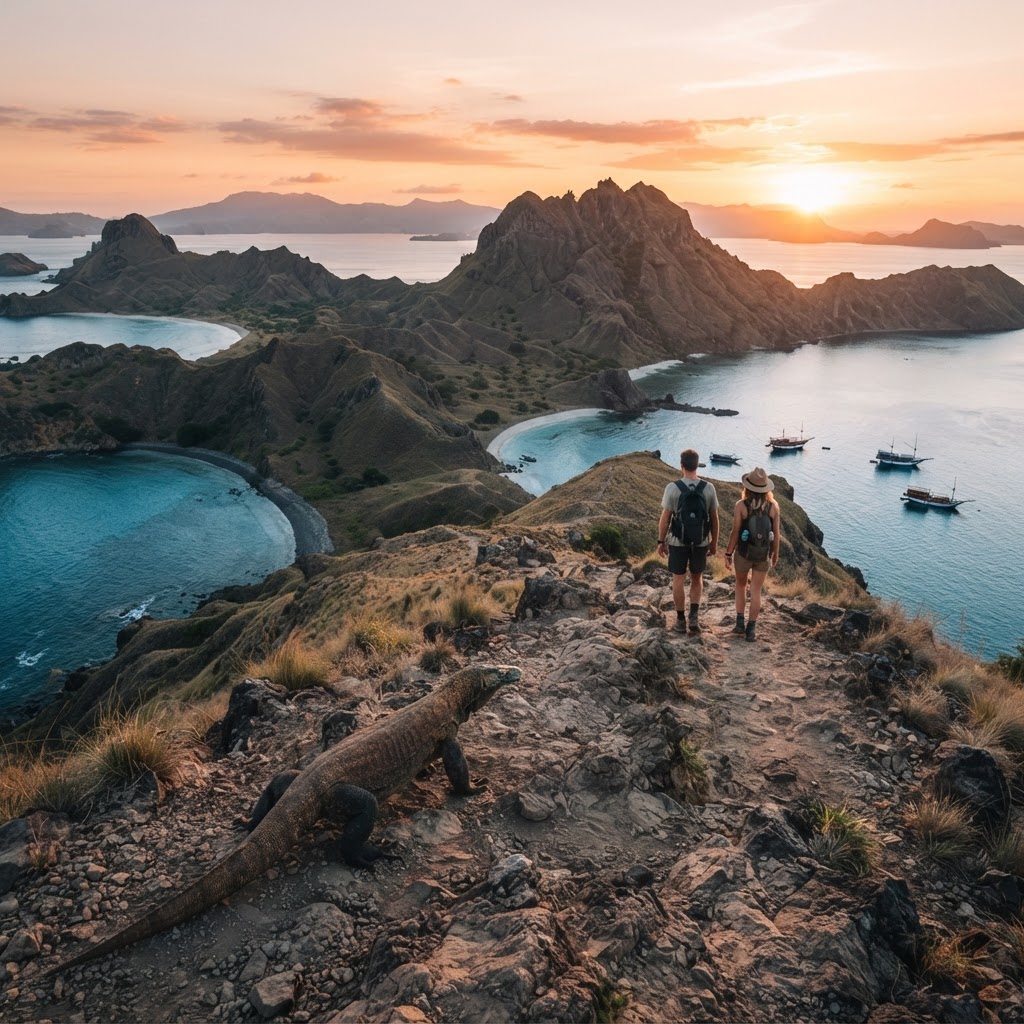
Volcanic ridges, prehistoric dragons, and the rugged gateway to Komodo
Bandung
Indonesia
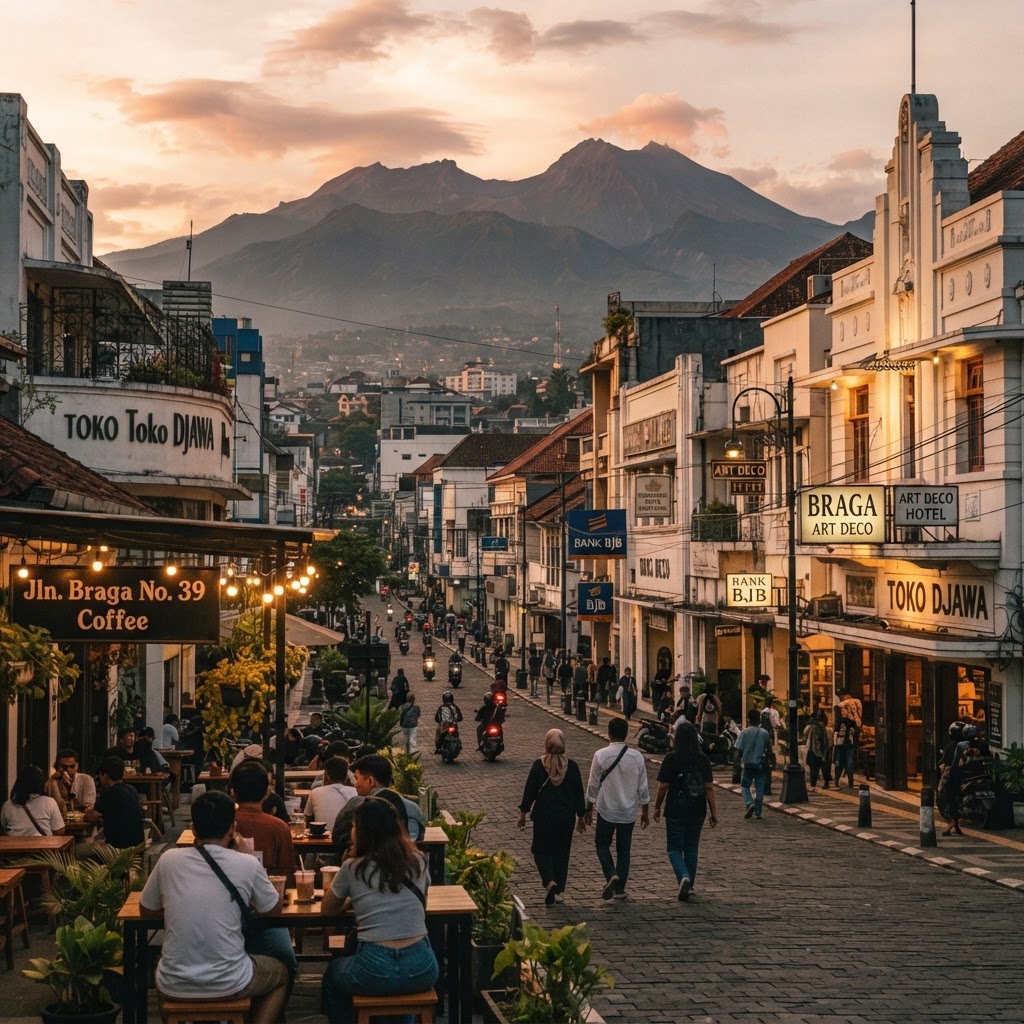
Volcanic craters, Dutch Art Deco boulevards, and Java's coolest highland cafe culture
Readymade itineraries
Start from a tested template — then make it yours.
Ready to book
Lock in your Mount Bromo, East Java, Indonesia trip
Everything in one place. We may earn a small commission — it never costs you more.
Plan a trip to Mount Bromo, East Java, Indonesia
Pick a length and we'll build a day-by-day plan around how you travel — neighborhoods clustered, budget-aware, and editable.
Get better at planning trips like this
Occasional notes on planning smarter — no spam, unsubscribe anytime.
Plan a trip to Mount Bromo, East Java, Indonesia
Turn this guide into a day-by-day plan built around your pace, your group, and your budget.
Build my Mount Bromo, East Java, Indonesia trip