Tunisia
Tunis
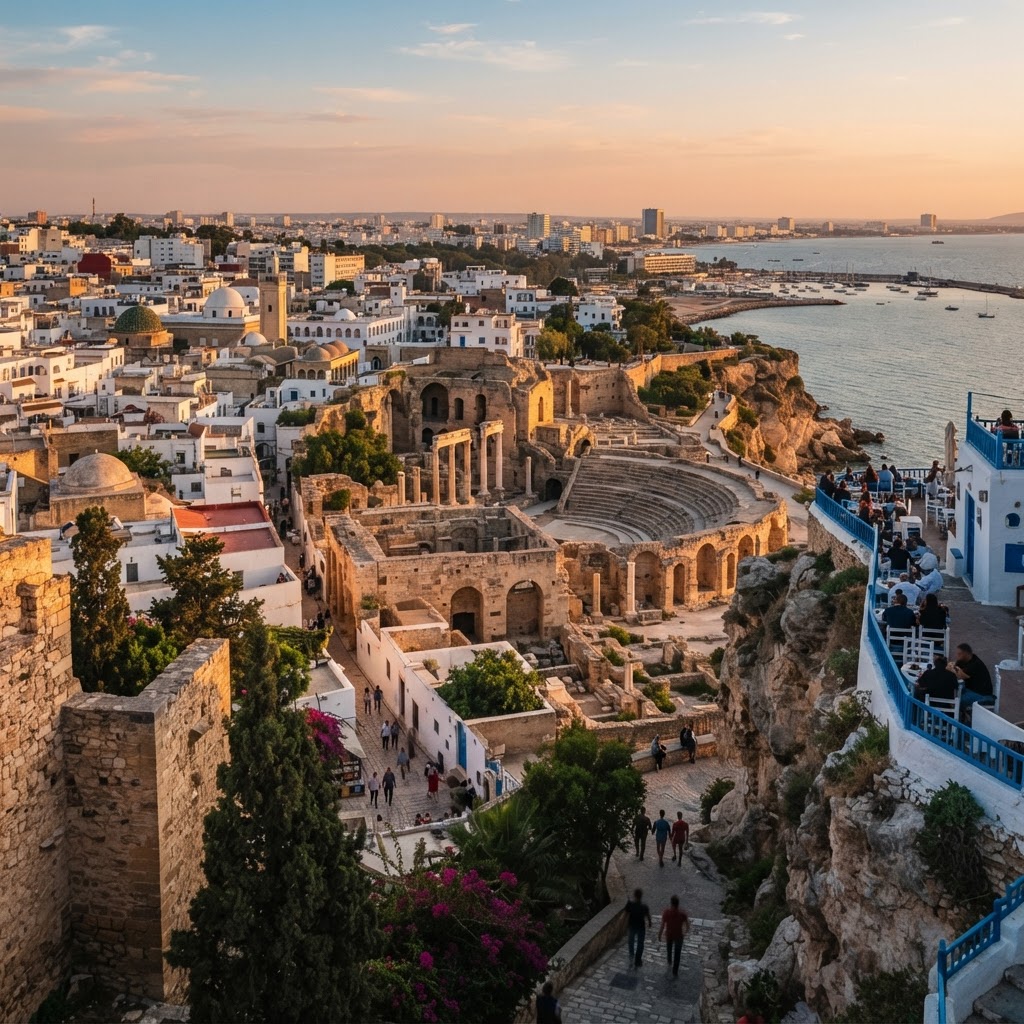
A complex layered capital where UNESCO-listed souks meet Roman ruins and coastal cliff cafes.
Plan & book
Sort your Tunis trip in one place.
We point you to the booking tools we'd actually use — live prices, no markup. Or let us build the day-by-day plan around you first, then book.
Tunis is an unexpected, layered metropolis spanning three distinct worlds: the ancient labyrinth of its 7th-century Medina, the faded Belle Époque avenues of Ville Nouvelle, and the sun-bleached coastal enclaves of Carthage, Sidi Bou Said, and La Marsa along the Gulf of Tunis. Unlike the mass beach resorts further south, the capital offers genuine cultural immersion, world-class Roman mosaics at the Bardo Museum, and deep Phoenician history without manicured tourist bubbles.
4 days
Best time
April to May or October to early November for mild Mediterranean temperatures and low crowd density.
Build your own trip with these prebuilt itineraries
Each one is a tested, day-by-day plan for Tunis — start here, then make it yours.
6 Days in Tunis: Capital Heritage & UNESCO Day Trips in Tunis
In-depth history and regional exploration using Tunis as a base for coastal dining, coastal trains, and day trips inland to Dougga or El Jem
4 Days in Tunis: Ancient Carthage & Culture in Tunis
Comprehensive first-timer cultural immersion covering scattered Punic and Roman Carthage ruins, Bardo mosaics, coastal suburbs, and traditional souks
2 Days in Tunis: Medina & Coastal Highlights in Tunis
Quick urban escape focusing on the historic Medina alleys, Ville Nouvelle cafe life, and an afternoon in blue-and-white Sidi Bou Said
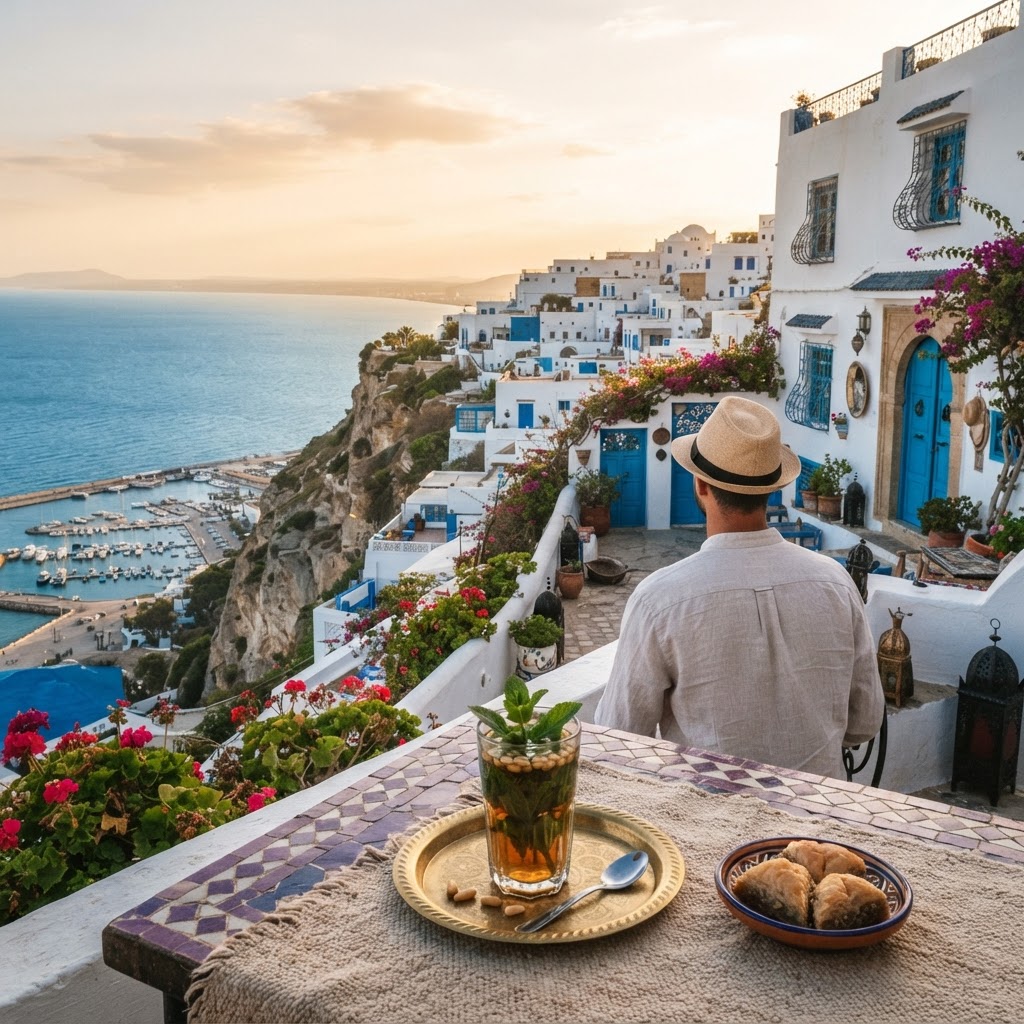
Tunis gives you unfiltered access to premier North African history and Mediterranean urban living without heavy mass-tourism crowds. You can navigate one of the Arab world's best-preserved medieval medinas in the morning, inspect imperial Roman mosaics at the Bardo by afternoon, and sip mint tea with pine nuts overlooking the Mediterranean cliffs of Sidi Bou Said by sunset. It also serves as the ideal springboard for day journeys to ancient Carthage, Dougga, and Bizerte.
Where to stay
Getting there
Getting around
Food & drink
What it costs
Things to do
Book tours & tickets in TunisSkip it if
Skip staying in central Tunis if you want an effortless resort vacation with direct private beach loungers, nightlife-driven party strips, or ultra-polished English-fluent infrastructure. Travelers uncomfortable with sensory chaos, urban grit, and negotiating in French or Arabic might find inland Tunis taxing.
When to go
Summer brings punishing heatwaves exceeding 35°C (95°F) that turn open-air ruin exploration into endurance tests. Mid-spring and mid-autumn offer balmy 22°C to 26°C weather, low rainfall, and manageable souk crowds without inflated seaside hotel rates.
Peak (July to August)
High heat, packed Mediterranean beaches, and heavy humidity; sightseeing in Carthage or the Medina requires early morning starts before midday closures.
Shoulder (April to June & September to November)
The prime window: ideal walking weather for ruins and medina alleys, calm sea breezes, and active cultural life.
Low (December to February)
Chilly, rain-swept days with temperatures around 10°C to 15°C; budget hotels slash rates and major archaeological ruins are empty, though days are short.
Neighborhoods
Where you stay shapes the trip. Here's how to think about it.
Medina of Tunis
A dense, pedestrian-only maze of 7th-century stone alleys, shaded souks, and hidden courtyard mansions.
Best for:History purists and culture seekers who want to wake up inside the ancient core.
Don't miss:The rooftop panoramic view of the Zitouna Mosque courtyard from the terrace of the souk carpet shops.
La Marsa
An affluent coastal suburb combining beachside promenades, contemporary art spaces, and buzzing open-air cafes.
Best for:Independent travelers, couples, and food lovers seeking walkable seaside living away from downtown chaos.
Don't miss:Fresh bambalouni (sugar donuts) paired with mint tea while walking along the Marsa Plage cornice at sunset.
Sidi Bou Said
Steep cobblestone lanes lined with whitewashed walls, vibrant cobalt blue moucharabieh lattices, and clifftop Gulf views.
Best for:Aesthetic-focused travelers and day-trippers; best early in the morning before souvenir vendors open.
Don't miss:A late-afternoon pine-nut mint tea at Café des Nattes or Café des Délices overlooking the bay.
Ville Nouvelle (Centre-Ville)
Faded French-colonial Belle Époque boulevards filled with outdoor coffee tables, tram bells, and Art Deco facades.
Best for:Budget travelers needing proximity to central transit hubs and unvarnished metropolitan life.
Don't miss:An afternoon stroll down Avenue Habib Bourguiba to see the Municipal Theatre and the Bab El Bhar gateway.
Carthage
A quiet, sprawling residential coastal district interspersed with detached UNESCO archaeological parks.
Best for:Archaeology obsessives seeking quiet surroundings and easy access to ancient ruins.
Don't miss:The seaside ruins of the Baths of Antoninus, set right against the Mediterranean shoreline.
Destination intelligence
Updated 9/14/2026The structured record we plan every Tunis itinerary from.
Walkability
Moderate. Individual pockets (the Medina, central Ville Nouvelle, Sidi Bou Said village) are compact and pedestrian-only, but traversing between Greater Tunis zones requires the TGM commuter train or metered taxis.
Transit quality
Fair. The historic TGM light train runs reliably along the northern coast to Carthage and La Marsa, while the city center is served by light rail (Métro Léger) and an abundant, cheap fleet of yellow cabs.
Car needed
Not required. A car is an active hindrance inside central Tunis and coastal suburbs; only rent a vehicle if departing on a multi-day regional road trip to Dougga, El Jem, or the southern Sahara.
Ideal duration
4 days
Minimum useful
2 days
Peak season
Summer (July to August) brings heatwaves over 35°C (95°F), crowded coastal beaches, and reduced daytime activity, though coastal evenings buzz with outdoor dining.
Shoulder season
Spring (April to June) and Autumn (September to November) offer warm Mediterranean temperatures, low rainfall, and comfortable conditions for ruin exploration and souk walking.
Low season
Winter (December to February) brings cooler, overcast days with occasional rain and shorter daylight hours, though hotels offer rock-bottom pricing and archaeological sites are nearly empty.
Best for
Common mistakes
- Treating Carthage as a single consolidated archaeological park; ruins are scattered across modern suburbs and require planning or a taxi to hop between disconnected sites.
- Renting a car for a short Tunis-only stay, which forces you to navigate intense downtown traffic and scarce parking instead of taking cheap taxis and the TGM train.
- Visiting the Medina on a Sunday afternoon when most historic souk workshops and authentic family-run lunch spots are shuttered.
- Failing to carry cash in Tunisian Dinars; street stalls, small cafes, and TGM ticket counters rarely take international credit cards.
Best nearby
How to plan it
- Base yourself in La Marsa for beachside walkability and relaxed evenings, or in a restored Medina dar if total cultural immersion matters more than nightlife.
- Do not attempt to do the Bardo Museum, Carthage ruins, and the Medina all in a single day; the vast scale of the Bardo mosaic collections warrants a dedicated half-day.
- Skip staying overnight in Carthage itself; treat it as an easy day trip via the TGM train from a base in La Marsa or Sidi Bou Said.
- Pair your Tunis stay with an inland road excursion to Dougga or Bulla Regia to see ancient Roman cityscapes preserved in countryside isolation.
Questions
More in Tunisia
Readymade itineraries
Start from a tested template — then make it yours.
Ready to book
Lock in your Tunis trip
Everything in one place. We may earn a small commission — it never costs you more.
Plan a trip to Tunis
Pick a length and we'll build a day-by-day plan around how you travel — neighborhoods clustered, budget-aware, and editable.
Get better at planning trips like this
Occasional notes on planning smarter — no spam, unsubscribe anytime.
Plan a trip to Tunis
Turn this guide into a day-by-day plan built around your pace, your group, and your budget.
Build my Tunis trip