Tunisia
Sidi Bou Said
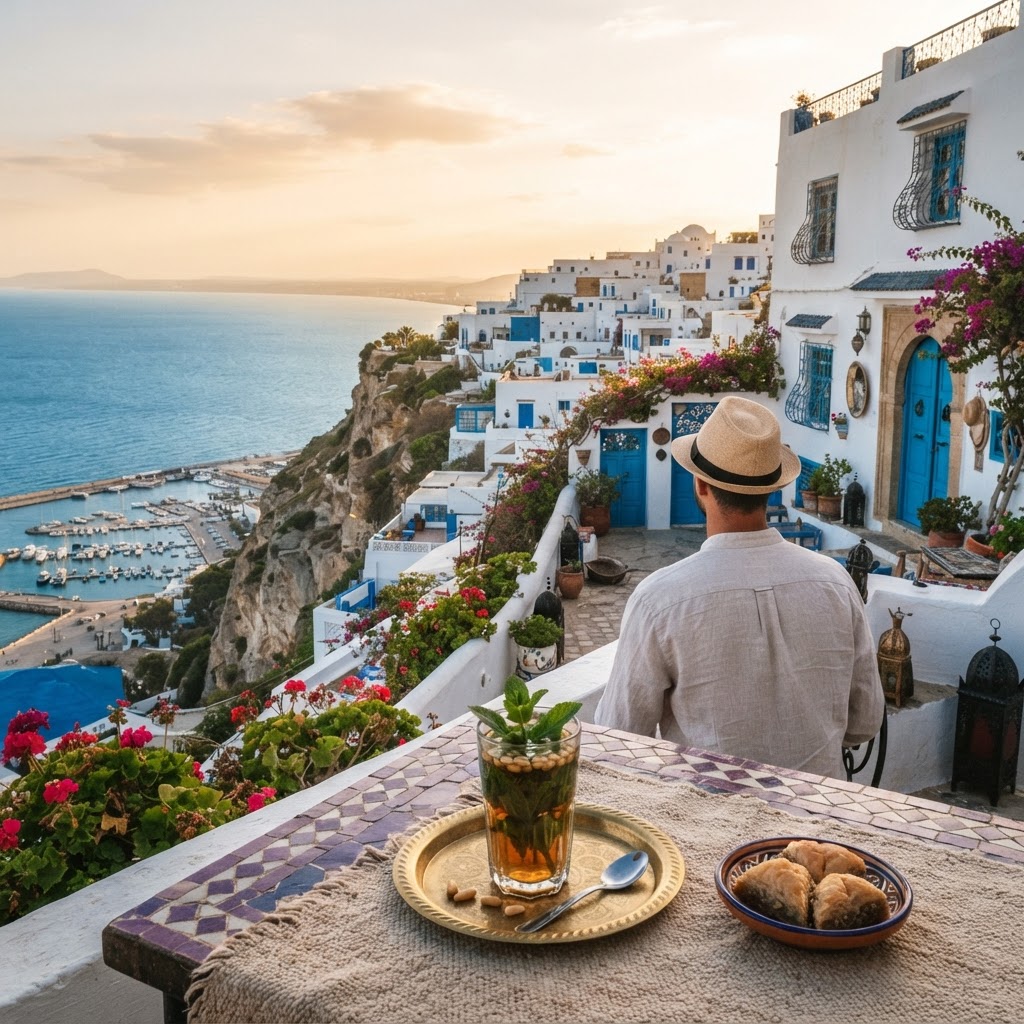
Cliffside Andalusian architecture, pine-nut mint tea, and sweeping Gulf of Tunis vistas.
Plan & book
Sort your Sidi Bou Said trip in one place.
We point you to the booking tools we'd actually use — live prices, no markup. Or let us build the day-by-day plan around you first, then book.
Perched on a steep cliff 20 kilometers northeast of central Tunis, Sidi Bou Said is an iconic coastal enclave defined by blinding whitewashed walls, cobalt blue moucharabieh lattices, and cascading bougainvillea. Established around the 13th-century tomb of Sufi mystic Abu Said al-Baji and later refined by French musicologist Baron Rodolphe d'Erlanger, this artistic promontory offers an atmospheric, pedestrian-scale retreat overlooking the Mediterranean. It functions both as an unhurried seaside base and as the premier aesthetic counterweight to the frantic energy of the Tunis medina.
2 days
Best time
April to May and September to October for warm days, breezy evenings, and manageable foot traffic.
Build your own trip with these prebuilt itineraries
Each one is a tested, day-by-day plan for Sidi Bou Said — start here, then make it yours.
3 Days in Sidi Bou Said in Sidi Bou Said
Slow coastal immersion exploring La Marsa, Tunis Medina, and historic seaside villages
2 Days in Sidi Bou Said in Sidi Bou Said
Romantic boutique coastal retreat paired with ancient Carthage exploration via TGM
1 Day in Sidi Bou Said in Sidi Bou Said
Cobblestones, cliffside cafes, and classic Arab-Andalusian architectural highlights
Sidi Bou Said is worth visiting because it preserves a coherent, legally protected architectural harmony found almost nowhere else in North Africa. Beyond its visual charm, staying overnight lets you experience the quiet village rhythm after day-tripping crowds depart: evening strolls along Rue Habib Thameur, mint tea spiked with toasted pine nuts overlooking the Gulf of Tunis, and immediate proximity to the sprawling ruins of ancient Carthage.
Where to stay
Getting there
Getting around
Food & drink
What it costs
Things to do
Book tours & tickets in Sidi Bou SaidSkip it if
Skip staying overnight if you require seamless step-free accessibility, as the historic core consists almost entirely of steep inclines, uneven cobblestones, and steps. Travelers on tight, fast-paced itineraries who only want massive archaeological museums or wild nightlife will find the village sleepy after 9:00 PM and should base in downtown Tunis or beachfront Gammarth instead.
When to go
Spring and early autumn offer 20–25°C temperatures ideal for conquering steep cobblestones without the sweltering 35°C Mediterranean summer heat or the cruise excursion crowds that choke Rue Habib Thameur midday.
Peak (June–August)
Scorching sun, packed sunset cafes, and lively nightlife, but village streets become congested with day-trippers from coastal resorts.
Shoulder (April–May & September–October)
Fragrant jasmine and bougainvillea blooms, comfortable walking temperatures, and open hotel availability.
Low (November–March)
Crisp sea winds, sporadic rain, and earlier café closures, yet wonderfully empty alleys and discounted boutique room rates.
Neighborhoods
Where you stay shapes the trip. Here's how to think about it.
Upper Village (Le Haut du Village)
Cobblestone pedestrian alleyways, whitewashed facades, and postcard cliff viewpoints.
Best for:Romantic boutique stays and travelers prioritizing historic ambiance.
Don't miss:Rue Habib Thameur's traditional arched doorways with intricate black stud patterns and framing bougainvillea.
Ras El Djebel & Ennejma Ezzahra Promontory
Serene, cultured hillside perch flanked by manicured gardens and open sea panoramas.
Best for:Architecture and classical music buffs wanting quiet away from tour bus foot traffic.
Don't miss:Palais Ennejma Ezzahra (Centre of Arab and Mediterranean Music) and its Moorish gardens.
Port de Plaisance (Marina & Beachfront)
Casual seaside enclave with salty air, yachts, and seafood bistros.
Best for:Families and travelers who prefer water access over cliffside stair climbing.
Don't miss:The 365-step descent from the cliff edge down to the marina for fresh grilled sea bass.
Sidi Dhrif Border
Tranquil, upscale residential periphery shaded by palms and modern private villas.
Best for:Visitors seeking quiet luxury rentals with easy TGM light rail access to La Marsa.
Don't miss:The scenic path tracing the rail cut toward Carthage Presidency station.
Destination intelligence
Updated 9/14/2026The structured record we plan every Sidi Bou Said itinerary from.
Walkability
High within the village core, but physically demanding due to steep hills, historic stairways, and slick cobblestone paving.
Transit quality
Moderate; the suburban TGM light rail provides cheap, direct connections between Tunis Marine, Carthage, and La Marsa, supplemented by readily available yellow taxis and Bolt rides.
Car needed
Not required. Driving and parking inside the narrow, pedestrianized upper village is stressful and largely restricted; public transit, Bolt, and walking cover all regional needs.
Ideal duration
2 days
Minimum useful
Half-day (4-5 hours)
Peak season
June through August, featuring hot Mediterranean beach weather, vibrant evening cafe culture, and heavy summer tourist crowds.
Shoulder season
April to May and September to October, offering mild temperatures (20–25°C), fragrant bougainvillea blooms, and pleasant walking conditions.
Low season
November through March, characterized by cooler sea breezes, occasional rain showers, and shuttered tourist stalls, but tranquil, crowd-free streets.
Best for
Common mistakes
- Visiting only as a rushed two-hour mid-day bus excursion when tour groups crowd the main spine and the heat is at its worst.
- Wearing slick soles or high heels on polished, steep cobblestones and staircases.
- Allowing persistent street vendors along the main thoroughfare to initiate unwanted henna applications or unsolicited jasmin corsages without agreeing on pricing first.
- Assuming the archaeological ruins of Carthage are clustered inside Sidi Bou Said; Carthage's sites are scattered across several square kilometers and require purposeful transit planning.
Best nearby
How to plan it
- Stay overnight inside a traditional Dar rather than taking a fast afternoon tour; the village only reveals its calm charm after 6:00 PM.
- Pair your trip with Carthage's Antonine Baths in the morning, taking the TGM train just three stops south before heading up the hill.
- Don't attempt to see the entire Tunis Medina, Bardo Museum, Carthage ruins, and Sidi Bou Said in a single 24-hour sprint unless you want exhaustion to ruin the scenery.
- Reserve cliffside terrace dining at Dar Zarrouk at least a week ahead if you want sunset views over the marina during summer.
- Carry small cash denominations (5 and 10 TND bills) for street vendors, bambalouni stands, and local train tickets, as cards are rarely accepted.
Questions
More in Tunisia
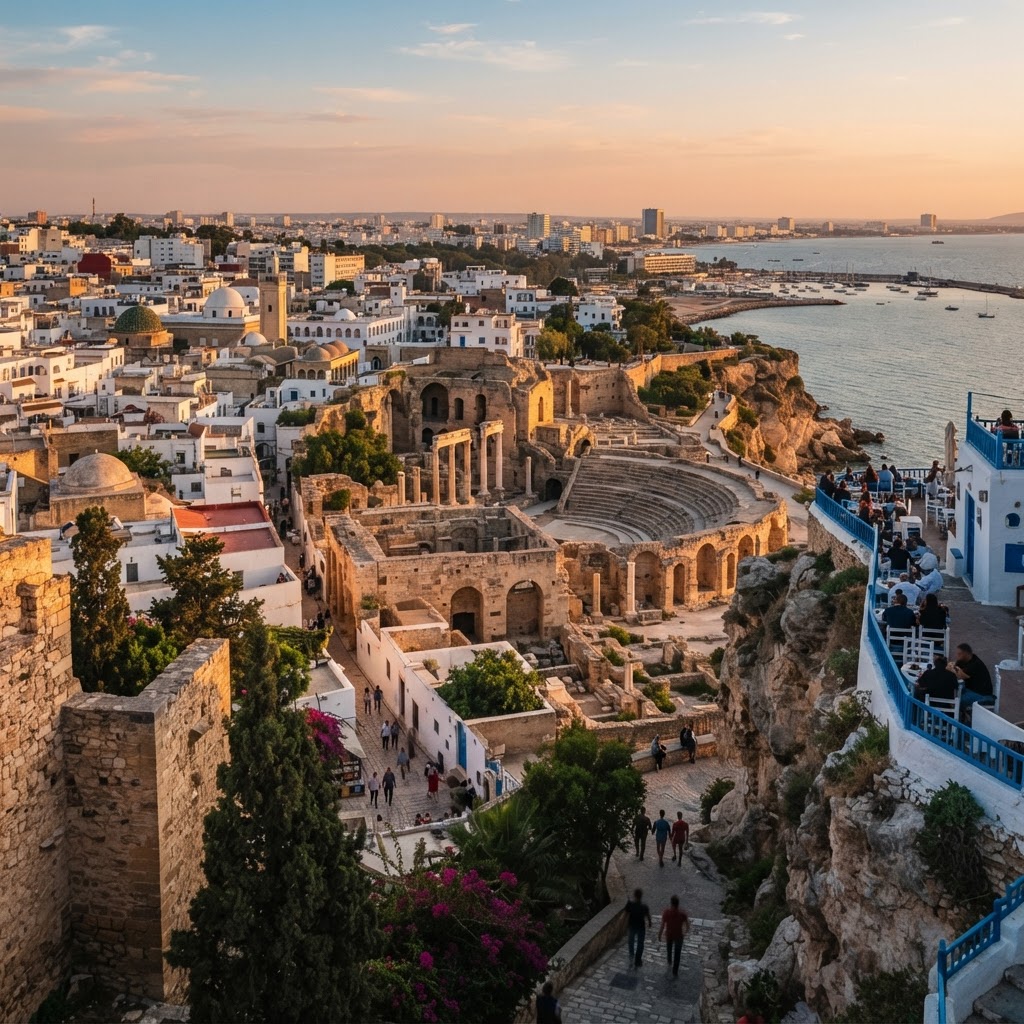
Readymade itineraries
Start from a tested template — then make it yours.
Ready to book
Lock in your Sidi Bou Said trip
Everything in one place. We may earn a small commission — it never costs you more.
Plan a trip to Sidi Bou Said
Pick a length and we'll build a day-by-day plan around how you travel — neighborhoods clustered, budget-aware, and editable.
Get better at planning trips like this
Occasional notes on planning smarter — no spam, unsubscribe anytime.
Plan a trip to Sidi Bou Said
Turn this guide into a day-by-day plan built around your pace, your group, and your budget.
Build my Sidi Bou Said trip