Israel
Tel Aviv
Bauhaus modernism, non-stop culinary vitality, and Mediterranean shoreline.
Plan & book
Sort your Tel Aviv trip in one place.
We point you to the booking tools we'd actually use — live prices, no markup. Or let us build the day-by-day plan around you first, then book.
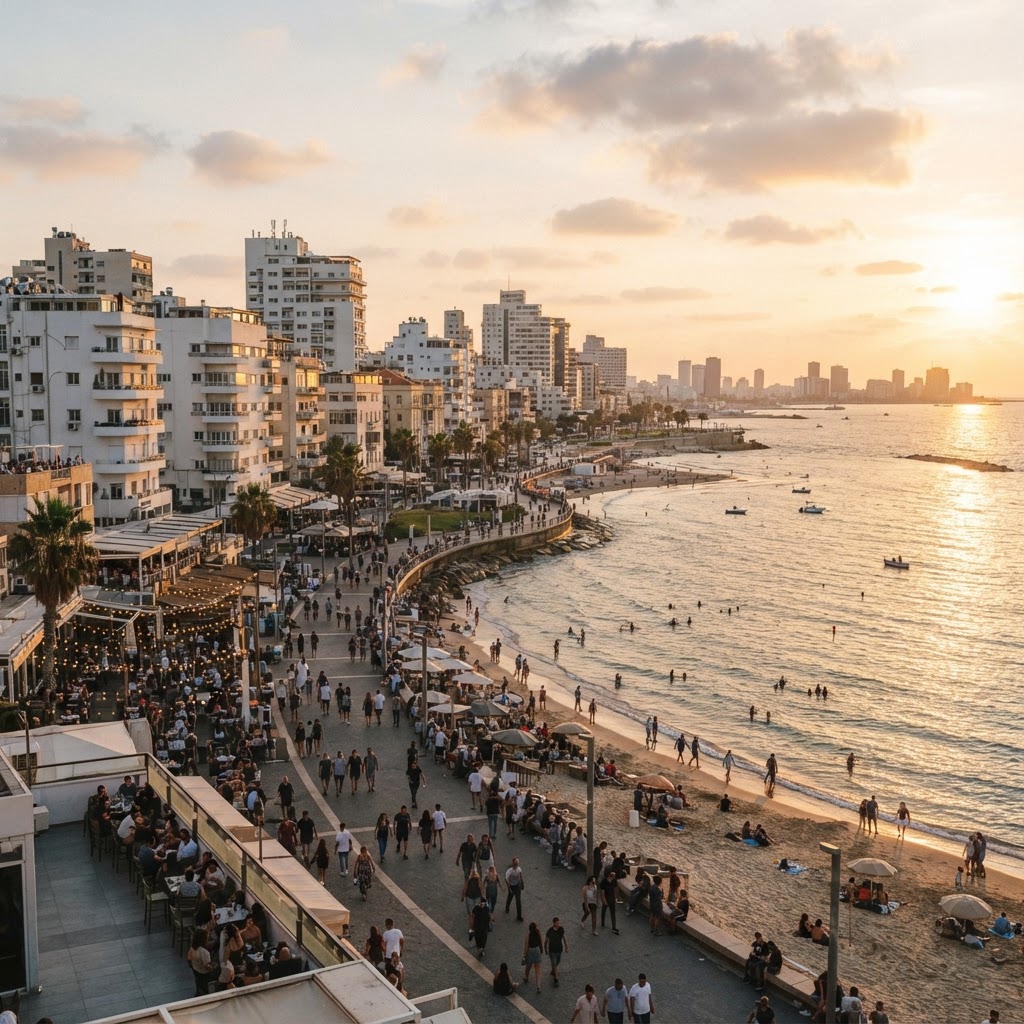
Perched along a 14-kilometer ribbon of Mediterranean coastline, Tel Aviv operates as Israel's secular, hyper-contemporary counterweight to ancient Jerusalem. Defined by UNESCO-listed 1930s Bauhaus architecture, vibrant neighborhood open-air markets, world-class culinary craft, and an outdoor lifestyle that centers around the beach promenade, it offers an immediate, lived-in vitality found in few other global capitals.
4 days
Build your own trip with these prebuilt itineraries
Each one is a tested, day-by-day plan for Tel Aviv — start here, then make it yours.
5 Days in Tel Aviv: Seaside Living & Design Slowdown in Tel Aviv
A relaxed pace focused on Mediterranean beach culture, boutique gallery exploration, and leisurely weekend rhythms
4 Days in Tel Aviv: Food Markets & Culinary Heritage in Tel Aviv
A deep dive into vibrant market tastings, Levantine gastronomy, historic Jaffa, and local street eats
3 Days in Tel Aviv: Coastal Culture & Nightlife in Tel Aviv
First-time urban highlights, coastal promenade strolls, modern nightlife, and Bauhaus architecture
Go for an unmatched modern culinary scene where Levantine produce meets global technical refinement, complemented by miles of sandy coastline and world-class twentieth-century architectural heritage. Unlike cities defined by static monuments, Tel Aviv's draw is atmospheric and experiential—moving from morning espresso along Rothschild Boulevard to late-night mezze and drinks in the industrial pockets of Florentin.
Where to stay
Getting there
Getting around
Food & drink
What it costs
Things to do
Book tours & tickets in Tel AvivSkip it if
Skip it if your primary interest in Israel is visiting biblical pilgrimage sites and ancient monumental antiquities, or if you are seeking a low-budget beach break—Jerusalem delivers far deeper historic depth, while Tel Aviv's prices for lodging and dining rank near upper Western European levels.
Destination intelligence
Updated 9/13/2026The structured record we plan every Tel Aviv itinerary from.
Walkability
High: flat terrain, dedicated pedestrian boulevards, and contiguous coastal paths link nearly all major central sights.
Transit quality
Moderate to High: efficient trains to the airport and regional cities, a new central light rail line, and widespread buses, though interrupted during Shabbat.
Car needed
No: an inner-city car rental is an active impediment due to sparse parking and congested avenues.
Ideal duration
4 days
Minimum useful
2 days
Peak season
June through August (popular for seaside summer breaks, though characterized by severe heat and heavy humidity).
Shoulder season
April to May and September to November (mild temperatures, clear skies, and ideal walking conditions).
Low season
December to February (cooler weather, intermittent Mediterranean rainfall, and significantly reduced hotel rates).
Best for
Common mistakes
- Failing to plan around Shabbat: public buses and trains cease operations from Friday afternoon until Saturday evening, and many local independent shops close (though beachside venues and non-kosher restaurants often remain bustling).
- Renting a rental car for inner-city exploration instead of relying on micromobility and walking.
- Skipping the security time allowance at Ben Gurion Airport—always allow a full 3 to 3.5 hours for thorough departure security screening.
- Visiting in July or August without anticipating intense Mediterranean heat and high humidity, which limits outdoor walking between noon and 4 PM.
Best nearby
More in Middle East
Readymade itineraries
Start from a tested template — then make it yours.
Ready to book
Lock in your Tel Aviv trip
Everything in one place. We may earn a small commission — it never costs you more.
Plan a trip to Tel Aviv
Pick a length and we'll build a day-by-day plan around how you travel — neighborhoods clustered, budget-aware, and editable.
Get better at planning trips like this
Occasional notes on planning smarter — no spam, unsubscribe anytime.
Plan a trip to Tel Aviv
Turn this guide into a day-by-day plan built around your pace, your group, and your budget.
Build my Tel Aviv trip