Uzbekistan
Tashkent, Uzbekistan
Soviet brutalism, palatial underground metro stations, and Central Asia's premier plov culture.
Plan & book
Sort your Tashkent, Uzbekistan trip in one place.
We point you to the booking tools we'd actually use — live prices, no markup. Or let us build the day-by-day plan around you first, then book.
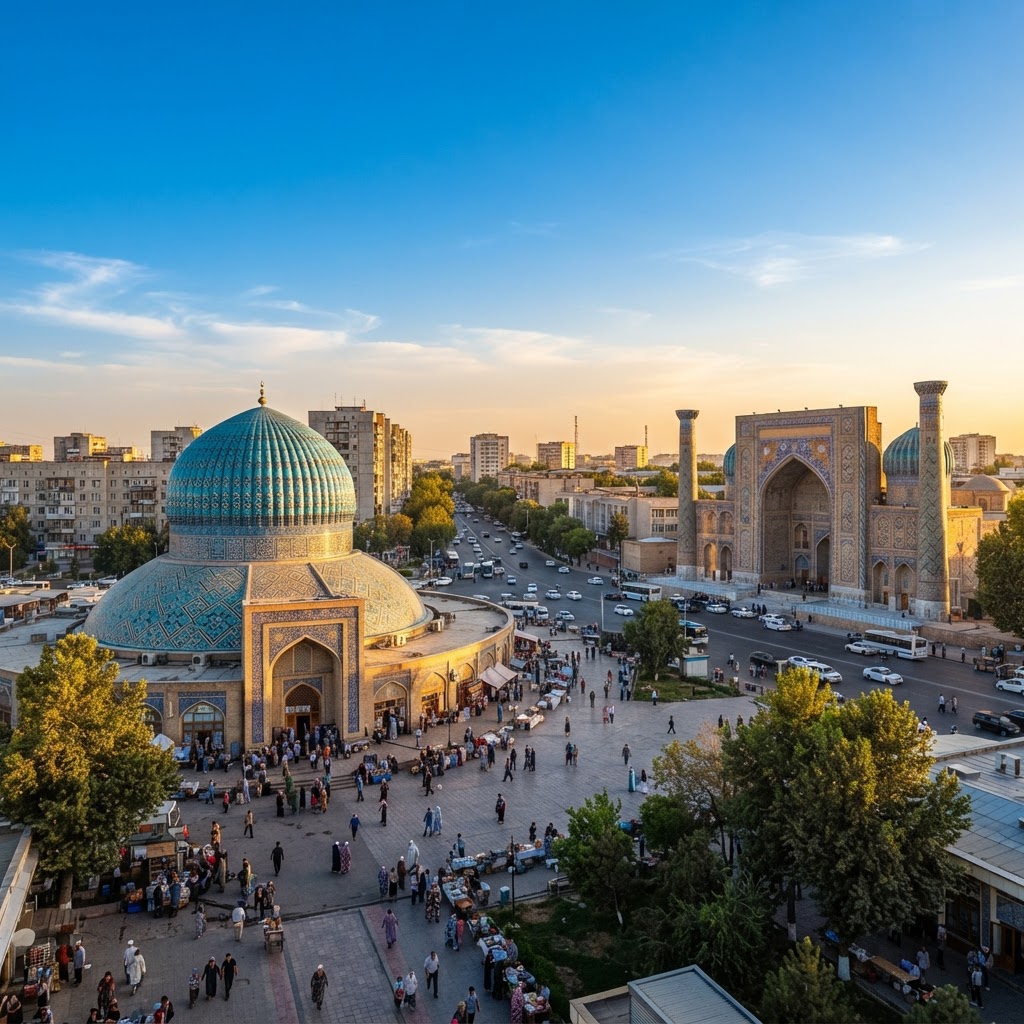
Tashkent is frequently dismissed as a mandatory airport layover en route to the Silk Road showstoppers of Samarkand and Bukhara, but treating it solely as transit misses the urban soul of modern Uzbekistan. Rebuilt almost entirely after a devastating earthquake in 1966, the capital is a fascinating blend of Soviet urban planning, grand neoclassical boulevards, deep-green plane trees, traditional mahalla neighborhoods, and ambitious contemporary cultural monuments. It offers an essential historical anchor: here, the Soviet layer of Central Asian identity is tangible in its brutalist facades and cavernous subway halls, serving as the cultural counterweight to the medieval turquoise domes to the west.
2 days
Build your own trip with these prebuilt itineraries
Each one is a tested, day-by-day plan for Tashkent, Uzbekistan — start here, then make it yours.
Tashkent shows you how 21st-century Uzbekistan actually functions. While Samarkand and Khiva are open-air preservation hubs, Tashkent is where the nation's contemporary arts, intellectual centers, metro infrastructure, and culinary traditions operate at full steam. Between the sensory rush beneath the blue geodesic dome of Chorsu Bazaar, the gilded grandeur of the Tashkent Metro, and industrial-scale cauldrons at the Central Asian Plov Centre, Tashkent gives your itinerary the urban context that Silk Road tourist spots lack.
Where to stay
Getting there
Getting around
Food & drink
What it costs
Things to do
Book tours & tickets in Tashkent, UzbekistanSkip it if
Skip spending more than an airport transfer in Tashkent if your trip is strictly limited to 5-6 days and your sole ambition is photographing preserved 14th-century madrasahs and turquoise desert mosaics. Travelers looking for compact medieval alleys should divert their limited days straight to Samarkand, Bukhara, and Khiva.
Destination intelligence
Updated 9/12/2026The structured record we plan every Tashkent, Uzbekistan itinerary from.
Walkability
Moderate within specific quarters like Mirobad and Amir Timur, but wide Soviet boulevards require the metro or taxis to hop between districts.
Transit quality
Excellent; the subway system is extensive, spotless, architecturally stunning, and operates on dependable timetables.
Car needed
Not required. High-speed rail covers intercity travel, and the metro combined with Yandex Go taxis makes personal vehicle hire an unnecessary hassle.
Ideal duration
2 days
Minimum useful
1 day
Peak season
April to May and September to October, offering pleasant temperatures in the 60s–70s°F (18–25°C) ideal for city exploration.
Shoulder season
March (featuring Navruz holiday celebrations) and November, characterized by cooler evenings and significantly lower lodging rates.
Low season
June through August (intense continental summer heat frequently surpassing 104°F / 40°C) and December to February (cold weather with occasional snow).
Best for
Common mistakes
- Skipping Tashkent entirely or treating it merely as an overnight stop between flights and the morning train.
- Hailing informal cabs off the street instead of using the Yandex Go app, leading to language barriers and inflated tourist quotes.
- Arriving at Besh Qozon (Plov Centre) after 2:00 PM when the freshest batches are sold out.
- Failing to purchase high-speed Afrosiyob rail tickets well in advance, as tickets routinely sell out weeks ahead.
- Throwing away hotel registration paper slips, which authorities can request upon exiting Uzbekistan.
Best nearby
More in Uzbekistan
Readymade itineraries
Start from a tested template — then make it yours.
Ready to book
Lock in your Tashkent, Uzbekistan trip
Everything in one place. We may earn a small commission — it never costs you more.
Plan a trip to Tashkent, Uzbekistan
Pick a length and we'll build a day-by-day plan around how you travel — neighborhoods clustered, budget-aware, and editable.
Get better at planning trips like this
Occasional notes on planning smarter — no spam, unsubscribe anytime.
Plan a trip to Tashkent, Uzbekistan
Turn this guide into a day-by-day plan built around your pace, your group, and your budget.
Build my Tashkent, Uzbekistan trip