Uzbekistan
Khiva
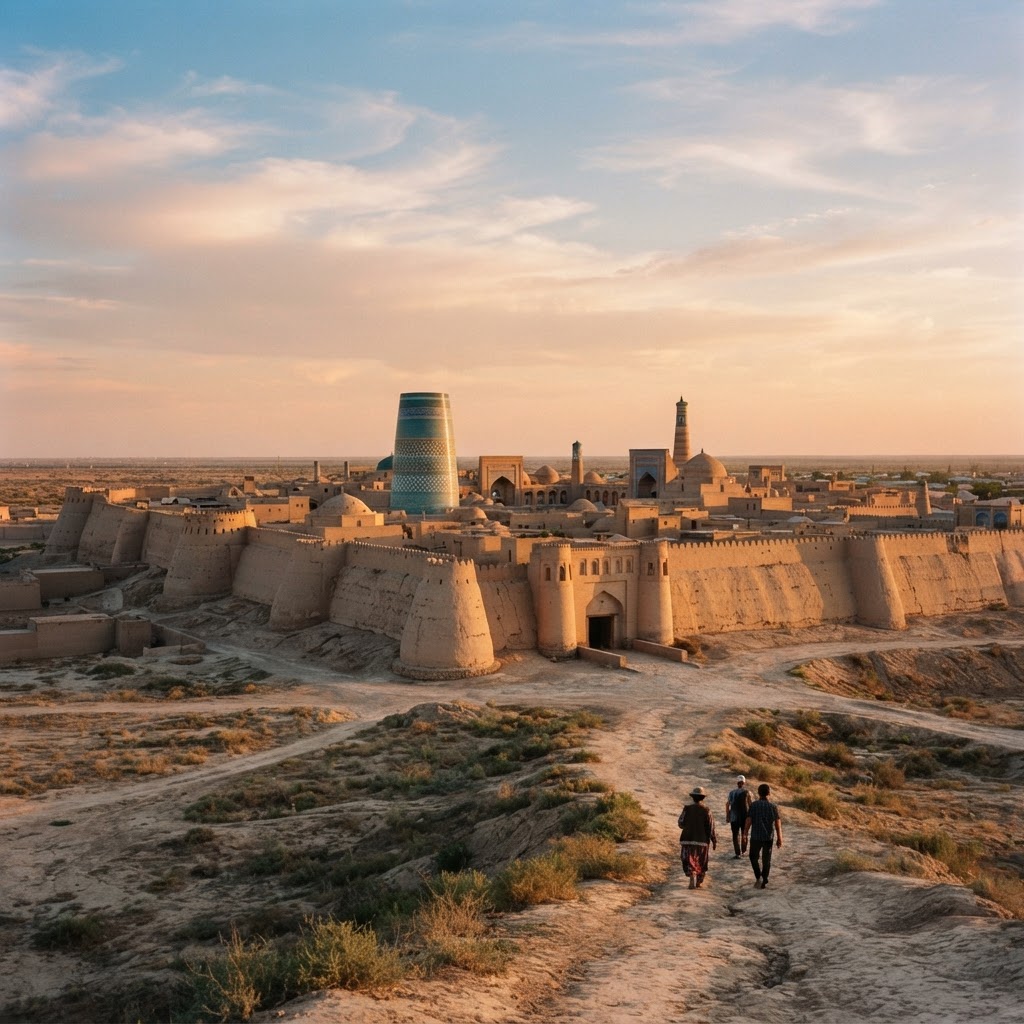
An intact mud-brick Silk Road citadel isolated at the desert edge.
Plan & book
Sort your Khiva trip in one place.
We point you to the booking tools we'd actually use — live prices, no markup. Or let us build the day-by-day plan around you first, then book.
Surrounded by crenellated earthen ramparts in western Uzbekistan, Khiva is centered on the Itchan Kala, an ancient oasis fortress packed with turquoise minarets, madrasas, and intricately carved wood pillars. Unlike Samarkand or Bukhara where historic monuments are interspersed throughout bustling modern sprawl, Khiva concentrates its heritage inside a compact, walkable open-air museum where mornings and late evenings feel like stepping into a preserved 18th-century caravan post.
2 days
Best time
Mid-April to late May and mid-September to mid-October.
Build your own trip with these prebuilt itineraries
Each one is a tested, day-by-day plan for Khiva — start here, then make it yours.
3 Days in Khiva: Desert Fortresses & Khorezm Heritage in Khiva
An immersive regional journey pairing deep architectural appreciation inside the walled city with a day trip exploring the ancient mud-brick desert citadels (Elliq Qala).
2 Days in Khiva: Classic Citadel & Golden Hour in Khiva
The definitive classic pace balancing unhurried historic exploration, sunrise and sunset photography from minarets and watchtowers, and curated Khorezmian dining.
1 Day in Khiva: Silk Road Express in Khiva
A high-efficiency, fully pedestrian walking circuit capturing the essential madrasahs, Kuhna Ark viewpoints, and evening floodlit alleys of Itchan Kala.
Khiva delivers the single most cohesive and atmospheric architectural ensemble in Central Asia. Within its fortified mud walls, dozens of palaces, mausoleums, and mosques sit clustered together without the intrusion of car traffic, modern highways, or mid-rise concrete. Experiencing the citadel at sunrise before tour buses arrive—or climbing the watchtower of Kuhna Ark as twilight turns the tilework sapphire—offers an unmatched sense of place that sprawling Silk Road capitals cannot replicate.
Where to stay
Getting there
Getting around
Food & drink
What it costs
Things to do
Book tours & tickets in KhivaSkip it if
Travelers with strictly limited time (fewer than 7 days total in Uzbekistan) who would waste 8 to 12 hours traveling to the country's far west instead of concentrating on Tashkent, Samarkand, and Bukhara. It should also be skipped by travelers who dislike curated, open-air museum atmospheres where ticket booths and souvenir stalls dominate residential life.
When to go
Spring and autumn deliver mild daytime temperatures (20°C to 26°C) suited for exploring exposed stone alleys without oppressive heat. The tradeoff is crowded courtyards and booked-out guesthouses, whereas summer brings brutal 40°C+ desert sun and winter brings freezing steppe winds that clear out the town entirely.
Peak (April–May & September–October)
Comfortable desert walking climate, pristine light for photography, and lively evening bazaars, but guesthouses inside the walls fill months ahead.
Shoulder (March & November)
Crisp morning chill and thin crowds; perfect for budget travelers and quiet photography, though desert winds require substantial layering.
Low (June–August & December–February)
Midsummer sees fierce desert heat above 40°C (104°F) that shuts down midday walking, while midwinter brings sub-zero temperatures and closed seasonal cafes.
Neighborhoods
Where you stay shapes the trip. Here's how to think about it.
Itchan Kala (Inner Fortress)
Car-free, mud-brick labyrinth framed by towering majolica minarets, preserved madrasas, and lively open-air artisan stalls.
Best for:First-timers, architectural purists, and travelers prioritizing sunrise strolls without tour groups.
Don't miss:The panoramic sunset view overlooking Kalta Minor Minaret from the rooftop watchtower of the Kuhna Ark fortress.
Dishan Kala (Outer Walled Town)
Quiet residential residential fringe featuring cracked earthen wall fragments, Russian imperial-era palaces, and authentic local life.
Best for:Travelers seeking lower accommodation rates, quiet side streets, and modern Khorezmian dining away from tourist crowds.
Don't miss:Nurullaboy Palace, an opulent late-Tsarist-influenced Khanate residence featuring ornate Russian porcelain fireplaces and crystal chandeliers.
Khiva Railway Quarter & East Gateway
Wide, newly paved tree-lined boulevard running between the modern Khiva train station and the ancient Palvan Darvoza (East Gate).
Best for:Short stays, early-morning train connections, and travelers with rolling luggage avoiding cobbled lanes.
Don't miss:Morning walk along Feruz Street toward the citadel walls as local shopkeepers open fresh bread stands and vegetable stalls.
North Gate Outskirts (Baghcha Darvoza)
Everyday residential quarter lined with tranquil local tea-houses, schoolyards, and traditional mud-plaster family homes.
Best for:Budget homestay seekers and independent photographers looking for unvarnished domestic scenes.
Don't miss:The scenic pathway running along the northern exterior base of the crenellated 18th-century rammed-earth ramparts.
Destination intelligence
Updated 9/14/2026The structured record we plan every Khiva itinerary from.
Walkability
Exceptional inside Itchan Kala; the historic core is fully pedestrianized and compact, requiring only sturdy walking shoes for stone and brick alleys.
Transit quality
High-speed rail connection connects to Bukhara and Samarkand; local travel relies cleanly on pedestrian footing and Yandex Go taxis outside the gates.
Car needed
Not recommended. A personal vehicle is entirely unusable inside the walled old town and unnecessary for getting between the train station and the gates.
Ideal duration
2 days
Minimum useful
1 day
Peak season
April to May and September to October offer mild, crisp desert weather and comfortable daytime walking temperatures.
Shoulder season
March and November bring cold mornings and thinner crowds, with chilly desert winds but unobstructed photography.
Low season
June through August brings blistering desert heat regularly exceeding 40°C (104°F); December through February is bitterly cold and gray.
Best for
Common mistakes
- Underestimating travel time and attempting to cram Khiva into an aggressive 5-day Uzbekistan itinerary where the long transit eats an entire day.
- Leaving the Itchan Kala during midday heat instead of timing monument climbs for the cool morning and late evening light.
- Purchasing the base Itchan Kala pass without realizing that select premium viewpoints—like the Islam Khodja Minaret climb and Kuhna Ark watchtower—require supplementary tickets.
- Assuming restaurant quality matches Tashkent or Bukhara; inside the citadel, many tourist-facing terraces offer mediocre menus, so vetting your dinner spots is essential.
Best nearby
How to plan it
- Stay inside the Itchan Kala walls if you want immediate dawn and late-night access to empty stone courtyards before day-trip crowds arrive.
- Book your high-speed train or sleeper train seat to or from Bukhara the moment tickets release 45 days out—seats vanish faster than hotels.
- Do not try to combine the 8-hour drive from Bukhara with an intensive fortress tour on the same day; arrive, check in, and start fresh the following morning.
- Reserve an upper terrace table at Terrassa Cafe 24 to 48 hours ahead if you want a direct sunset vantage over the Kuhna Ark watchtower.
- Hire a private driver for a half-day detour to the ancient mud ruins of Ayaz Kala and Toprak Kala in the Kyzylkum desert instead of rushing straight to the airport.
Questions
Readymade itineraries
Start from a tested template — then make it yours.
Ready to book
Lock in your Khiva trip
Everything in one place. We may earn a small commission — it never costs you more.
Plan a trip to Khiva
Pick a length and we'll build a day-by-day plan around how you travel — neighborhoods clustered, budget-aware, and editable.
Get better at planning trips like this
Occasional notes on planning smarter — no spam, unsubscribe anytime.
Plan a trip to Khiva
Turn this guide into a day-by-day plan built around your pace, your group, and your budget.
Build my Khiva trip