Costa Rica
Tamarindo
Costa Rica's liveliest surf hub with town comforts and serious Pacific breaks
Plan & book
Sort your Tamarindo trip in one place.
We point you to the booking tools we'd actually use — live prices, no markup. Or let us build the day-by-day plan around you first, then book.
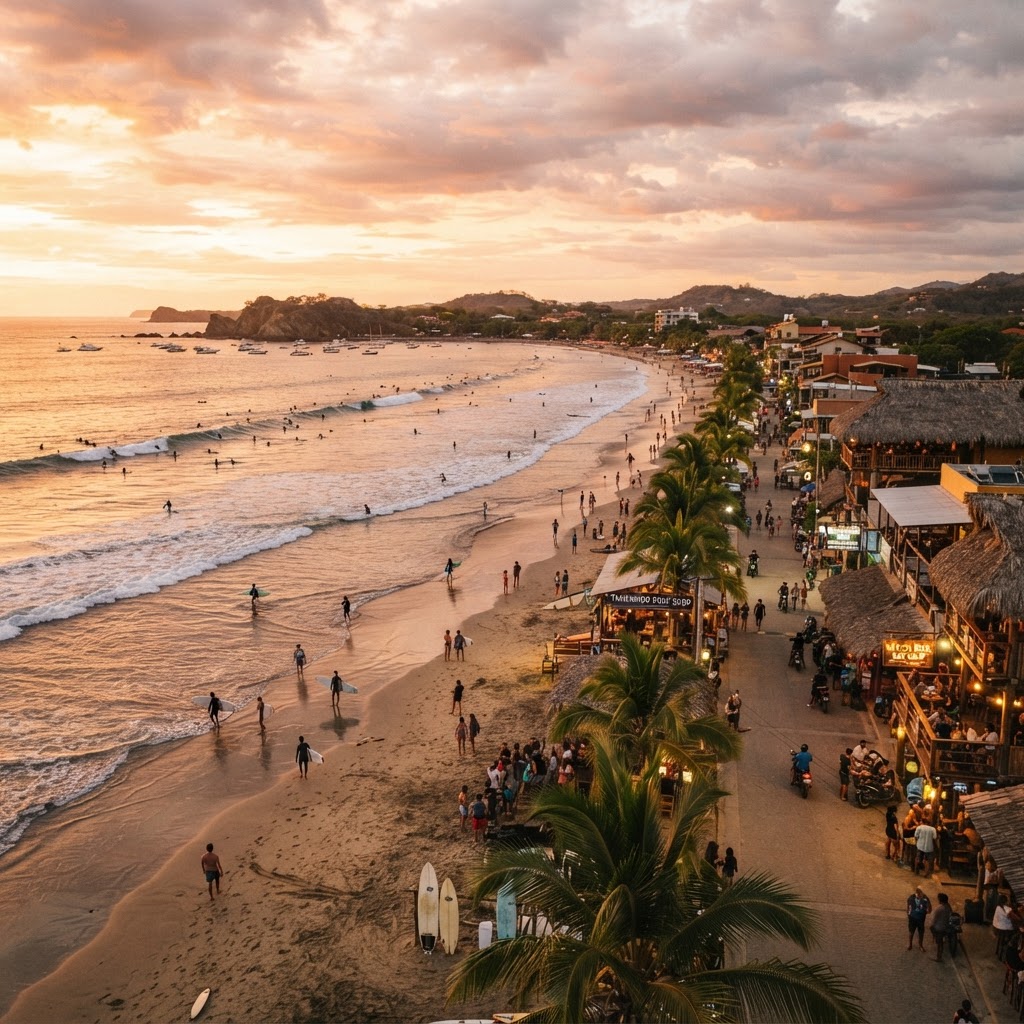
Tamarindo has evolved from a sleepy fishing village into Guanacaste’s primary surf playground. Nicknamed 'Tamagringo' for its heavy American expat influence and paved conveniences, it provides reliable beginner waves right off town, easy dining, vibrant nightlife, and immediate access to wilder surf breaks and wildlife estuaries.
4 to 5 days
Build your own trip with these prebuilt itineraries
Each one is a tested, day-by-day plan for Tamarindo — start here, then make it yours.
5 Days in Tamarindo: The Gold Coast Road Trip in Tamarindo
SUV beach-hopping to Avellanas, Playa Negra, and secluded coastal nature
3 Days in Tamarindo: Waves & Nightlife in Tamarindo
Surfing, beach bars, and social nightlife without needing a rental car
4 Days in Tamarindo: Easy Family Escapes in Tamarindo
Gentle surf clinics, estuary wildlife tours, and relaxed Langosta family downtime
Go for world-class, forgiving beginner-to-intermediate surf breaks directly in front of boutique hotels and beach clubs, paired with rare amenities like grocery delivery, diverse dining, and smooth road connections from an international airport.
Where to stay
Getting there
Getting around
Food & drink
What it costs
Things to do
Book tours & tickets in TamarindoSkip it if
Skip Tamarindo if you crave an off-the-grid, untouched eco-lodge wilderness experience where you fall asleep solely to jungle insects; destinations like the Osa Peninsula or Nosara fit that mold much better.
Destination intelligence
Updated 9/13/2026The structured record we plan every Tamarindo itinerary from.
Walkability
High in town center; beach cruisers or golf carts cover Langosta, while outer beach excursions require an SUV.
Transit quality
Limited public bus routes; reliance is on private shuttles, local official red taxis, and rideshares.
Car needed
Not required if staying downtown or in Langosta; recommended if surfing outer bays like Playa Negra, Playa Minas, or Avellanas.
Ideal duration
4 to 5 days
Minimum useful
3 days
Peak season
December through April: endless dry days, offshore winds, packed beaches, and peak holiday lodging rates.
Shoulder season
May through August: regular sunshine mornings with afternoon squalls, verdant landscapes, lower room rates, and consistent surf swell.
Low season
September to November: heaviest Pacific rainfall, peak wave size for experienced surfers, and several business closures in October.
Best for
Common mistakes
- Swimming across the Tamarindo estuary on foot instead of paying a local boat captain $2 to cross, ignoring active crocodile populations
- Expecting untouched, tranquil wilderness in downtown Tamarindo during peak dry season rather than a lively party scene
- Leaving valuables unattended on beach towels while surfing or swimming
- Driving a low-clearance compact car to secondary surf breaks like Playa Negra or Avellanas during rainy season washouts
Best nearby
See what a trip to Costa Rica actually costs. Travel Budget Co.
Readymade itineraries
Start from a tested template — then make it yours.
Ready to book
Lock in your Tamarindo trip
Everything in one place. We may earn a small commission — it never costs you more.
Plan a trip to Tamarindo
Pick a length and we'll build a day-by-day plan around how you travel — neighborhoods clustered, budget-aware, and editable.
Get better at planning trips like this
Occasional notes on planning smarter — no spam, unsubscribe anytime.
Plan a trip to Tamarindo
Turn this guide into a day-by-day plan built around your pace, your group, and your budget.
Build my Tamarindo trip