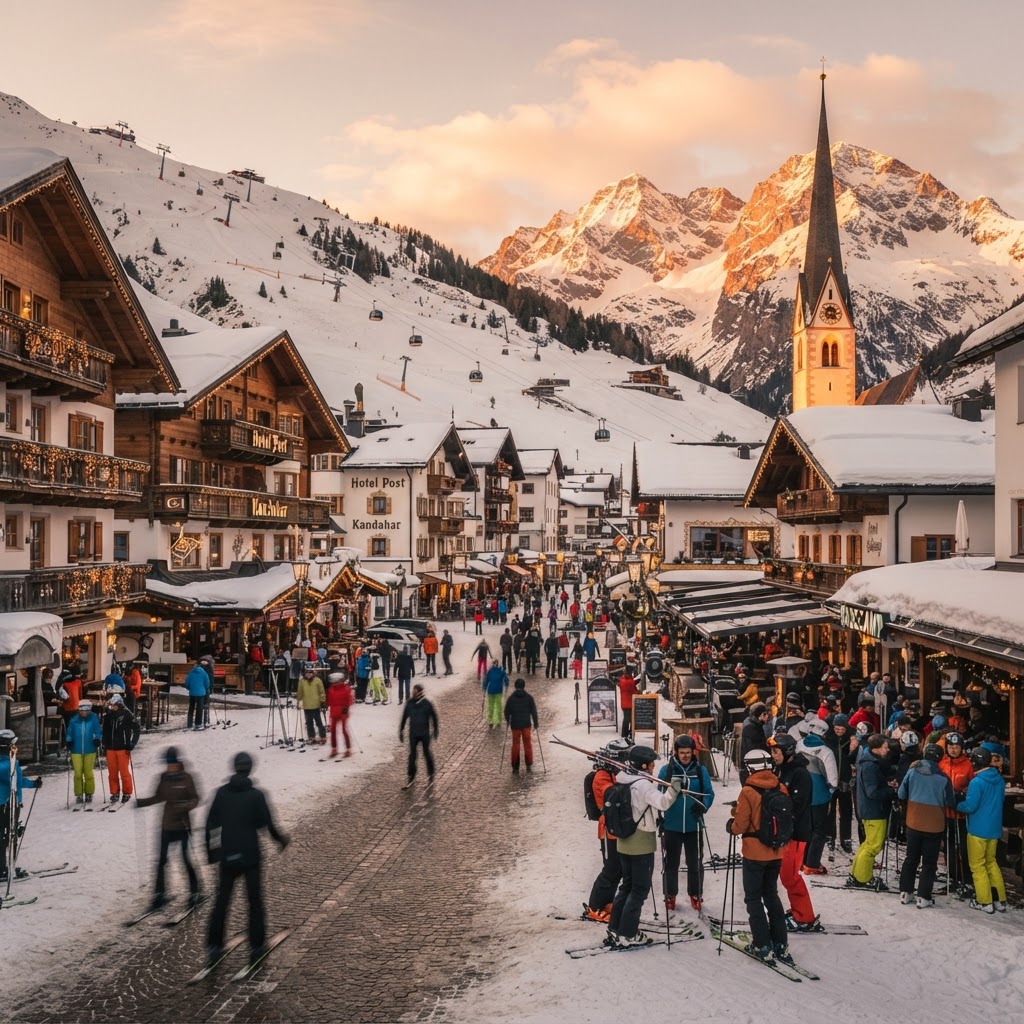
Austria
St. Anton am Arlberg
The cradle of alpine skiing, unmatched off-piste terrain, and Europe's most raucous après-ski.
Plan & book
Sort your St. Anton am Arlberg trip in one place.
We point you to the booking tools we'd actually use — live prices, no markup. Or let us build the day-by-day plan around you first, then book.
St. Anton am Arlberg sits at 1,304 meters in the Tyrolean Alps, anchored by a rich heritage as the birthplace of modern ski technique and the gateway to the vast Ski Arlberg network. Flanked by jagged peaks like the 2,811-meter Valluga, the village marries an efficient transit-oriented base with unforgiving, high-adrenaline freeride terrain. While winter draws expert skiers and legendary tabletop revelers to iconic bars along the home run, summer reveals high-altitude hiking, e-biking through the Verwall valley, and panoramic Tyrolean hut hospitality.
5 to 7 days
Best time
Mid-January to late February for deep alpine snowpack and peak après energy, or late July for alpine ridge hiking.
Build your own trip with these prebuilt itineraries
Each one is a tested, day-by-day plan for St. Anton am Arlberg — start here, then make it yours.
7 Days of the Ultimate Arlberg Ski Safari in St. Anton am Arlberg
Comprehensive winter exploration across St. Anton, Lech, Zürs, and Warth via interconnected lifts
5 Days of Legendary Freeride & Après-Ski in St. Anton am Arlberg
Technical terrain, guided off-piste routes, and iconic slope-side nightlife
4 Days of Summer Alpine Trails & Mountain Huts in St. Anton am Arlberg
Warm-weather high-elevation trekking, via ferrata, and traditional Tyrolean hut hospitality
St. Anton offers an uncompromising alpine pedigree: 300+ kilometers of interconnected pistes across the Arlberg, over 200 kilometers of deep-powder backcountry, and a village setup served directly by international Railjet trains. It uniquely balances genuine high-alpine mountaineering challenges with an unapologetic, world-class après-ski scene, making it the definitive destination for skiers who want aggressive vertical drops by day and thumping brass-and-techno mountain huts by afternoon.
Where to stay
Getting there
Getting around
Food & drink
What it costs
Things to do
Book tours & tickets in St. Anton am ArlbergSkip it if
Absolute beginners and timid blue-square cruisers will find St. Anton punishing; gentler nearby resorts like Lech or Obergurgl offer far friendlier progression terrain. Travelers on shoestring budgets or those seeking a peaceful, party-free winter escape without loud late-night crowds should look elsewhere.
When to go
December runs the risk of early-season base variability, while March brings spring slush on south-facing lower runs like the home trail. Late January guarantees reliable cold powder across high-elevation bowls like Schindlerkar, though accommodation prices peak and peak-hour lift lines require an early start.
Peak (Mid-Dec–Late Mar & Jul–Aug)
Ski Arlberg is fully running with raucous slope-side crowds; summer offers cool 20°C hiking weather. Hotels routinely demand 7-night Saturday-to-Saturday bookings.
Shoulder (April & Sep–Early Oct)
April delivers sunny bluebird spring skiing with discounted passes and soft afternoon slush; September brings crisp air and golden larches, though high-altitude lifts close by late September.
Low (May–Jun & Nov–Early Dec)
Inter-season dormancy. Mountain lifts stop, nearly all restaurants and hotels close for seasonal turnaround, and the valley is quiet.
Neighborhoods
Where you stay shapes the trip. Here's how to think about it.
Dorfzentrum (Village Center)
Car-free pedestrian core bustling with ski boots by day and bar-hoppers by midnight, centered around the train station and Galzigbahn.
Best for:First-timers, nightlife lovers, car-free travelers
Don't miss:The architectural Ferris-wheel glass station of the Galzigbahn, right where the pedestrian zone ends.
Nasserein
Slightly quieter eastern extension with immediate lift access and family-run chalets, a five-minute flat walk or two-minute bus from the core.
Best for:Families, beginner skiers, those wanting quieter nights without sacrificing ski-in/ski-out convenience
Don't miss:Catching the Nassereinbahn early morning before the village center crowds funnel toward Galzig.
Gastig
Elevated residential enclave on the sunny hillside above the main road, trading flat walks for sweeping valley panoramas.
Best for:Couples, quiet-seekers, mid-to-high budget chalets
Don't miss:The scenic footpaths leading down to town, but save energy or budget for the uphill walk or local bus back after dinner.
St. Jakob am Arlberg
Authentic Tyrolean hamlet two kilometers down-valley with traditional wooden farms, quieter pensions, and dependable free ski-bus connections.
Best for:Budget-conscious travelers, road-trippers, extended summer stays
Don't miss:The 18th-century baroque pilgrimage church of St. James, offering a total break from ski-hub commercialism.
St. Christoph am Arlberg
High-altitude satellite pass at 1,800 meters defined by alpine luxury, doorstep slopes, and the historic Arlberg Hospice.
Best for:Luxury travelers, pure ski-in/ski-out purists, travelers avoiding village noise entirely
Don't miss:A lunch stop or cellar tour at the historic Hospiz Alm, sliding straight down to the basement via their indoor wooden slide.
Destination intelligence
Updated 9/14/2026The structured record we plan every St. Anton am Arlberg itinerary from.
Walkability
High
Transit quality
Exceptional
Car needed
No
Ideal duration
5 to 7 days
Minimum useful
3 days
Peak season
Mid-December through late March (winter ski peak) and July through August (summer alpine hiking)
Shoulder season
April (spring sun-and-slush skiing) and September to early October (autumn hiking, though many lifts begin closing)
Low season
May to June and November to early December (inter-season shutdown; lifts closed, hotels and restaurants undergoing seasonal turnover)
Best for
Common mistakes
- Renting a car at the airport: Parking is exceptionally restricted, expensive, and unnecessary given the central train station and comprehensive bus network.
- Bringing beginner skiers without checking trail maps: St. Anton's blue runs often ride like reds, and the home runs get steep and heavily moguled by 3 PM.
- Venturing off the Valluga II cable car without a certified guide: Entry with ski equipment is strictly prohibited by lift operators unless accompanied by an authorized mountain guide.
- Underestimating the après-ski descent: Drinking at mid-mountain bars like MooserWirt means you must still negotiate a crowded, slushy, often icy run back into the village in dim light.
Best nearby
How to plan it
- Base yourself in Nasserein if you want ski-in ease without enduring 2:00 AM street revelers outside your bedroom.
- Hire an UIAGM-certified mountain guide for at least one day if you want to ski off the Valluga summit, as the top cable car does not allow skiers without one.
- Do not attempt the full Run of Fame to Warth-Schröcken on poor-visibility days; lift holds on the Flexenbahn can strand you on the Vorarlberg side of the pass.
- In summer, rent an e-mountain bike to navigate the 20-kilometer gravel ascent through the Verwall valley toward the Konstanzer Hütte instead of walking the flat service road.
- Reserve dinner at high-end spots like Hospiz Alm or Museum Restaurant at least 2 to 3 weeks ahead in February; walk-ins will be turned away.
Questions
More in Austria
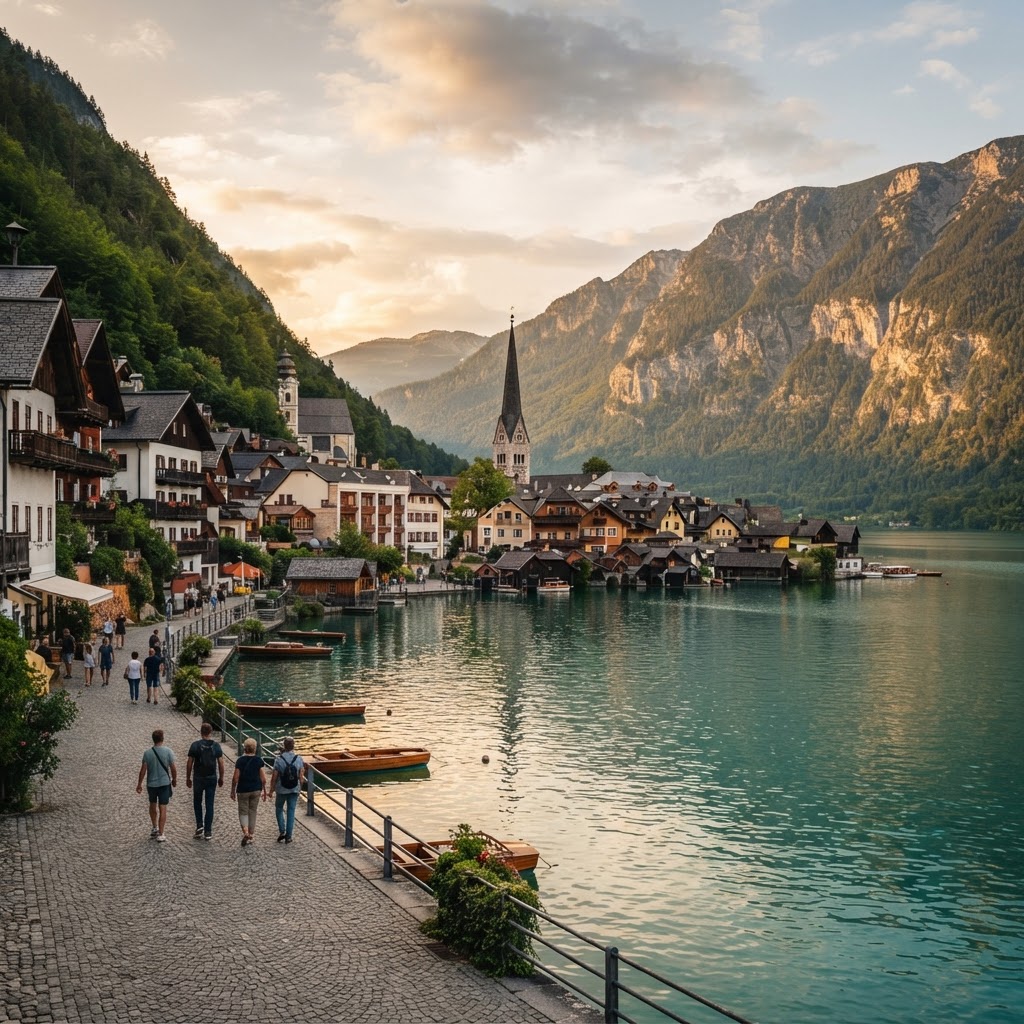
Salzkammergut, Austria
Austria
Turquoise glacial lakes, Habsburg spa towns, and jagged limestone ridges.
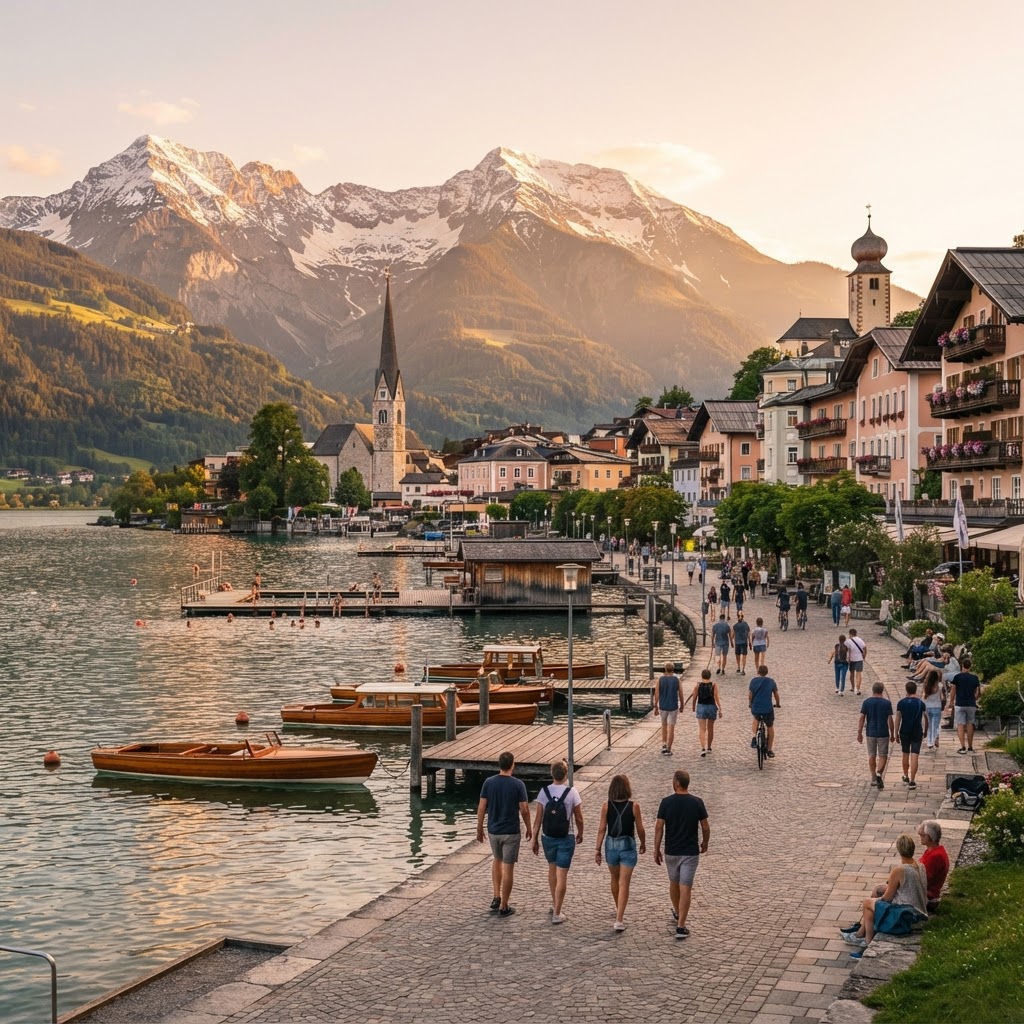
Zell am See, Austria
Austria
A car-free Alpine crossroad where glacial peaks plunge straight into swimming waters.
Readymade itineraries
Start from a tested template — then make it yours.
Ready to book
Lock in your St. Anton am Arlberg trip
Everything in one place. We may earn a small commission — it never costs you more.
Plan a trip to St. Anton am Arlberg
Pick a length and we'll build a day-by-day plan around how you travel — neighborhoods clustered, budget-aware, and editable.
Get better at planning trips like this
Occasional notes on planning smarter — no spam, unsubscribe anytime.
Plan a trip to St. Anton am Arlberg
Turn this guide into a day-by-day plan built around your pace, your group, and your budget.
Build my St. Anton am Arlberg trip