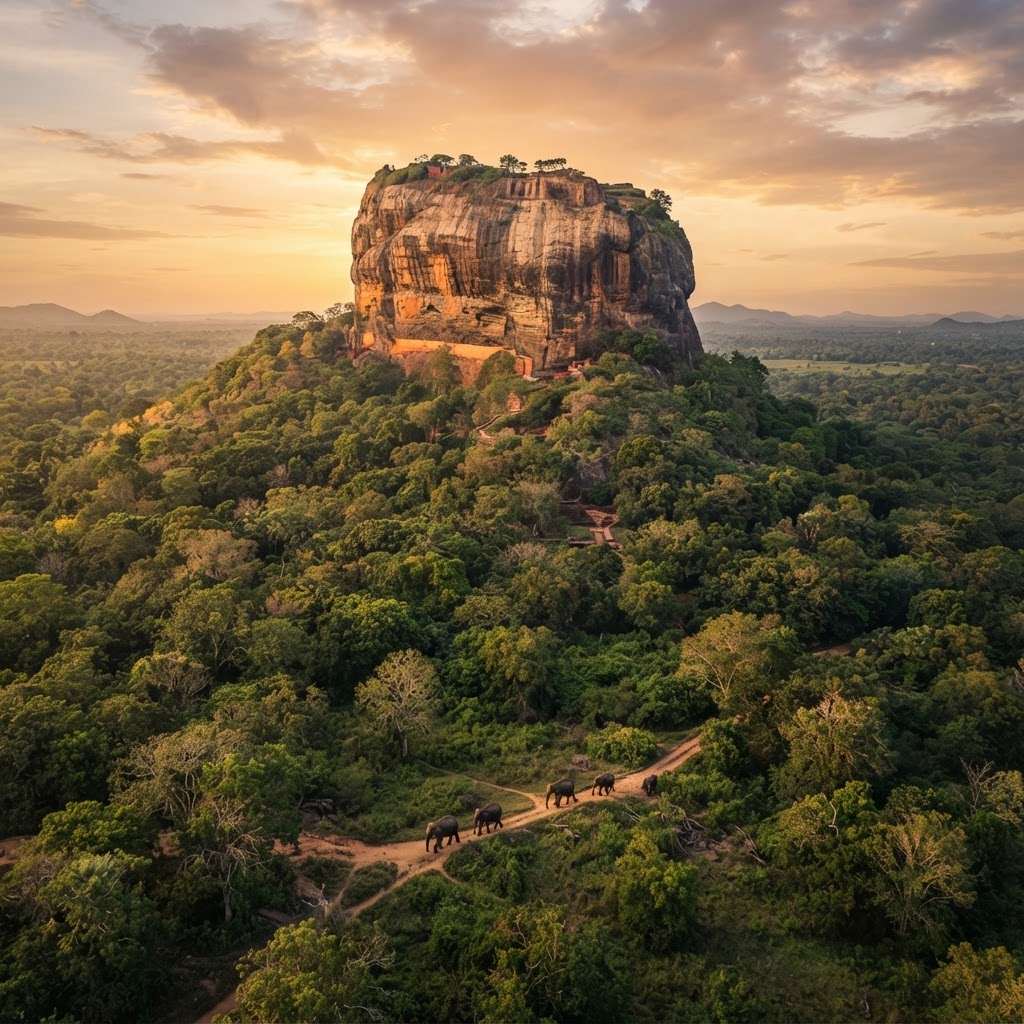
Sri Lanka
Sigiriya, Sri Lanka
A fifth-century sky citadel rising sheer above jungle canopy and wild elephant trails
Plan & book
Sort your Sigiriya, Sri Lanka trip in one place.
We point you to the booking tools we'd actually use — live prices, no markup. Or let us build the day-by-day plan around you first, then book.
Sigiriya is centered around a 200-meter-high sheer granite monolith transformed in the 5th century by King Kashyapa into an improbable cliff-top palace complex. Beyond the archaeological core of water gardens, ancient tempera frescoes, and massive brick lion paws, the surrounding rural landscape consists of tranquil reservoir tanks, paddy lanes, and thick forest corridor. It serves as the most atmospheric base in Sri Lanka's dry-zone Cultural Triangle.
2 to 3 days
Best time
January to March for optimal morning climbing conditions, or July to September to pair rock ascents with the Minneriya elephant gathering.
Build your own trip with these prebuilt itineraries
Each one is a tested, day-by-day plan for Sigiriya, Sri Lanka — start here, then make it yours.
4 Days: Immersive Cultural Triangle & Village Retreat in Sigiriya
A slow-paced exploration centered around tranquil jungle homestays, rural village traditions, and day trips to Dambulla Cave Temple and Ritigala monastery.
3 Days: Sacred Ruins & Elephant Corridors in Sigiriya
Active wildlife and archaeology fusion combining the classic rock fortress summits with open-air jeep safaris in nearby Minneriya and Kaudulla reserves.
2 Days: The Essential Climbs & Ancient Engineering in Sigiriya
First-time historical highlights covering early morning Lion Rock ascents, the hydraulic gardens, and the Pidurangala sunset scramble.
To see fifth-century engineering and urban planning built directly against raw geology, where manicured water gardens meet vertical cliff faces. Climbing Sigiriya gives you intimate contact with ancient plaster frescoes and mirror-wall poetry, while neighboring Pidurangala offers the sweeping, unobstructed silhouette of Lion Rock against the jungle canopy at dusk.
Where to stay
Getting there
Getting around
Food & drink
What it costs
Things to do
Book tours & tickets in Sigiriya, Sri LankaSkip it if
Skip staying in Sigiriya if you have severe vertigo or mobility limitations, as experiencing the main fortress requires ascending over 1,200 steep, exposed metal stairs suspended on open cliff faces without lift access. Travelers seeking lively nightlife, walk-to-dinner dining strips, or seaside relaxation will also find it too remote.
When to go
Sigiriya sits squarely in the central dry zone, bypassing much of the southwest monsoon that drenches the coast between May and September. The major tradeoff is heat versus rainfall: the winter months bring cooler 28°C climbing mornings, while the mid-year window is drier and hotter but unlocks incredible wildlife viewings around evaporating reservoirs.
Peak (December to March)
Crisp morning visibility, lower humidity, and minimal rainfall; expect long ticket queues and midday stair traffic at Lion Rock if you arrive past 8:00 AM.
Shoulder (July to September)
Hot and dusty with clear blue skies; ideal for climbing Pidurangala at sunset and catching hundreds of wild elephants assembling at Minneriya National Park.
Low (October to November & April to May)
April and May bring blistering 35°C interior heat, while October and November see heavy northeast inter-monsoon squalls that make the iron summit stairways slippery.
Neighborhoods
Where you stay shapes the trip. Here's how to think about it.
Sigiriya Village (Main Strip & Forest Sanctuary)
A quiet, rural junction where dirt feeder roads branch into shaded forest lanes and unhurried family-run guesthouses.
Best for:First-timers, independent travelers, and walkers who want immediate access to the fortress gates and roadside roti stalls.
Don't miss:Dining on fresh rice and curry at Chooti Restaurant, positioned conveniently on the primary road near the archeological park perimeter.
Pidurangala Environs
Thick secondary jungle canopy, nocturnal insect hums, and low-impact eco-lodges clustered beneath the monastery rock.
Best for:Nature lovers, budget backpackers, and sunrise hikers who want to roll straight out of bed onto the Pidurangala trailhead.
Don't miss:The pre-dawn path starting at Pidurangala Vihara, taking the forest trail past the reclining Buddha statue to reach the rocky summit plateau.
Kandalama Reservoir
Sprawling lake views, herds of grazing water buffalo, and architectural luxury surrounded by dense elephant-corridor jungle.
Best for:Couples, architecture devotees, and luxury seekers looking for secluded resort stays away from main road traffic.
Don't miss:An evening walk along the earthen bund of Kandalama Tank to watch wild birds roost against the silhouette of Geoffrey Bawa's Heritance Kandalama.
Habarana Junction
A busy, practical transit crossroad twenty minutes north, packed with banks, pharmacy hubs, safari jeeps, and regional transport options.
Best for:Logistics-first travelers, families booking daily safari drives into Minneriya, and anyone using buses to cross between Trincomalee, Kandy, and Polonnaruwa.
Don't miss:Booking a custom 4x4 safari departure directly from the Habarana town stand to head straight toward the Minneriya or Kaudulla grassland borders.
Destination intelligence
Updated 9/14/2026The structured record we plan every Sigiriya, Sri Lanka itinerary from.
Walkability
Low to moderate; village paths are pleasant for daytime strolls, but sites are separated by 3 to 10 kilometers of jungle roads without sidewalks.
Transit quality
Limited; public local buses connect Dambulla and Sigiriya infrequently, making tuk-tuks and private drivers the standard local transit.
Car needed
Hired car with driver or dedicated tuk-tuk recommended; self-driving a rental car is challenging due to local traffic dynamics and unpaved rural tracks.
Ideal duration
2 to 3 days
Minimum useful
1 full day (2 nights)
Peak season
December to March, bringing sunny, dry skies across the central plains and pleasant morning climbing temperatures.
Shoulder season
July to September, when the southwest monsoon leaves the dry zone relatively clear, coinciding with the Minneriya Elephant Gathering.
Low season
April to May (extreme dry-zone heat) and October to November (northeast inter-monsoon heavy downpours).
Best for
Common mistakes
- Climbing Lion Rock between 10:00 AM and 2:00 PM when the exposed metal stairs heat up intensely and stairwell congestion peaks
- Skipping the on-site Sigiriya Museum before the ascent, missing critical architectural context about hydraulic engineering and palace layout
- Treating Pidurangala as an easy casual stroll without proper footwear; the final summit stretch requires a hands-on boulder scramble
- Walking or cycling remote rural dirt tracks after dusk where wild elephants routinely cross between regional reservoirs
- Staying in commercial transit towns like Dambulla rather than in Sigiriya's tranquil jungle fringe
Best nearby
See what a trip to Sri Lanka actually costs. Travel Budget Co.
How to plan it
- Stay within Sigiriya village or the Pidurangala border if you want to walk to dinner and reach trailheads before the sunrise tour buses pull in from Kandy.
- Be at the Sigiriya ticket turnstile at 7:00 AM sharp; arriving at 9:00 AM means enduring blistering heat on the shade-free metal stairs and stalling in human bottlenecks on the cliff face.
- Pair Sigiriya with Dambulla Cave Temple on the way in or out, tackling Dambulla's 300 steps in late afternoon when the rock floor cools down and crowds disperse.
- Do not book a Minneriya safari months in advance; wait until you arrive and ask your guesthouse where the herds are congregating, as elephants shift daily between Minneriya, Kaudulla, and Hurulu Eco Park depending on seasonal water levels.
- Bring light, shoulder-and-knee-covering clothing and slip-on footwear for Pidurangala, because the access path begins directly inside an active Buddhist temple where strict dress rules are enforced.
Questions
More in Sri Lanka
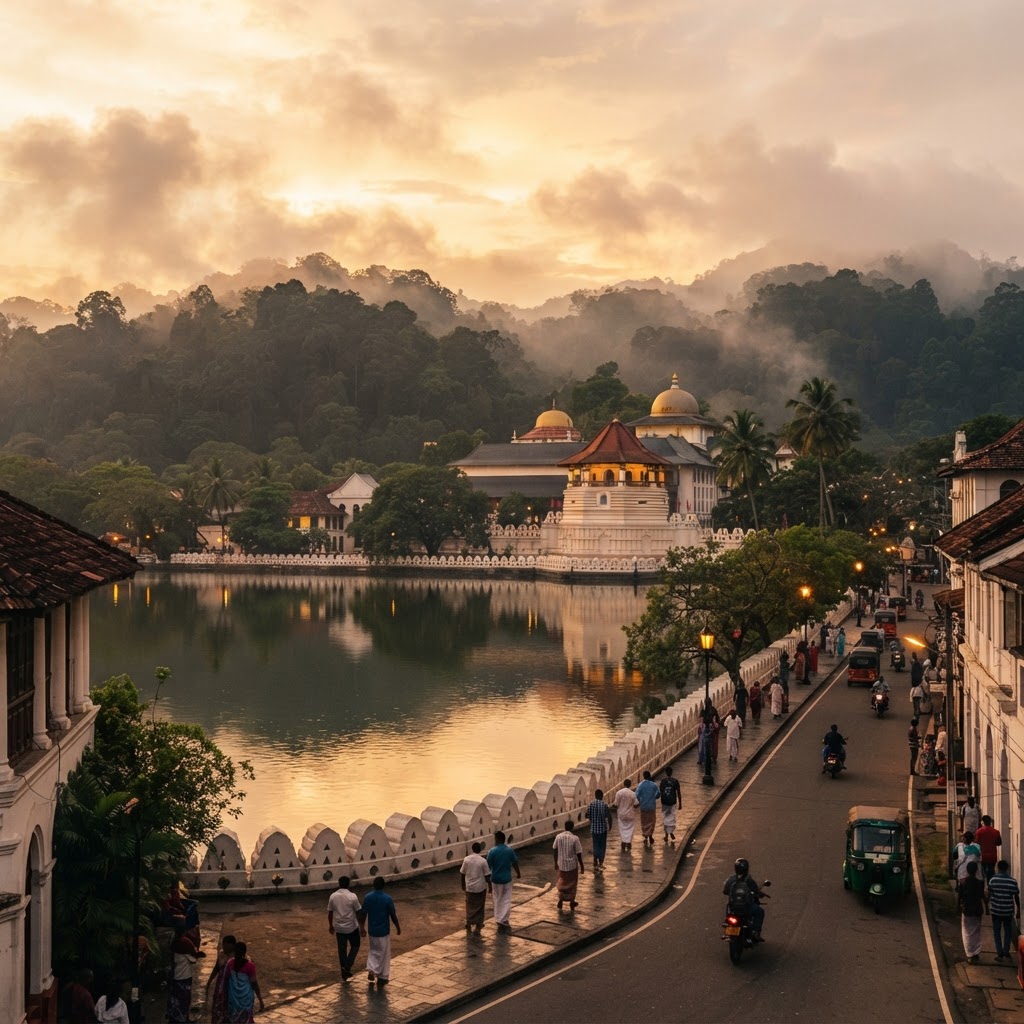
Kandy
Sri Lanka
The sacred hill capital of mist, heritage, and gateway railways
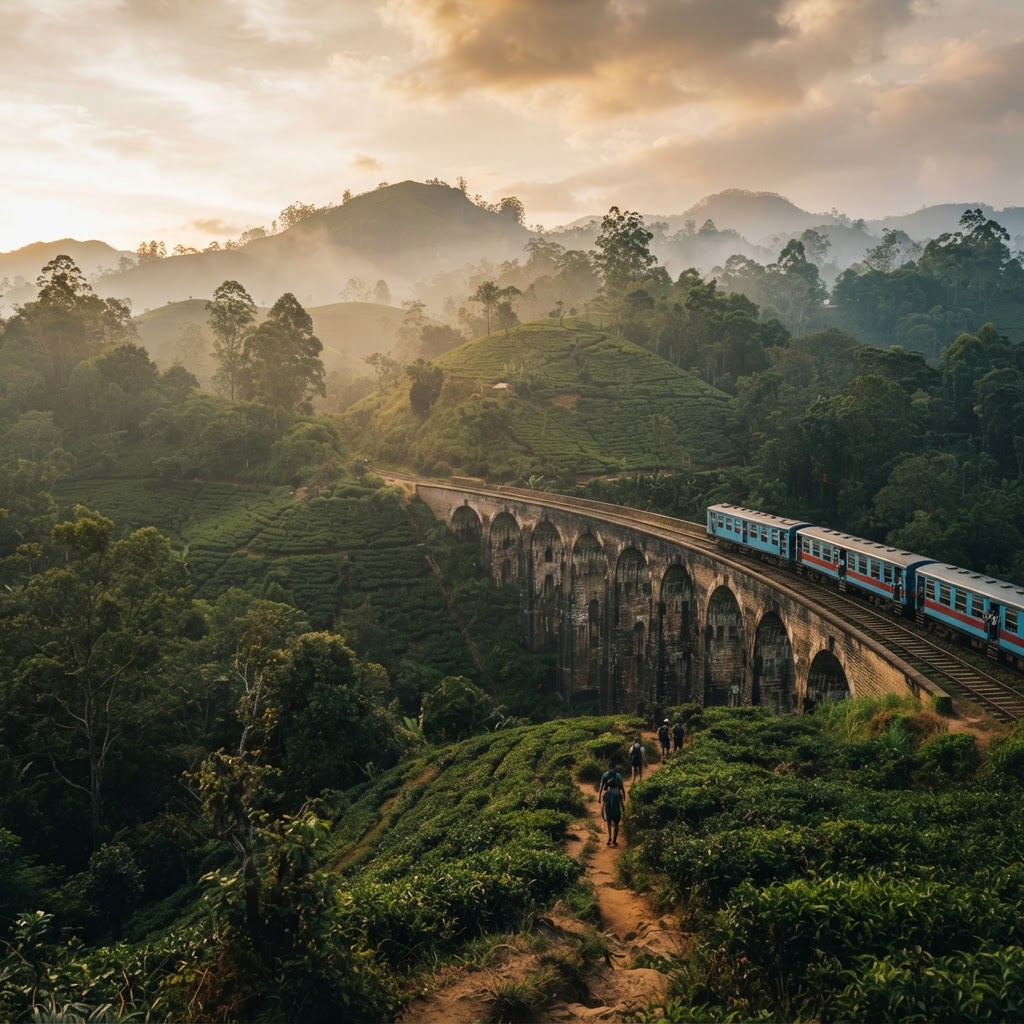
Ella, Sri Lanka
Sri Lanka
Misty tea ridges, colonial rail engineering, and relaxed highland trail pacing.
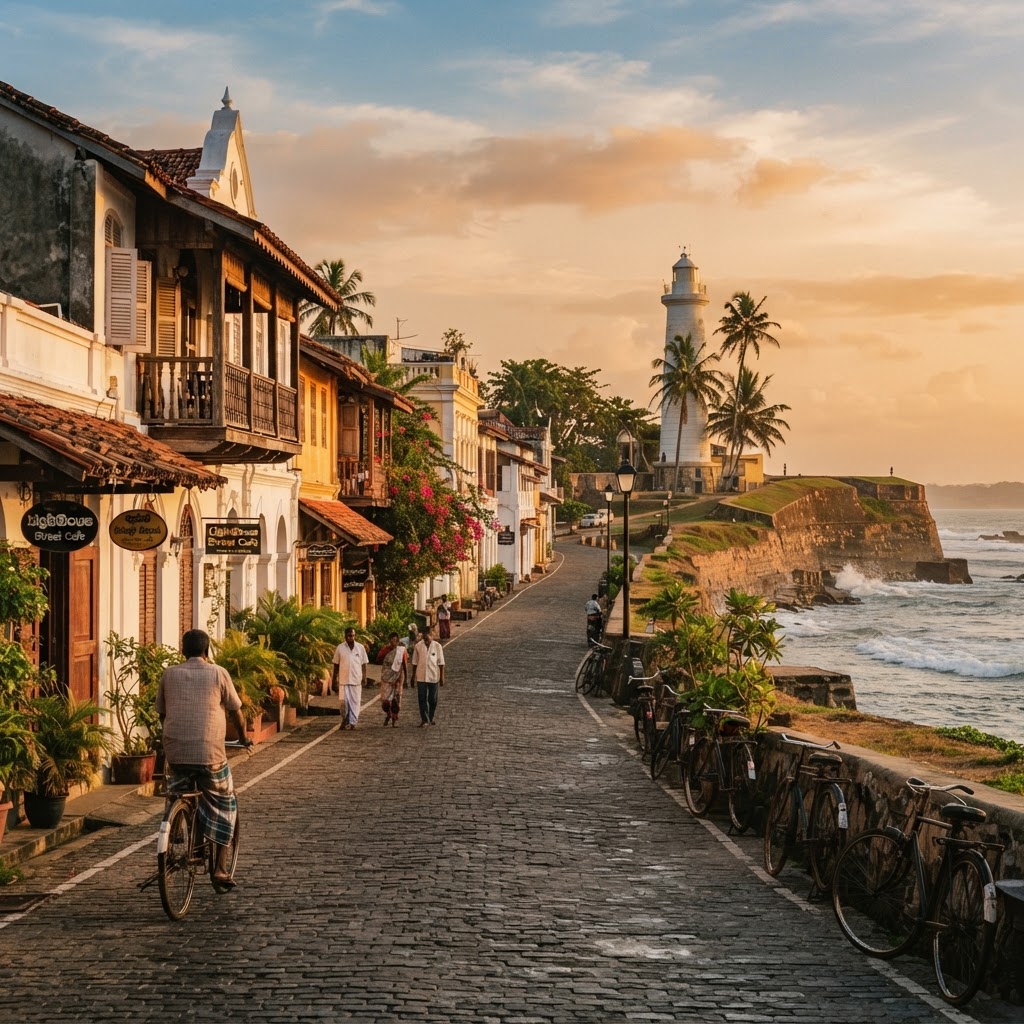
Galle, Sri Lanka
Sri Lanka
A living 17th-century rampart community of Dutch colonial architecture, ocean air, and refined southern coast pace.
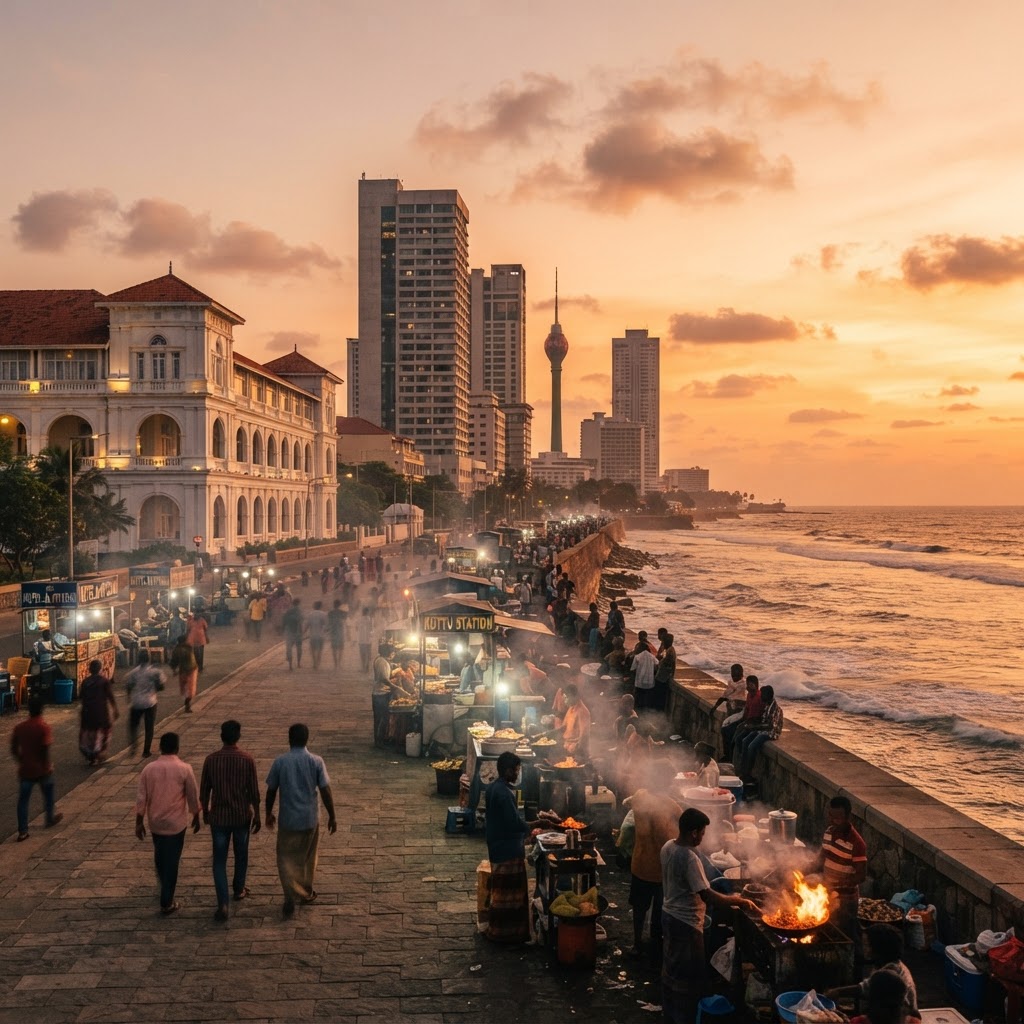
Colombo
Sri Lanka
Colonial architecture, tropical modernism, and fiery street eats meet on the Indian Ocean edge.
Readymade itineraries
Start from a tested template — then make it yours.
Ready to book
Lock in your Sigiriya, Sri Lanka trip
Everything in one place. We may earn a small commission — it never costs you more.
Plan a trip to Sigiriya, Sri Lanka
Pick a length and we'll build a day-by-day plan around how you travel — neighborhoods clustered, budget-aware, and editable.
Get better at planning trips like this
Occasional notes on planning smarter — no spam, unsubscribe anytime.
Plan a trip to Sigiriya, Sri Lanka
Turn this guide into a day-by-day plan built around your pace, your group, and your budget.
Build my Sigiriya, Sri Lanka trip